Black Moon: The Mysterious Lunar Event Explained
Black Moons are among the rarest and most intriguing events in the lunar calendar, steeped in astronomical wonder and popular lore. While the moon’s phases regularly pace the night sky, the Black Moon stands out, both for its infrequency and for its role in stargazing culture. This guide unpacks the science, definitions, history, and cultural meaning of the Black Moon.
What Is a Black Moon?
The term Black Moon does not refer to a visual phenomenon like a lunar eclipse or blood moon. Instead, it is a calendar-based event that describes rare occurrences tied to the new moon phase. By common definition, a Black Moon describes:
- The second new moon in a single calendar month (similar to how a “Blue Moon” is the second full moon in a month).
- The third new moon in a season of four new moons, according to astronomical tradition.
- Some use the term for the absence of a new moon or full moon in a month, though this is rareest and only possible in February due to its short length.
In most cases, a Black Moon is either the second new moon in one month or the third new moon in a season that has four new moons, instead of the typical three.
How Often Does a Black Moon Occur?
Black Moons happen approximately every 29 to 33 months, depending on the specific definition used:
- The second new moon in a month repeats about every two to three years, since the lunar cycle (the synodic month) is about 29.5 days, while most months have 30 or 31 days.
- The third new moon in a season with four new moons also recurs about every 2.5 years due to the longer astronomical seasons.
- Months without a new or full moon (Black February) are extremely rare, occurring several times per century.
This makes the Black Moon a favorite event among amateur astronomers and sky gazers, who track the lunar calendar for these astral curiosities.
Why Does a Black Moon Happen?
The lunar cycle lasts approximately 29.5 days, which means there are usually 12 new moons in a year. However, because most months are slightly longer, occasionally two new moons fall within a single month—leading to what is commonly called a Black Moon. Similarly, because the solar year is longer than 12 lunar months, there are sometimes 13 new moons in a year, giving rise to seasons with four new moons instead of three.
Types of Black Moons
- Monthly Black Moon: The second new moon within the same calendar month.
- Seasonal Black Moon: The third new moon in an astronomical season with four new moons.
- Absence Black Moon: A month (February) without a new moon (also sometimes called a “Black Moon”).
Table: Black Moon vs Other Lunar Events
| Event Type | Description | Frequency | Visual |
|---|---|---|---|
| Black Moon | 2nd new moon in a month or 3rd in a season of 4 | Every 29-33 months | Invisible (new moon phase) |
| Blue Moon | 2nd full moon in a month or 3rd in a season of 4 | Every 2-3 years | Full moon |
| Blood Moon | Total lunar eclipse (reddish moon) | Every 2-3 years | Visibly red moon |
Is a Black Moon Visible?
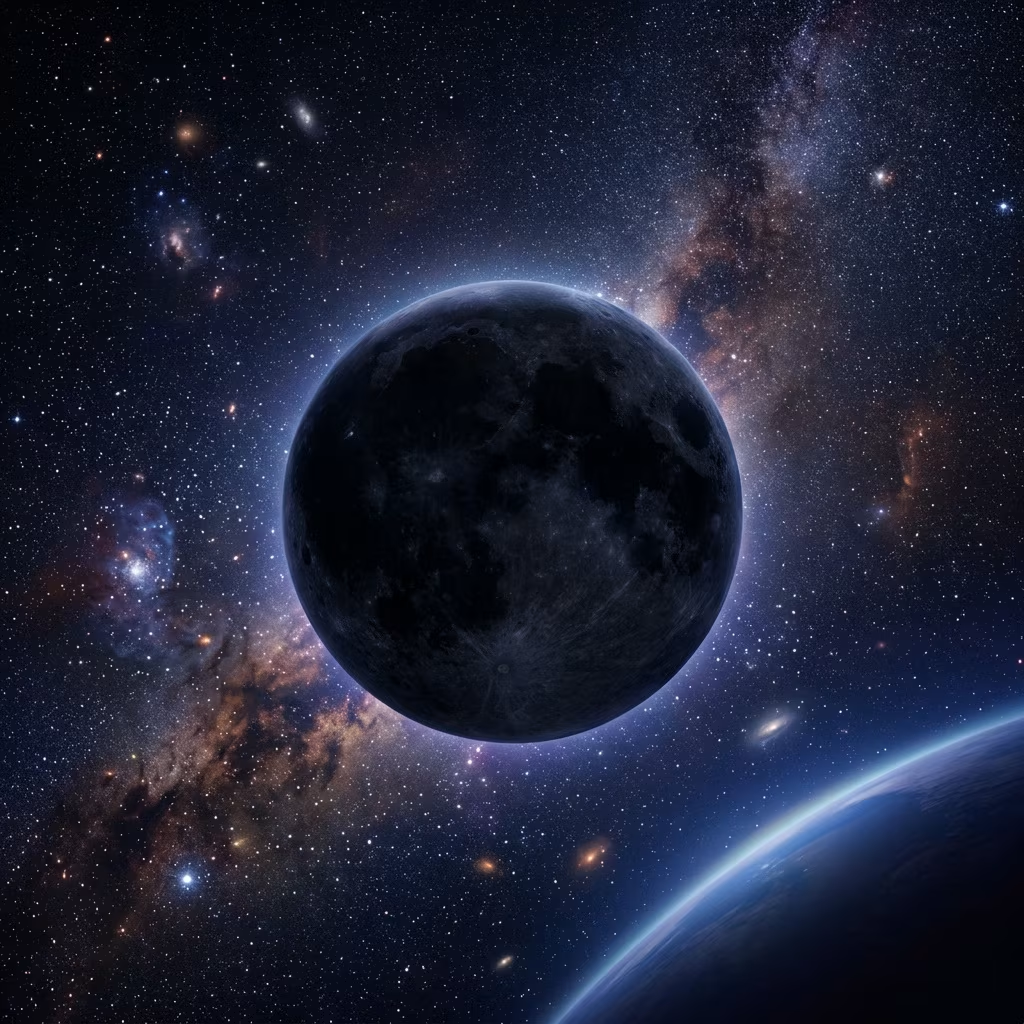
Unlike other lunar spectacles, the Black Moon is invisible to the naked eye. This is because it signifies the new moon phase, when the moon is positioned between the Earth and Sun. At this time, the moon’s illuminated side faces away from Earth, making it invisible in the night sky. There are no color changes or eclipses associated with a Black Moon—the skies simply appear darker than usual, making it ideal for stargazing.
Why Do Astronomers and Stargazers Care About Black Moons?
- Darker Skies: With the new moon invisible, the night sky is free from moonlight glare. This is the best time to observe faint deep-sky objects, the Milky Way core, galaxies, and meteor showers.
- Celestial Curiosity: The rarity and calendar quirk of a Black Moon appeals to astronomers and the general public alike.
- Photography: Astrophotographers prize Black Moons for capturing crystal-clear images of star fields and nebulae.
For avid sky watchers, Black Moons are as much a celebration of the lunar cycle as Blue Moons and Blood Moons.
When Is the Next Black Moon?
The next notable Black Moon will occur on August 23, 2025, peaking at 2:06 AM EDT in the constellation Leo. This is the third new moon in a summer with four new moons, a scenario only possible because of the way the lunar and solar calendars overlap. Previous Black Moons occurred on May 19, 2023, and the next after 2025 is projected for about 2028.
Black Moon vs. Blue Moon vs. Blood Moon
- Black Moon: Second new moon in a calendar month or third new moon in a season of four.
- Blue Moon: Second full moon in a calendar month or third full moon in a season of four.
- Blood Moon: Total lunar eclipse; the moon turns a reddish color due to the Earth’s shadow.
It’s important to note that while Blue Moons and Blood Moons are visually noticeable, Black Moons are defined by timing—making them special for their rarity, not their appearance.
How to Maximize Stargazing During a Black Moon
- Plan for clear skies: Watch the weather before you head out. The new moon’s darkness is only useful if the sky is cloud-free.
- Travel away from light pollution: The darker your location, the more you’ll see—especially the Milky Way and distant star clusters.
- Bring binoculars or a telescope: Binoculars are great for beginners, while telescopes reveal deep-sky treasures.
- Capture the sky: Modern smartphones and basic DSLR cameras can photograph the stars and even the Milky Way during new moon nights.
- Check astronomy apps: Apps and websites can point you to the best sky objects for your location on Black Moon nights.
Cultural and Spiritual Significance
Through history, the phases of the moon have inspired myths and beliefs. Black Moons, due to their rarity, are sometimes seen as times of renewal, mystery, or spiritual power. Some traditions use the Black Moon to:
- Mark new beginnings or powerful intentions in rituals and ceremonies.
- Symbolize a hidden or secret event, owing to the invisible nature of the new moon.
- Interpret as a time for reflection and inward focus, as darkness envelopes the sky.
While no scientific evidence ties Black Moons to supernatural forces, their effect on the imagination and cultural practices around the world is undeniable.
Frequently Asked Questions (FAQs)
What is the difference between a Black Moon and a Blue Moon?
The Black Moon refers to the second new moon in a month or third in a season of four new moons; the Blue Moon refers to the second full moon in a month or third in a season of four full moons. Blue Moons are often visible, Black Moons are not.
Is a Black Moon the same as a solar eclipse?
No. A solar eclipse happens when the new moon passes directly between Earth and the Sun, blocking sunlight. A Black Moon is simply a new moon according to calendar timing—eclipses require a precise alignment of the Sun, Moon, and Earth.
Can you see anything special during a Black Moon?
The magic of a Black Moon is in what you can’t see: with no moonlight, skies are at their darkest, making it ideal for observing the Milky Way, nebulae, and galaxies.
How rare is a Black Moon?
Depending on the definition, Black Moons occur every 2 to 3 years. Their rarity gives them an outsized presence in lunar lore and fascination.
Are there any effects on Earth during a Black Moon?
No physical effects are caused by a Black Moon. Like any new moon, some may notice stronger tides due to the moon’s alignment, but nothing unusual beyond regular lunar cycles happens during this event.
Quick Facts About Black Moons
- Invisible Event: The Black Moon is not visually detectable from Earth as it occurs at new moon phase.
- Perfect for Stargazing: The darkest sky means prime time for seeing deep-sky objects and the Milky Way.
- Based on Calendars: The definition depends on whether you use a calendar month or astronomical season.
- No Special Equipment Needed: All you need is dark skies and a sense of celestial adventure!
Conclusion
Black Moons are a testament to the fascinating patterns of our lunar neighbor. While they are not marked by dramatic sightings, their arrival is an opportunity for sky watchers and astronomers to connect with the rhythms of the universe. Whether you use the time to observe the wonders above or reflect under the blanket of a star-studded sky, the Black Moon invites us to appreciate nature’s celestial choreography in all its mystery.
References
- https://www.space.com/34239-black-moon-blue-moon-blood-moon-lunar-names.html
- https://www.space.com/stargazing/black-moon-darkens-august-skies-heres-how-to-hunt-sparking-wonders-in-the-milky-way-this-weekend
- https://www.timeanddate.com/astronomy/moon/black-moon.html
- https://www.youtube.com/watch?v=mf8N2wgQ2Fs
- https://www.youtube.com/watch?v=wpwOowGRmEg
- https://nasaspacenews.com/2024/11/the-black-moon-is-here-and-its-unlike-any-lunar-event-youve-seen/
- https://www.sciencefocus.com/space/black-moon-april-2022
- https://www.thepeculiarbrunette.com/black-moon-spiritual-meaning-and-ritual-intentions/
- https://divineharmony.com/astrology-blog/the-great-black-conjunction-of-black-sun-and-black-moon-%E2%9C%A8%F0%9F%96%A4%E2%9C%A8/
- https://www.universetoday.com/articles/guide-to-space
- https://www.livescience.com/space/the-moon/a-rare-black-moon-rises-this-weekend-what-is-it-and-what-can-you-see
- https://www.mentalfloss.com/article/527320/winter-meteors-valentines-day-star-and-black-moon-guide-february-night-sky
- https://www.theweathernetwork.com/en/news/science/space/seasonal-black-moon-august-28-2025?_guid_iss_=1
- https://foreverconscious.com/black-moon-ritual-clearing-manifesting-september-2016