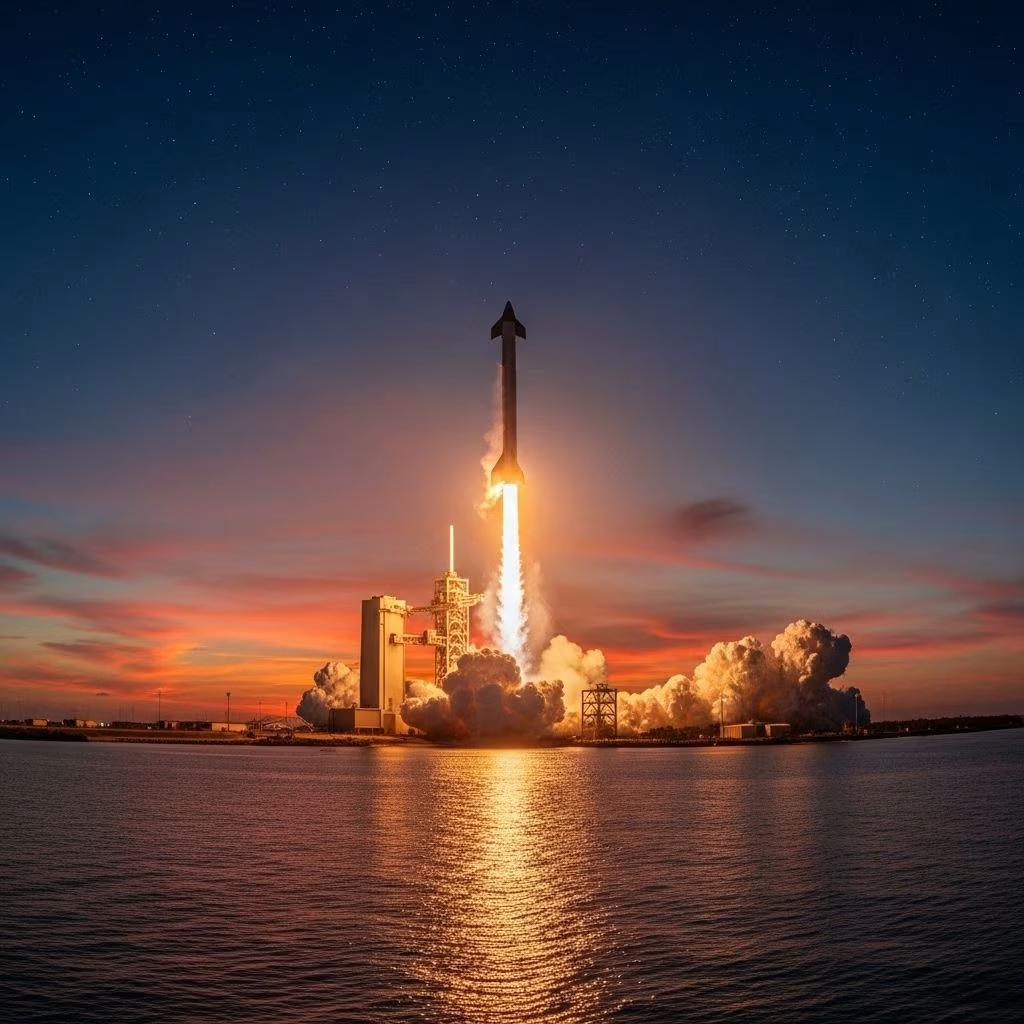
SpaceX: Revolutionizing Spaceflight in the 21st Century
SpaceX—formally known as Space Exploration Technologies Corp.—stands as the most disruptive force in modern spaceflight. Founded in 2002 by entrepreneur Elon Musk, SpaceX has transformed the trajectory of human access to space through relentless innovation in reusable rockets, commercial spacecraft, ambitious Mars colonization goals, and a dramatic reduction in launch costs.
Inception and Vision: A New Era of Spaceflight
Elon Musk established SpaceX in 2002 with a core mission: to radically reduce space transportation costs and to eventually enable humanity to become a multi-planetary species. In the early 2000s, spaceflight was the domain of government agencies and a handful of traditional aerospace contractors. SpaceX aimed to disrupt this paradigm by developing rockets and spacecraft with in-house talent and pioneering reusable technology.
Key Objectives at Founding:
- Lowering the cost of accessing space
- Developing reliable, reusable rockets
- Fulfilling cargo and astronaut delivery contracts with NASA
- Laying the technological foundations for the human settlement of Mars
Early Challenges and the Road to Success
SpaceX’s journey began with significant hurdles. Its first rocket, the Falcon 1, was an ambitious attempt at creating a small, affordable, and reusable launch system. However, its first three launch attempts (2006–2008) all ended in failure—a critical test for the young company.
Breakthrough came in September 2008, when Falcon 1 became the first privately-developed, liquid-fueled rocket to reach Earth orbit. This historic moment not only validated Musk’s vision but also secured crucial NASA contracts that would sustain the company through its next phase.
Milestones of SpaceX’s Early Years:
- 2006–2008: First three Falcon 1 launches fail. The fourth succeeds, making history.
- 2008: Awarded NASA’s Commercial Orbital Transportation Services (COTS) contract for cargo deliveries to the International Space Station (ISS).
- 2010: Launches Falcon 9, a medium-lift vehicle, boosting SpaceX’s capabilities.
Advancing Rocket Technology: Falcon Family & Reusability
The leap from Falcon 1 to Falcon 9 marked SpaceX’s arrival as a serious contender in medium and heavy-lift spaceflight. With the Falcon 9, SpaceX showcased not only competitive cost structures but also a drive for reusability—something almost no one in the industry believed was commercially viable at the time.
Key Launch Vehicles:
| Rocket | Class | Features | First Launch |
|---|---|---|---|
| Falcon 1 | Small, orbital | First privately-developed orbiter | 2006 |
| Falcon 9 | Medium-lift | Partially reusable, flagship commercial vehicle | 2010 |
| Falcon Heavy | Heavy-lift | Three Falcon 9 boosters combined; highest payload capacity since Saturn V | 2018 |
| Starship | Super heavy-lift | Fully reusable; designed for Mars and interplanetary missions | (Active test program) |
Reusability Breakthrough:
- First Falcon 9 first-stage landing: December 2015 (historic return to pad)
- First stage reflight: March 2017, proving economic viability of reusability
- Since then, routine booster reuse has become the norm, driving down costs and supporting rapid launch cadence
Commercial Success and Industry Disruption
SpaceX began to dominate the global launch market by lowering barriers to space access. Government payloads, private satellites, commercial cargo, and even crew missions became routine customers. This has spurred rapid commercialization of low Earth orbit and enabled new business models, such as satellite internet and mega-constellations.
Major Achievements:
- 2012: First commercial spacecraft (Dragon) delivers cargo to the ISS.
- 2020: First private company to send astronauts to space (Crew Dragon Demo-2), returning crew launch capability to the U.S.
- 2024: World-record 134 launches in a single year; targeting 170 in 2025
- Over 95% of U.S. orbital launches in 2025 are SpaceX missions.
- Over 450 successful booster landings by early 2025.
SpaceX Launch Vehicles in Detail
Falcon 9
The workhorse of SpaceX’s fleet, Falcon 9 is a medium-lift, partially reusable rocket that supports a variety of missions, from commercial communications satellites to NASA crew deliveries.
- Two-stage rocket with a reusable first stage
- Carries the Dragon cargo and crew capsules
- Supports routine launches with turnaround records of less than a week
Falcon Heavy
Falcon Heavy combines three Falcon 9 boosters for heavy-lift missions—enabling delivery of large satellites, deep space probes, and interplanetary payloads.
- Partially reusable
- 34 active Merlin engines at launch
- Highest operational payload to low Earth orbit of any rocket in current service
Starship
The next-generation Starship rocket is a fully-reusable, super heavy-lift launch vehicle designed to take humans to the Moon, Mars, and beyond. As of mid-2025, Starship has completed nine major test flights, with each improving on past results, and is expected to transform both cost and capacity for deep space exploration.
- Designed for 100+ metric tons to orbit
- 100% reusable (booster and spacecraft)
- Key to Musk’s Mars settlement plans
- Ongoing development and regulatory review, with each flight approaching full mission objectives
Other Notable Projects:
- Dragon & Crew Dragon: Spacecraft for cargo and crew NASA missions to the ISS.
- Starlink: Massive satellite constellation aimed at providing global broadband internet coverage.
Primary Launch Sites
SpaceX operates from multiple launch locations across the U.S., each serving unique mission profiles:
- Cape Canaveral Space Force Station (Florida): Historic hub for commercial and defense launches.
- Kennedy Space Center (Florida): Iconic NASA site, home to crewed missions.
- Vandenberg Space Force Base (California): Used for polar and sun-synchronous launches.
- Starbase (Texas): Main development and launch facility for Starship and Mars venture.
- Ronald Reagan Ballistic Missile Defense Test Site: Used for certain specialized missions.
Partnerships and Government Collaboration
While fundamentally a private company, SpaceX has forged deep operational ties with NASA and the U.S. Department of Defense. These collaborations include commercial resupply and crew contracts to the ISS, launch of military satellites, and national security payloads. SpaceX’s reliability and launch cadence have made it integral to U.S. space infrastructure.
Starship and the Mars Ambition
SpaceX’s most ambitious project is the Starship program—a fully renewable, super heavy-lift system explicitly designed to enable mass payload delivery to Mars and, one day, human colonization. Test flights have refined both the spacecraft and booster recovery systems. While not yet achieving full orbital reuse, Starship’s rapid development pace and scale remain unprecedented in the industry.
Key Starship Facts:
- Intended for Earth, Moon, and Mars flights
- Designed to carry 100+ people or 100+ metric tons to orbit
- Central to Musk’s vision of a self-sustaining city on Mars
- Ongoing test launch campaign from Starbase, Texas
SpaceX’s Broader Impact on Space and Industry
The impact of SpaceX resonates far beyond its own manifests:
- Lower launch costs have democratized access for smaller companies, universities, and governments.
- Disrupted traditional aerospace contracts and catalyzed a new generation of private space companies.
- Stimulated public interest and investment in both commercial and governmental space initiatives.
- Enabled new markets, such as satellite internet and rapid satellite constellation deployment.
Launch Statistics and Growth
| Year | Orbital Launches | Successful Landings | Starship Flights* |
|---|---|---|---|
| 2010 | 2 | 0 | 0 |
| 2015 | 7 | 3 | 0 |
| 2020 | 26 | 23 | 0 |
| 2024 | 134 | ~120 | 5 |
| 2025* | Target: 170 | ~95% success rate | 9 |
*Starship test flights as of mid-2025. Launch numbers based on records as of June 2025.
Frequently Asked Questions (FAQs)
What is SpaceX?
SpaceX is a private aerospace manufacturer and launch service provider based in the United States, founded in 2002 by Elon Musk, with the goal of reducing space transportation costs and enabling human habitation of Mars.
Who is the founder and CEO of SpaceX?
Elon Musk is the founder, CEO, and chief engineer of SpaceX.
What are SpaceX’s main rockets?
SpaceX currently operates the Falcon 9 (medium-lift), Falcon Heavy (heavy-lift), and is testing the fully-reusable Starship system for future interplanetary missions.
How many launches does SpaceX handle annually?
As of 2024, SpaceX completed 134 launches in one year, and aims for 170 in 2025, the highest cadence in industry history.
What is Starlink?
Starlink is SpaceX’s global satellite internet constellation, aiming to provide broadband service to underserved regions worldwide.
What is Starship?
Starship is SpaceX’s next-generation, fully-reusable super heavy-lift vehicle under development, intended for Moon, Mars, and deep-space missions.
What are SpaceX’s most significant achievements?
- First private liquid-fueled rocket to reach orbit (Falcon 1, 2008)
- First private cargo and crew delivery to the ISS
- First routine booster landings and re-flights
- Largest satellite launch cadence and commercial market share
Conclusion: The SpaceX Effect
SpaceX’s influence on the space industry is transformative. By iterating rapidly, prioritizing cost reduction, pioneering reuse, and establishing unprecedented launch frequency, the company has rewritten the rules of what is possible. As Starship advances and Mars missions draw nearer, SpaceX continues to define humanity’s boldest aspirations for the cosmos.
References
- https://en.wikipedia.org/wiki/SpaceX
- https://www.spacex.com
- https://www.spacex.com/updates
- https://rocketlaunch.org/launch-providers/spacex
- https://www.thespacereview.com/article/4997/1
- https://ts2.tech/en/spacex-mid-2025-comprehensive-report-june-27th-2025/
- https://en.wikipedia.org/wiki/History_of_SpaceX
- https://ts2.tech/en/spacex-comprehensive-overview-of-history-technologies-missions-and-future-plans/
- https://research.contrary.com/company/spacex
- https://www.space.com/space-exploration/launches-spacecraft/spacex-aiming-for-record-breaking-170-orbital-launches-in-2025
- https://sacra.com/c/spacex/
- https://www.cnet.com/science/spacex-simplified-everything-you-need-to-know-about-elon-musks-rocket-empire/
- https://www.techtarget.com/whatis/definition/SpaceX
- https://spaceexplored.com/guides/spacex/