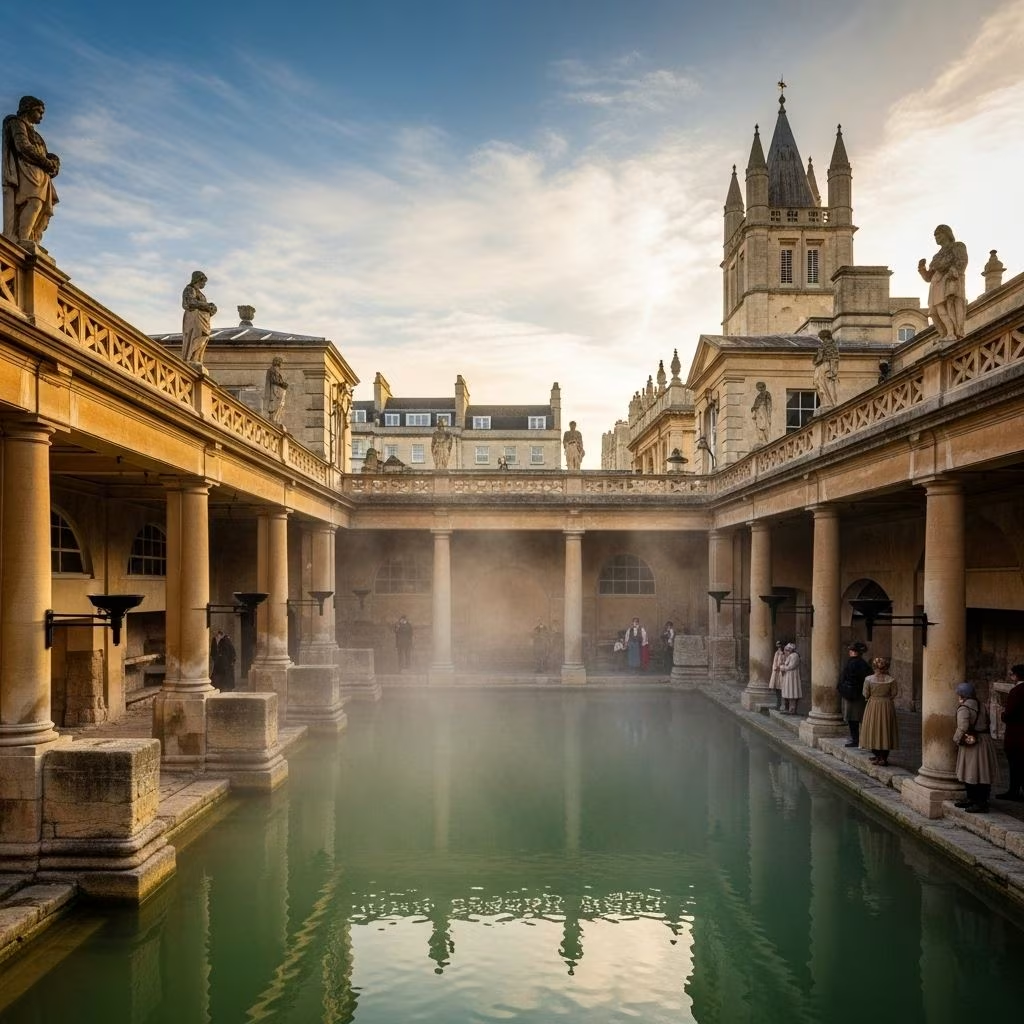
Bath, England: An Elegant Journey Through Time
Nestled in the lush hills of Somerset, Bath stands apart as England’s most graceful and historically rich spa town. Within two hours west of London, this UNESCO World Heritage-listed city enchants visitors with its blend of ancient Roman heritage, stunning Georgian architecture, and vibrant modern culture.
The Legacy of Bath’s Hot Springs
Bath’s story begins with its most famous feature: the hot mineral springs. Nearly two millennia ago, Roman conquerors discovered these health-giving waters and transformed the site into a resort town, calling it Aquae Sulis. For four centuries, Romans and local Britons soaked here, believing in the spring’s healing powers and leaving behind temples, bathhouses, and carved stones.
Today, the Roman Baths Museum is at the heart of the city. Visitors can wander through evocative ruins, well-preserved ancient pools, and a trove of artifacts—brought to life by a state-of-the-art audioguide. Stand above the very spring where emperors and patricians once sought rejuvenation, surrounded by mosaics, statues, and the echoes of ancient voices.
- Practical Tip: Allow at least two hours for the museum and take the audioguide to maximize your experience.
- Must-see: The Sacred Spring, the large Great Bath, and the haunting temple pediment.
Crowning Glory: Bath Abbey
The city’s other architectural marvel is Bath Abbey, a soaring Gothic structure founded over 500 years ago. As the last great medieval church built in England, the Abbey is renowned for its luminous stained glass and remarkable “fan vaulting” ceiling. Step inside and you’re greeted by a space so aglow with colored glass that locals call it the “Lantern of the West.”
Outside, the west front displays a unique carving of Jacob’s Ladder—complete with angels ascending and descending a stone staircase. Inside, the light filters through 52 windows, each telling stories in stained glass. Historic events echo here: in 973, King Edgar, considered the first king of all England, was crowned in the Abbey—a moment that defined a nation.
- Don’t Miss: The East Window and intricate memorial tablets on the abbey walls.
- Visit Tip: Look for free choir concerts and seasonal events that fill the abbey with music.
Bath’s Regency Revival and Social Scene
After Bath’s Roman heyday faded, the city briefly languished, little more than a cluster of cottages. Everything changed in the late 17th and 18th centuries, when the royal endorsement of Queen Mary and Queen Anne—who came to bathe in the mineral-rich waters—sparked a revival. The city soon drew aristocrats, writers, and high society eager to “take the waters” and mingle among its elegant promenades.
Transforming itself into the Hollywood of Georgian England, Bath was reshaped by visionary architects John Wood the Elder and John Wood the Younger. They realized a city-wide masterplan of crescents, circuses, and graceful terraces, all built from the creamy limestone known as “Bath stone.” Flower-lined avenues, broad parades, and regal mansions formed a setting for balls, gambling, and polite intrigue—immortalized in the novels of Jane Austen.
- Key Neighborhoods: The Circus, a ring of grand townhouses; and the Royal Crescent, a dramatic arc of thirty connected houses looking out over the city.
- Cultural Note: Bath’s architecture is so distinctive that the city has more protected historic buildings per capita than anywhere else in England.
The Georgian Gems: Royal Crescent and The Circus
Few urban layouts rival the visual drama of Bath’s Royal Crescent. Completed in 1775, this sweeping curve of 30 linked mansions stands on a hill, facing a broad green and the distant hills. Each facade forms a harmonious line, punctuated by classic Doric columns. Strolling here is like stepping into an 18th-century painting.
Just a short walk away lies The Circus—not a carnival, but a perfectly circular street, ringed with three stacks of columns echoing the regions of classical civilization. The symmetry and scale convey a sense of serene grandeur. These two ensembles, alongside Queen Square and Pulteney Bridge, showcase why Bath is the textbook example of Georgian urban design.
| Architectural Highlight | Era | Distinctive Features |
|---|---|---|
| Roman Baths | 1st–4th centuries CE | Great Bath, statues, temple ruins |
| Bath Abbey | 16th century | Fan vaults, stained glass, Gothic carving |
| Royal Crescent | 18th century | Sweeping curve, Doric columns, uniform facades |
| The Circus | 18th century | Circular street, three column types, urban symmetry |
Vibrant Streets: Life in Bath Today
Bath’s streets bustle with a uniquely English mix of history, culture, and playfulness. Flower baskets dangle from lamp posts. Buskers add music to the pedestrian squares, and independent shops line the graceful avenues. The city is proud of its many parks and annual floral competitions, where Bath’s blooms are so famous that other towns once asked for Bath’s exclusion just to have a chance at winning.
Bath’s cafe culture thrives. You’ll find everything from classic English tea rooms to continental bars and local pubs with centuries-old histories. The Star Inn, favored by locals, still offers “snuff” for curious customers—a nod to the city’s working-class past molded by coal miners and craftspeople.
- Dining Tip: Try a Sally Lunn bun—a Bath specialty at one of the city’s oldest bakeries.
- Shopping Tip: Don’t miss the specialty boutiques and high-end shops along Milsom Street and the winding alleys.
Bath’s Canal and Outdoor Delights
Away from the bustling core, the tranquil Kennet & Avon Canal winds past Georgian terraces, wild gardens, and stately swans. The canal is a favorite escape for leisurely strolls, boat rides, and picnics beside the water. Hire a narrowboat, or simply walk to nearby Sydney Gardens for a leafy respite.
Green spaces abound: from stately Royal Victoria Park, with its sweeping lawns and gardens, to hidden sylvan corners perfect for relaxing after a day of sightseeing.
- Active Option: Rent a bicycle to explore the canal path, or take a guided canal cruise to learn about the city’s waterways.
- Scenic Spot: Alexandra Park offers panoramic views of the honey-stoned city below.
Bath’s Museums and Arts Scene
Cultural buffs rejoice in Bath’s array of museums and galleries. The Fashion Museum showcases centuries of style, from Georgian finery to modern haute couture. The Holburne Museum houses art treasures in a grand neoclassical building, while Jane Austen fans can immerse themselves in the writer’s era at the Jane Austen Centre.
Bath also hosts vibrant festivals throughout the year—literary gatherings, film screenings, and classical concerts echo within historic halls and sunlit parks.
- Top Sites: The Victoria Art Gallery, Herschel Museum of Astronomy (where Uranus was discovered!), and the Bath Assembly Rooms.
- Festival Season: Look out for Bath Festival and the annual Jane Austen Festival, attracting visitors in Regency costume from around the world.
Bath’s Sociable Spirit: Pubs, Walks, and Nightlife
Bath’s blend of refinement and sociability is best sampled in its traditional pubs and through its famous Mayor’s Guided Walks. These free tours, led by passionate locals, reveal stories behind the city’s stones, from royal romances to industrial revolutions. In the evening, lively pubs like the Bell Inn and the Saracen’s Head serve regional ales and house laughter beneath old timbers.
- Local Experience: Join a free town walk to get your bearings and dive into Bathian lore.
- Nightlife: The city’s theaters, jazz bars, and cozy pubs come alive after sunset, bridging history and modernity in one convivial sweep.
Plan Your Visit: Getting There and Around
Bath is an easy jaunt from London—about 90 minutes by train from Paddington Station. Once there, the city’s compact layout and pedestrian zones mean you can see the highlights easily on foot. For longer stays, consider the myriad day trips to nearby wonders, such as Stonehenge, the Cotswolds, and Avebury, rounding out a perfect English escape.
- Transport: Trains run frequently from London and Bristol; local buses and taxis serve the city center, but walking is the best way to savor the scene.
- Accommodation: Options range from elegant Georgian hotels to charming B&Bs tucked down winding lanes.
Frequently Asked Questions (FAQs)
Q: What is the best time to visit Bath?
A: Spring and early autumn offer mild weather, floral displays, and fewer crowds, though summer holds lively festivals.
Q: Can you take a dip in Bath’s original Roman pools?
A: While the ancient Roman Baths themselves are a museum and not open for bathing, the nearby modern Thermae Bath Spa allows visitors to experience the mineral springs in a contemporary setting.
Q: How accessible is Bath for day-trips from London?
A: Bath is highly accessible—trains run roughly every 30 minutes from London and take about 1.5 hours. Walking from the station to the city’s main attractions is easy and pleasant.
Q: Is Bath suitable for families?
A: Yes, Bath is family-friendly with parks, museums, and interactive exhibits at venues such as the Roman Baths (with children’s audioguides) and the Bath Postal Museum.
Q: Are there guided tours or walks available?
A: Absolutely. The city offers free Mayor’s Guided Walks daily, as well as themed walks on Jane Austen, architecture, and local legends.
Conclusion: Bath’s Enduring Allure
Bath is far more than a pretty façade—it’s a city where every corner tells a story. Here, the rejuvenating waters of the past flow beneath avenues of timeless beauty. Whether you come to soak in history, marvel at architecture, or simply relax amid English elegance, Bath extends a warm welcome and the promise of new discoveries—around every golden-stoned crescent and sun-dappled piazza.
References
- https://www.boomermagazine.com/highlights-of-bath-england-from-rick-steves/
- https://www.youtube.com/watch?v=jjtJrF0GKL0
- https://www.ricksteves.com/watch-read-listen/video/tv-show/england-bath-and-york
- https://www.ricksteves.com/watch-read-listen/read/articles/bath-england
- https://tribunecontentagency.com/article/rick-steves-europe-bath-the-gem-of-georgian-england/
- https://www.ricksteves.com/europe/england/bath
- https://blog.ricksteves.com/blog/tag/bath/
- https://community.ricksteves.com/travel-forum/england/bath-england-93581454-88f7-4a70-ae3a-58ef9885b69a