Entering Madrid’s Bullfighting Arena: An Unforgettable Ritual
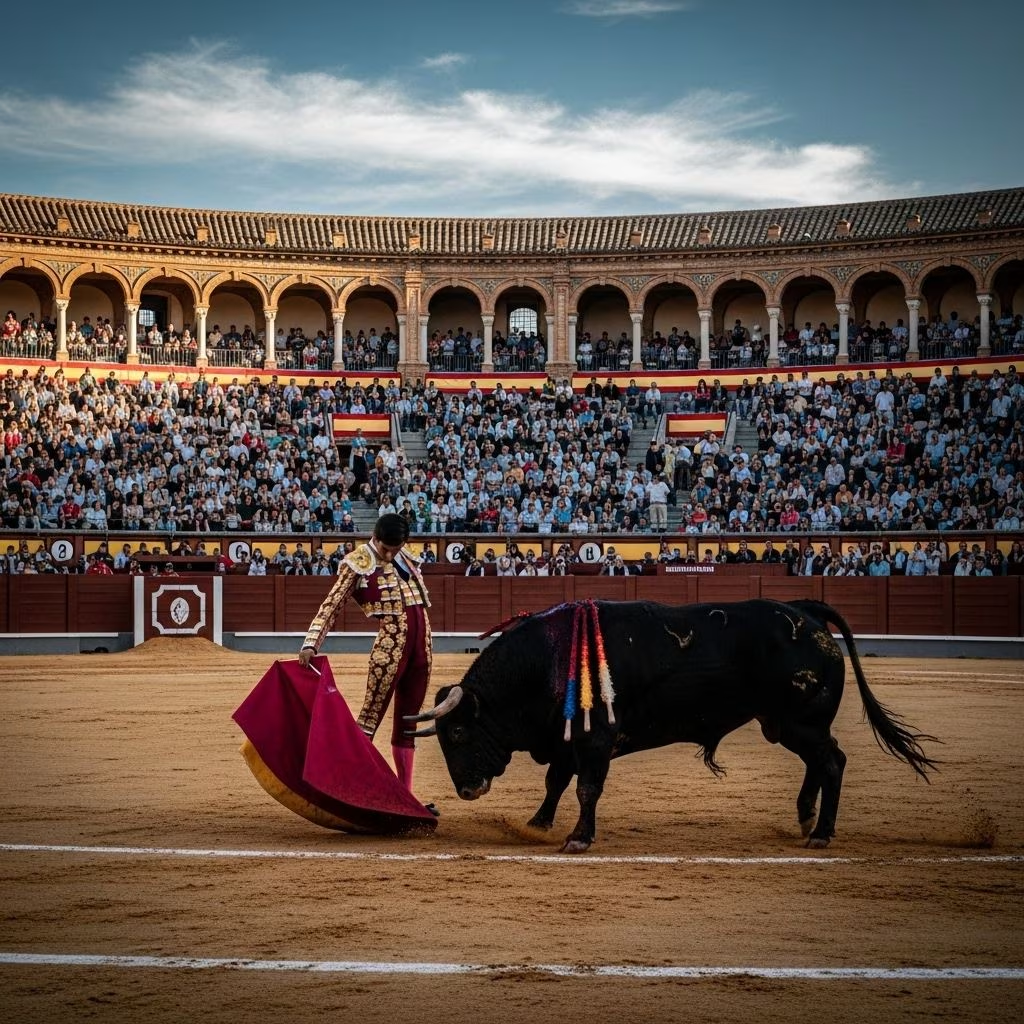
Packed trains hum towards Madrid’s legendary Plaza de Toros, the largest and most prominent bullring in Spain. As you ascend the subway escalator with the evening crowd, there’s an electricity in the air—a sense of anticipation shared by aficionados, families, and curious travelers alike.
To attend a bullfight in Madrid is not merely to watch a sporting event—it is to witness a spectacle that connects centuries of Spanish history, ritual, and debate. From the ornate ticket lines and bustling vendors to the grand parade in the ring, every detail is a carefully choreographed component of an experience Madrid has refined into an art form.
The Bullfight Season: When and What to Expect
Bullfighting in Madrid typically runs from Easter through October, with the most significant events held on Sunday evenings. While the full-scale, high-drama fights (corridas de toros) featuring established matadors are the main draw, summer often brings novilladas—smaller events with younger bulls and teenage novice bullfighters. These fights are both financially accessible and serve as crucial proving grounds for aspiring matadors.
Ticket prices and seating options vary considerably:
- Corridas de toros: Headline events starring leading matadors; most expensive and frequently sold out in advance.
- Novilladas: Cheaper tickets, featuring youthful fighters and less experienced bulls; ideal for first-time visitors.
As the stadium fills, rituals unfold: vendors hawk pistachios and sunflower seeds instead of peanuts and crackerjack, and a ramshackle band—often led by an enthusiastic cymbal player—strikes up a relentless rhythm to set the mood.
From Baseball Game to Medieval Theater: The Atmosphere
The spectacle bears similarities to going to a major sports event, but the air is charged with a unique tension and vibrancy all its own. At the Plaza de Toros, traditions and roles are on full display:
- Locals—seasoned men scrutinize the action, women rhythmically flutter their fans, both ready to shout ‘¡Olé!’ when the choreography in the sand demands it.
- Tourists—often distinguishable by camera flashes and wide eyes, navigate the etiquette of when and how to show appreciation or dismay.
Madrid’s bullrings pack in thousands of spectators, but despite media portrayals, most of the crowd remains local—passionate supporters and generations of families upholding a tradition that is deeply rooted in Spanish society.
Conversations around you bounce from light-hearted banter about a matador’s flair to whispers questioning the ethics of the art. For even within Spain, the question of bullfighting’s place in modern culture is hotly contested.
The Structure of a Bullfight: Ritual and Drama
Each bullfight typically consists of six separate bouts, each starring one bull and one matador. The action is divided into three distinct arcs called tercios, or thirds:
- First tercio – The Testing: The bull charges into the arena, wild and bewildered. Capes flash as assistants (“banderilleros”), matadors, and picadors on horseback test its strength and aggression. The goal: reveal the animal’s nature.
- Second tercio – The Banderillas: The banderilleros attempt to plant brightly colored, barbed sticks (“banderillas”) into the bull’s shoulders, further weakening and angering it while demonstrating their own agility.
- Third tercio – The Kill: The grand matador takes center stage, performing a tightly rehearsed series of passes with his cape, demonstrating courage and control. The finale arrives with the matador attempting a precise and honor-bound kill, aiming to finish the bull swiftly and cleanly with his sword.
The Key Players in the Arena
- Matador: Both artist and athlete, the matador is the center of attention—respected, sometimes adored, and measured by their bravery and skill.
- Banderilleros: Colorfully suited assistants who take great risks driving barbed sticks into the bull during the second act.
- Picadors: Horse-mounted lancers whose pricks weaken the bull, testing its strength and contributing to the dramatic sequence.
- The Bull: Not just an adversary but the ultimate symbol of natural power, bred for aggression, speed, and spectacle.
The Audience: Rituals, Responses, and Atmosphere
The audience brings the event to life—they wave white handkerchiefs in approval, shout praises or curses, and collectively judge the matador’s performance with generations of expertise. Some moments of high artistry are answered with synchronized shouts of “¡Olé!” while a failed or botched kill can provoke boos or pointed silence.
The bullfight is also a social gathering: families, old friends, and local clubs gather year after year in the same seats—bronzed by decades under the Spanish sun.
Bullfighting’s Artistic Defenders and Critics
To its defenders, bullfighting is seen as an art form—an aesthetically charged contest of courage, grace, and tradition. It is not the violence, but the ceremony, symbolism, and risk that matter most.
As one Madrid aficionado describes it:
“It is an art. Bull fighting is an art. It’s not about the cruelty, it’s just an art, and it’s a whole aesthetic. You’re fighting against an animal that is 500 or 600 kilos and there is this guy right in front of him with this cape and sword. And he is brave enough, and he’s wearing this suit and people are so supportive of him—they want to see him do well.”
Some matadors have become national heroes, immortalized in stories and photographs. Hemingway, the famed American writer, was deeply moved by the pageantry and existential drama of bullfighting, chronicling its highs and lows. Icons like El Cordobés drew crowds of celebrities and statesmen—including Hemingway and Franco—to witness their legendary duels in the ring.
The Brutality and Controversy: A Divided Tradition
Despite—or because of—its tradition and pageantry, bullfighting remains deeply controversial. Critics inside and outside Spain often denounce it as cruel and outdated.
- Animal rights advocates decry the suffering of the animal in a contest where the odds are heavily stacked against the bull.
- Modern Spaniards are divided; while many revere the spectacle as living heritage, an increasing portion question its place in a changing society.
The debate flares most fiercely during tourist season. While local aficionados argue that most attendees are from the community—and that tourists are a small minority—there’s acknowledgment that the spectacle would struggle to survive without some level of outside patronage.
Regulations have begun to change in parts of Spain: In contemporary times, some regions have outlawed bullfighting entirely, or pushed for reforms to reduce its most violent aspects. Yet in Madrid, the tradition continues much as it has for generations.
Bullfighting’s Broader Cultural Imprint
Whether or not you enter the ring, bullfighting leaves its mark all across Madrid’s cultural landscape. After the spectacle, aficionados and casual fans often decamp to nearby bull bars—crowded, lively establishments adorned with old posters, photographs, and mounted bull heads. Here, debates about style, technique, and morality flow as freely as the local wine.
Bullfighting also surfaces in art and literature, from passionate stories by Ernest Hemingway to vibrant paintings and posters. For better or worse, the spectacle remains entwined with the image and identity of Spain’s capital.
Bullfighting Etiquette for Visitors
- Dress Respectfully: While there’s no strict formal code, locals tend to dress up for the event; avoid shorts and tank tops.
- Observe the Rituals: Listen and watch before shouting or clapping—follow the crowd’s cues.
- Decide for Yourself: Attending is entirely voluntary. Love it or loathe it, to witness a Madrid bullfight is to glimpse a passionate, polarized dimension of Spanish cultural life.
Quick Comparison: Spanish vs. Portuguese Bullfights
| Aspect | Spanish Bullfighting | Portuguese Bullfighting |
|---|---|---|
| Kill occurs in arena? | Yes, by the matador, in the ring’s final act | No, the bull is not killed in public; usually slaughtered afterward |
| Number of matadors | Typically three, each facing two bulls | Usually one main cavaleiro (equestrian) with helpers |
| Main performer | Matador (on foot) | Cavaleiro (on horseback) |
| Audience composition | Primarily local, some tourists | Primarily local; less tourist-oriented |
Frequently Asked Questions (FAQs)
Q: When and where is the best time to see a bullfight in Madrid?
A: The main bullfighting season stretches from Easter to October. Most major events are held on Sunday evenings at Madrid’s Plaza de Toros.
Q: Are most spectators locals or tourists?
A: Despite popular belief, most of the crowd remains local; tourists comprise a small but visible minority.
Q: Is it okay to leave the bullfight early if I feel uncomfortable?
A: Absolutely. Many first-time attendees watch one or two bouts and leave if the spectacle proves too intense.
Q: Why do some people see bullfighting as art?
A: Bullfighting’s defenders point to the stylized movements, deep symbolism, and ritual choreography—viewing it as a test of human courage and grace, rather than mere violence.
Q: How do animal rights activists view bullfighting?
A: Most animal rights advocates consider it cruel and outdated due to the pain and death inflicted on the animal during the spectacle.
In Summary: Madrid’s Bullfighting—A Tradition Under the Spotlight
Madrid’s bullfights are as much about ritual and community as they are about spectacle and controversy. They embody a vibrant, passionate tradition that continues to inspire awe, pride, and protest in equal measure. Whether you view it as a profound art form or a practice whose time has passed, the bullfight remains an iconic, complex reflection of Spain itself.
References
- https://tncpnews.com/rick-steves-europe-madrid-two-bulls-is-plenty/
- https://blog.ricksteves.com/blog/two-bulls-is-plenty/
- https://www.youtube.com/watch?v=dbQI-PszCvQ
- https://www.ricksteves.com/watch-read-listen/video/tv-show/the-majesty-of-madrid
- https://classroom.ricksteves.com/videos/madrid-and-its-love-of-ham-c0382cb5-806b-4a0d-8ac7-4d11390ef791
- https://www.ricksteves.com/watch-read-listen/read/articles/madrid-bullfight
- https://community.ricksteves.com/travel-forum/spain/bullfighting-in-madrid
- https://www.theepochtimes.com/bright/rick-steves-europe-one-great-day-in-madrid-5766998
- https://blog.ricksteves.com/blog/bullfighting/