Brussels: The Would-Be Capital of Europe
Brussels, with its unique blend of cosmopolitan flair, centuries-old history, and whimsical character, stands as Europe’s unofficial capital. Whether you’re drawn by its pivotal role in international politics, its spectacular art and architecture, or its reputation for good living, this city offers a trove of experiences that reflect the ambitions and contradictions at the heart of today’s Europe.
The Political and Cultural Heart of Europe
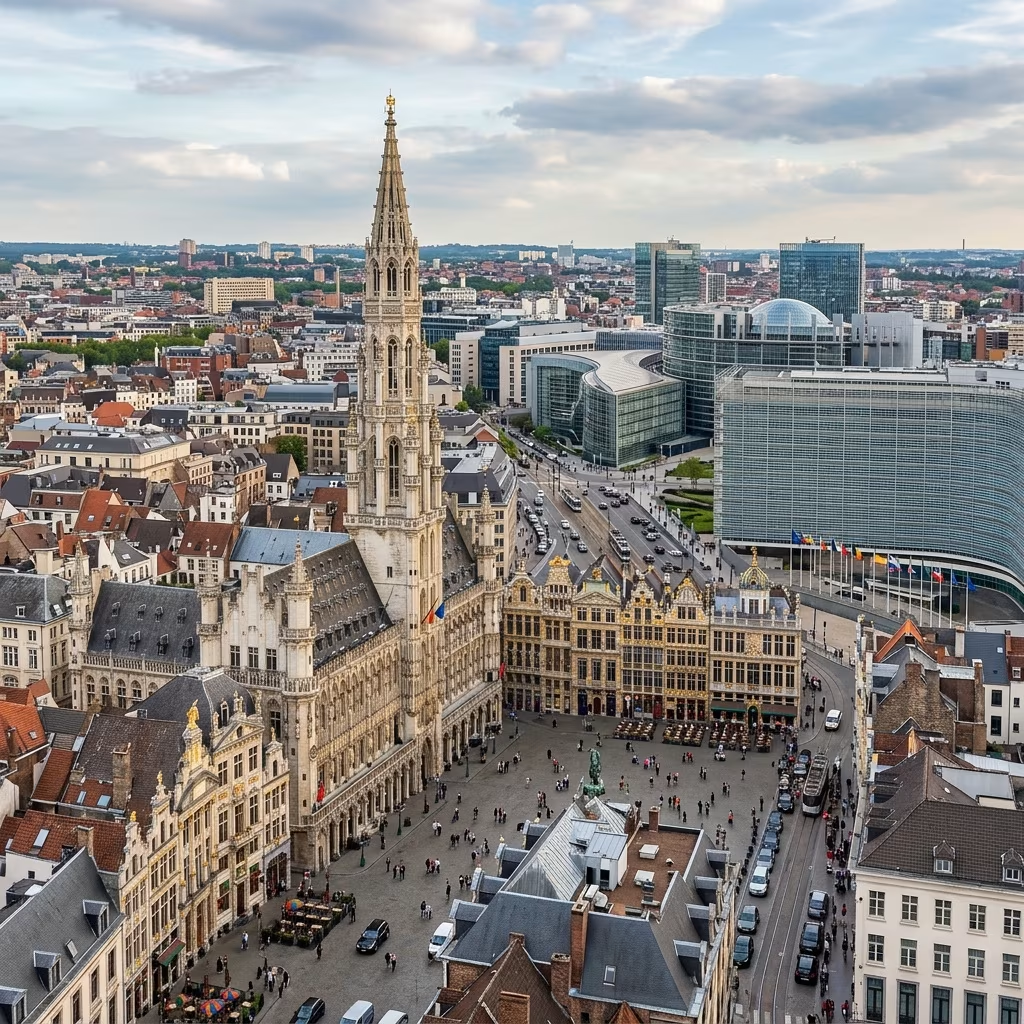
Once a medieval crossroads, Brussels now claims a starring role on the global stage. With a population exceeding 1.2 million, it’s not only the capital of Belgium but also houses the headquarters of NATO and serves as the political nerve center of the European Union.
- Home to both the European Parliament and the European Commission.
- Location of NATO’s main offices, underlining Brussels’ strategic importance.
- Proudly multicultural, its identity is shaped by a mix of French and Flemish influences, as well as residents from around the world.
Yet, Brussels balances its serious political clout with a playful spirit, evident in its obsession with comic strips, surrealist art, and an equally legendary scene for food and drink.
The Grand Place: Brussels’ Beating Heart
The Grand Place, known locally as La Grand Place, forms the historic and geographic center of Brussels. This majestic square, framed by ornate guildhalls and the spired Town Hall, is consistently ranked among Europe’s most beautiful public spaces.
- Originally a bustling market in a small medieval village.
- Today, it’s a UNESCO World Heritage Site and the city’s main gathering spot for festivals, concerts, and the famous flower carpet event.
- Surrounded by chocolate shops, inviting cafés, and museums that are just steps away.
Each season, the Grand Place comes alive as proud Bruxellois and curious travelers soak in the atmosphere beneath the ornate facades, sampling local treats or sipping one of the country’s many renowned beers.
Brussels’ Museums: A Celebration of Art and Innovation
Brussels boasts an array of museums that stand as testaments to its heritage of creativity and intellectual curiosity. Art lovers can follow a trail that spans medieval masters, surrealists, and whimsical pop culture icons.
Royal Museums of Fine Arts of Belgium
- Houses Old Masters by Bruegel, Rubens, and van der Weyden.
- The Fin-de-Siècle Museum celebrates the late 19th and early 20th centuries, with Impressionist and Art Nouveau treasures.
The Magritte Museum
- Dedicated to the surrealist genius René Magritte, with over 250 works that challenge assumptions and provoke smiles.
- Home to the famous painting of a pipe labeled “Ceci n’est pas une pipe.”
Other Notable Museums
- BELvue Museum: Chronicles Belgium’s tumultuous history, royalty, and national identity.
- Autoworld: Features hundreds of historic cars from Europe and beyond.
- Military History Museum: Offers an immense collection of weaponry, uniforms, and aviation history.
- Fashion and Lace Museum: Showcases exquisite Brussels lace and embroidery heritage.
- Museum of Musical Instruments: Over 1,500 instruments, each with an audio tour to immerse visitors in the sounds of civilization.
The Atomium: Brussels’ Futuristic Landmark
Dominating the city’s skyline is the Atomium, a steel behemoth built for the 1958 World’s Fair. Imagined as an iron crystal magnified billions of times, its spheres and connecting tubes lead visitors on a space-age adventure.
- Each sphere houses interactive exhibits on science, design, and social innovation.
- The top sphere provides panoramic views of Brussels and beyond. For the adventurous, there are escalators linking each pod—and for the acrophobic, there are selfie spots on firm ground outside.
Comic Culture and Quirky Landmarks
The lighter side of Brussels shines in its comic strip culture and sense of humor. Caricature, irony, and playful rebellion are woven into the city’s identity.
- Manneken-Pis: The city’s impish mascot—an irreverent statue of a small, peeing boy—dates back centuries and embodies the local penchant for irreverence. The statue is often dressed in various costumes and celebrated with much fanfare.
- Belgian Comic Strip Center: A museum dedicated to legendary local characters, from The Smurfs and Tintin to Lucky Luke. Comic book murals also liven up dozens of city walls.
A Tapestry of Architecture
Architecturally, Brussels is an open-air museum that blends medieval, baroque, neoclassical, and striking Art Nouveau styles. Wandering its streets offers a crash course in European design evolution.
- St. Michael and St. Gudula Cathedral: A white-stone Gothic masterpiece where Belgian royals are married and interred.
- Art Nouveau treasures: Many buildings by Victor Horta, an Art Nouveau pioneer, are UNESCO World Heritage Sites.
- Elegant 19th-century arcades like the Galeries Royales Saint-Hubert shelter luxury shops, cafés, and theaters.
The Capital of Good Living: Food and Drink
Beneath Brussels’ political polish and artistic gravitas lies a city that relishes good food, memorable drinks, and slow pleasures. Its culinary scene reveres both humble street eats and refined gastronomy.
- Beer Culture: Brussels is a pilgrimage site for beer lovers. Hundreds of varieties—many from centuries-old monastic breweries—await at atmospheric pubs. Locals and tourists gather over trappist ales, fruity lambics, and rich dubbels.
- Mussels and Fries: The definitive Brussels meal, moules-frites, features plump mussels steamed with herbs, served in a steaming kettle with heaps of crispy fries on the side.
Pro tip: Don’t call them “French fries”—Belgians vie for having invented them and have certainly honed them to perfection. Expect generous portions, best eaten with tangy mayonnaise. - Chocolate: Artisanal chocolate shops abound, with melt-in-your-mouth pralines and truffles tantalizing visitors at every turn.
- Waffles: Brussels waffles are light, crispy, and often piled high with fruit, chocolate, or cream—a go-to snack for travelers and a point of local pride.
- Other treats: Crunchy waffles, steaming stews, and the occasional crunchy croquette can be found in nearly every neighborhood.
Hidden Gems and Surprises
Beyond the obvious grandeur, Brussels rewards curiosity. Step off the beaten path to discover quiet neighborhoods, innovative museums, and unexpected bits of greenery.
- AfricaMuseum: Located just outside Brussels, this museum explores Central African culture and natural history, as well as the legacy of Belgian colonial rule.
- Neighborhoods like Ixelles and Saint-Gilles invite exploration with their bohemian markets, multicultural eateries, and local designer boutiques.
- Expansive parks such as the Parc du Cinquantenaire offer peaceful retreats within the city’s urban core.
Brussels: City of Contrasts and Connections
Brussels’ ability to juggle its many identities—historic and modern, French and Flemish, buttoned-up and boisterous—gives it a sometimes confusing, always fascinating energy. Visitors sense both the weight of history and the push for progress as they walk its mosaic of neighborhoods.
| Aspect | Examples |
|---|---|
| Political Power | EU parliament, NATO, federal government |
| Artistic Legacy | Old Masters, Magritte, Art Nouveau |
| Culinary Scene | Mussels, fries, beer, waffles, chocolate |
| Comic & Quirk | Manneken-Pis, Comic Strip Center |
| Architectural Variety | Medieval, Baroque, Art Nouveau, Modernist |
Frequently Asked Questions (FAQs)
Q: What makes Brussels the “would-be capital” of Europe?
A: Brussels is home to key institutions of the European Union and NATO, making it the de facto political heart of modern Europe, even though no single city is officially designated as its capital.
Q: What are the must-see attractions in Brussels?
A: Highlights include the Grand Place, Magritte Museum, Royal Museums of Fine Arts, Manneken-Pis, Atomium, and the vibrant comic strip murals throughout the city.
Q: What foods should travelers try in Brussels?
A: Essential Brussels foods are mussels with fries (moules-frites), artisanal chocolates, light and crispy waffles, and a wide selection of Belgian beers.
Q: Is Brussels easy to explore for tourists?
A: Yes. The city is compact, well-organized, and public transport is convenient. Many attractions are within walking distance in the historic core.
Q: How does the city blend its French and Flemish roots?
A: Street names, cultural events, and cuisine reflect both French and Flemish traditions. English is also widely understood, and international influences are noticeable in restaurants and neighborhoods.
Conclusion: Brussels — Europe’s Open-Ended Capital
Brussels doesn’t fit any single mold. It’s a city forever in flux—where kings and bureaucrats, artists and brewers, old stones and glass towers commingle. Whether you arrive chasing history, politics, or simply a world-class meal, Brussels invites discovery, reflection, and, at its best, delight in life’s contrasts. Here, the future and the past are always in conversation, making Brussels not just the would-be capital of Europe, but a city that embodies the continent’s spirit itself.
References
- https://www.ricksteves.com/watch-read-listen/video/tv-show/belgium-bruges-and-brussels
- https://www.ricksteves.com/europe/belgium/brussels
- https://www.ricksteves.com/watch-read-listen/read/articles/brussels-one-of-europes-great-travel-secrets
- https://www.heraldnet.com/life/rick-steves-europe-politics-good-living-and-peeing-in-brussels/
- https://www.youtube.com/watch?v=m9xD-5K_f5Y
- https://www.youtube.com/watch?v=1fNov58IqrU
- https://community.ricksteves.com/travel-forum/belgium/brussels-for-a-day-and-a-stop-in-ghent
- https://community.ricksteves.com/travel-forum/belgium/is-a-stop-in-brussels-worth-it
- https://blog.ricksteves.com/cameron/2020/01/third-rate-towns