The Castles of Mad King Ludwig II: Bavaria’s Legendary Fairytale Palaces
Tourists flock to southern Bavaria for its romantic mountain scenery, charming villages, and—most of all—its extraordinary castles. Here in the borderlands between Bavaria and Austria, three royal residences embody history, extravagance, and mythical dreams. These castles, commissioned by King Ludwig II, are among Germany’s most iconic sights: Hohenschwangau, Ludwig’s boyhood home; Neuschwanstein, his grand and whimsical fairytale; and Linderhof, his most intimate retreat. Each palace reveals facets of Ludwig’s eccentric personality, his devotion to art and legend, and the cultural currents of 19th-century Bavaria.
King Ludwig II: Bavaria’s Romantic Visionary
Ascending the throne at just 18 years old in 1864, Ludwig II faced the constraints of a modern Bavaria—a constitutional monarchy with limited royal authority. Rather than battling political realities, Ludwig retreated into the world of Romantic literature, grand operas, and legendary heroes. He developed a close friendship with composer Richard Wagner, whose dramatic works shaped Ludwig’s imagination and architectural fantasies. Ludwig would come to be known as the “Mad” King, a misunderstood artist whose penchant for lavish castle building stirred controversy and eventually led to his untimely demise.
- Reigned: 1864–1886
- Passions: Romanticism, Wagnerian opera, medieval myths
- Legacy: Three world-famous castles symbolizing artistic dream over political power
Hohenschwangau: Ludwig’s Boyhood Castle
Hohenschwangau Castle sits at the foot of the mountains near Füssen, its historic yellow towers surrounded by alpine forests and shimmering lakes. Originally constructed in the 12th century, Hohenschwangau was left in ruins after the Napoleonic Wars. Ludwig’s father, King Maximilian II, lovingly rebuilt it in 1836—and it was here, amid painted halls and epic legends, that Ludwig spent his formative years.
Architectural and Artistic Features
- Romantic Decor: Elegant rooms adorned with murals depicting Germanic legends and medieval myths
- Authentic Atmosphere: More intimate and “lived-in” than the neighboring Neuschwanstein, offering insight into 19th-century royal life
- Ludwig’s Telescope: Young Ludwig watched the construction of Neuschwanstein from his bedroom window using a telescope—a testament to his lifelong fascination with castles and fantasy
As you wander the halls of Hohenschwangau, you encounter traces of Ludwig’s childhood—his bedroom, reading chair, and the epic stories that fueled his imagination. The castle’s banquet hall, painted with larger-than-life heroes, reflects a nation searching for identity: post-Napoleonic Germany, newly united in 1871, took solace in legendary roots and historic grandeur. Hohenschwangau offers a rare chance to experience Ludwig’s private world, making it a rewarding destination for those seeking more than just crowds and postcard views.
Highlights:
- Less crowded than Neuschwanstein, allowing a relaxed visit
- Immersive historic interiors
- Panoramic views of Bavarian lakes and forests
Neuschwanstein: Ludwig’s Fairytale Dream
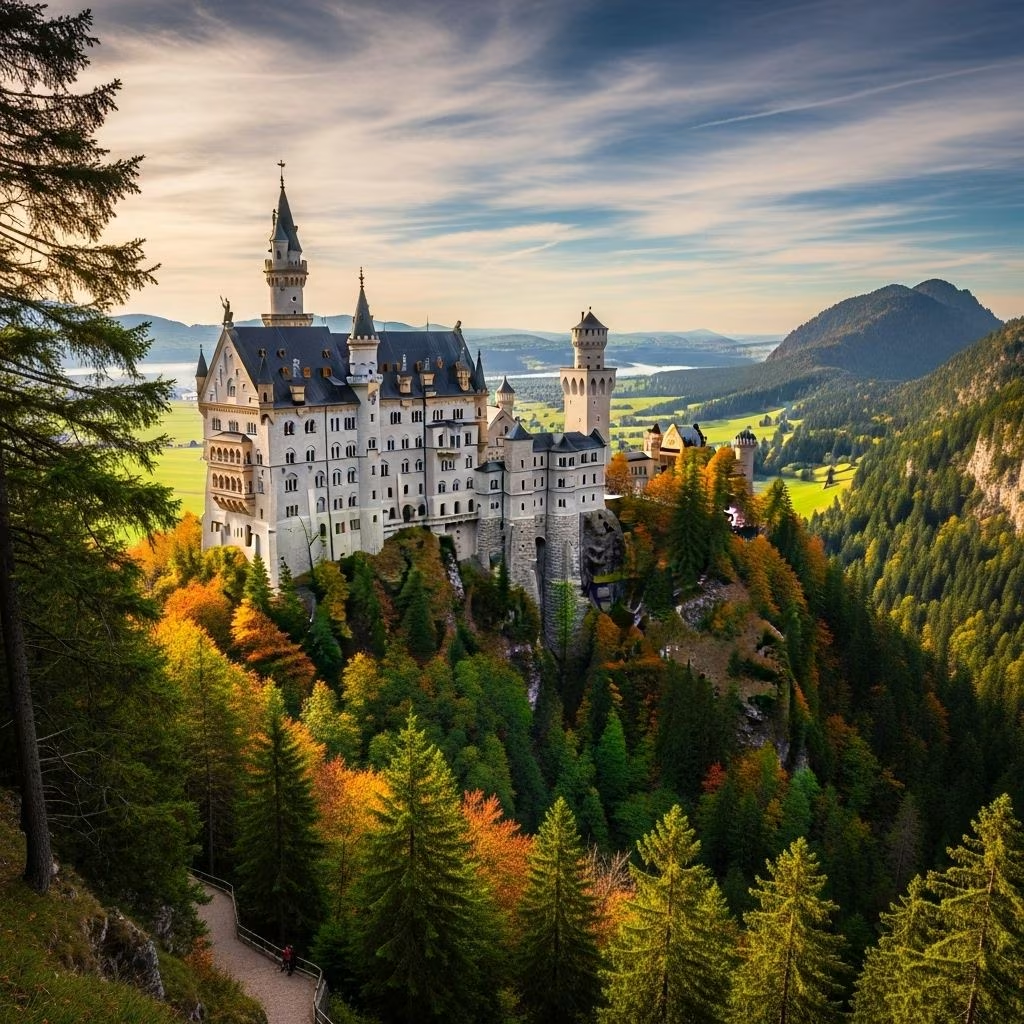
If Hohenschwangau is the castle of Ludwig’s youth, Neuschwanstein is the castle of his dreams. Perched dramatically on a forested ridge above the village, its white limestone turrets and fanciful silhouette appear lifted straight from a fairy tale. Built in the late 19th century (started in 1869), Neuschwanstein was conceived not for defense but for spectacle. Its medieval exterior masks a relatively modern construction—indeed, Neuschwanstein is just as old as the Eiffel Tower.
| Attribute | Details |
|---|---|
| Location | Above Hohenschwangau, near Bavaria’s southern border |
| Style | Neo-Romanesque with Romantic, Wagnerian themes |
| Years Built | Started in 1869; unfinished at Ludwig’s death in 1886 |
| Purpose | Fantasy retreat, homage to Wagner’s operas |
| Notable Features | Throne room inspired by Byzantine architecture; murals of knights and maidens; views over Bavarian Alps |
Inside Neuschwanstein: Wagnerian Fantasy
The castle’s interior mirrors the mythic drama of Ludwig’s mind. Corridors and halls are covered in painted scenes from Wagner’s operas: knights in gleaming armor, damsels in distress, dragons, and saints. The throne room, itself designed as a Byzantine basilica, features a one-ton chandelier shaped like a golden crown. Ludwig dreamed of sitting among saints and historic kings, his own ephemeral court elevated by legend.
- Byzantine Influence: Religious iconography and Eastern-inspired design elements
- Unparalleled Views: The castle towers above green valleys, shimmering lakes, and craggy peaks—the quintessential Alpine landscape
- Wagnerian Motifs: Every room references the epic tales that defined Ludwig’s cultural world
Visitor Information
- Guided tours only; tickets sell out early—online reservations are essential
- Castle is accessible via a steep hike (shuttle options available in summer)
- Photography is not allowed inside
The Fate of Neuschwanstein and Ludwig II
Ludwig’s extravagant ambitions at Neuschwanstein came at great financial and political cost. His refusal to curtail spending drew criticism from the Bavarian government. Declared mentally unfit to rule, Ludwig was removed from power in June 1886. Just two days later, his body was found in Lake Starnberg under mysterious circumstances—a possible suicide, though many suspect foul play.
The castle itself was never fully completed. Yet within weeks of Ludwig’s funeral, crowds arrived to tour the grand halls he had left behind. Today, Neuschwanstein is Germany’s most-visited castle, immortalized as the inspiration for Disney’s Sleeping Beauty Castle and countless stories worldwide.
- Annual visitors: Over 1.5 million
- Economic impact: Bavaria now profits immensely from Ludwig’s once-controversial building spree
Linderhof: Ludwig’s Royal Retreat
A world apart from the grand crowds of Neuschwanstein, Linderhof Palace nestles quietly in the forested valleys near Oberammergau—about 45 minutes’ drive from Hohenschwangau. This relatively small but exquisitely detailed residence was Ludwig’s favorite and most personal escape. Surrounded by formal Italian-style gardens, fountains, and sculpture, Linderhof represents the artistic zenith of Ludwig’s castle-building endeavors.
Unique Features of Linderhof
- Exquisite Interiors: Gilded stuccowork, sparkling mirrors, and lavish porcelain details
- Gardens: Meticulously landscaped grounds inspired by Versailles and Italian renaissance
- Technical Marvels: Ludwig’s “magical” dining table—set and lifted from the kitchen below so he could dine alone
- Seclusion: Designed for Ludwig’s solitary life as a “royal hermit”
Ludwig spent much of his last eight years at Linderhof, seeking refuge from the pressures of monarchy and the prying eyes of his government. Here, his artistic ambitions and loneliness reached their most extravagant and poignant expression. The palace is a manageable size, making visits uncrowded and immersive. Its combination of fantasy and comfort makes it a favorite among castle fans.
Bavaria’s Castles Today: Tourism and Legacy
Today, Ludwig’s castles anchor international tourism in Bavaria. Millions visit each year to marvel at Neuschwanstein’s drama, Hohenschwangau’s intimacy, and Linderhof’s splendor. The castles have become emblems of Bavarian culture and European romanticism, their legends entwined with national identity.
- Neuschwanstein: Most visited; iconic worldwide
- Hohenschwangau: Historic, immersive, family-friendly
- Linderhof: Artistic, smaller crowds, best for palace enthusiasts
Visiting involves careful planning: tickets are often limited, and guided tours are required. For those willing to seek out Bavarian magic away from the crowds, the neighboring Austrian Tirol offers relaxing villages and serene mountain chalets—providing a peaceful contrast to Ludwig’s grand creations.
Table: Comparison of Ludwig II’s Castles
| Castle | Year Built | Main Features | Visitor Experience |
|---|---|---|---|
| Hohenschwangau | Rebuilt 1836 | Romantic murals, historic rooms, Ludwig’s childhood home | Quieter, informative, family-friendly |
| Neuschwanstein | Started 1869 | Fairytale architecture, Wagnerian themes, unfinished | Crowded, dramatic, guided tours only |
| Linderhof | Built 1868–1874 | Lavish interiors, Italian gardens, technical marvels | Smaller, artistic, immersive |
Frequently Asked Questions (FAQ)
Q: Why is Ludwig II called the “Mad” King?
A: Ludwig II earned the nickname “Mad King” due to his excessive spending on extravagant castle projects and his increasingly eccentric, reclusive lifestyle. His devotion to art and fantasy over political duties fueled contemporary accusations of insanity. However, many consider him a misunderstood artistic visionary.
Q: Are the castles authentic medieval residences?
A: No. While their exteriors mimic medieval fortresses, Ludwig’s castles were built in the 19th century using modern techniques. Their designs are inspired by Romantic ideals rather than defensive needs.
Q: Which castle should visitors prioritize?
A: Most travelers visit Neuschwanstein for its iconic appearance, but those interested in history and quieter surroundings often prefer Hohenschwangau or Linderhof.
Q: Do the castles require advance booking?
A: Yes. All three castles offer tours only by appointment; Neuschwanstein tickets often sell out early, so online reservations are strongly recommended.
Q: What is Ludwig II’s connection to Richard Wagner?
A: Ludwig was a lifelong patron and friend of composer Richard Wagner. Wagnerian operas inspired the décor and artistic motifs of Ludwig’s castles, especially Neuschwanstein.
Tips for Exploring Bavaria’s Castles
- Arrive early to avoid crowds, especially at Neuschwanstein
- Book tickets in advance—same-day purchases often unavailable
- Allow time to explore nearby villages (Füssen, Oberammergau, Pinswang)
- Take guided tours for rich historical context and storytelling
Conclusion: Living the Legend in Bavaria
The castles of King Ludwig II fuse myth, art, and history into spectacular monuments that define Bavaria’s landscape and allure. What once seemed extravagant folly has become the region’s most powerful asset—inviting dreamers, romantics, and families to walk the hallowed halls where legends come to life. Whether gazing through Ludwig’s childhood telescope, standing in Neuschwanstein’s throne room, or wandering the gardens at Linderhof, visitors discover that the mad king’s dreams remain very much alive in the heart of Europe.
References
- https://www.ricksteves.com/watch-read-listen/read/articles/castles-of-mad-king-ludwig-ii
- https://blog.ricksteves.com/blog/three-castles-eltz-rheinfels-and-neuschwanstein/
- https://www.ricksteves.com/watch-read-listen/video/tv-show/munich
- https://www.heraldnet.com/life/rick-steves-europe-marveling-at-the-castles-of-boyhood-dreams/
- https://blog.ricksteves.com/blog/mad-king-ludwigs-castle/
- https://www.sfgate.com/travel/article/The-castles-of-mad-King-Ludwig-II-2306543.php
- https://www.ricksteves.com/watch-read-listen/read/articles/fuessen-oberammergau-castles-bavaria-germany
- https://community.ricksteves.com/travel-forum/germany/ludwigs-castles-the-zugspitze