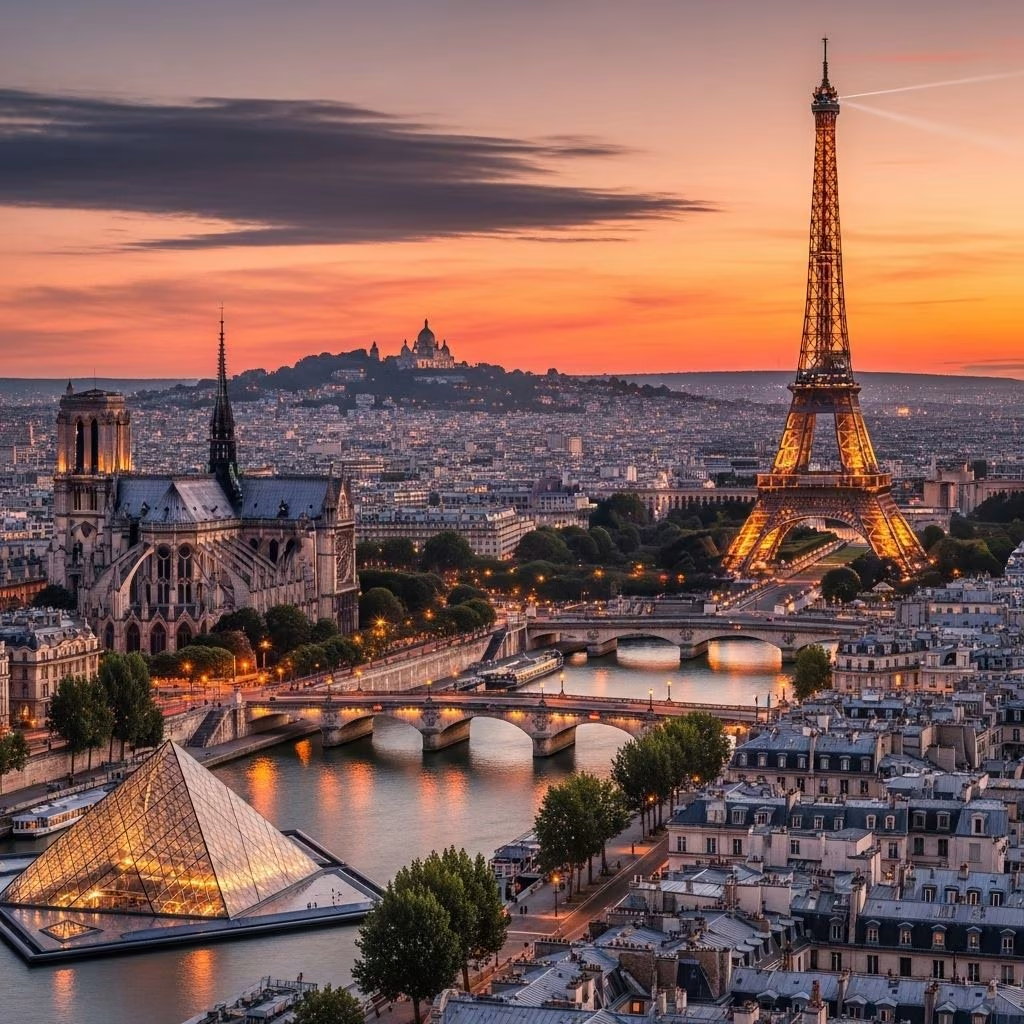
Highlights of Paris: From Eiffel Tower to Artistic Delights
Paris, the sparkling capital of Europe, blends grand monuments with intimate art, layered history, and a culture that’s at once vibrant and refined. With its iconic skyline, storied museums, atmospheric neighborhoods, and culinary wonders, Paris is a city best experienced on foot (or by a quick Métro ride), where centuries—medieval, revolutionary, bohemian, and modern—intertwine along the Seine. This guide will take you through the highlights, exploring timeless icons, historic districts, and the cuisine and lifestyle that make Paris the city of light.
A City Defined by the Seine
The Seine River is the lifeblood of Paris, elegantly splitting the city into the Right and Left Banks. At its center, two natural islands, Île de la Cité and Île Saint-Louis, cradle some of the city’s oldest neighborhoods and most celebrated landmarks.
- Right Bank: Traditionally more commercial, hosting famous boulevards such as Champs-Élysées and grand plazas.
- Left Bank: Known for its intellectual, literary, and artistic spirit, home to the Latin Quarter and storied cafés.
- Île de la Cité: The heart of medieval Paris, where Notre-Dame Cathedral stands.
The Eiffel Tower: Ironwork of the Industrial Age
No symbol is more synonymous with Paris than the Eiffel Tower. Rising over 1,000 feet, this bold lattice of iron was completed in 1889 for the World’s Fair. Though controversial at first, it quickly became the city’s beacon, admired for both its engineering and panoramic views.
- Ascending the Tower: Take the elevator to one of the tower’s observation decks for sweeping vistas over the Seine, the city’s symmetrical boulevards, and distant monuments.
- Champs de Mars: The leafy lawns at the tower’s base are perfect for a picnic or watching the tower sparkle at night.
Notre-Dame Cathedral: Medieval Majesty
The Notre-Dame Cathedral, with its gracefully soaring stonework and stunning stained glass, is an architectural masterpiece at the city’s center. Despite damage from the tragic 2019 fire, its presence is undiminished. Builders laid its first stones in 1163, and for centuries it has watched over Paris.
- Gothic Grandeur: Admire the flying buttresses, sculpted portals, rose windows, and forest of spires.
- The Towers: When accessible, scaling the towers offers memorable views and a close-up of the cathedral’s legendary gargoyles.
Montmartre: The Bohemian Hill
Perched on the city’s highest hill, Montmartre exudes rustic charm and artistic legacy. Wind through its cobbled lanes once frequented by Renoir, Picasso, and Toulouse-Lautrec, and pause for panoramic views from the steps of the Sacré-Cœur Basilica.
- Sacré-Cœur Basilica: Gleaming white atop Montmartre, this church is a place of pilgrimage, prayer, and exceptional city vistas.
- Artists’ Squares: Place du Tertre remains lively with portrait artists and bustling cafés, tapping into Paris’ bohemian soul.
- Historical Cafés: Sip coffee where Impressionists swapped sketches and stories.
The Latin Quarter: Heart of Learning and Life
The Latin Quarter, on the Left Bank, delights with its intellectual energy, student life, and Roman roots. Home to the Sorbonne University, this ancient neighborhood is a patchwork of bookshops, lively bistros, and history-rich lanes.
- Medieval Lanes: Lose yourself among narrow streets echoing with the footsteps of generations of writers, poets, and philosophers.
- Bistros and Bookstores: The neighborhood’s constant buzz is fueled by youthful conversation spilling out of cafés and quaint shops crammed with volumes both new and old.
Place de la Concorde and the Echoes of Revolution
At the edge of the Champs-Élysées, the grand Place de la Concorde is more than a majestic square; it’s a site of seismic events in French history. The guillotine once stood here, and it was the stage for the most dramatic moments of the French Revolution. Today, an Egyptian obelisk presides over elegant fountains and statues—a reminder of France’s turbulent path to modernity.
- Revolutionary Landmarks: Consider the potent symbolism of the square, from its role in ending monarchy to today’s traffic circle lined by monumental buildings.
- Obelisk: Gifted from Egypt in the 19th century, the obelisk is covered with ancient hieroglyphics and marks the square’s center.
Champs-Élysées: Parisian Pageantry
The Champs-Élysées is the most prestigious boulevard in Paris, a broad corridor linking Place de la Concorde to the Arc de Triomphe. Lined with shops, theaters, and historic cafés, it is the setting for celebrations from Bastille Day parades to finish-line drama during the Tour de France.
- Lively Retail and Dining: Find flagship stores and classic brasseries amid the bustle.
- Arc de Triomphe: At the western end, climb the arch for a radiant view over the grand boulevards radiating from its circle.
The Orsay Museum: Art from Realism to Impressionism
For art lovers, the Orsay Museum is a revelation. Housed in a stunning Beaux-Arts railway station, it contains Europe’s finest collection of Impressionist and Post-Impressionist paintings.
- Highlights: Masterpieces by Monet, Manet, Degas, Van Gogh, Renoir, and Cézanne illuminate French creativity from 1848 to 1914.
- Dreamy Interiors: The lofty iron-and-glass architecture rivals the collection, merging utility and artistry.
Historic Depths: Carnavalet Museum and the Catacombs
Paris is as much about its layers as its skyline. The Carnavalet Museum (now beautifully renovated) dives into the fascinating story of Paris, chronicling its evolution from ancient times through revolutions and belle époque.
The Catacombs, meanwhile, offer a chilling yet captivating look at the city from the underground, where millions of skeletal remains were relocated in the 18th century to relieve overflowing cemeteries. These tunnels are an evocative, somber reminder of the cycles of life within the metropolis.
- Parisian Past: At Carnavalet, stroll through rooms brought to life by artifacts, furniture, and immersive displays.
- Catacombs Tour: Follow a path of bones and memorials in Paris’ labyrinthine underworld.
Jacquemart-André Museum: Aristocratic Paris
Set in a sumptuous 19th-century mansion, the Jacquemart-André Museum offers glimpses into the taste and lifestyle of Parisian nobility. The collection is a treasure trove of Old Masters paintings, period furniture, and decorative arts. Unlike the city’s crowded mega-museums, Jacquemart-André provides an intimate art experience, making it a favorite of connoisseurs and quiet seekers alike.
- Intimate Galleries: Wander rooms filled with Renaissance canvases and Sèvres porcelain, feeling as if you’ve stepped into a well-heeled family’s private salon.
Savoring Paris: French Culinary Traditions
No Paris journey is complete without savoring its legendary cuisine. The city is punctuated by bakeries turning out golden baguettes and buttery croissants, bistros serving signature dishes, and masterful cheese shops and chocolate purveyors. Rick Steves highlights some cherished classics:
- Escargot: Snails cooked in garlicky herb butter—a symbol of French culinary boldness.
- Cheese and Charcuterie: Sample a variety of artisanal cheeses with crusty bread and cured meats.
- Crème Brûlée: Break through caramelized sugar to a silken custard beneath; a simple but luxurious finale to any meal.
Tip: Join a Parisian friend for dinner as Rick does, and discover the slow, convivial rhythm of French dining—where each course and conversation is savored.
The Essentials: Seeing Paris in a Few Days
While Paris takes a lifetime to discover, you can experience its essentials in a matter of days with a bit of planning. Rick Steves’ advice emphasizes proximity and variety:
- Cluster Visits: Group sights by neighborhood for easy walking routes (Eiffel Tower, Latin Quarter, Montmartre, Museums Loop).
- Use the Métro: Paris’ compact center and efficient transit make city-hopping a breeze.
- Slow Down and Observe: Don’t try to see it all; pause in a park, linger in a market, or watch the world from a café terrace.
Table: Parisian Highlights At-a-Glance
| Attraction | Era | Highlights |
|---|---|---|
| Eiffel Tower | Industrial Age (1889) | Iconic architecture, city views |
| Notre-Dame Cathedral | Medieval (12th–14th c.) | Gothic design, stained glass |
| Montmartre & Sacré-Cœur | 19th century | Art legacy, panoramic views |
| Latin Quarter | Ancient–medieval | Intellectual hub, bookshops |
| Place de la Concorde | 18th–19th century | Revolutionary history |
| Champs-Élysées & Arc de Triomphe | 19th century | Prestige, grand vistas |
| Orsay Museum | 19th century | Impressionist art |
| Carnavalet Museum & Catacombs | Various | Civic history, urban lore |
| Jacquemart-André Museum | 19th century | Private art collection |
Frequently Asked Questions (FAQs)
Q: What are the most iconic sights for a first-time visitor to Paris?
A: The quintessential highlights include the Eiffel Tower, Notre-Dame Cathedral, Montmartre and the Sacré-Cœur, the Champs-Élysées and Arc de Triomphe, and world-class museums such as the Orsay and Jacquemart-André.
Q: How can I experience authentic Parisian cuisine?
A: Enjoy local bistros and brasseries for dishes like escargot, cheese platters, and crème brûlée. Paris’ open-air markets and bakeries (boulangeries) are also excellent places to sample and savor fresh flavors.
Q: What’s the best way to get around Paris?
A: The city’s historic highlights are close together and easily explored by foot; the Paris Métro is fast, safe, and covers all major sights.
Q: Which Parisian neighborhood offers the best artistic atmosphere?
A: Montmartre remains the historic heart of Paris’ art scene, still alive with studios, galleries, and sidewalk painters on the Place du Tertre.
Q: Is it possible to see Paris’ essentials in a single day?
A: It’s ambitious, but feasible to see key monuments and neighborhoods (Eiffel Tower, Notre-Dame, one major museum, Montmartre) with careful planning and prioritization. Ideally, spend at least three days to savor the atmosphere and artistry fully.
Q: What lesser-known museums should I consider?
A: The Carnavalet Museum and Jacquemart-André Museum offer intimate, thematic collections and fewer crowds, revealing unique aspects of Parisian history and aesthetics.
Top Tips for an Inspiring Paris Visit
- Plan for variety in your sightseeing—blend big icons, neighborhood strolls, and art stops.
- Don’t skip the culinary scene; markets and modest bistros can provide unforgettable meals.
- Arrive early or late at top attractions to beat crowds and enjoy serene moments.
- Use the Seine riverbanks and city parks as places to rest and to enjoy people-watching.
Paris invites you to climb its heights, wander its storied lanes, and immerse yourself in a city both timeless and ever-changing. Whether marveling at engineering feats, revolutionary history, or kitchen artistry, each corner of Paris rewards curiosity and savoring life’s pleasures—one step, sight, flavor, and moment at a time.
References
- https://www.youtube.com/watch?v=xXnW4pD0OrA
- https://www.youtube.com/watch?v=NIC0DXY-swE
- https://www.ricksteves.com/watch-read-listen/video/tv-show/highlights-of-paris
- https://www.ricksteves.com/europe/france/paris
- https://www.ricksteves.com/watch-read-listen/video/tv-show/paris-embracing-life-and-art
- https://www.youtube.com/watch?v=3P6M42aWo60
- https://www.ricksteves.com/watch-read-listen/video/paris-historic-walk
- https://www.youtube.com/playlist?list=PLAF8618AFFCFBCF3E
- https://community.ricksteves.com/travel-forum/france/best-way-to-see-standard-paris-highlights
- https://www.teacherspayteachers.com/Product/Viewing-Guide-for-Rick-Steves-Highlights-of-Paris-Video-NO-PREP-Easy-subbing-6494851