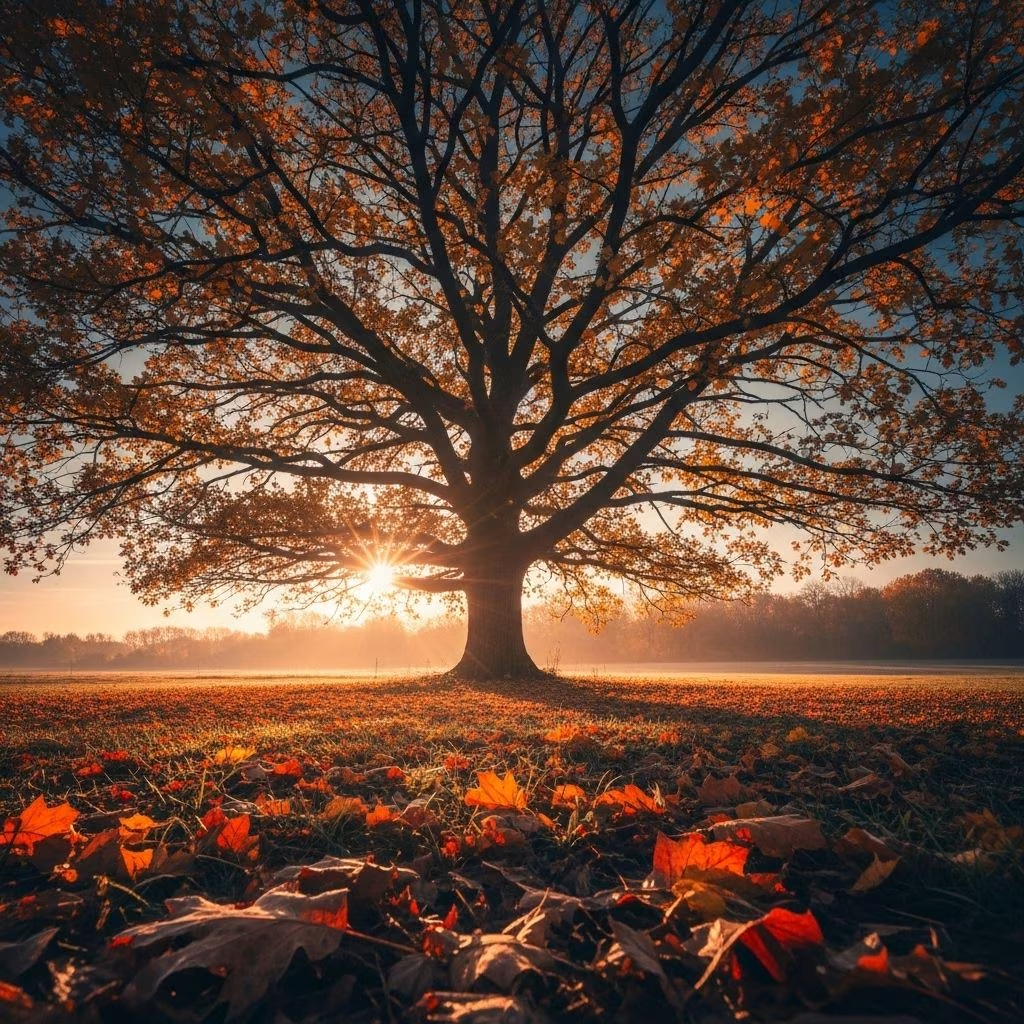
As summer draws to a close, crisp breezes, golden foliage, and the promise of pumpkin spice signal the arrival of autumn. But when does fall officially begin in 2025? More than just a date on the calendar, the start of fall is intimately tied to the autumnal equinox—a remarkable astronomical event that marks a shift in the balance of day and night across the globe. This article explores the timing, science, traditions, and cultural significance of the first day of fall and the equinox, along with how to celebrate this seasonal turning point.
When Is the First Day of Fall in 2025?
The first day of fall in 2025 is Monday, September 22. While many people anticipate cool weather or associate autumn’s arrival with changing leaves, the true start of the season is set by the autumn equinox. Each year, the equinox occurs around September 22 or 23 in the Northern Hemisphere. Exceptionally, it may fall on September 21 or 24, depending on subtle variations in Earth’s orbit and the way our calendar aligns with the Earth’s revolution around the sun.
Key facts about fall’s arrival:
- The equinox falls on Monday, September 22, 2025, at 2:19 p.m. EDT (11:19 a.m. PDT).
- The event is universal for all locations in the Northern Hemisphere; in the Southern Hemisphere, it’s the start of spring.
- The last equinox of the year, before the fall, is the spring equinox in March.
What is the Autumnal Equinox?
The autumnal equinox is the precise moment when the sun’s center crosses the celestial equator, resulting in nearly equal lengths of day and night across the globe. “Equinox” is derived from Latin—aequus (equal) and nox (night)—reflecting this balance.
During this astronomical event:
- The sun shines directly over the equator.
- Day and night are approximately—and only approximately—equal in length all over the world.
- Both the North and South Poles are illuminated at the same time.
- Earth’s axis tilts neither toward nor away from the sun, a balance achieved only twice a year: at the March and September equinoxes.
However, true equal day and night occur on a day known as the equilux, which typically falls a few days after the equinox due to atmospheric refraction and the precise definition of sunrise and sunset.
How is the Date of the Equinox Determined?
The timing of the equinox is determined by the Earth’s position in its orbit around the sun. As the planet makes its annual revolution, there are two moments (in March and September) when the sun’s apparent path—the ecliptic—intersects with the celestial equator. When this crossing occurs in September, we experience the autumnal equinox in the Northern Hemisphere.
The autumnal equinox doesn’t always fall on the same calendar day due to:
- Leap years and the Gregorian calendar’s adjustments.
- The Earth’s slightly elliptical orbit and axial tilt.
This careful celestial choreography means that while September 22 and 23 are most common, occasional fluctuations push the date to September 21 or 24.
Why Do We Have Seasons?
Seasons occur thanks to the axial tilt of the Earth (23.5 degrees) relative to the plane of its orbit. As Earth orbits the sun:
- In summer (Northern Hemisphere), the North Pole tilts toward the sun, giving longer days and more direct sunlight.
- After the autumnal equinox, the tilt causes the Northern Hemisphere to gradually receive less daylight, resulting in shorter days and cooler temperatures.
- The Southern Hemisphere experiences these effects in reverse: the September equinox marks the start of spring there.
What Happens at the Autumnal Equinox?
On or near the equinox, several interesting phenomena occur:
- Sunrise due east and sunset due west: On the day of the equinox, the sun rises in the exact east and sets in the exact west for most places on Earth.
- Roughly equal day and night: Most locations experience almost—but not perfectly—12 hours of day and night. A perfect balance is disrupted by atmospheric refraction and how sunrise/sunset are defined.
- Pole illumination: Both the North and South Poles are equally illuminated, marking a transition at the poles—after the equinox, the North Pole slides into darkness and the South Pole begins to see sunlight.
Celebrating the Start of Fall: Traditions and Activities
The autumnal equinox is celebrated across the world, often with harvest festivals or nature-based rituals:
- Harvest Festivals: Many cultures mark the abundance of the late summer and early fall harvest, giving thanks for a season’s crops.
- Modern Activities: Pumpkin patches, apple picking, corn mazes, and “leaf peeping” (seeking out the best fall colors) are beloved seasonal pastimes all across North America.
- Crafts & Decor: People decorate their homes with gourds, pumpkins, and autumnal hues. Halloween decorations often begin to appear in mid to late September.
Best Places for Fall Foliage:
- Hudson Valley, New York: Known for stunning fall leaves and scenic parks.
- Smoky Mountains: Leaf color change can be tracked each year on fall foliage prediction maps.
- Rocky Mountains: Early leaf changes occur by the equinox in states like Colorado, Montana, and Wyoming.
How Does the Equinox Affect Daylight?
| Date | Approximate Daylight | Notable Features |
|---|---|---|
| Sept 22, 2025 | ~12 hours (not exact) | Equinox: sun aligns with equator |
| Late September – Early October | Rapidly decreasing | Shorter days in N. Hemisphere |
| Dec 21, 2025 | ~ 9 hours (mid-latitudes USA) | Winter solstice, year’s shortest day |
After the autumnal equinox, days become noticeably shorter and nights grow longer until the winter solstice in December—the shortest day and longest night of the year.
Frequently Asked Questions About the First Day of Fall and the Equinox
Q: What defines the first day of fall?
A: The first day of fall is marked astronomically by the autumnal equinox, when the sun’s direct rays cross the Earth’s equator, creating nearly equal day and night lengths in both hemispheres.
Q: Does fall always start on the same date?
A: No, the date varies slightly each year—usually September 22 or 23, due to the Earth’s orbit and leap year corrections. Very rarely, it can fall on September 21 or 24.
Q: Why aren’t day and night exactly equal on the equinox?
A: Due to atmospheric refraction (which bends light over the horizon) and differences in how sunrise/sunset are defined, the daylight period is slightly longer than the night. The day of truly equal lengths, called the equilux, falls a few days after the equinox.
Q: What seasonal changes follow the autumnal equinox?
A: You’ll notice cooler temperatures, earlier sunsets, the changing color of leaves, animal migrations, and traditional autumn celebrations, from harvest festivals to Halloween preparations.
Q: What happens at the poles during the equinox?
A: At the North Pole, the autumnal equinox marks the descent into several months of darkness (polar night). At the South Pole, it heralds the return of daylight (polar day).
Q: When does winter officially begin?
A: The winter solstice, expected for 2025 on Sunday, December 21 at 10:03 a.m. ET, marks the shortest day and the official start of winter in the Northern Hemisphere.
Ways to Mark the First Day of Fall
The equinox is a special time to connect with nature and seasonal rhythms. Here are some favorite ways to embrace the season’s arrival:
- Gardening: Plant cold-hardy crops, bulbs, or pollinator habitats to enjoy fall’s unique growing season.
- Seasonal Eats: Indulge in apple cider, pies, and everything pumpkin spice.
- Decor: Adorn porches and tables with pumpkins, gourds, mums, and early Halloween decorations.
- Leaf Peeping: Visit nearby parks or take scenic drives to enjoy colorful foliage.
- Enjoy Outdoor Hikes: Cooler, less buggy weather makes this an ideal time for outdoor adventure.
- Cultural Rituals: Join local harvest festivals, autumn-themed fairs, or community gatherings.
Fun Facts about the Fall Equinox
- The word “equinox” comes from Latin, meaning “equal night.”
- Day and night are closest in duration at the equator; at higher latitudes, the difference is a bit larger.
- Egg balancing on the equinox is a myth—eggs (and other objects) can be balanced any day of the year with enough patience.
- The September equinox is called the “vernal equinox” in the Southern Hemisphere, where it signals spring’s arrival.
- Many ancient monuments—like Stonehenge and Chichen Itza—were built to mark the equinoxes.
Looking Ahead: The Next Seasonal Change
Following the autumnal equinox, daylight continues to diminish until the winter solstice. In 2025, winter officially starts on Sunday, December 21. After that, the days gradually begin to lengthen again, setting the rhythm for the return of spring.
Conclusion
The autumnal equinox is much more than a marker of seasonal change—it’s a celestial event with fascinating science, rich traditions, and an invitation to celebrate nature’s cycles. As you enjoy the first golden leaves and the first sip of apple cider, take a moment to appreciate the deeper rhythms that shape life on Earth. Happy fall, and may your first day of the season be as balanced as the equinox itself!
References
- https://www.goodmorningamerica.com/living/story/sept-22-autumnal-equinox-125814865
- https://www.countryliving.com/life/travel/a28661720/first-day-of-fall-equinox/
- https://www.aol.com/articles/got-fall-feeling-september-22-122515096.html
- https://highparknaturecentre.com/weekly-wisdom-what-is-autumn-equinox/
- https://www.countryliving.com/uk/wellbeing/a41493514/autumn-reset-revaluate-life/
- https://www.recordpatriot.com/news/article/first-day-fall-equinox-19763158.php
- https://science.nasa.gov/solar-system/skywatching/night-sky-network/embracing-the-equinox/