The Lingering Lessons of Verdun
Just 140 miles east of Paris lies Verdun, a landscape both picturesque and somber—one that witnessed the fury of World War I’s longest and perhaps most haunting battle. Verdun has become synonymous with the horrors of ‘The Great War,’ embodying both unimaginable suffering and the tireless pursuit of peace. Today, visitors come not only to walk in the footsteps of soldiers but to contemplate the devastating consequences of conflict and the importance of reconciliation.
Why Verdun Matters: A Historical Overview
In 1916, Verdun was the stage for an unprecedented ‘war of attrition.’ For 300 days and nights, French and German armies waged a relentless struggle to bleed each other dry, resulting in roughly 300,000 deaths and 400,000 wounded. The scale of the conflict was staggering:
- Duration: February to December 1916 (about 300 days)
- Shells Fired: An estimated 60 million shells rained down, scarring the landscape and making artillery shrapnel the deadliest weapon on the field
- Carnage: 95% of the deaths were due to artillery shrapnel, not rifles or machine guns
- Legacy: French and German forces alternated control of vital positions, yet neither side gained a decisive victory
What emerges from this overwhelming violence is a world forever changed—one where entire regions were reduced to mud and rubble, and human endurance was tested beyond measure.
Visiting Verdun Today: Key Sites and Experiences
Modern Verdun offers one of Europe’s most powerful and contemplative sightseeing experiences. Here are the essential sights every visitor should include:
1. Verdun Memorial Museum
Begin your journey at the Verdun Memorial Museum, which stands as an essential gateway to understanding the battle’s brutality and complexity.
- Immersive Exhibits: The museum’s gripping displays feature authentic German and French military artifacts—a 1916 field rucksack from both sides, uniforms, weaponry, and soldiers’ personal effects.
- Battlefield Replica: Part of the museum includes a life-sized diorama beneath a glass floor, allowing visitors to peer directly into a recreated WWI battlefield complete with mud, trenches, and shattered equipment.
- Innovations and Reality: Learn how technological leaps like synchronized machine guns and mobile X-ray machines shaped the course of the conflict—though ironically, most deaths still came from the jagged shrapnel of exploding shells.
Exhibits are translated into English, providing accessible and in-depth context for international visitors.
2. Fort Douaumont
To the northeast of Verdun lies Fort Douaumont, arguably the most important and symbolic of the region’s fortifications.
- Strategic Stronghold: Built in 1885 atop a key hill, Fort Douaumont was one of the 38 defensive positions meant to shield France from German incursion after the Franco-Prussian War.
- Command Center: Throughout the battle, this fortress changed hands several times, serving as a headquarters for both French and German forces.
- Architectural Features: The thick concrete walls—five to seven feet thick—and layers of sand overhead provided some protection from relentless shelling.
- Life Underground: Soldiers endured months of siege living in two miles of dark, damp corridors. Conditions were so dire that troops were forced to live like moles, dodging both enemy fire and disease.
Today’s visitors can explore these atmospheric galleries, aided by modern audioguides that animate the stories of soldiers and commanders alike.
3. The Landscape of Memory: Cemeteries and Memorials
The hills and fields around Verdun are dotted with poignant reminders of sacrifice. Many of these are essential elements of a WWI pilgrimage:
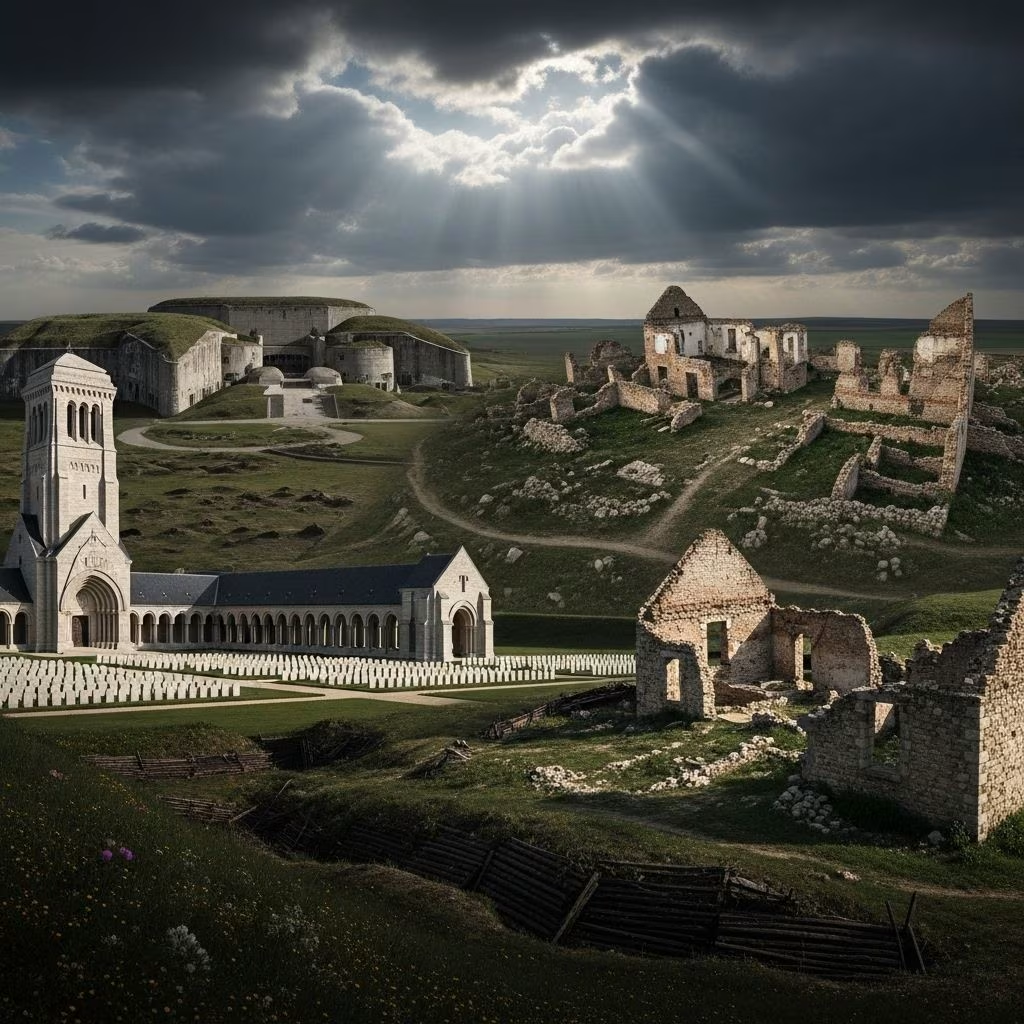
- Ossuary at Douaumont: This monumental building houses the remains of around 130,000 unidentified soldiers—French and German—testifying to the carnage and shared suffering.
- French National Cemetery: Vast rows of white crosses stand in mute tribute, their lines sometimes broken by the Star of David and crescents reflecting France’s diverse army.
- Trench of Bayonets: A memorial to an entire unit lost in action, reputedly found standing with bayonets at the ready—an eerie and symbolic marker for the fate of grunts on the line.
Smaller monuments and village memorials can be found throughout the region, each telling its own story of collective loss and remembrance.
Echoes of War: The Battlefield Then and Now
It is difficult today to reconcile Verdun’s soft, green forests and rolling hills with the devastation of 1916. At war’s height, the terrain resembled a lunar landscape: treeless, mud-choked, and pockmarked by craters. Every visible inch was crisscrossed by trenches and littered with debris, broken weapons, and human remains. Even nature required decades to recover from the deforestation and poison of bombardment.
- Postwar reforestation gave birth to the tranquil woods visitors now stroll.
- Countless small towns and villages, some never rebuilt, still bear scars—or are marked only by plaques commemorating their wartime annihilation.
Technological Innovations and War’s Realities
While WWI is often associated with new and terrible technology—tanks, airplanes, machine guns—the overwhelming cause of injury and death at Verdun was artillery shrapnel. Ninety-five percent of those killed never saw the enemy; death came in the form of lethal fragments from shells fired miles away. Even machine-gun innovations, such as synchronizing guns to fire through airplane propellers, were ultimately less deadly than the rain of steel from above.
Medical Aid and the Human Cost
Suffering was not confined to the battlefield. Primitive field hospitals, frequently overwhelmed by the scale and type of injuries, relied on breakthrough technologies like portable X-ray machines. Nonetheless, thousands of soldiers died agonizing deaths without adequate care. Disease, infection, and psychological trauma compounded the toll, with many survivors profoundly scarred both physically and emotionally.
Living Memory and Visiting Verdun
Verdun’s legacy is reverently preserved through its museums, memorials, and battlefield sites. For travelers, the region holds deep educational and emotional value:
- Accessibility: Verdun is about a two-hour drive from Paris, making it a feasible day trip, though a longer stay allows deeper exploration.
- Touring the Area: Consider renting a car to best access scattered sites, or join specialized battlefield tours for maximum insight. Many visitors supplement their experience with audio guides in multiple languages.
- Commemorative Events: Anniversaries and remembrance ceremonies offer a solemn connection with France’s past and draw international attendance, including veterans’ families and dignitaries.
Tips for Visiting
- Start your visit at the Verdun Memorial Museum for an in-depth orientation.
- Dress warmly and be prepared for damp or muddy conditions, especially when exploring fortifications and trenches.
- Allow time for quiet reflection at memorial sites—many visitors find these moments the most powerful.
The Lasting Lesson: Peace, Memory, and Reconciliation
The story of Verdun is not one merely of carnage but of lessons seared into the collective memory of Europe. The horrors endured here fueled both the resolve for peace and the development of international organizations designed to prevent repeats of such devastating conflict. Today, the very landscape that once resulted in division stands as a symbol of Franco-German reconciliation and European unity. Tourists and former adversaries alike now gather where once only death and destruction reigned, celebrating not victory, but the fragile wonder of peace.
Frequently Asked Questions (FAQs)
Q: What was the Battle of Verdun, and why was it significant?
A: The Battle of Verdun was one of World War I’s largest and longest battles, fought between France and Germany in 1916. It symbolized the futility and tragedy of trench warfare, resulting in massive casualties without decisive territorial change.
Q: What are the must-see sites for visitors to Verdun?
A: Essential sites include the Verdun Memorial Museum, Fort Douaumont, the Douaumont Ossuary, multiple national cemeteries, and preserved trench lines and craters in the surrounding forest.
Q: How accessible is Verdun for international tourists?
A: Verdun is approximately two hours by car from Paris. Public transport options may be limited, so renting a car is recommended for full access to the battlefield sites.
Q: What lessons does Verdun teach about modern Europe?
A: Verdun underscores the senselessness of war and the importance of peace, international cooperation, and remembrance. The region now stands as an emblem of Franco-German reconciliation and European unity.
Q: How long should I plan to spend at Verdun?
A: While a determined visitor can cover the main sites in a single long day, many prefer to stay at least two days to allow for deeper exploration, reflection, and to visit more remote memorials and trenches.
Table: Key Verdun Sites and Features
| Site | Type | Highlights |
|---|---|---|
| Verdun Memorial Museum | Museum | Artifacts, battlefield replica, multimedia, bilingual exhibits |
| Fort Douaumont | Fortification | Labyrinthine corridors, historic command posts, audioguides |
| Douaumont Ossuary | Memorial/Ossuary | Remains of 130,000 unidentified soldiers, panoramic views |
| Trench of Bayonets | Trench Memorial | Site of legendary French unit’s disappearance |
| National Cemetery | Cemetery | Thought-provoking rows of graves and markers |
In Closing: All Is Quiet on the Western Front?
Where once artillery roared and soldiers cowered in mud, silence now reigns. Verdun’s battlefields have become a sanctuary—one that compels visitors to reckon with war’s devastation and to carry forward a dedication to peace. Visiting Verdun is not only a journey through history, but also a reminder of our collective responsibility: to remember, to reflect, and, above all, to strive for a world where such tragedies never repeat.
References
- https://www.youtube.com/watch?v=o0Glx1rQSFU
- https://blog.ricksteves.com/blog/wwi-sights-verdun/
- https://www.ricksteves.com/watch-read-listen/read/articles/verdun-france
- https://blog.ricksteves.com/blog/tag/verdun/
- https://community.ricksteves.com/travel-forum/france/visiting-verdun
- https://www.ricksteves.com/europe/france/reims-verdun
- https://blog.ricksteves.com/blog/2013/08/page/5/