


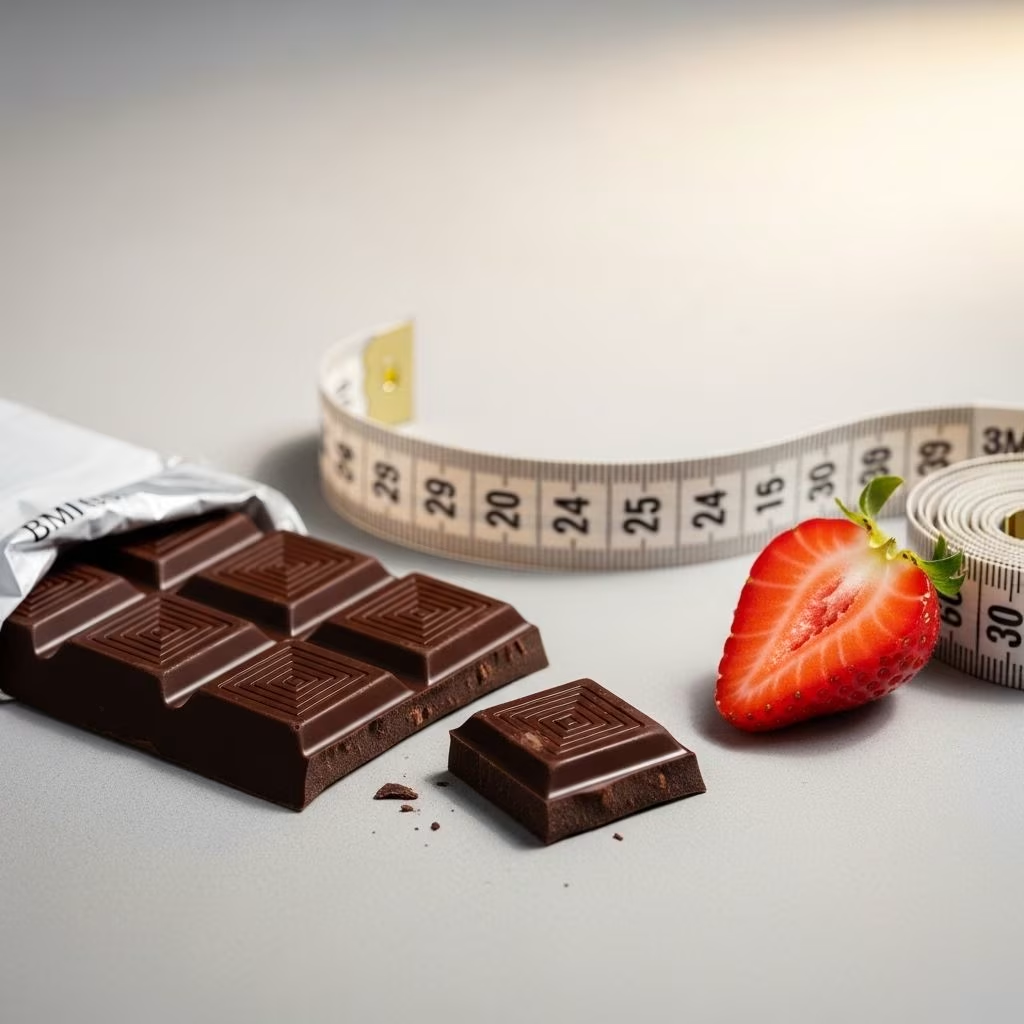
Chocolate and Body Weight: Is There Really a Connection?
For decades, chocolate has enjoyed both devoted fans and skeptical critics, especially when it comes to its impact on health and body mass index (BMI). While chocolate is often associated with indulgence and calorie-laden treats, recent studies have challenged assumptions by investigating whether its consumption may actually relate to lower BMI in adults. This article examines the underlying research, explores plausible biological mechanisms, and discusses what these findings might mean for your diet and weight management strategies.
What Is BMI and Why Does It Matter?
BMI, or Body Mass Index, is a widely used measure to classify individuals based on their weight relative to their height. Typically, BMI is used as an indicator of healthy body weight and to identify weight categories that may lead to health problems. According to the Centers for Disease Control and Prevention (CDC), adult BMI is categorized as follows:
- Underweight: BMI less than 18.5
- Normal weight: BMI 18.5 – 24.9
- Overweight: BMI 25 – 29.9
- Obese: BMI 30 and above
Maintaining a healthy BMI is considered important for reducing risk of cardiovascular disease, diabetes, and other metabolic illnesses.
Surprising Research: Chocolate and Lower BMI
Contrary to expectations that frequent chocolate consumption would be linked to weight gain due to its calorie and fat content, several studies have found an intriguing association: people who eat chocolate more frequently may actually have lower BMI compared to those who eat it less often.
Key Study: The Chocolate–BMI Paradox
A pivotal cross-sectional analysis published in the esteemed journal “Archives of Internal Medicine” found that adults who reported eating chocolate more often had statistically lower BMI than those who ate it less frequently, even after adjusting for age, sex, physical activity, calorie intake, and saturated fat intake. Notably, this association was robust and persisted across multiple models accounting for these potential confounders.
| Adjustment Model | β (SE) | P Value |
|---|---|---|
| Unadjusted | -0.142 (0.053) | .008 |
| Age and sex adjusted | -0.126 (0.053) | .02 |
| Including activity, calories, sat fat, depression scale | Up to -0.208 (0.060) | .001 |
In these models, the negative β coefficient indicates that as chocolate frequency increases, BMI decreases. Essentially, people eating chocolate more frequently tended to have a lower BMI even when accounting for other lifestyle factors.
How Much Chocolate Was Eaten?
Study participants typically consumed chocolate about two times per week. It is important to note that the frequency of consumption had a stronger association with lower BMI than the amount of chocolate consumed. In other words, simply eating chocolate more often — rather than eating more chocolate in one sitting — appeared to link to lower body weight metrics.
What Could Explain This Paradox?
The results are counterintuitive: how could eating something high in sugar and fat correlate with being leaner? Researchers propose several possible biological and behavioral mechanisms:
- Antioxidant and Polyphenol Effects: Chocolate, especially dark chocolate, is high in antioxidant compounds called flavonoids, which may improve metabolic health and enhance insulin sensitivity. These improvements can potentially aid in more efficient calorie burning and glucose regulation.
- Impact on Metabolism: Chocolate might have a mild stimulatory effect on metabolism, leading to increased energy expenditure. Some studies have shown that chocolate polyphenols can influence mitochondrial biogenesis and fat oxidation in animal models.
- Effects on Mood and Satiety: Chocolate contains compounds that enhance mood (such as serotonin precursors) and may curb cravings for other higher-calorie foods through psychological satisfaction, potentially leading to a reduced overall calorie intake despite chocolate’s caloric density.
- Participant Lifestyle Factors: Some research suggests that people who eat chocolate regularly also tend to engage in other healthy behaviors, such as being more mindful about portion control, though studies adjusted for physical activity found no significant differences in exercise habits between frequent and infrequent chocolate eaters.
What About Calories and Fat?
One major caveat is that frequent chocolate consumers also consumed more total calories and saturated fat overall. Despite this, their BMI remained lower on average. At first glance, this defies basic dietary logic. However, if chocolate offers any unique metabolic advantage, or promotes greater dietary satisfaction that leads to fewer overall snacks and binges, it could partially balance out its high caloric content. Nonetheless, researchers caution that these findings do not justify unlimited chocolate consumption.
Limits and Important Considerations
It is crucial to understand the limitations of current studies on chocolate and BMI:
- Cross-Sectional Design: Most available studies, including the most-cited, are cross-sectional, meaning they measure habits and outcomes at a single point in time. This prevents firm conclusions about cause and effect. People who are already lean may simply feel less need to restrict chocolate, or might metabolize calories differently due to genetics or activity levels.
- Lack of Detail on Chocolate Type: Many studies do not distinguish between dark chocolate, milk chocolate, or chocolate candies. The health effects can vary widely: dark chocolate is generally richer in beneficial phytochemicals and lower in added sugar than milk chocolate.
- Self-Reporting Inaccuracies: Most dietary studies rely on participants to report intake accurately, which can be unreliable and introduce bias.
Researchers from studies such as the one published in “Archives of Internal Medicine” specifically warn readers that while the association is intriguing, it does not prove that eating chocolate causes lower BMI.
Conflicting Research: Are There Long-Term Risks?
Not all scientific evidence suggests chocolate is a boon for the waistline. In fact, prospective studies that track participants over years often find the opposite: regular chocolate consumption can lead to modest weight gain over time.
- In a study of over 15,000 participants followed for up to six years, more frequent chocolate consumption was linked to greater long-term weight gain in a clear dose-response relationship.
- This weight gain translated to about 0.7-1.1 kg over six years for those eating chocolate weekly as compared to those who ate it less than monthly.
- Notably, the inverse link (more chocolate, lower BMI) was seen only in cross-sectional analyses — not over time.
This suggests a possible explanation: individuals who gain weight or develop obesity-linked illnesses may reduce their chocolate or calorie consumption after diagnosis, making it appear that only leaner people eat chocolate frequently. This underscores the importance of distinguishing between correlation and causation.
Does the Type of Chocolate Matter?
The type of chocolate likely plays a significant role in determining its effect on health:
- Dark Chocolate: Tends to be higher in cocoa solids, fiber, and potentially beneficial polyphenols, while being lower in added sugars and fats.
- Milk Chocolate: Higher in sugar, lower in beneficial phytochemicals, and more likely to contribute to excess calorie intake without delivering much nutritional value.
- Chocolate Confections: Often contain additional fats, sugars, and other additives that can rapidly increase calorie load and diminish any health benefits.
Overall, moderate amounts of high-cocoa chocolate are more likely to contribute to the observed beneficial effects, if any, compared to heavily processed chocolates with low cocoa content.
Should You Add Chocolate to Your Diet for Weight Loss?
While the idea that chocolate might help lower body weight is appealing, experts urge caution. Current research does not provide enough evidence to recommend eating chocolate as a weight loss strategy. Instead, most health authorities emphasize overall dietary moderation:
- Enjoy chocolate in moderate amounts as part of a balanced, calorie-controlled diet.
- Prefer dark chocolate with a high cocoa content and minimal added sugars and fats.
- Avoid using chocolate as an excuse to eat unlimited calories or compensate for unhealthy lifestyle habits.
- Keep in mind your individual health profile, dietary needs, and risk factors before making changes based solely on emerging or contradictory research.
Potential Health Benefits Beyond Weight
Chocolate has been studied for potential health benefits beyond its relationship with weight. Some research suggests moderate chocolate intake may be:
- Cardioprotective: By improving cholesterol and lowering blood pressure (especially for dark chocolate).
- Anti-inflammatory: Through antioxidant and polyphenol action.
- Cognitive Benefits: Possible short-term memory or cognitive function improvements due to chocolate’s content of flavanols and stimulatory compounds.
However, these benefits tend to accrue with small daily amounts (e.g., 1-2 squares of dark chocolate), not large servings or sugar-rich candy bars.
Chocolate, Mood, and Dietary Satisfaction
Part of chocolate’s appeal lies not only in its taste, but also in its psychological effects. Known for triggering the release of mood-enhancing neurotransmitters, consuming chocolate may contribute to a sense of satiety and happiness, reducing the likelihood of overindulgence in other foods. This could partially explain why frequent, but moderate, chocolate eaters do not necessarily gain excess weight.
Frequently Asked Questions (FAQs)
Q: Does eating chocolate directly lead to weight loss?
A: No. While some studies find an association between higher chocolate consumption frequency and lower BMI, these studies do not prove cause and effect. Eating chocolate is not a proven weight loss method.
Q: Is dark chocolate healthier than milk chocolate?
A: Yes, dark chocolate contains more antioxidants and fewer added sugars and fats compared to milk chocolate. Choose varieties with higher cocoa content for maximum health benefits.
Q: Can I eat chocolate every day?
A: You may eat small amounts of chocolate as part of a balanced diet. However, moderation is key because chocolate is calorie-dense.
Q: Will chocolate hurt my diet if I’m trying to lose weight?
A: Occasional moderate consumption should not impair weight loss for most people. The important factors are total calorie intake, food quality, and overall diet patterns.
Q: What’s the best way to include chocolate in a healthy eating plan?
A: Use chocolate as a mindful treat, preferably dark chocolate, and savor it in modest portions rather than eating large, sugary confections.
Summary Table: Chocolate and BMI—What the Research Says
| Research Aspect | Key Findings |
|---|---|
| Cross-sectional studies | More frequent chocolate consumption linked to lower BMI. |
| Prospective/long-term studies | Frequent chocolate consumption correlates with greater weight gain over time. |
| Chocolate type effects | Dark chocolate is potentially more beneficial than milk chocolate for health outcomes. |
| Calories & fat intake | Frequent chocolate eaters consume more calories, but still may not gain as much weight in cross-sectional studies. |
| Recommended approach | Enjoy chocolate in moderation, choose high-cocoa dark varieties, and integrate it into a balanced calorie-controlled diet. |
Final Thoughts
Chocolate’s relationship with body weight and health is complex: cross-sectional studies suggest a possible link between frequent chocolate consumption and lower BMI, but carefully conducted long-term research urges caution. Chocolate can be part of a healthy, enjoyable diet when consumed in moderation and in its less-processed forms. As always, a balanced approach to food, regular physical activity, and mindful eating patterns provide the best foundation for achieving and maintaining a healthy body weight.
References
- https://www.clinicaladvisor.com/news/chocolate-consumption-tied-to-lower-bmi/
- https://journals.plos.org/plosone/article?id=10.1371%2Fjournal.pone.0070271
- https://pmc.ncbi.nlm.nih.gov/articles/PMC4285439/
- https://pubmed.ncbi.nlm.nih.gov/34994745/
- https://pmc.ncbi.nlm.nih.gov/articles/PMC4351742/
- https://pdfs.semanticscholar.org/f9c6/57af3774d7a5905512060231c9f55060ed66.pdf
- https://pubmed.ncbi.nlm.nih.gov/24139727/


