


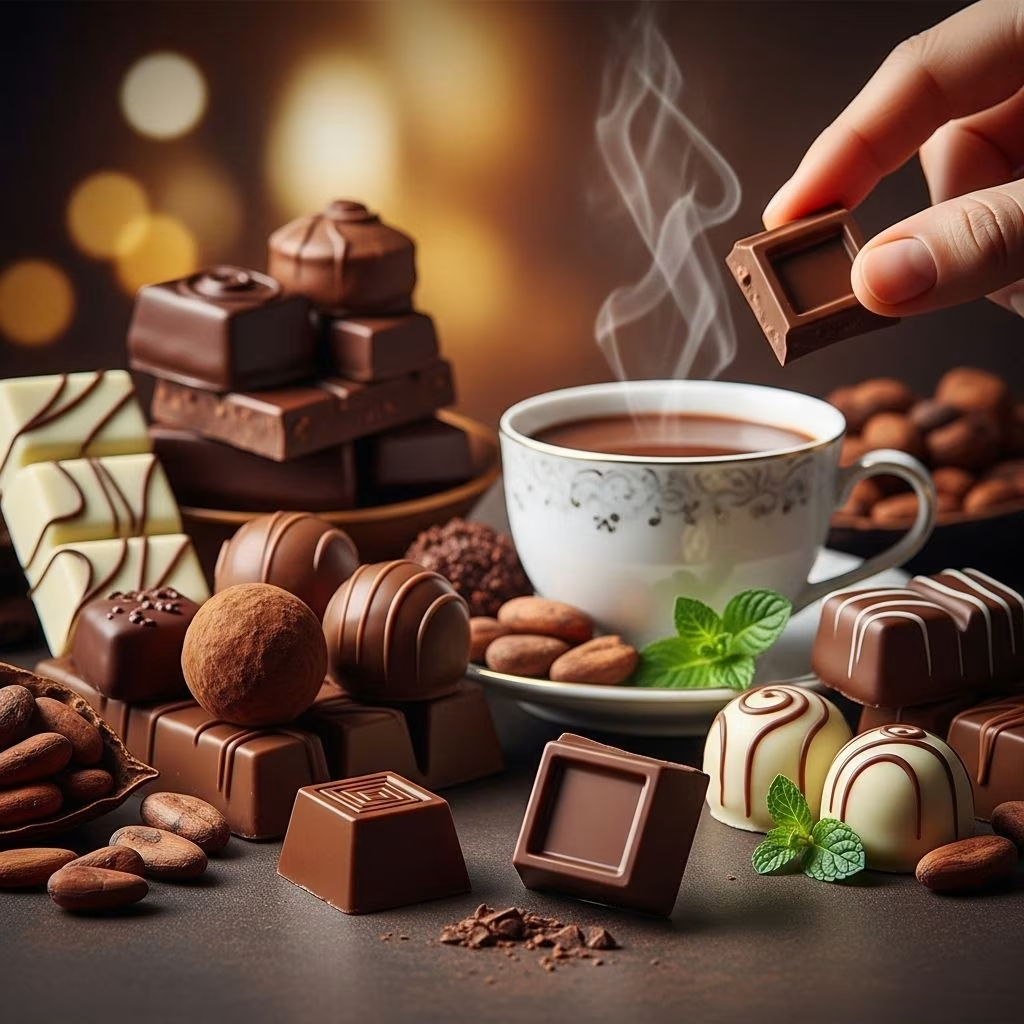
Chocolate Wisdom: Savoring the Joy, Embracing the Benefits
Chocolate occupies a unique, almost magical space in our lives. It symbolizes pleasure, celebration, and sometimes, even guilt. Yet, when approached with intention and wisdom, chocolate can become much more than a guilty pleasure. By learning to savor, not devour, and bringing mindful awareness to the act of eating, we can transform what chocolate means to us—making it a source of daily joy, connection, and even better health.
Why Chocolate Matters: More Than Just a Treat
For many, chocolate sparks intense cravings and even anxiety around self-control. But what if the real secret to “chocolate wisdom” lies not in resisting, but in paying deep, sensory attention to this beloved food?
- Chocolate has the power to awaken our senses and bring us back to the present moment.
- Enjoyed mindfully, chocolate can be satisfying, even in small amounts.
- Beyond flavor, chocolate teaches important lessons about pleasure, gratitude, and what it means to truly savor life.
Instead of seeing chocolate as an enemy—or a forbidden object—reconsider it as an ally in cultivating balance, enjoyment, and even healthier choices overall.
Chocolate and Health: Separating Fact from Fiction
Chocolate’s reputation has shifted over the years, from sinful indulgence to a potential superfood, especially in its dark, minimally processed forms. Recent research reveals several benefits:
- Supports metabolic health: Consuming small amounts of dark chocolate (especially with 70% or higher cocoa content) has been associated with a lower risk of type 2 diabetes. A study found that people eating at least five ounces of any chocolate weekly had a 10% lower risk, while those focusing on dark chocolate had a 21% lower risk.*
- May aid in weight loss: In a study, participants who enjoyed a daily serving of dark chocolate alongside a balanced, low-carb diet lost weight 10% faster than those without chocolate, kept weight off longer, and reported better quality of life and lower cholesterol.*
- Pleasure without excess: Mindful chocolate enjoyment promotes satisfaction and reduces overeating, countering the myth that once you start, you can’t stop.
*Note: The strongest benefits are observed with dark chocolate. Milk chocolate or chocolate products high in sugar and fat may have the opposite effect, and portion control remains key.
The Art of Savoring: Chocolate as Mindfulness Practice
How you eat chocolate matters as much as what kind you eat. The difference between mindless munching and mindful savoring can be transformative:
- Stop and Sit: Treat chocolate as a special experience. Sit down. Take a moment before you eat. Let yourself transition from distraction and routine to intention.
- Engage the Senses: Before taking a bite, look at the chocolate. Notice its sheen, its shape, its aroma. Rub a piece lightly against your lips to feel its texture and temperature.
- Suck, Don’t Chew: Place the chocolate in your mouth and let it melt slowly. Focus on the changing flavors and sensations as it dissolves on your tongue, the roof of your mouth, and the sides of your cheeks. Notice how the taste evolves, and how your desire shifts as you truly experience it.
- Practice Gratitude: Appreciate the pleasure, and recognize when you’re satisfied. Savoring one piece, fully and mindfully, can feel far more indulgent—and fulfilling—than eating half a box distractedly.
| Mindless Eating | Mindful Savoring |
|---|---|
| Eating on the go, while distracted | Sitting down, present in the moment |
| Chewing and swallowing quickly | Letting chocolate melt slowly, noticing flavors |
| Reaching for more mindlessly | Aware of satisfaction after just one piece |
| Regret and guilt after overeating | Contentment and gratitude for the experience |
Personal Stories: The Impact of Chocolate Wisdom
Many people are shocked to discover the difference mindful chocolate eating makes. For example, students participating in chocolate appreciation exercises often expect to crave more after eating a single piece. Instead, they find themselves astonished by how deeply satisfying “just one” can be, or surprised to discover they prefer darker, richer flavors over waxy or bland milk chocolate. Some realize, perhaps for the first time, that chocolate need not be a predestined pathway to overindulgence or regret.
- “I thought I could never stop at one piece, but I actually didn’t want another.”
- “Paying attention made me appreciate the flavor so much more.”
- “When I’m mindful, the craving seems to melt along with the chocolate itself.”
These revelations aren’t just about chocolate—they’re about awakening to the present and savoring life itself.
Chocolate, Connection, and Social Pleasure
Chocolate is meant for sharing, and few foods are better at bringing people together. Whether at a communal table or a casual gathering, unveiling chocolate creates an instant bond. Conversations pause, eyes light up, and sharing a simple treat sparks a moment of collective delight. When you share chocolate, you become everyone’s friend—reminding us all that simple joys are often the richest, and that “enough” is possible when shared and savored.
- Bring enough to share. The mood will change as soon as the chocolate appears.
- Notice the social ritual: the way people anticipate, pass, and discuss their chocolate choices.
- Enjoy the connection that comes from savoring together.
Guidelines for Enjoying Chocolate Wisely
Before you dive into rich chocolate, consider applying these basic principles:
- Sit Down: Standstill makes the heart grow fonder. Eating on the go dulls your senses and dampens pleasure.
- One Piece, One Focus: Treat just one piece as enough. Focus all your attention on the flavors, textures, and feelings in your mouth.
- Evaluate: Does it taste like you remembered? More or less delicious? More or less satisfying?
- Enjoy Fully: Let yourself enjoy that piece without guilt—or grasping for another.
Chocolate for Health: Practical Tips and Science
- Choose dark chocolate (preferably 70% cocoa or higher) for the greatest health benefit. Higher concentrations are more beneficial, though some may need time to adjust to the bitterness.
- Moderation counts: Both the science and common sense emphasize that chocolate, when enjoyed in excess, adds unnecessary calories and may counteract potential health benefits.
- Broader healthy habits: Eating dark chocolate can be part of a healthy, disease-preventive pattern that emphasizes whole plant foods, limited unhealthy fats, low sodium, low added sugars, and regular physical activity.
- Find your balance: Chocolate can be an enriching addition to a sensible diet. It’s the approach, not the prohibition, that usually makes the difference.
Chocolate and Weight Management: What the Research Says
Perhaps surprisingly, including chocolate in a thoughtful way can support weight loss, not sabotage it. In recent research:
- Participants eating a daily serving of dark chocolate (with a standard low-carb diet) lost weight faster and kept it off longer compared to those who only followed the diet.
- They also reported better sleep quality and lower cholesterol.
- Importantly, these benefits took a week or two to appear—reminding us that patience enhances results, just as patience enhances pleasure.
The reason why chocolate helps? Scientists suspect it may be due to cocoa’s bioactive compounds, which influence both metabolism and the brain’s reward circuitry—satisfying the mind and nourishing the body at once. Still, portion size is crucial: one daily serving, not unlimited indulgence.
Frequently Asked Questions (FAQ)
Q: Can I eat chocolate and lose weight?
Yes, incorporating a modest amount of dark chocolate (ideally 70% cocoa or higher) into your diet can support weight loss when coupled with overall healthy eating and portion control. In studies, participants who ate a daily serving of dark chocolate with a balanced diet lost weight faster and kept it off longer. However, moderation is key; chocolate still provides calories.
Q: Is dark chocolate healthier than milk chocolate?
Dark chocolate is typically much higher in cocoa and lower in added sugar and fat than milk chocolate, making it the preferred choice for health benefits. Dark chocolate (especially 70% or higher cocoa) is associated with better metabolic outcomes and a lower risk of type 2 diabetes, while frequent consumption of milk chocolate may contribute to weight gain if not consumed in moderation.
Q: What is the best way to enjoy chocolate without overeating?
- Sit down and focus solely on the chocolate.
- Let it melt slowly in your mouth, paying attention to all sensations.
- Notice when you feel satisfied, which typically happens sooner when eating mindfully.
Q: Does chocolate have any mental health benefits?
Mindful chocolate enjoyment provides a dual benefit: it activates the brain’s reward centers, promoting feelings of pleasure, and offers an opportunity for present-moment awareness—a practice linked to less stress and greater happiness.
Q: How can I stop craving more chocolate after just one piece?
By slowing down, savoring completely, and giving your full attention to the flavor, most people find the urge for “more, more, more” naturally fades. Remember: satisfaction comes from quality of attention, not quantity eaten.
Chocolate Wisdom: Key Takeaways
- Pleasure is not the enemy of health; distraction is. When you savor chocolate mindfully, you truly satisfy body and mind.
- One piece enjoyed deeply is far better than ten devoured mindlessly.
- Sharing chocolate enhances joy for everyone—the essence of “enough” is found in appreciation, not in excess.
- Mindfulness is a door to wisdom—and chocolate may, quite literally, be the tastiest one.
“Chocolate reminds us to wake up, pay attention, stop reaching for what we don’t have, and focus on what we do. It teaches us that we don’t need a truckful of love to satisfy our hungry hearts. When we pay attention, enough is possible, here, now, right this very moment.”
References
- Dark chocolate and type 2 diabetes: recent study results
- Weight loss and chocolate: details on the study and recommendations
- Practical wisdom on savoring and mindful eating shared by Prevention.com contributors and researchers
Related Reading
- 7 Forbidden Foods You Should Eat
- 16 Simple Ways To Eat Less
- 3 New Ways To Boost Your Dieting Willpower
References
- https://www.prevention.com/weight-loss/a20429553/chocolate-has-a-place-in-good-health/
- https://www.prevention.com/health/a63186905/dark-chocolate-lowers-type-2-diabetes-risk-study/
- https://www.prevention.com/weight-loss/a20454973/chocolate-for-weight-loss/
- https://www.prevention.com/weight-loss/a20458525/conquer-your-chocolate-craving/
- https://www.prevention.com/food-nutrition/a65981065/dark-chocolate-vs-milk-chocolate-benefits/
- https://www.prevention.com/food-nutrition/a65781763/what-happens-to-your-blood-pressure-when-you-eat-dark-chocolate-everyday/
- https://www.prevention.com/weight-loss/a20428008/chocolate/
- https://pmc.ncbi.nlm.nih.gov/articles/PMC9589144/
- https://www.prevention.com/health/a20430564/health-news-roundup-chocolate-and-cancer-prevention/


