


How Playing Tetris for 3 Minutes Can Help Beat Your Cravings
Cravings—for rich desserts, snacks, cigarettes, or even a nap—can be overwhelming, often growing from a fleeting thought to a near-irresistible desire within minutes. Surprisingly, new research suggests that playing Tetris, the classic block-stacking game, for as little as three minutes can weaken these urges and make them much more manageable.
Understanding Cravings: What Happens in the Brain?
Cravings are intense, sometimes intrusive desires to experience something pleasurable, such as eating, drinking, smoking, or engaging in a specific behavior. These urges often appear suddenly but rely on a mental process called imagery: when you crave something, you are subconsciously picturing the reward (like the taste of cake or the sensation of smoking), making the urge feel tangible.
According to Dr. Jackie Andrade of Plymouth University, “Cravings tend to last for only a few minutes, but in that time, they can feel unbearable.”
The Tetris Intervention: How Does It Work?
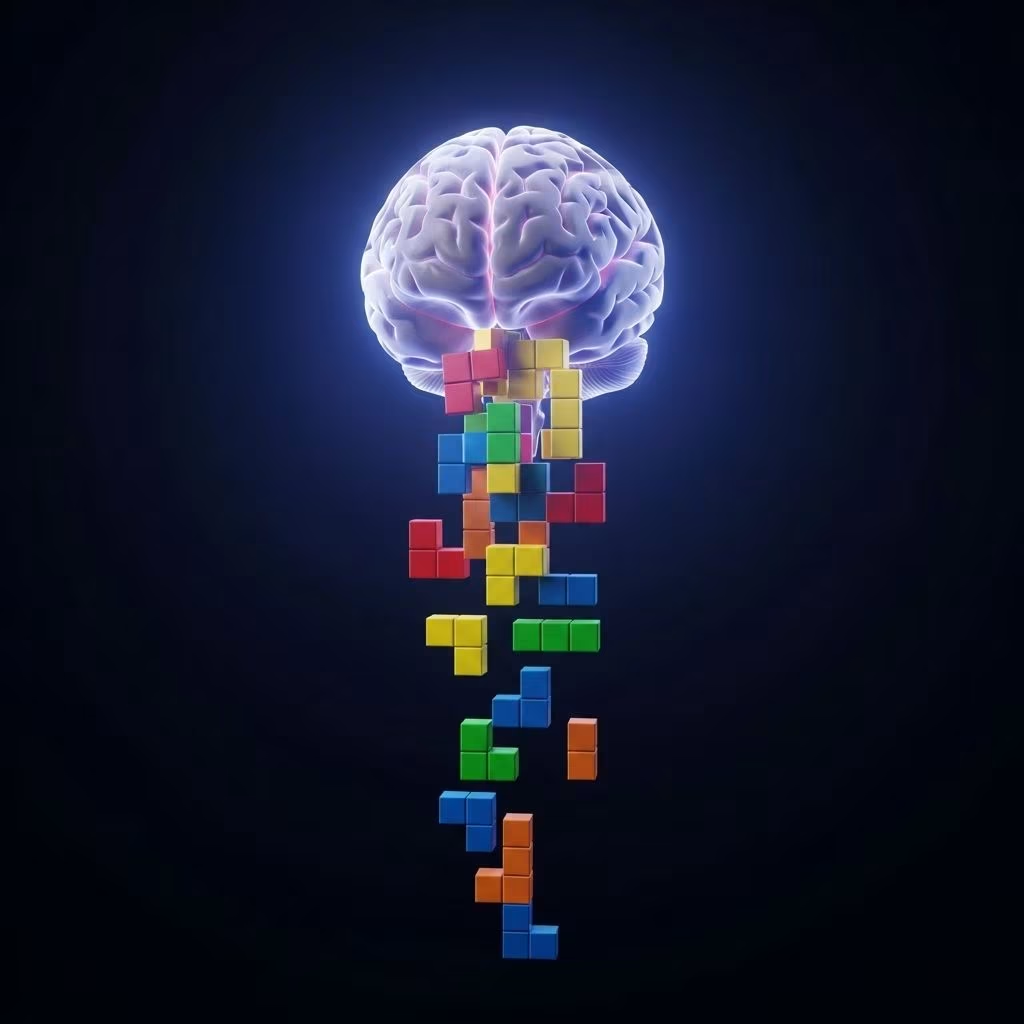
The core insight from the studies is that engaging in visually intensive tasks, like playing Tetris, disrupts your mind’s ability to form the mental imagery that powers cravings.
- When you play Tetris, your brain focuses on fitting and rotating falling blocks, which uses the same mental processes normally employed to imagine indulging your craving.
- This interference means it becomes much harder to picture your desired treat or action. Without vivid imagery fueling the urge, the craving loses its intensity and fades.
- Even short bursts—just three minutes—are enough to make a noticeable difference
“Playing Tetris can help reduce the strength of a craving to the point where you can tolerate it until it goes away,” Dr. Andrade explains.
The Scientific Evidence: How Tetris Lowers Cravings
Multiple research teams have tested the effects of playing Tetris on cravings both in laboratory and real-world settings.
Key Studies and Their Findings
- Plymouth University Study (2014): Volunteers used handheld devices and were pinged throughout the day to report cravings. Half of them played Tetris for three minutes after receiving a prompt; the rest did not. Those who played Tetris reported about a 20% reduction in craving strength on average, compared to those who didn’t play.
- Expanding to Activities Beyond Food: Cravings for not just food, but also cigarettes, alcohol, coffee, and activities like sleep or sex, all diminished after a few minutes of gameplay.
- Consistent Effects Across a Week: The reduction in urge intensity was observed consistently during a seven-day period, demonstrating that the effect isn’t a one-off curiosity, but a robust psychological phenomenon.
One study found that participants who played Tetris had significantly lower craving levels and less vivid craving imagery—a reduction of about 24% in craving scores.
Types of Cravings Affected
- Food and Non-Alcoholic Drinks: Most common, often triggered by mental images of favorite treats or drinks.
- Drugs, Cigarettes, Coffee, Alcohol: Cravings for substances also weakened after playing Tetris.
- Activities: Urges to sleep, socialize, play other games, or seek sexual activity—these too diminished in intensity.
Why the Tetris Effect Works
The psychological mechanism behind Tetris’s effect is called cognitive interference: engaging in a visually demanding task blocks the mental “daydreaming” you experience when a craving strikes.
| Activity | Normal Craving Response | With Tetris Intervention |
|---|---|---|
| Thinking of chocolate cake | Picture the taste and texture, desire intensifies | Brain focuses on blocks, less able to imagine the cake, urge fades |
| Craving a cigarette | Mental image of first puff, pleasurable sensations | Tetris disrupts imagery, craving becomes less vivid and intrusive |
| Urge to nap or procrastinate | Visualize comfort of bed or relaxing | Mental imagery is taken up by Tetris gameplay |
The core takeaway: If your brain is busy visually rotating blocks, it can’t simultaneously construct the vivid imagery that drives cravings.
How to Use Tetris as a Practical Craving-Busting Technique
- Timing matters: Play Tetris when the craving hits—ideally within the first few minutes it emerges—since cravings tend to peak and fade within a small window of time.
- Session length: Three minutes of Tetris have been shown to be effective; longer play isn’t necessary and could even risk procrastination.
- Accessibility: The technique works best with easy access—keep Tetris on your phone, tablet, or computer so you can play a quick round when needed.
- Consistency: Use it regularly whenever you notice strong urges. Over time, this practice may strengthen your self-control by giving your brain a rapid, reliable alternative focus.
Is Tetris Unique, or Can Other Games Help?
Although Tetris has been specifically studied, especially because of its highly visual and spatial gameplay, it is likely that other games requiring intense visual-spatial processing may have similar effects. However, not all games may provide the same benefit, particularly those that trigger cravings for the very things you wish to avoid (such as snack-based games).
The Science Behind the Tetris Effect: Expert Insights
According to study author Jackie Andrade, “Tetris blocks this imagery because we use the same mental processes to look at the shapes and mentally rotate them to fit the spaces. It is difficult to do both things at once—play Tetris and fantasize about our craving—and the craving fades when the pleasurable mental imagery of indulging is absent.”
The research points to a simple, accessible, and non-pharmaceutical strategy to help anyone struggling with urges that undermine healthy habits or recovery from addiction.
Comparing Approaches: Tetris vs Other Distraction Methods
| Method | Main Focus | Effect on Craving | Practicality |
|---|---|---|---|
| Tetris | Visual-spatial rotation | Reduces craving imagery directly | Highly portable, quick |
| Meditation | Relaxation, focused attention | Can reduce stress and indirectly weaken cravings | Requires training, not as immediate |
| Going for a walk | Physical movement, scenery change | Distracts, but may not block imagery | Not always feasible in the moment |
| Listening to music | Auditory focus | Shifts attention but doesn’t always target visual processes | Easy but may not be as effective for vivid cravings |
Potential Limitations and Open Questions
- The Tetris effect is most robust for visual cravings—urges strongly tied to mental imagery. Less imagery-based cravings might be less affected.
- More research is needed to determine long-term effects and whether other visually engaging games or activities work just as well.
- While participants in studies were not all clinically addicted, future research should explore the approach in more severely addicted populations.
- Relying too heavily on games might risk replacing one compulsion with another (excessive gaming), so moderation is important.
Practical Tips: Building the Craving-Busting Habit
- Download a version of Tetris (or a similar visual-spatial puzzle) on your mobile device.
- Whenever a craving hits, instead of trying to resist it directly, redirect your attention to the game for 3 minutes.
- Notice if the intensity of your desire drops—if it works, use it again next time.
- Combine this technique with other strategies (healthy routines, mindful eating, support networks) for best results.
FAQ: Frequently Asked Questions About Tetris and Craving Control
Q: How long do I need to play Tetris to see a benefit?
A: Scientific studies have shown that as little as three minutes of focused Tetris play is enough to reduce craving intensity significantly.
Q: Does Tetris work for all types of cravings?
A: The effect is strongest with cravings that include vivid mental imagery, such as those for food, snacks, cigarettes, and some behaviors. It may be less effective for non-imagery-based urges.
Q: Can other video games have the same effect?
A: Any activity that is visually absorbing and requires mental rotation or manipulation might have similar effects, but Tetris has been the main focus of research. Games that trigger cravings themselves (like those themed around sweets) should be avoided.
Q: Is this a replacement for willpower?
A: Playing Tetris is a tool to support willpower. It helps disrupt the cycle of cravings long enough for the urge to subside, but effective behavior change is usually supported by additional strategies like environment management and support systems.
Q: Is it safe to use Tetris frequently as a craving-busting technique?
A: As long as playing Tetris does not interfere with your responsibilities or become excessive, using it briefly as a distraction is considered safe and can be an effective part of a healthy behavior change plan.
Key Takeaways
- Cravings are powered by vivid mental imagery of rewards.
- Playing Tetris for just 3 minutes consumes the brain’s visual processing power, disrupting imagery and weakening urges by up to 20-24%.
- The technique is effective for food, alcohol, smoking, and behavioral cravings, and works best when cravings are fresh and vivid.
- This strategy is accessible—anyone with a phone or computer can leverage it as a quick tool to resist temptation or unwanted habits.
Try It Today
The next time you feel a craving start to build, pause, load up Tetris, and play for three minutes. Let your brain’s need to rotate falling blocks overpower the vivid imagery of that snack, drink, or cigarette. You may find urges become easier to manage—and with repeated practice, you’ll gain confidence in your ability to wait cravings out until they fade away.
References
- https://medicalxpress.com/news/2014-02-tetris-diminish-cravings-food-cigarettes.html
- https://www.sciencedaily.com/releases/2015/08/150813101535.htm
- https://time.com/14021/playing-tetris-will-make-you-forget-youre-hungry/
- https://www.prevention.com/weight-loss/a20475339/playing-tetris-beats-cravings/
- https://pubmed.ncbi.nlm.nih.gov/26275843/
- https://pubmed.ncbi.nlm.nih.gov/24508486/
- https://www.nicswell.co.uk/health-news/do-tetris-weight-loss-claims-stack-up


