


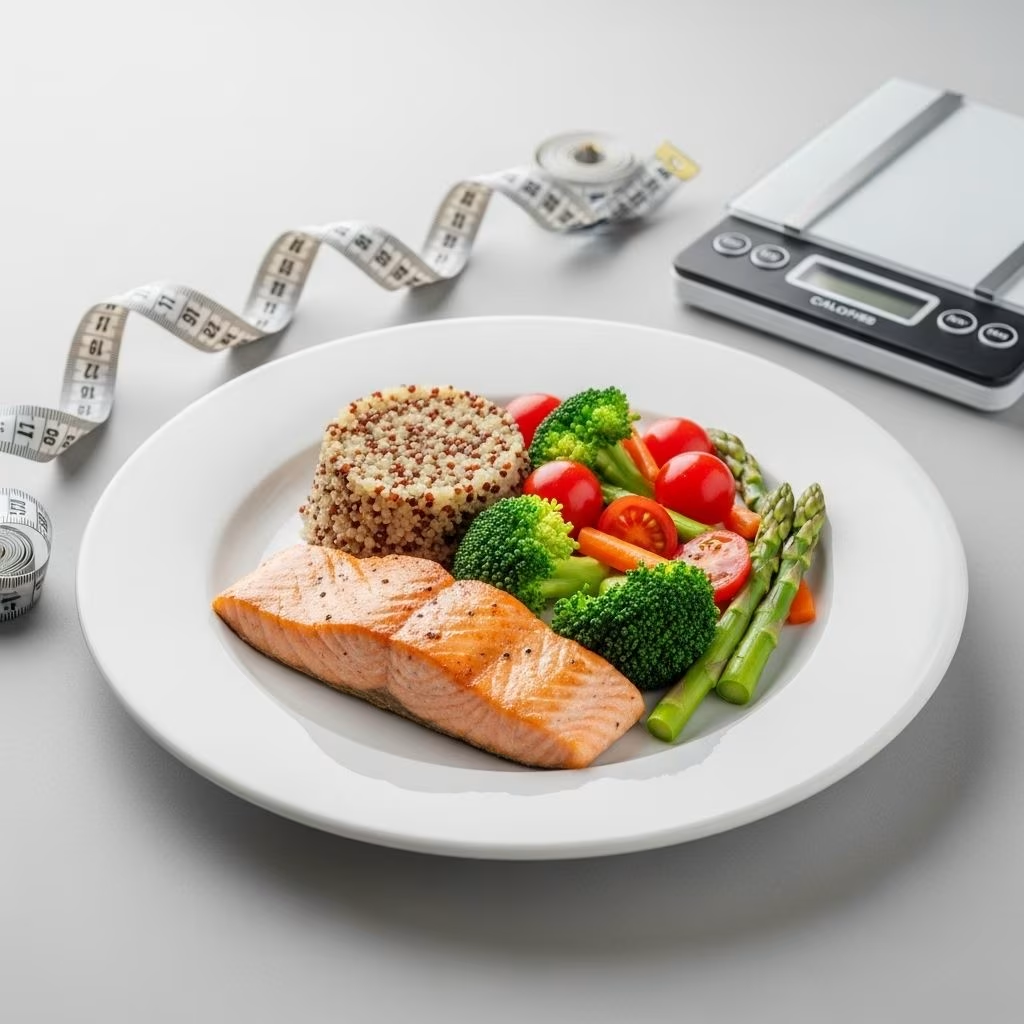
Portion sizes have quietly expanded over the years, making it harder to eat healthfully and control calorie intake. Scientific research demonstrates that simply eating bigger portions—regardless of hunger—can substantially increase your daily calorie consumption. Mastering portion control is a powerful tool for achieving and maintaining a healthy weight, and in this guide, you’ll learn the science, see practical serving-size visuals, and get tactical tips for portion control at home and while dining out.
Why Portion Sizes Matter
Researchers at Pennsylvania State University found that when people were served portions 50% larger than normal, daily calorie intake rose by 335 calories for women and 504 calories for men. Doubling portion sizes pushed daily calories even higher—by 530 for women and 812 for men. This extra calorie load, repeated over weeks, can quickly lead to weight gain, even if you don’t intend to overeat. Being mindful of portion sizes isn’t just smart—it’s essential for managing your nutrition and body weight.
What’s the Difference Between a Calorie and a Portion?
- Calorie: A unit of energy supplied by food and beverage. Calories fuel your body, but consuming more than you burn can lead to weight gain.
- Portion: The actual amount of food you choose to eat at any one time—your portion may be more or less than the “serving size” listed on food packages.
- Serving Size: A measured amount of food, such as one slice of bread or one cup of milk, serving as a reference on Nutrition Facts labels.
Why Is This Important?
Knowing both the calorie content and recommended serving size can prevent you from accidentally eating double—or triple—the calories you thought you were consuming. For example, if a serving of lasagna is one cup (280 calories), eating two cups means you’re actually getting 560 calories.
How Portion Sizes Have Changed Over Time
Restaurants and packaged food manufacturers have dramatically increased portion sizes over the past few decades. What used to be a standard-size bagel (about 3 inches in diameter with 150 calories) now regularly appears as a jumbo bagel (over 4 inches wide, with more than twice the calories). Portion creep isn’t just making us eat more—it’s changing our perceptions of what a normal portion looks like.
- Burgers, fries, and soft drinks: Typical restaurant and fast food servings are often two to three times larger than in the 1970s.
- Pasta and bagels: Both have doubled or tripled in portion size compared to recommended servings.
- Snack packages: “Single serving” bags now contain the calories of multiple servings.
Understanding the Science: How Larger Portions Affect Calories Consumed
In clinical studies, participants consumed markedly more calories when offered larger portions, without reporting feeling any fuller or hungrier than those who ate standard amounts. This effect isn’t just psychological; it’s physiological, driven by visual cues, packaging, and the human tendency to “clean your plate,” regardless of true hunger.
Visual Portion Guides: What Does a Healthy Portion Look Like?
It’s easy to eat more than you realize, especially with oversized plates and packaging. Use these visual cues—based on common objects—to estimate healthy serving sizes without needing a scale or measuring cup:
| Food Type | Recommended Portion Size | Visual Guide |
|---|---|---|
| Meat, Poultry, Fish | 3 oz | Deck of cards or bar of soap |
| Cheese | 1 oz | Four dice |
| Vegetables/Salad | 1 cup (raw), 1/2 cup (cooked) | Baseball; 1/2 baseball |
| Pasta, Rice | 1/2 cup | Half a baseball or rounded handful |
| Potato (baked, whole) | 1 medium | Computer mouse |
| Fruit | 1 piece (apple, orange) | Tennis ball |
| Peanut Butter | 2 tbsp | Golf ball |
| Bread | 1 slice | CD case |
Handy Serving Size Estimations
- Protein-rich foods: Your palm (one portion), or two palms for men.
- Vegetables or fruit: One cupped hand (per portion).
- Starchy carbs: One clenched fist (per portion), double for men.
- Fats (e.g., butter, cheese): Thumb size (women); two thumbs (men).
How Much Should You Eat? Calculating Your Calorie Needs
Each person’s calorie needs vary depending on factors such as age, gender, activity level, and goals (weight loss, maintenance, or gain). For instance, a sedentary woman needs about 1,800 calories daily, but an active man may require closer to 2,500.
To lose one pound per week, you must create a deficit of 3,500 calories—or about 500 fewer calories per day. This can be achieved by eating less, burning more through physical activity, or a combination of both.
How to Read Nutrition Facts Labels for Portion Control
Your secret weapon for managing portion sizes is the Nutrition Facts label:
- Serving size: Check what counts as a serving. Never assume the whole package is one serving.
- Servings per container: Make note of how many servings the item includes.
- Calories per serving: Watch for calorie counts. If you eat more than one serving, multiply accordingly.
- Other nutrients: Monitor sodium, saturated fat, and added sugar, which often align with larger portions.
A frozen lasagna may list 1 cup as a serving. If you spoon out 2 cups, multiply the calories, fat, and sodium totals by two for accuracy.
The Plate Method: Easy Portion Control
The Plate Method is a simple technique for building balanced, portion-approved meals without measuring tools:
- Vegetables and salad: Fill half your plate.
- Lean protein: One-quarter of your plate.
- Starches (whole grains, potatoes): One-quarter of your plate.
- Fats: Keep to a small portion—about a thumb-sized dollop.
This not only helps with calorie control but naturally increases nutrients and fiber, which promote fullness and health.
Practical Tips to Cut Down on Portion Sizes
At Home
- Serve food on smaller plates and bowls to make portions appear fuller.
- Pre-portion snacks—avoid eating directly from bags or boxes.
- Store leftovers promptly to prevent mindless picking after meals.
- Cook and plate at the stove instead of at the table, reducing temptation for seconds.
- Use smaller utensils to slow your eating pace.
- Embrace single-portion packaged foods if you tend to overeat bulk items.
When Eating Out
- Say no to super-sizing: Order the smallest available size for entrees and snacks.
- Share dishes: Split an entrée or dessert with a friend to instantly reduce your portion.
- Request a to-go box: Ask for half your meal to be boxed before serving. Enjoy the rest for lunch the next day.
- Skip buffets: Unlimited options make it easy to lose track of portions and fullness cues.
- Drink calorie-free beverages: Choose water, sparkling water, or unsweetened tea instead of soda or sugary drinks.
Common Portion Size Pitfalls—and How to Avoid Them
- Eating straight from the package: You could consume several servings at once. Always portion out food onto a plate or in a bowl.
- Buffet temptation: All-you-can-eat buffets encourage you to eat far beyond your body’s needs.
- Sauces, spreads, and toppings: Condiments can double calorie count if heaped on. Use half—and opt for lower-fat or lighter versions to save calories.
Portion Control When on a Budget
Making healthy portion decisions doesn’t have to break the bank:
- Cook more at home with whole, budget-friendly foods—like beans, lentils, frozen vegetables, and brown rice.
- Use measuring cups or your hand as a guide for reasonable portioning.
- Pack leftovers for future meals to stretch grocery dollars and help with portion control.
- Plan meals and snacks in advance so you don’t overspend or overeat on convenience foods.
Why “All calories aren’t created equal”
Calories from whole, minimally processed foods tend to have more fiber, protein, and nutrients—helping you feel full. Highly processed foods are often dense in calories but low in satiety, making it easy to overeat past your body’s needs. Prioritizing quality food sources improves the effectiveness of portion control for weight loss and general health.
Long-Term Benefits of Portion Control
- Supports healthy, long-term weight loss and maintenance
- Lowers risk for diabetes, hypertension, and heart disease
- Improves digestion, energy levels, and overall wellness
- Builds lifelong mindful eating habits
Frequently Asked Questions (FAQs)
Q: What’s the best way to visually estimate a single portion?
A: Use everyday objects: 3 ounces of meat is about a deck of cards, 1 cup of veggies equals a baseball, and 1 ounce of cheese is like four dice. You can also use your own palm and fist as portion guides.
Q: Is it okay to eat packaged \”single-serving\” snacks?
A: Yes—as long as you stick to just one package. Single servings can be helpful if you tend to overeat bulk snacks, but always check the Nutrition Facts label to confirm what counts as one serving.
Q: How do I control portions at restaurants?
A: Order the smallest size available, share large servings, and ask for half your meal to be packed in a to-go box right away. Avoid all-you-can-eat buffets and calorie-loaded drinks.
Q: Are extreme diets with severe calorie restriction necessary for weight loss?
A: No. Managing portion sizes, eating balanced meals, and making gradual calorie adjustments are safer and more sustainable for healthy weight loss.
Q: My family’s portions are much bigger than recommended—how can we adjust?
A: Gradually transition by serving meals on smaller plates, using measuring cups, and increasing the volume of low-calorie foods like leafy greens and vegetables. Over time, your perception of a “normal” portion will shift.
Key Takeaways
- Portion sizes have grown—so has calorie intake. Being mindful dramatically affects your weight and health.
- Visual cues, the plate method, and hand/fist guides make portion control easier and more intuitive.
- Reading Nutrition Facts labels ensures you eat appropriate servings—and accurately count calories.
- Smaller dishes, pre-portioned snacks, and mindful ordering at restaurants are simple, powerful strategies.
- Building these habits now can pay off for your waistline and your health for years to come.
Commit these tips to memory, use them daily, and watch your results—in both health and confidence—grow.
References
- https://www.niddk.nih.gov/health-information/weight-management/just-enough-food-portions
- https://www.cancer.org/cancer/risk-prevention/diet-physical-activity/eat-healthy/controlling-portion-sizes.html
- https://www.healthline.com/nutrition/portion-control
- https://www.prevention.com/weight-loss/a20466917/your-guide-to-calories-and-portion-sizes/
- https://www.prevention.com/weight-loss/a20473778/simple-portion-size-chart/
- https://www.prevention.com/weight-loss/a20435195/calories-and-portion-sizes/
- https://www.prevention.com/weight-loss/a20430335/food-portions-for-weight-loss/
- https://www.cdc.gov/healthy-weight-growth/media/pdfs/portion-size_pitfalls-508.pdf
- https://www.heart.org/en/healthy-living/healthy-eating/eat-smart/nutrition-basics/suggested-servings-from-each-food-group


