


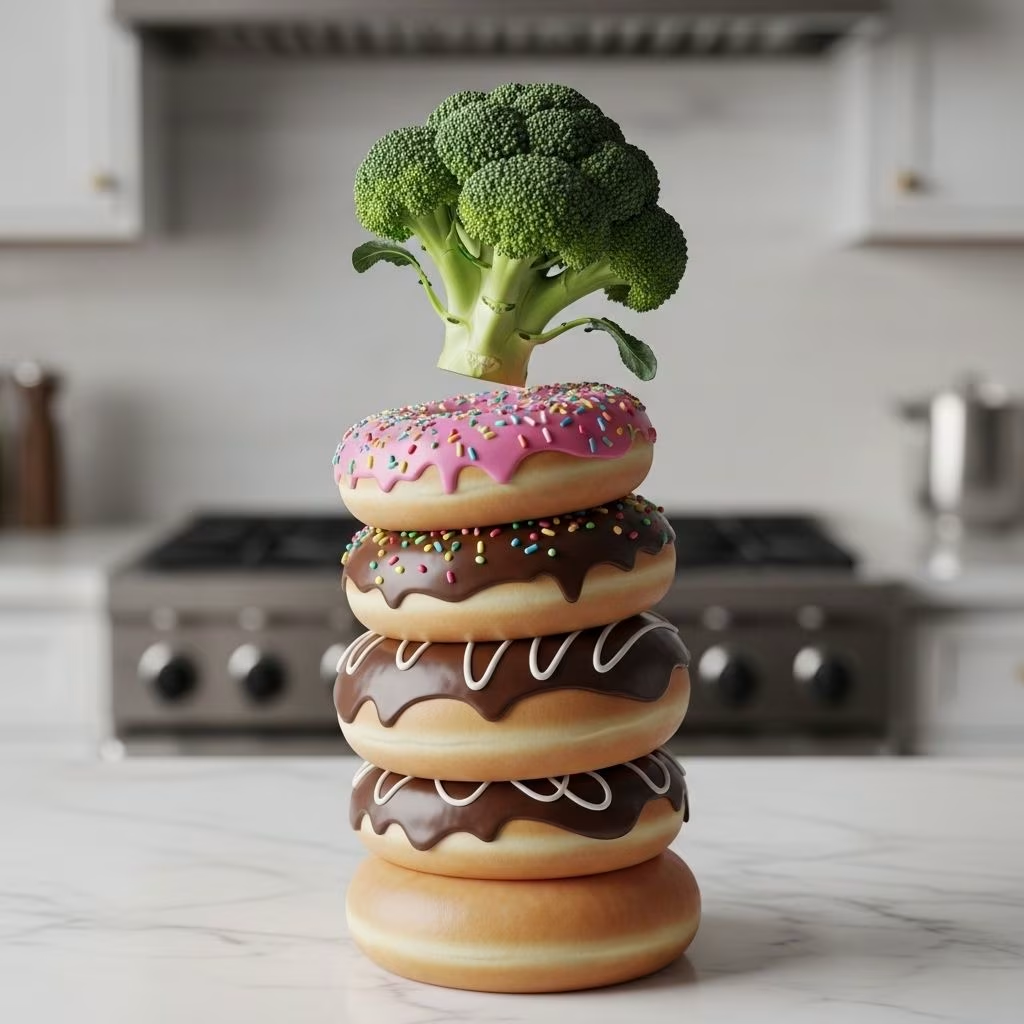
When it comes to weight loss, many of us focus on avoiding well-known pitfalls—think midnight snacking, skipping workouts, or indulging in fast food. But some of the strangest (and most destructive) diet mistakes actually hide in plain sight, disguised as healthy habits. If you’ve ever wondered why the number on the scale won’t budge despite your best intentions, you might be making this surprisingly common error.
Thinking You’re “Eating Healthy”—But Not Watching Your Portions
Imagine this: you swap out soda for green juice, ditch potato chips for granola, and spoon chia seeds into your smoothies. You’re making all the right choices—or so it seems. Yet, you’re not seeing the results you expect.
The critical mistake? Overestimating the power of healthy foods—and underestimating their calories.
Why “Healthy” Foods Aren’t Calorie-Free
- Nut butters, avocados, and seeds are nutrient-dense but high in calories. A little goes a long way.
- Whole grain products often pack as many (or more) calories as their refined counterparts.
- Healthy oils (like olive oil) are still fats—with about 120 calories per tablespoon.
- Natural sweeteners (think honey or agave) can spike calories as easily as sugar.
Portion control matters with every food—even those marketed as healthy. Without it, you may wind up eating more calories than you realize, stalling or even reversing your weight loss progress.
Liquid Calories: The Sneakiest Saboteur
One of the most insidious mistakes involves drinking your calories. Many people overlook the caloric impact of beverages, especially when they’re “health drinks.”
- Fruit juices (even fresh-pressed) can contain as much sugar as soda.
- Green juices, smoothies, and protein shakes are often loaded with extra fruit, honey, or nut butter—making them calorie bombs.
- Specialty coffees and teas with sweetened creamers quickly add up.
A seemingly innocent daily smoothie or juice could add hundreds of calories to your routine—sometimes enough to erase the calorie deficit you’re working so hard to create.
Story of a Serial Dieter: When “Healthy” Eating Backfires
Consider the experience of a nutrition professional who, in an honest effort to eat healthier, started substituting processed snacks with nuts, seeds, and dried fruit. She noticed her pants getting tighter, not looser.
On examining her diet closer, she realized she was eating several servings’ worth of nuts and dried fruit every day—often while distracted, so she didn’t even realize how much she’d consumed.
“I fell for the trap of believing that as long as it was ‘healthy’ food, portions didn’t matter. But those extra calories added up!”
Simple Fixes: How to Make Healthy Eating Work for Weight Loss
The good news: You don’t have to give up on healthy foods or “diet” forever. Instead, blend mindful choices with portion awareness.
Five Strategies to Avoid the Healthy-Food Trap
- Read labels on nut butters, protein bars, juices, and even natural foods.
- Measure servings—especially for calorie-dense foods like nuts, granola, and oils.
- Trade calorie-laden drinks for water, seltzer, or unsweetened tea when possible.
- Fill up on fiber-rich vegetables. They’re low calorie, nutrient-packed, and satisfying.
- Be aware of “health halos”: Foods labeled “organic,” “gluten-free,” or “natural” aren’t necessarily lower in calories.
The Science of Portion Awareness
Studies show that most people, even nutrition pros, struggle to estimate portion sizes accurately. Visual tricks help:
- A serving of nuts = about a small handful or 1/4 cup.
- A serving of olive oil = the size of a poker chip (1 tablespoon).
- A serving of cheese = the size of a pair of dice (1 ounce).
Try using smaller plates and bowls to help control serving sizes; research reveals this simple swap can cut intake by up to 22% without you even noticing.
Common Diet Mistakes That Go Beyond the Obvious
This isn’t the only weight-loss trap. Dietitians pinpoint several other commonly overlooked blunders:
- Skipping meals—only to binge later.
- Mindless eating at your desk, in front of the TV, or while multitasking.
- Relying on “fat-free” or “sugar-free” labels. These foods often have similar calorie counts to their regular versions and may encourage overeating.
- Overestimating calorie burn from exercise.
- Not researching nutrition stats before dining out—a turkey sandwich can have as many calories as a couple slices of pizza, depending on bread and toppings.
Are Fat-Free Foods Better?
Often, fat-free indulgences backfire. Many people end up eating twice as many calories from these alternatives because the “low-fat” label makes them feel less guilty, but these foods seldom satisfy cravings.
Moderation works best: If you want dessert, have a small scoop of the real thing. Savor it instead of mindlessly munching on a larger serving of the “diet” version.
How Fad Diets Take Mistakes to the Next Level
Some of the strangest mistakes come disguised as structured plans—fad diets that restrict food groups or ask you to follow odd advice.
| Fad Diet | Key Restriction | Why It Fails |
|---|---|---|
| The Werewolf Diet | Eating by the phases of the moon; periodic fasting | Not science-based; overly restrictive and unsustainable |
| The Five-Bite Diet | Only five bites per meal, skipping breakfast | Extreme calorie deficit; risk of nutrient deficiency |
| The Baby Food Diet | Eating jars of baby food as meals | Lacks protein, healthy fats; leads to boredom and deficits |
| The Dukan Diet | Limits carbs; heavy on protein | Hard to maintain; neglects long-term healthy habits |
| Whole30 | Avoids sugar, grains, dairy, beans, peanuts | Removes multiple food groups; tough to sustain |
When “Healthy” Habits Mean Overeating
Dieters sometimes underestimate how even positive changes can have unintended consequences:
- Overfilling smoothies with added fruits, nut butters, honey, or fancy milks
- Supplementing meals with “superfoods” unnecessarily
- Assuming “free foods” don’t count toward calorie totals
- Forgetting snacks add up, especially if you nibble frequently during the day or late at night
The Path Forward: Mindful, Not Mindless, Nutrition
It’s not just what you eat—but how you eat. Mindful eating involves listening to your hunger and fullness cues, eating slowly, and sitting down for meals—with your focus on the food, not screens or work.
- Pause before starting each meal and note your hunger level.
- Practice eating without digital distractions.
- Chew thoroughly and savor tastes, textures, and aromas.
Frequently Asked Questions (FAQs)
Q: If I only eat healthy foods, can I eat as much as I want?
A: Unfortunately, no. Even healthy foods like nuts, oils, and whole grains contain calories that add up. Portion control is essential, regardless of food type.
Q: Are smoothies and juices good for weight loss?
A: They can be part of a healthy diet, but many contain more calories and sugar than expected. Keep ingredients simple and limit portion size, especially with added sweeteners.
Q: What are the sneakiest high-calorie “health” foods?
A: Common culprits include granola, dried fruit, nuts, nut butters, avocado, hummus, smoothies, and fancy coffee drinks.
Q: How can I tell if I’m consuming too many calories?
A: Track your intake for a few days using an app or journal. Review labels and mind serving sizes, particularly for snacks and beverages.
Q: Is fat-free or sugar-free always the better choice?
A: Not necessarily. Fat-free and sugar-free products often contain other additives and sweeteners, and can have a similar calorie load to regular versions. Enjoy small portions of the foods you love instead.
The Takeaway: How to Avoid This Classic Diet Mistake
Don’t let “healthy” eating become a trap. Calorie awareness and portion mindfulness must go hand-in-hand with nutritious food choices for long-term weight management. When you dial back the extras and tune in to true hunger signals, you’ll see the scale—and, more importantly, your energy levels—move in the right direction.
- Focus on balance—combine nutrient-dense foods with smart portions.
- Stay hydrated—mostly with water.
- Choose variety—but don’t assume variety means “unlimited.”
- Avoid diet extremes—and skip bizarre fads in favor of consistency and moderation.
The weirdest mistake might be the easiest one to make—because it hides behind the veneer of “good intentions.” Fix it, and you’ll unlock the full benefits of your healthy lifestyle.
References
- https://www.prevention.com/food-nutrition/g29490374/worst-diets/
- https://www.prevention.com/weight-loss/g20469143/4-diets-you-should-never-try/
- https://www.prevention.com/weight-loss/a20441163/common-weight-loss-mistakes/
- https://www.prevention.com/weight-loss/g20494587/25-worst-diet-tips-ever/
- https://www.prevention.com/weight-loss/g20498928/mistakes-that-sabotage-weight-loss/
- https://www.prevention.com/food-nutrition/g20498199/foods-you-should-never-eat/
- https://www.prevention.com/weight-loss/g20428546/9-weight-loss-traps-you-should-avoid-at-all-costs/
- https://www.prevention.com/food-nutrition/healthy-eating/a63423411/foods-you-should-not-eat/
- https://www.prevention.com/food-nutrition/healthy-eating/a65664887/ultra-processed-foods-weight-loss-gut-health-study/
- https://www.prevention.com/weight-loss/g20441544/losing-weight-without-trying/


