


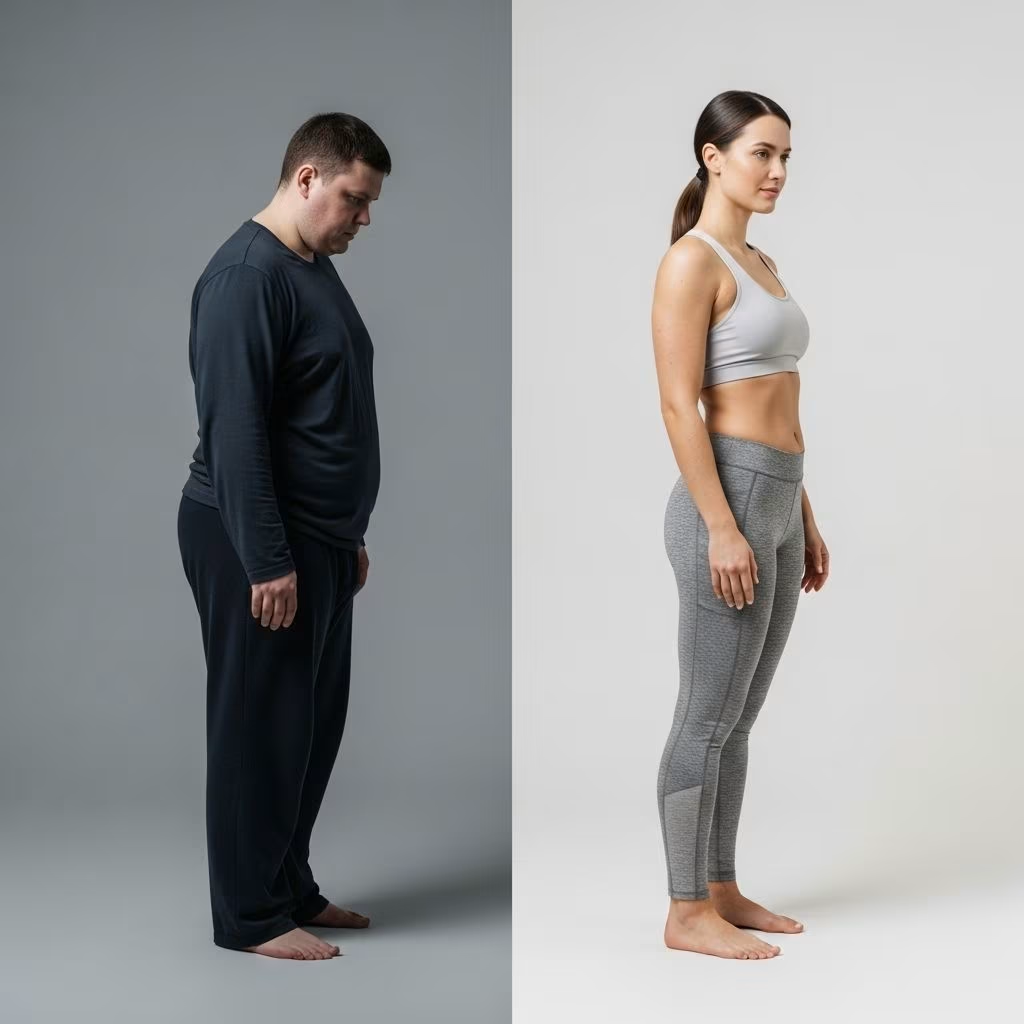
What Really Happens to Your Body When You Lose Weight
Millions embark on weight loss journeys each year, driven by aspirations for better health, improved appearance, and higher self-esteem. Yet, rarely do we pause to ask: What actually happens inside the body when we lose weight? The process encompasses far more than numbers on a scale—it is a complex physiological and psychological interplay, with far-reaching effects well beyond pants size. In this comprehensive guide, we unravel the science of weight loss, the metabolic changes your body undergoes, and the best strategies for achieving healthy, lasting results.
How Weight Loss Affects Your Body
Losing weight is fundamentally about reducing body fat, but the true impact is systemic, affecting every organ and system. When caloric intake drops below what your body burns, it draws energy from fat stores, shrinking—but not eliminating—fat cells. However, this process also triggers compensatory mechanisms meant to protect you from what your body interprets as famine.
- Initial Weight Loss: Most early loss is water weight as glycogen (your body’s stored carbohydrate) is depleted, releasing water in the process.
- Fat Loss Phase: As the calorie deficit continues, your body increasingly taps into stored fat for energy.
- Muscle Loss Risk: Without enough dietary protein or resistance exercise, there’s a risk of losing lean muscle along with fat.
- Whole-Body Effects: Weight loss can impact mood, skin, hormone production, and even the way your brain perceives hunger and fullness.
What Happens to Fat When You Lose Weight?
Fat, or adipose tissue, has a single job: energy storage. When you lose weight, your body breaks down the triglycerides (fat molecules) stored in these fat cells for use as fuel. The result?
- Fat cells shrink, but do not disappear. The number of fat cells in your body stays roughly the same, but they become smaller as stored energy is used up.
- Waste products are released. The process releases carbon dioxide (which you breathe out) and water (which you excrete via urine, sweat, and breath).
- Potential for regain remains. With fat cells still present, your body is primed to refill them if old habits return.
Key takeaway: Fat loss reduces cell size, not number, and the body is wired to defend those fat stores.
Metabolic Slowdown: How Your Body Fights Back
Evolution has primed your body to resist weight loss at all costs. When you reduce calories:
- Metabolic rate drops. Your resting energy expenditure (the calories you burn at rest) decreases in response to less food, a phenomenon known as “adaptive thermogenesis.”
- Hunger hormones increase. Ghrelin (the hunger hormone) rises, making you feel hungrier.
- Satiety hormones decrease. Leptin and other hormones that signal fullness drop, reducing satisfaction after meals.
- Energy conservation behaviors emerge. You may feel less energetic or unconsciously move less.
These survival mechanisms, once vital for enduring famine, work against you when trying to lose weight in a world of abundant calories. This helps explain why weight regain is so common—even when most of the lost weight was fat and not muscle.
Muscle Mass and Energy Expenditure
Maintaining muscle during weight loss is vital for your metabolism and overall health. Here’s why:
- Muscle burns more calories than fat. Preserving muscle mass helps prevent dramatic metabolic slowdown.
- Strength training helps spare muscle. Combining exercise—especially resistance training—with a healthy diet helps retain muscle during fat loss.
- Protein intake is crucial. Sufficient protein supports muscle preservation and can help you feel fuller longer.
Active living also boosts N.E.A.T. (Non-Exercise Activity Thermogenesis)—the calories your body expends through non-exercise movement such as walking, standing, and fidgeting. These daily movements add up and can account for a significant portion of your overall calorie burn.
Hormonal and Mood Changes During Weight Loss
Weight loss doesn’t just impact your body; it can influence your mind, stress levels, and emotional well-being.
- Hunger and mood: Calorie restriction boosts cravings and can dampen mood, increasing the risk of irritability and low energy.
- Sleep is affected: Inadequate nutrient and calorie intake can disrupt sleep, which can, in turn, interfere with weight loss and increase stress hormones (like cortisol).
- Body image can shift—for better or worse: For some, weight loss brings confidence, but for others it can spark anxiety or reinforce unhealthy thought patterns.
- Metabolic and reproductive hormones fluctuate: Major weight loss may impact thyroid, sex, and fertility hormones, especially in women.
It’s critical to prioritize mental health and a balanced state of mind, not just a smaller body.
Why Is Regaining Weight So Common?
Despite best efforts, research shows that many people who lose weight regain some (or all) of it within a few years. Why?
- Metabolic adaptation: The body’s defense mechanisms mean your new, lower weight requires fewer calories for maintenance. Return to previous eating or activity habits and the extra energy is stored.
- Biological drive for homeostasis: Hormone levels, appetite signals, and even brain chemistry push you back to your previous weight set point.
- Unsustainable approaches: Restrictive diets or excessive exercise plans are hard to maintain, leading to burnout and rebound.
- Environmental influences: Easy access to calorie-dense foods, stress, and social cues can override your best intentions.
- Fat cell memory: Since fat cells shrink but do not disappear, they remain prepared to store fat again when calorie intake rises.
This doesn’t mean weight loss is futile—but it underscores that sustaining loss is a separate challenge, requiring long-term behavioral and environmental change.
How to Lose Weight the Healthy, Sustainable Way
Healthy, lasting weight loss is much more than willpower or sheer effort. Here’s what the science and experts recommend:
- Prioritize whole, nutrient-rich foods: Fill half your plate with vegetables, add lean proteins, healthy fats, and whole grains.
- Avoid extreme diets: Slow, steady progress is more likely to last than rapid, restrictive plans.
- Keep a food diary: Tracking what you eat increases awareness and accountability.
- Don’t skip meals: Regular meals help control blood sugar, appetite, and cravings.
- Stay hydrated (but don’t drink your calories): Water is best—caloric beverages are less filling and contribute to excess intake.
- Eat more mindfully: Slow down and pay attention to hunger/fullness cues; distracted eating leads to overconsumption.
- Include healthy fat sources: Such as nuts, avocados, eggs, and olive oil, for satiety and nutrient absorption.
- Set small, realistic goals: Focus on achievable steps rather than unsustainable ambitions.
- Increase your N.E.A.T.: Stand, stretch, and move more throughout the day to boost calorie burn.
- Get enough sleep: Aim for 7+ hours nightly; sleep deprivation raises hunger and stress hormones.
Sample Day of Sustainable Weight Loss Habits
| Time | Habit |
|---|---|
| 7:00 am | Eat a protein-rich breakfast |
| 9:00 am | Go for a short walk or stretch |
| 12:00 pm | Lunch: Fill half your plate with vegetables |
| 3:00 pm | Hydrate with water, not sugary drinks |
| 6:00 pm | Mindful dinner, focusing on satiety and slow eating |
| 9:00 pm | Prepare for minimum 7 hours of sleep |
A New Perspective: Focusing on Health Over Numbers
Most weight loss advice is centered around numbers—calories, pounds, inches. But genuine wellness requires a more holistic viewpoint:
- Healthy behaviors matter more than the scale. Eating nutrient-rich foods, regular movement, and prioritizing sleep all contribute to health—even if the scale doesn’t move much.
- Stop chasing a thin ideal. The body’s biology is naturally resistant to excessive leanness.
- Self-acceptance is protective. Cultivating appreciation for your body boosts motivation and mental health, creating a more sustainable foundation for healthy habits.
- Focus on non-scale victories. Better energy, improved sleep, lower cholesterol, and more confidence are all valuable results.
Remember: Even modest weight loss (5–10% of initial body weight) yields significant health improvements, such as better blood sugar, cholesterol, and pressure.
Frequently Asked Questions (FAQs)
Q: Why do I stop losing weight after the first few weeks?
A: Early weight loss is usually water weight; after that, metabolism slows and your body becomes more efficient. Plateaus are common and can be overcome by reassessing intake, boosting movement, and ensuring proper sleep.
Q: Is it bad to lose weight quickly?
A: Rapid loss (more than 2 pounds per week) raises risk of muscle, bone, and nutrient loss. Slow, steady loss better preserves health, muscle, and long-term results.
Q: Are diet sodas helpful for weight loss?
A: Research links diet soda with increased calorie intake and potential weight gain, especially in children and teens. Water is the best choice for hydration.
Q: How important is exercise compared to diet?
A: Nutrition plays the largest role in weight loss, but activity prevents muscle loss, improves mood, and helps maintain weight. Non-exercise movement (N.E.A.T.) also makes a difference.
Q: Can anyone reach a ‘normal’ BMI through diet and exercise?
A: For many, especially with a history of higher body weight, long-term studies suggest reaching a “normal” BMI is rare. Focus on health-promoting habits over a target number.
References
- https://www.prevention.com/weight-loss/a36065492/rethinking-body-weight/
- https://www.prevention.com/weight-loss/a30188568/lose-weight-without-exercise-0/
- https://www.prevention.com/weight-loss/diets/a60578947/how-to-lose-weight-fast-safely/
- https://www.prevention.com/weight-loss/
- https://www.prevention.com/weight-loss/g20434758/the-3-body-types-and-how-they-affect-your-weight-loss/
- https://www.prevention.com
- https://www.prevention.com/weight-loss/g20441544/losing-weight-without-trying/
- https://www.prevention.com/weight-loss/a20481618/right-weight-for-your-body/
- https://www.prevention.com/walk-off-weight/
- https://www.prevention.com/weight-loss/a20474562/best-weight-loss-exercises/


