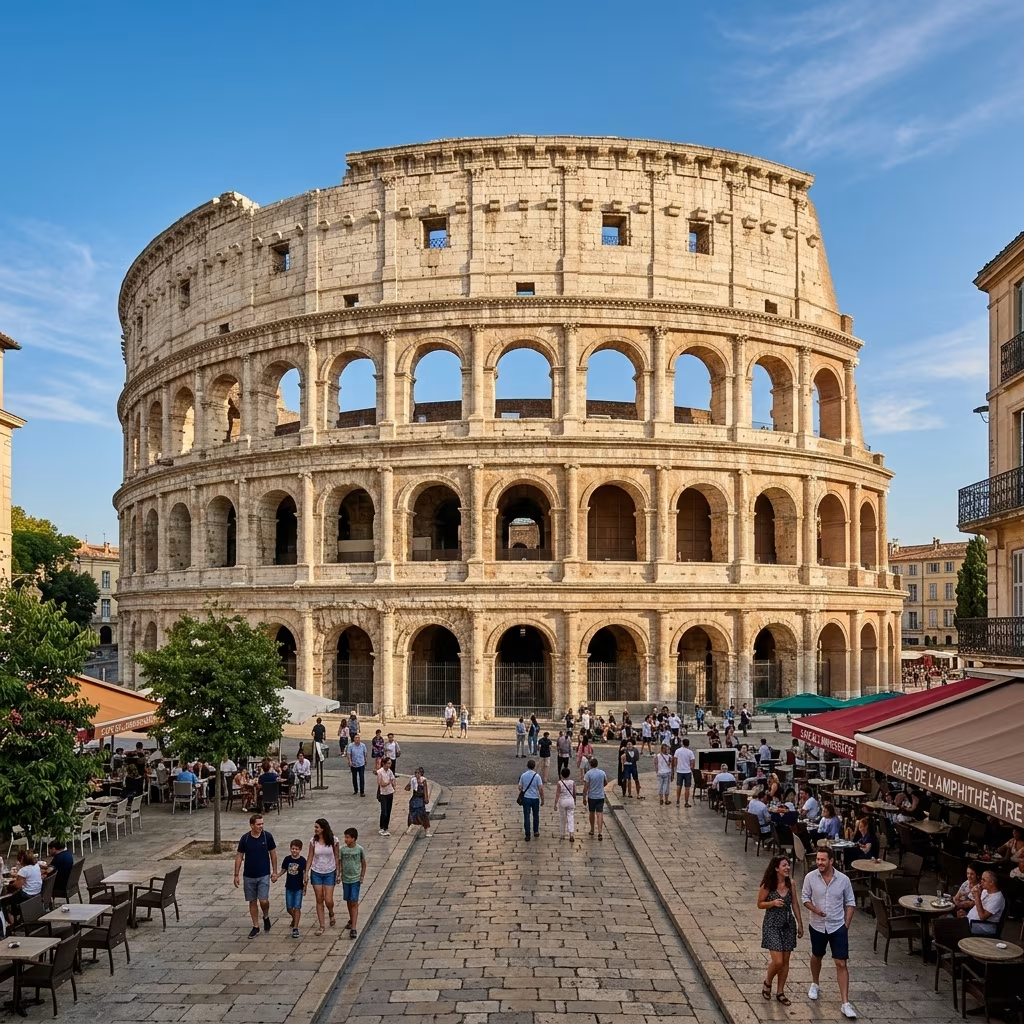
Roman Splendor and Life in Nîmes, France
Nestled in the heart of southern France, Nîmes blends ancient Roman heritage with vibrant Provençal culture. While travelers to Provence often flock to Arles and Avignon, those who venture to Nîmes discover a living city whose timeless monuments, leafy promenades, and proud traditions set it apart. From the streets where gladiators once fought, to bustling café terraces and grand gardens, Nîmes rewards visitors with both spectacular sights and authentic daily life.
Contents
- Introduction to Nîmes
- Origins and Roman History
- The Maison Carrée: A Roman Jewel
- The Arena: Gladiators and Heritage
- Musée de la Romanité: Past Reimagined
- Pont du Gard: Aqueduct Masterpiece
- Daily Life and Provençal Traditions
- From Denim to Gardens: Nîmes’ Innovations
- Beyond Nîmes: The Magic of Provence
- Frequently Asked Questions (FAQs)
Introduction to Nîmes
Nîmes (pronounced “Neem”) stands at the crossroads of history, where the relics of Rome mingle with the pleasures of modern-day French life. Though often overshadowed by its more famous neighbors, the city is an underappreciated gem — an unhurried place where ancient stones and leafy boulevards frame a uniquely southern art de vivre.
Most travelers heading to Provence have lists topped with Arles and Avignon, famous for their festivals and papal heritage. Yet, those who journey slightly off the beaten path to Nîmes encounter:
- Imposing Roman ruins second only to Rome itself
- A charismatic old town, pedestrian-friendly and brimming with local flair
- An animated market culture offering a taste of authentic Provence
- Open-air parks and leafy squares perfect for lingering over coffee or wine
Visiting Nîmes is not simply about sightseeing, but about absorbing a city’s pulse — one that reverberates through centuries.
Origins and Roman History
Nîmes began as a Celtic settlement around 500 BC, but its true transformation arrived with Rome. In the first century BC, Emperor Augustus integrated Nîmes into the Roman Empire, bestowing on it the privileges — and architecture — of a regional capital. The city’s prosperity merited:
- One of the longest Roman city walls in the ancient world
- Grand civic buildings, including temples and arenas
- A 30-mile-long aqueduct to supply water for citizens and industry
The legacy of Roman might still shapes Nîmes’ identity. Today, visitors stroll streets once patrolled by legionnaires, and can still trace the city’s original wall in fragments through the modern urban fabric.
The Maison Carrée: A Roman Jewel
At the heart of ancient Nîmes stands the Maison Carrée (“Square House”), a beautifully preserved Roman temple. This iconic monument rivals even the Pantheon in Rome for its completeness and elegance, and is considered one of the best examples of classical Roman architecture anywhere.
- Built under the reign of Augustus, the Maison Carrée is nearly 2,000 years old.
- Its clean lines, Corinthian columns, and compact size reflect both function and grace.
- The temple’s remarkable preservation is owed to its continuous use throughout history: first as a temple, later as a church, a town hall, public archives, art gallery, and finally as today’s renowned monument.
Visitors can admire the temple’s harmonious proportions, ornate capitals, and imposing staircase — all testament to the engineering mastery and enduring taste of Roman civilization. Inside, exhibits and films often introduce the city’s ancient story, making the Maison Carrée an ideal first stop.
The Arena: Gladiators and Heritage
If the Maison Carrée is Nîmes’ crown, the amphitheater is its beating heart. This magnificent oval arena is among the best-preserved in the Roman world, continuing to serve as a stage for spectacles — from ancient gladiatorial combat to modern concerts and festivals.
- Built around the end of the 1st century AD, the arena could seat 24,000 spectators.
- Its design is a marvel: 34 rows of seats envelop a perfectly symmetrical oval stage, while 60 passageways (vomitoria) ensured the crowds could enter and exit efficiently.
- Below ground, a labyrinth of chambers and lifts allowed organizers to stage elaborate events, including hoisting wild animals and stage props up to the arena floor.
Today, visitors can:
- Take guided tours that reveal both the daily life of ancient Romans and secrets of amphitheater construction
- Climb to the highest rows for sweeping views of Nîmes’ rooftops and boulevards
- Attend events — such as the Feria de Nîmes — which return the arena to its roots as a place of communal celebration
Unlike their Roman predecessors, modern spectacles are bloodless: Provençal bullfights celebrate the animal’s cunning rather than its demise, a unique tradition where the bull, not the matador, is often the star.
Musée de la Romanité: Past Reimagined
Facing the arena is the Musée de la Romanité (Museum of Romanity), a cutting-edge institution that brings to life the city’s ancient legacy. Opened in the 21st century, the museum displays:
- 5,000+ artifacts tracing Nîmes’ story from pre-Roman times to the Middle Ages
- Latin-inscribed stones, intricate mosaics, statues, pottery, and everyday objects
- Interactive media stations and immersive exhibits that make history accessible for all ages
- Special finds unearthed in recent excavations, including discoveries made during modern construction
A visit here deepens appreciation for the continuity of daily life in Nîmes. Beyond the grandeur of emperors and generals, the museum highlights the daily rituals, beliefs, and artistry of ordinary citizens across twenty centuries.
Pont du Gard: Aqueduct Masterpiece
No exploration of Roman Nîmes is complete without a pilgrimage to the Pont du Gard, a monumental aqueduct-bridge spanning the Gardon River about 30 minutes from town. This UNESCO World Heritage site embodies the daring and precision of ancient Roman engineering.
- The aqueduct, stretching over 30 miles in total, was constructed around 19 BC to bring water from a distant spring to Nîmes.
- While much of the route ran underground, the Pont du Gard rises in three tiers, its massive limestone blocks fitted together without mortar.
- The bridge is meticulously sloped — descending less than an inch every hundred yards — ensuring a gentle, continuous flow for centuries.
Visitors can:
- Hike scenic trails for panoramic views of the bridge and the lush Gardon valley
- Join guided tours that allow you to walk atop the aqueduct’s channel, just as Roman maintenance crews once did
- Explore the Pont du Gard museum, offering hands-on displays and detailed models
- Enjoy summer picnics or canoeing beneath the ancient arches
- Experience unique nightly light shows that illuminate the monument’s grandeur
The Pont du Gard continues to awe both engineers and artists, providing a tangible link between the ancient and present-day worlds.
Daily Life and Provençal Traditions
While Nîmes’ monuments draw visitors, the rhythms of daily life invite them to linger. The city center is renowned for its:
- Pedestrianized lanes lined with shaded plane trees and chic 19th-century façades
- Café terraces where locals convene for leisurely meals and lively conversation
- Vibrant market halls stocked with Provençal produce, cheeses, meats, and olives
- Local festivals and street performances that animate the calendar year-round
Strolling through these streets, visitors sense the spirit of a town that is both proud of its past and deeply connected to its contemporary joys.
From Denim to Gardens: Nîmes’ Innovations
Few realize that denim, the foundation of countless blue jeans, was invented in Nîmes. The fabric’s name comes from “de Nîmes,” literally “from Nîmes.” In the 18th century, a vibrant textile industry provided prosperity here, powered by an extensive canal network that kept looms humming and dyers supplied.
This spirit of innovation extended beyond the factories to urban planning. In the 18th century, Jardins de la Fontaine (“Fountain Gardens”) became one of Europe’s earliest public parks, built on the site of a Roman spring:
- The gardens echo the grandeur of Versailles, but were created for the populace — not royalty.
- Visitors find marble statues, reflective pools, tree-shaded avenues, and whimsical fountains.
- The park remains a favorite gathering spot, ideal for picnics, leisure, or a game of boules (the Provençal take on bocce).
Nîmes’ adaptability — blending innovation with tradition — is symbolized in these gardens, where ancient relics and modern life coexist gracefully.
Beyond Nîmes: The Magic of Provence
Nîmes serves as a superb base for exploring the wider riches of Provence:
- The Côtes du Rhône wine region lies just an hour north, with rolling vineyards and rustic villages dotting the landscape. Tasting routes reveal the hospitality and flavors that have made the region world-famous for wine.
- Nearby towns like Avignon and Arles offer their own charms: from the papal palace in Avignon to the creative legacy of Van Gogh in Arles, who was drawn by the Provençal light and energy.
- Fields of lavender, sunflower, and almond orchards perfume the air and color the countryside, drawing painters and dreamers alike.
- Traditional festivals — from open-air markets to bullfights in ancient arenas — keep Provençal heritage alive for all to enjoy.
Travelers looking for more than monuments will find in Nîmes and its surroundings the substance of la belle vie: a slow pace, rich culture, and friendship born over glasses of local wine.
Frequently Asked Questions (FAQs)
Q: What is the best time to visit Nîmes?
A: The best times are spring (April–June) and fall (September–October), when the weather is pleasant and the crowds lighter. Summers offer lively festivals but can be busy and hot.
Q: Are the Roman monuments wheelchair accessible?
A: Many major sites, including the Maison Carrée and Musée de la Romanité, are accessible. The amphitheater offers access to ground-level areas, though some upper tiers require stairs.
Q: Is the Pont du Gard worth a separate trip?
A: Absolutely. The Pont du Gard is one of the world’s most impressive Roman engineering feats, and the site also features a museum, scenic walks, and river activities for families.
Q: What local dishes should I try in Nîmes?
A: Sample brandade de morue (salt cod puree), local olives, tapenade, Provençal cheeses, and Côtes du Rhône wines. For dessert, the calisson, an almond-paste sweet, is a regional specialty.
Q: What makes Nîmes different from Arles or Avignon?
A: Nîmes is less crowded and feels authentically Provençal, blending grand Roman monuments with a lively market culture, denim heritage, and inviting gardens. Each city is unique, but Nîmes offers perhaps the purest sense of southern French charm and history.
References
- https://www.youtube.com/watch?v=0L7nrtVgOu0
- https://www.ricksteves.com/watch-read-listen/read/articles/nimes-france
- https://www.ricksteves.com/watch-read-listen/video/tv-show/provence-legendary-light-wind-and-wine
- https://www.ricksteves.com/watch-read-listen/read/articles/under-the-roman-sun-in-provence
- https://blog.ricksteves.com/blog/nimes-market/
- https://community.ricksteves.com/travel-forum/france/one-week-in-france-two-days-in-nimes-where-else
- https://www.ricksteves.com/watch-read-listen/read/articles/europe-shines-on-summer-evenings