Black Moon: The Hidden Phase of the Lunar Cycle
Throughout human history, the moon has inspired our imaginations, guided agricultural cycles, and become the centerpiece of countless myths. Among the phases of the moon, one particularly rare event stands out—called the Black Moon. Unlike blood-red lunar eclipses or the blue-tinged rarity of a second full moon in a month, the Black Moon is remarkable precisely because it is invisible—and yet it holds a unique astronomical and cultural intrigue.
What Is a Black Moon?
The term Black Moon is not an official astronomical designation, but rather a popular name given to certain rare occurrences of the new moon. A new moon is the phase when the Moon’s illuminated side faces away from Earth and it occupies the same region of sky as the Sun, rendering it invisible to our eyes. A Black Moon takes this a step further, referring to cases when new moons appear recurrently or in unusual cycles.
Much like the Blue Moon (the second full moon in a calendar month), the Black Moon is based on calendar quirks rather than dramatic visual changes in the night sky. In other words, during a Black Moon, the sky will actually be no different from any other new moon—completely dark, as the moon is hidden in sunlight.
Types and Definitions of a Black Moon
Because ‘Black Moon’ is not a scientific term, its definition can vary. Astronomers and sky watchers have identified several situations that qualify as Black Moons:
- Second New Moon in a Single Calendar Month: The most popular definition is when two new moons occur within one calendar month. Given the lunar cycle lasts about 29.5 days, this occurs every 29–32 months, depending on time zones and leap years.
- Third New Moon in a Season With Four New Moons: More rarely, a season (the period between a solstice and an equinox, or vice versa) can contain four new moons rather than the usual three. The third new moon in such a season is called a Black Moon.
- No New Moon in a Month: In February, owing to its shorter duration, there can occasionally be a month with no new moon at all (it can only happen in February). Some sources call this absence of a new moon a Black Moon.
- No Full Moon in a Month: Similarly, a month can sometimes lack a full moon (again, only possible in February), leading some to refer to this as a Black Moon, but this definition is less common.
Though each type is rare, the ‘second new moon in a month’ and ‘third new moon in a season of four’ are the most widely recognized by astronomers.
Why Is the Black Moon Rare?
The lunar cycle (lunation) lasts roughly 29.5 days. A typical year contains about 12.37 full cycles of the moon. Because our Gregorian calendar months are not perfectly synced with the lunar cycle, occasionally, an anomaly occurs: either a month with two new moons, or a season with four new moons.
- Second new moon in a month: Occurs every 29 to 32 months.
- Third new moon in a season with four: Occurs roughly once every two and a half to three years.
The Black Moon is even rarer than a Blue Moon, due to the smaller window for new moons within a given period. Add the oddities of leap years and differences in time zones across the world, and you get a phenomenon that is difficult to witness—at least, by calendar alone.
Upcoming and Historical Black Moons
The Black Moon is a recurring yet largely invisible member of the lunar calendar. Here are examples of recent and upcoming Black Moons, focusing on the most commonly referenced types:
| Black Moon Type | Date | Region Where Observed |
|---|---|---|
| Seasonal (3rd in 4 new moons) | May 19, 2023 | Global |
| Seasonal (3rd in 4 new moons) | August 23, 2025 | Global |
| Monthly (2nd new moon in month) | November 30, 2024 | Pacific Northwest, USA |
The next similar event after August 2025 is expected in 2028. Each region may experience the Black Moon on slightly different dates based on local time.
Scientific Significance
From an astronomical perspective, the Black Moon does not involve any change in the Moon’s appearance or unusual alignments. It is a phenomenon born of calendar arithmetic, reflecting the interplay between solar and lunar cycles.
- Lunar Phases: The moon cycles through its phases approximately every 29.5 days, beginning with new moon, waxing crescent, first quarter, and so on.
- Alignment: At new moon, the Moon is generally between the Earth and the Sun. Its unilluminated side faces Earth, making it invisible.
- Lack of Visual Change: The Black Moon is identical in appearance to any new moon—completely invisible (unless there is a rare solar eclipse, which can only occur at new moon but is unrelated to the Black Moon designation).
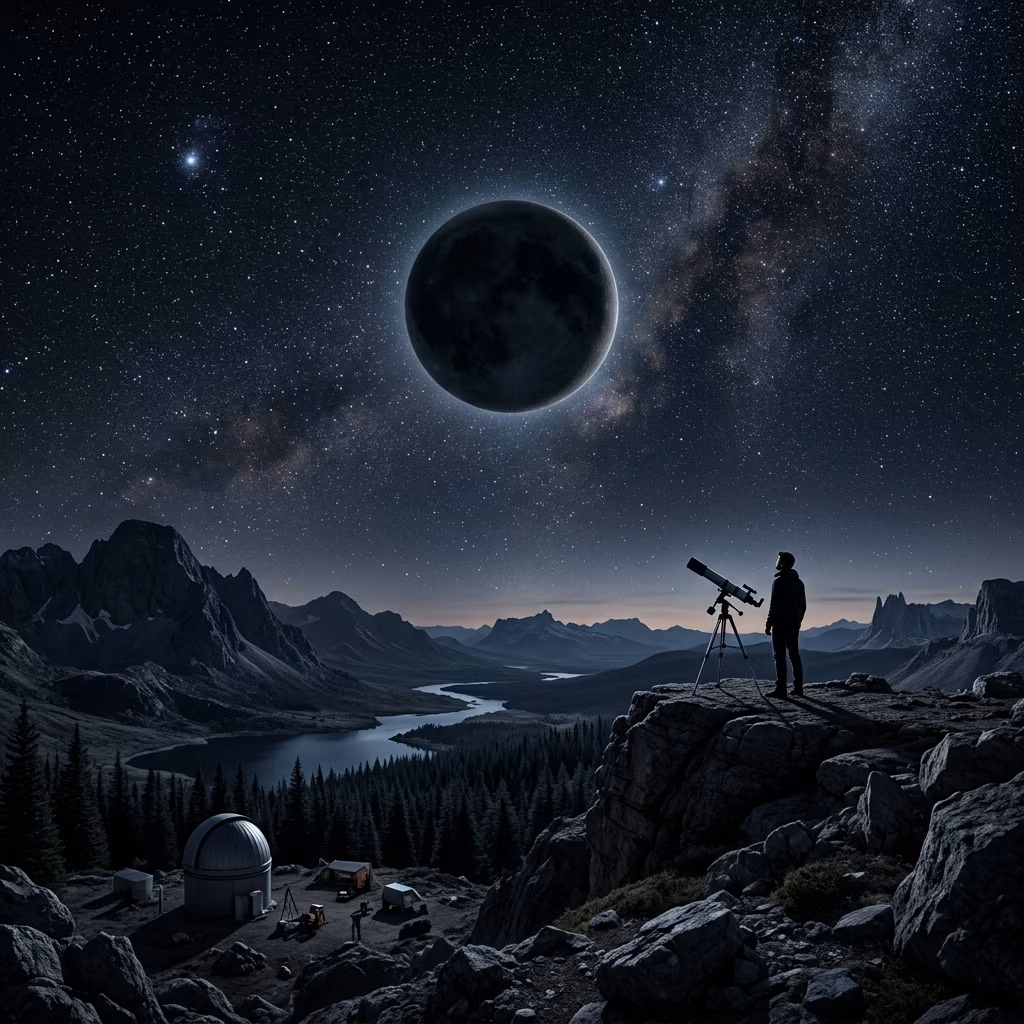
However, for astronomers and astrophotographers, this moonless night offers the darkest skies and the perfect opportunity to observe deep-sky objects, the Milky Way, and meteor showers free of lunar glare.
Cultural and Spiritual Perspectives
Despite its scientific ordinariness, the Black Moon has acquired rich meanings in folklore, astrology, and spiritual practices:
- Symbol of Renewal: The new moon in many traditions symbolizes new beginnings, hidden potential, and transformation. The Black Moon, being an unusually rare new moon, is seen as an amplified version of this symbolism.
- Astrological Significance: In modern astrology, Black Moons are thought to represent intensified energies for setting intentions, breaking old patterns, and deep introspection.
- Rituals and Beliefs: Some practitioners use the Black Moon for heightened rituals, meditations, or spiritual work, viewing it as a liminal or ‘between the worlds’ period.
- Myth and Superstition: The rarity of the Black Moon has also led to assorted superstitions about luck, omens, or mystical events, although none have astronomical grounding.
While scientists regard the Black Moon simply as a calendar occurrence, it remains a fascinating motif in cultural storytelling.
Black Moon vs. Blue Moon and Blood Moon
With so many evocative names—Blue Moon, Blood Moon, Black Moon—it’s helpful to clarify their distinctions:
| Lunar Event | Definition | Visual Changes? |
|---|---|---|
| Black Moon |
| No—moon is invisible as with any new moon |
| Blue Moon |
| No—moon appears as usual |
| Blood Moon |
| Yes—moon turns copper-red due to Earth’s atmosphere |
Where Blue or Blood Moons can involve striking colors or rare alignments, the Black Moon is only distinguishable by its absence—an invisible phenomenon rooted in our calendar’s rhythms.
Observing the Black Moon
While the Black Moon itself cannot be seen (since it coincides with the new moon), it creates ideal conditions for night sky observation:
- Dark Skies: With no visible moon, stargazers can observe faint celestial objects like nebulae, star clusters, and even the core of the Milky Way.
- No Special Equipment Needed: Unlike an eclipse, there is nothing specific to watch for regarding the moon, but binoculars and telescopes reveal a plethora of deep-sky treasures under moonless skies.
- Best Locations: Observing from areas far from city lights maximizes visibility of faint astronomical objects during a Black Moon.
- Upcoming Event Example: On August 23, 2025, at 2:06 AM EDT (06:06 GMT), the Black Moon will occur in the constellation Leo, coinciding with the darkest skies of the season.
Photographers and astronomers prize these nights for astrophotography and ambitious observation sessions.
Frequently Asked Questions (FAQs)
Q: Can you see the Black Moon?
A: No, the Black Moon occurs during the new moon phase, when the Moon is nearly aligned with the Sun and its illuminated side is turned away from Earth, making it invisible.
Q: How often do Black Moons occur?
A: Depending on the definition, a Black Moon can take place about every 29 to 33 months as the second new moon in a month, or every 2.5 to 3 years as the third new moon in a four-new-moon season.
Q: What’s the difference between a Black Moon and a Blue Moon?
A: A Blue Moon refers to the second full moon in a calendar month, while a Black Moon refers to extra new moons—either the second new moon in a month or the third in a season with four.
Q: Is there cultural meaning to a Black Moon?
A: In folklore and modern spiritual circles, the Black Moon is often associated with beginnings, transformation, and heightened energy. However, these meanings are cultural rather than scientific.
Q: Will there be anything special to see during the Black Moon?
A: The sky will be at its darkest, offering ideal stargazing and astrophotography opportunities, but the Moon itself will not be visible.
Q: When is the next Black Moon?
A: The next widely recognized Black Moon based on the ‘third new moon in a season of four’ occurs on August 23, 2025.
Sources & References
- Time and Date: What is a Black Moon?
- Space.com: A rare Black Moon rises with the sun on Aug. 23: Here’s what to expect
- NASA Space News: The Black Moon Is Here, and It’s Unlike Any Lunar Event You’ve Seen
- BBC Science Focus: What is a Black Moon?
- Science Focus Magazine: Black Moon, Blue Moon, Blood Moon
- The Peculiar Brunette: Black Moon Spiritual Meaning
References
- https://www.space.com/34239-black-moon-blue-moon-blood-moon-lunar-names.html
- https://www.space.com/stargazing/a-rare-black-moon-rises-with-the-sun-on-aug-23-2025-heres-what-to-expect
- https://www.timeanddate.com/astronomy/moon/black-moon.html
- https://www.youtube.com/watch?v=mf8N2wgQ2Fs
- https://www.youtube.com/watch?v=wpwOowGRmEg
- https://nasaspacenews.com/2024/11/the-black-moon-is-here-and-its-unlike-any-lunar-event-youve-seen/
- https://www.sciencefocus.com/space/black-moon-april-2022
- https://www.thepeculiarbrunette.com/black-moon-spiritual-meaning-and-ritual-intentions/
- https://divineharmony.com/astrology-blog/the-great-black-conjunction-of-black-sun-and-black-moon-%E2%9C%A8%F0%9F%96%A4%E2%9C%A8/
- https://www.mentalfloss.com/article/527320/winter-meteors-valentines-day-star-and-black-moon-guide-february-night-sky
- https://www.theweathernetwork.com/en/news/science/space/seasonal-black-moon-august-28-2025?_guid_iss_=1
- https://www.livescience.com/space/the-moon/a-rare-black-moon-rises-this-weekend-what-is-it-and-what-can-you-see
- https://foreverconscious.com/black-moon-ritual-clearing-manifesting-september-2016