Best Telescopes for Beginners in 2025
Embarking on your astronomy journey can be both exciting and overwhelming. Telescopes open the door to stunning views of the Moon, planets, and deep space, but choosing the right first telescope is critical to enjoying the experience. In this guide, we break down the best beginner telescopes for 2025, discuss what features matter most, review standout models, and provide expert advice to help you confidently find the best telescope for your needs.
How to Choose a Beginner Telescope
Before reviewing individual telescopes, it’s essential to understand what to look for in a beginner telescope. A good starter telescope should be easy to use, portable, offer clear views of key celestial targets, and fit your budget. Consider the following criteria when shopping:
- Ease of Use: Telescopes with simple mounts and intuitive controls are ideal for newcomers.
- Maintenance: Refractor telescopes generally require less alignment and cleaning compared to reflectors.
- Portability: Lightweight, compact models are best if you need to transport the telescope.
- Price: There are excellent beginner options at various price points; avoid over-investing in features you may not need at the start.
- Automated Features: Some beginner telescopes use smartphones or computers to help you find objects in the sky more easily.
Top Beginner Telescopes of 2025
Our experts and testers have evaluated dozens of models to bring you this curated list of the best beginner telescopes of 2025. Each recommendation addresses common beginner needs, whether you’re searching for portability, value, or ease of use.
Celestron Astro Fi 130
- Type: Newtonian Reflector
- Main Features: App-controlled via SkyPortal, SkyAlign technology, sturdy aluminum tripod
- Magnification: 65x (10mm), 26x (25mm)
- Pros: Easy for beginners, quick object finding, great lunar and planetary viewing
- Cons: Dependent on app, battery drains quickly in cold, eyepiece upgrades recommended
This is a highly capable entry-level telescope, balancing affordability with quality. The SkyAlign technology and SkyPortal app allow you to align and control the telescope with minimal prior knowledge, and the optics deliver solid views of the Moon and planets. It’s ideal for those who value technology integration and user-friendliness.
Celestron StarSense Explorer LT 80AZ
- Type: Refractor
- Main Features: Smartphone-guided pointing, manual operation, easy setup
- Pros: Highly intuitive, excellent for quick learning, portable design
- Cons: Limited aperture for deep space, best suited to solar system objects
This innovative telescope uses your smartphone to guide you to celestial objects, making the process of finding stars, planets, and galaxies much less intimidating for first-timers. The refractor design keeps maintenance to a minimum, and the lightweight build is perfect for impromptu sessions on clear nights.
Celestron NexStar 4SE
- Type: Computerized Maksutov-Cassegrain
- Main Features: Fully motorized mount, SkyAlign tech, GoTo object finder
- Pros: Exceptional tracking, user-friendly interface, excellent optics
- Cons: Higher price, requires external power source for extended sessions
The NexStar 4SE is the perfect blend of advanced automation and approachable controls. Beginners can effortlessly locate thousands of objects with its GoTo system, which precisely slews the scope to your target. This model is a solid investment for anyone who anticipates growing with their telescope.
Sky-Watcher Heritage 130P
- Type: Tabletop Newtonian Reflector
- Main Features: Collapsible tube, large aperture for price, manual controls
- Pros: Great light-gathering, compact, affordable
- Cons: Table required for comfortable use, no computerized aids
The Heritage 130P delivers impressive performance in a compact, portable design. Its 130mm aperture means bright, sharp images of planets and brighter deep sky targets, all while remaining budget friendly. This is an excellent choice for families and those limited on space or cost.
Unistellar eVscope eQuinox 2
- Type: Smart Digital Telescope
- Main Features: Real-time image stacking, smartphone integration, automatic alignment
- Pros: Simple, digital viewing, excellent for urban astronomers, community science features
- Cons: Costly, images viewed digitally—not through an eyepiece
This “smart” telescope is ideal for those who prefer a digital experience. The eVscope eQuinox 2 stacks images in real time to provide stunning views even in light-polluted city environments. It’s a top pick for tech enthusiasts keen on sharing observations and engaging in citizen science projects.
Key Features of Beginner Telescopes
Beginner telescopes come in several core designs, each with specific strengths:
- Refractors: Durable and low-maintenance; great for viewing planets and the Moon.
- Reflectors: Larger apertures at lower cost for fainter deep-sky targets, but require more cleaning and collimation (alignment).
- Catadioptrics: Compact and powerful, often feature computerized tracking and GoTo technology.
Additional beginner-friendly features include:
- Altazimuth and Dobsonian Mounts: Easier for beginners than equatorial mounts.
- Wide-Field Eyepieces: Help locate objects more easily and create impressive views of large targets.
- App connectivity or GoTo: Greatly assists with object finding and telescope control.
- Portability: Lightweight telescopes are easier to transport to dark-sky sites.
Stargazing Tips for New Telescope Owners
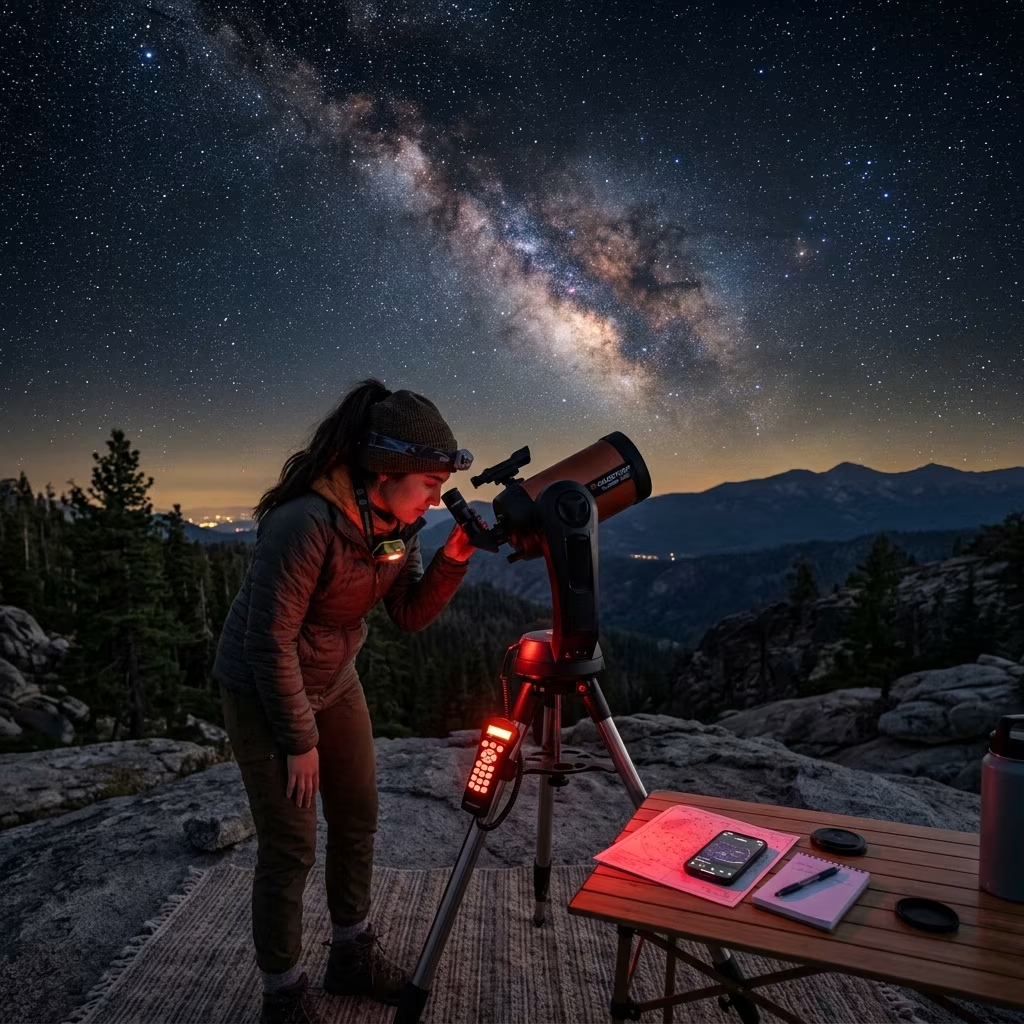
- Start with the Moon and bright planets like Jupiter and Saturn—these are visually rewarding and easy to find.
- Give your scope 15–30 minutes to acclimate to outdoor temperatures before observing.
- Avoid city lights where possible for clearer, sharper night sky views.
- Use star charts or mobile apps to plan what you want to observe each evening.
- Upgrade eyepieces for sharper, more comfortable views as your skills progress.
- Keep your optics clean but avoid over-cleaning, which can damage coated surfaces.
Comparison Table: Beginner Telescopes (2025)
| Name | Type | Recommended For | Main Advantage | Main Drawback |
|---|---|---|---|---|
| Celestron Astro Fi 130 | Reflector | Tech-savvy beginners | Easy app-assisted navigation | Relies on smartphone/app |
| Celestron StarSense Explorer LT 80AZ | Refractor | Manual fans, smartphone users | Superb guided learning experience | Smallest aperture on list |
| Celestron NexStar 4SE | Maksutov-Cassegrain | Users wanting automation | Full computerized GoTo control | Higher price |
| Sky-Watcher Heritage 130P | Reflector | Budget-conscious beginners | Value and portability | Needs table, no computerization |
| Unistellar eVscope eQuinox 2 | Smart Digital | Urban, tech-oriented users | Digital imaging, crowd science | Expensive |
Frequently Asked Questions (FAQs)
What type of telescope is best for beginners?
For most beginners, a simple refractor or a Newtonian reflector on an altazimuth or Dobsonian mount offers the best balance of ease and versatility. Computerized systems can help, but are not required to have great fun stargazing.
How much should I spend on my first telescope?
Quality starter telescopes range from $100 to $600. Avoid very cheap “department store” telescopes, as these often have poor optics and frustrating mounts. Consider spending a bit more on ease of use and better optics to ensure a positive first experience.
Can I use a beginner telescope for astrophotography?
While casual photos of the Moon and planets are possible using a smartphone, serious astrophotography requires more advanced telescopes and mounts suited to long exposures and stable tracking.
What can I expect to see with these telescopes?
You will be able to observe the Moon’s craters, Jupiter’s bands and moons, Saturn’s rings, various star clusters, and even some bright nebulae and galaxies under dark skies.
How important is the telescope’s aperture?
Aperture is the diameter of the main lens or mirror and determines how much light the telescope gathers—the larger the aperture, the brighter and clearer the image. However, for beginners, balancing aperture with portability and ease of use is essential.
Do I need computerized features?
Computerized and app-based features make locating objects much easier for novices but can add cost and complexity. Manual telescopes provide a more hands-on learning experience and are excellent for understanding sky navigation.
Final Thoughts
Investing in a beginner telescope is the first step toward a lifetime of cosmic exploration. When choosing your first telescope, prioritize ease of setup, quality optics, and suitable support materials (manuals, apps, or guides). No matter which model you select, patience and curiosity are your best companions on clear nights.
Still have questions after reviewing our guide? Reach out to local astronomy clubs or specialty stores for advice and hands-on demonstrations—they are invaluable resources for newcomers. Happy observing!
References
- https://www.space.com/31229-best-beginner-telescopes.html
- https://www.space.com/15693-telescopes-beginners-telescope-reviews-buying-guide.html
- https://www.youtube.com/watch?v=6TIOSPMZkL0
- https://www.astronomy.com/astronomy-for-beginners/best-telescopes-for-beginners-at-high-point-scientific/
- https://astrobackyard.com/beginner-astrophotography-telescope/
- https://www.astronomy.com/observing/best-telescopes-for-beginners/
- https://telescopicwatch.com/best-telescope-reviews/
- https://www.livescience.com/technology/best-beginner-telescopes
- https://astrobackyard.com/buying-your-first-telescope/
- https://skiesandscopes.com/beginners-telescope/
- https://www.skyatnightmagazine.com/top-astronomy-kit/best-telescopes-beginners
- https://www.planetary.org/articles/how-to-pick-the-perfect-beginner-telescope
- https://www.telescopenerd.com/articles/best-telescopes-for-beginners.htm
- https://starsandseas.com/best-telescopes-for-beginners/
- https://abigailbassett.com/2024/06/20/the-best-telescopes-for-beginners/
- https://www.livescience.com/best-telescopes
- https://www.popularmechanics.com/space/telescopes/reviews/a25198/best-telescopes-for-stargazing/
- https://telescopeschool.com/what-makes-the-best-telescope-for-beginners/