The full moon has long fascinated humanity, inspiring names and legends shaped by nature, agriculture, and cultural tradition. Each month’s full moon carries a unique title, echoing history, astronomy, and the deep connection our ancestors felt for the rhythms of the night sky.
Why Are Full Moons Named?
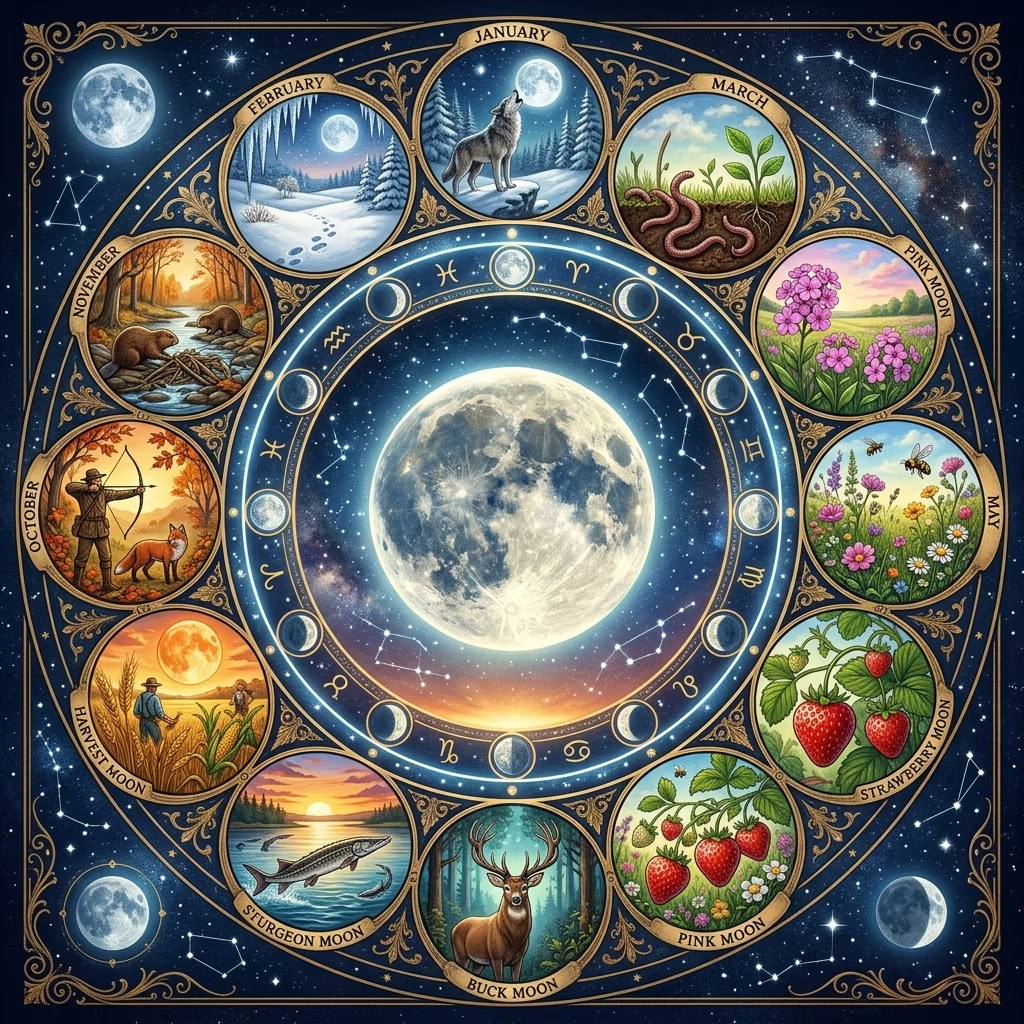
For centuries, different cultures around the world have given distinctive names to each full moon. These names arose from practical observations: the progression of the seasons, recurring weather conditions, animal behavior, and agricultural cycles. Many of the best-known full moon names in the modern West were adapted from Native American traditions, particularly those of Algonquian-speaking peoples in what is now the northeastern United States. Colonial settlers later adopted and popularized these names, and they persist in almanacs and calendars to this day.
- Names track the lunar calendar: Many Native American tribes used the cycles of the moon to keep time throughout the year.
- Reflection of seasonal change: Each name highlights natural phenomena, important harvests, or ecological events typical for its month.
- Folklore and identity: Names became part of oral tradition, helping communities pass down environmental knowledge and cultural stories over generations.
What Defines a Full Moon?
A full moon occurs when the Earth is positioned directly between the Sun and the Moon. Sunlight fully illuminates the side of the Moon we see from Earth, making it appear 100% bright and round. This alignment happens roughly every 29.5 days, marking one complete lunar cycle—a period that inspired many human timekeeping systems long before the modern calendar.
| Moon Phase | Position | Appearance |
|---|---|---|
| New Moon | Moon between Earth & Sun | Dark, invisible from Earth |
| Full Moon | Earth between Sun & Moon | Fully illuminated, round |
| Other Phases (Waxing, Waning, etc.) | Various | Partially illuminated (crescent, half, gibbous) |
Monthly Full Moon Names and Meanings
Below is a month-by-month guide to each full moon’s traditional name, its origin, and the seasonal significance behind it.
(2025 Full Moon dates are listed in Eastern Time, and * denotes a Super Moon.)
January: Wolf Moon
The January full moon is called the Wolf Moon, after the howling of hungry wolf packs amid the biting cold and deep snow of midwinter. The haunting calls of wolves were highly noticeable in the silence of January nights. Alternative names include Old Moon and Ice Moon.
- 2025 Date: Monday, January 13 — 5:27 p.m.
February: Snow Moon
February’s full moon is known as the Snow Moon because this month usually brings the heaviest falls of snow in North America. The enduring cold often made hunting difficult, so the full moon was also called the Hunger Moon or Storm Moon.
- 2025 Date: Wednesday, February 12 — 8:53 a.m.
March: Worm Moon
The Worm Moon marks the last full moon of winter. Its name refers to earthworm trails appearing in thawing soil, a sign of returning spring. Other regional or historic names include Crust Moon, Chaste Moon, Death Moon, and Sap Moon—the latter referencing the tapping of maple trees for syrup as the ground warms.
- 2025 Date: Friday, March 14 — 2:55 a.m.
April: Pink Moon
April’s full moon is called the Pink Moon after the name of wild ground phlox, one of the earliest widespread spring flowers in North America. Despite the name, the moon does not appear pink. Other aliases include Sprouting Grass Moon, Egg Moon, and Fish Moon, reflecting themes of renewal and the start of migration or spawning seasons.
- 2025 Date: Saturday, April 12 — 8:22 p.m.
May: Flower Moon
Celebrating the blooming of countless wildflowers, the Flower Moon signifies peak spring and nature’s awakening. The full moon in May is a time of abundance, growth, and fertility. Some traditions also use names like Hare Moon, Corn Planting Moon, and Milk Moon.
- 2025 Date: Monday, May 12 — 12:56 p.m.
June: Strawberry Moon
June’s Strawberry Moon recalls the short harvesting season for strawberries in northeastern North America, when the fruit ripens and is gathered. Europeans sometimes refer to it as the Rose Moon, while others call it the Hot Moon to denote the approach of summer heat.
- 2025 Date: Wednesday, June 11 — 3:44 a.m.
July: Buck Moon
Male deer (bucks) start regrowing their antlers in July after shedding them each year. This natural renewal grants July’s full moon its name: the Buck Moon. Other traditional designations include Thunder Moon, for the frequent summer storms, and Hay Moon, for the time of cutting and storing hay.
- 2025 Date: Thursday, July 10 — 4:37 p.m.
August: Sturgeon Moon
The Sturgeon Moon acknowledges the large freshwater fish, abundant in lakes across North America during late summer. Tribes along the Great Lakes and Lake Champlain fished for sturgeon at this time. Alternative names are Green Corn Moon, Grain Moon, and Red Moon (the last for the moon’s reddish hue during sultry August evenings).
- 2025 Date: Saturday, August 9 — 3:55 a.m.
September: Corn Moon (or Harvest Moon)
The full moon closest to the autumnal equinox is called the Harvest Moon, which can fall in September or October. In 2025, September’s full moon is often referred to as the Corn Moon in many Native American traditions, marking the major corn harvesting period. The Harvest Moon, when it occurs in September, is famous for rising soon after sunset and providing long evenings to complete the harvest.
- 2025 Date: Sunday, September 7 — 2:09 p.m.
October: Hunter’s Moon (Harvest Moon if closest to Equinox)
Traditionally, the Hunter’s Moon follows the Harvest Moon and marks a time of hunting and stockpiling meat for winter. Its bright successive evenings once aided hunters tracking game across plowed fields. When the Harvest Moon falls in October, the September full moon is called the Corn Moon. In 2025, the October moon is both the Hunter’s Moon and a Super Moon (when the moon is closest to Earth and appears larger).
- 2025 Date: Monday, October 6 — 11:48 p.m. *Super Moon
November: Beaver Moon
The Beaver Moon gets its name from the time to set beaver traps ahead of winter, when the animals were more active and their fur thickest. Some sources note it signaled time to prepare for intense cold. It’s also sometimes called the Frost Moon.
- 2025 Date: Wednesday, November 5 — 8:19 a.m. *Super Moon
December: Cold Moon
The Cold Moon closes the lunar year. Its name reflects the deepening chill as winter sets in, plus the long, dark nights. Some reflect on the Long Night Moon, and for some Native American groups, the Oak Moon or Moon Before Yule were also commonly used.
- 2025 Date: Thursday, December 4 — 6:14 p.m. *Super Moon
Special Full Moons: Blue Moons, Supermoons, and Blood Moons
- Blue Moon: Refers to a second full moon in a calendar month (very rare), or occasionally to the third of four full moons in a single season.
- Supermoon: Occurs when a full moon coincides with its closest approach to Earth (perigee), making it appear brighter and larger.
- Blood Moon: A dramatic red hue during a total lunar eclipse, caused by Earth’s atmosphere scattering sunlight onto the lunar surface.
2025 Full Moon Calendar At-A-Glance
| Month | Name | Date (Eastern Time) | Special Notes |
|---|---|---|---|
| January | Wolf Moon | Mon, Jan 13 — 5:27 p.m. | |
| February | Snow Moon | Wed, Feb 12 — 8:53 a.m. | |
| March | Worm Moon | Fri, Mar 14 — 2:55 a.m. | |
| April | Pink Moon | Sat, Apr 12 — 8:22 p.m. | |
| May | Flower Moon | Mon, May 12 — 12:56 p.m. | |
| June | Strawberry Moon | Wed, Jun 11 — 3:44 a.m. | |
| July | Buck Moon | Thu, Jul 10 — 4:37 p.m. | |
| August | Sturgeon Moon | Sat, Aug 9 — 3:55 a.m. | |
| September | Corn Moon | Sun, Sep 7 — 2:09 p.m. | |
| October | Hunter’s Moon | Mon, Oct 6 — 11:48 p.m. | Super Moon |
| November | Beaver Moon | Wed, Nov 5 — 8:19 a.m. | Super Moon |
| December | Cold Moon | Thu, Dec 4 — 6:14 p.m. | Super Moon |
Alternative Full Moon Names Around the World
Many cultures have developed their own distinctive names for the full moons, often based on climate, planting, and harvest cycles specific to their region:
- Europe: Names like Rose Moon (June) or Mead Moon (July)/Honey Moon, referencing midsummer rituals and celebrations.
- China: Lunar festivals such as the Mid-Autumn Festival celebrate the harvest moon in September or early October.
- India: The Hindu calendar assigns full moons (Purnima) special significance for certain festivals and spiritual observances.
- Other Native American Tribes: Though Algonquian names are most common in North America, tribal groups from other regions often have their own versions, based on distinct environments and traditions.
Frequently Asked Questions (FAQs)
Why do full moons have names?
Full moon names arose as a calendar system, linking natural or agricultural events to the lunar cycle, helping communities track time and prepare for seasonal tasks.
Is the moon actually different colors for each monthly name?
No, the moon’s color usually doesn’t match its name. For example, the Pink Moon (April) gets its name from wildflowers, not a color. However, the moon can appear red or orange when near the horizon or during a lunar eclipse.
What is a Blue Moon?
A Blue Moon is either the second full moon in a single calendar month or, more traditionally, the third out of four full moons in a single season. Such occurrences are rare—hence the phrase “once in a blue moon.”
What makes a Supermoon special?
A Supermoon happens when the full moon coincides with the closest point to Earth in its orbit (perigee), making it appear slightly larger and much brighter than usual. The difference, though, may be subtle without careful observation.
Do full moon names differ in the Southern Hemisphere?
Yes, since the seasons are opposite, Southern Hemisphere cultures might adapt or reverse the names to match local cycles, or use distinct traditions altogether.
Observing the Full Moon: Tips for Skywatchers
- Check local moonrise times: The full moon rises just after sunset and is visible all night; check local times for optimal viewing.
- Use binoculars or a telescope: While the full moon is easy to see with the naked eye, optical aid reveals mountains, valleys, and lunar maria.
- Photography: Use a tripod and low ISO for best results. The moon is extremely bright, so short exposures work well, even during dusk or dawn.
- Appreciate the folklore: Learn and share the stories behind each moon—it can add context and meaning to your skywatching experience.
Conclusion: The Enduring Legacy of Full Moon Names
From guiding agricultural rituals to shaping myths and legends, the monthly full moons create a rhythm for everyone who gazes up into the night sky. While rooted in practical tradition, these evocative names continue to inspire wonder and forge a connection between past and present generations.
References
- https://www.space.com/39238-full-moon-names.html
- https://www.space.com/35273-full-moon-names-2017-explained.html
- https://www.rmg.co.uk/stories/space-astronomy/what-are-names-full-moons-throughout-year
- https://spaceplace.nasa.gov/full-moons/en/
- https://www.astronomy.com/observing/full-moon-calendar-dates-times-types/
- https://www.pgsworldwide.com/2023/10/31/whats-that-in-the-sky-the-history-of-full-moons-names/
- https://en.wikipedia.org/wiki/Full_moon
- https://www.popularmechanics.com/space/moon-mars/g30325950/moon-names/
- https://www.timeanddate.com/astronomy/moon/full-moon-names.html
- https://www.lunarphasepro.com/full-moon-names/
- https://www.britannica.com/topic/list-of-moons-2033266
- https://www.youtube.com/watch?v=0t5uUH3j2nk
- https://time.com/5378480/2018-august-full-moon-nicknames/
- https://www.youtube.com/watch?v=Glks0gCa4Eg
- https://col2.com/the-full-moon-names