Taurid Meteor Shower 2024: Everything You Need to Know
The Taurid meteor shower is a mesmerizing annual event, captivating skywatchers every autumn with its slow, bright “fireballs”. In 2024, this shower promises another spectacular display, with optimal viewing conditions predicted for many regions around the world. This comprehensive guide explores the origins of the Taurids, peak viewing times and locations, what makes them unique, and tips for seeing the best fireballs in the night sky.
Contents
- What Are the Taurid Meteor Showers?
- Origin and Science of the Taurids
- Northern and Southern Taurids: Differences and Parent Bodies
- Why Taurids Are Famous for Fireballs
- Viewing the Taurid Meteor Shower in 2024
- Potential Hazards: The Taurid Swarm and Earth Impact Risk
- Tips for Best Observation
- FAQs: Taurid Meteor Shower
What Are the Taurid Meteor Showers?
The Taurid meteor showers are an annual phenomenon in which Earth passes through debris streams left by ancient comets and asteroids. The distinctive Taurid showers occur from late October to mid-November each year, and are known for producing a smaller number of meteors per hour—but they often include exceptionally bright events known as fireballs.
- Named for their radiant point in the constellation Taurus the Bull—the region where meteors appear to originate in the sky.
- Unlike most meteor showers, Taurids are well known for their long activity window and slow, vivid fireballs.
- The Taurid shower is sometimes called the “Halloween Fireballs” because of its timing and colorful bright meteors.
Origin and Science of the Taurids
The Taurids trace their origin to powerful, ancient bodies within our solar system:
- The Taurid complex is made up of debris from a massive comet that began breaking apart about 10,000 years ago, leaving behind the Comet 2P/Encke and several significant asteroids.
- The debris field from this break-up forms the largest meteoroid stream in the inner solar system.
- Unlike other showers, Taurids contain heavier, pebble-sized fragments, rather than just dust grains, which explains the frequency of bright fireballs.
Taurid meteors strike Earth at relatively slow speeds (for a meteor), making them easier to observe without the fleeting, rapid streaks typical of other showers. This also contributes to their brightness and extended tracks across the sky.
Table: Taurids Meteor Shower – At a Glance
| Feature | Description |
|---|---|
| Active Dates | Late October mid November (peak: early November) |
| Radiant Constellation | Taurus |
| Parent Body | Comet 2P/Encke (Southern), Asteroid 2004 TG10 (Northern) |
| Hourly Rate (ZHR) | 510 meteors/hour (occasionally higher) |
| Notable Feature | Slow, bright fireballs |
| Viewing Best | After midnight, away from lights, radiant high in the sky |
Northern and Southern Taurids: Differences and Parent Bodies
The Taurid meteor shower is divided into two overlapping streams, each with its unique parent body and characteristics:
- Southern Taurids: Directly associated with Comet 2P/Encke.
- Northern Taurids: Linked to asteroid 2004 TG10, believed to be a fragment of the original giant comet.
- Both streams appear to originate from the constellation Taurus but are scientifically distinct.
- The Southern Taurids are generally active from mid-September through mid-November, peaking around early November.
- The Northern Taurids follow shortly after the Southern stream, with similar rates and viewing conditions.
These overlapping showers mean that some years, observers can witness meteors from both the Northern and Southern Taurids simultaneously, increasing the potential for bright meteor sightings, especially visible fireballs.
Why Taurids Are Famous for Fireballs
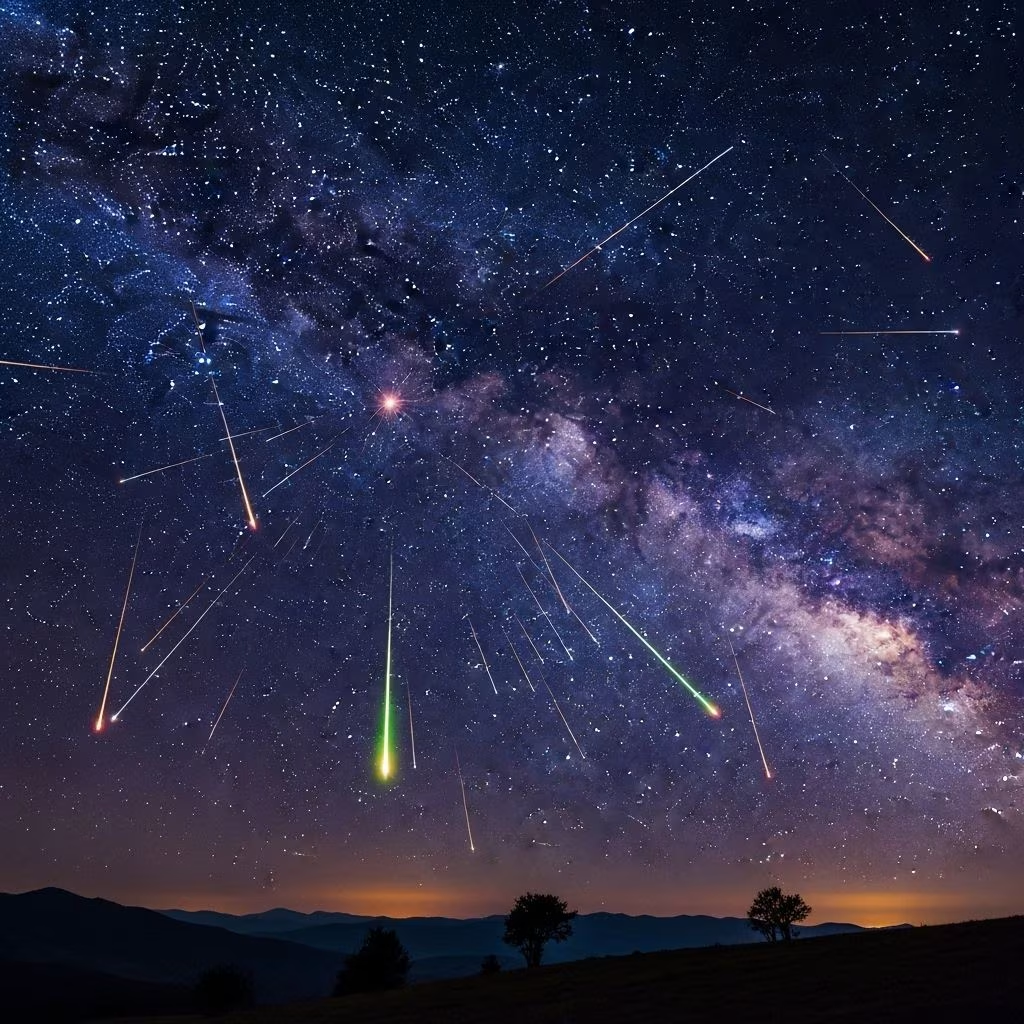
The Taurids have earned a reputation among astronomers and skywatchers for generating exceptional fireballsvery bright meteorsthat can outshine Venus and occasionally cast shadows on the ground.
- The “fireball” tendency is a result of larger debris particles in the stream, which burn brighter and sometimes fragment with dramatic visual effects.
- During certain “swarm” years (every 712 years), the number and intensity of fireballs can rapidly increase.
- These fireballs sometimes leave glowing trails called persistent trains which can linger for several seconds or even minutes.
- While the overall meteor count is modest, the Taurids’ slow, flashy meteors make up for it in spectacle and photographic potential.
Fun Fact: Some Taurid fireballs are so bright, they’re mistaken for plane lights or firework explosions by uninitiated observers.
Viewing the Taurid Meteor Shower in 2024
In 2024, stargazers can look forward to prime Taurid activity. Knowing when and where to look dramatically improves your chances of catching Taurid fireballs:
- The peak nights for both Northern and Southern Taurids closely align, typically spanning the first and second week of November.
- Best viewing occurs after midnight, once the radiant in Taurus climbs high above the horizon.
- The Taurids are visible across most of the world, except for the extreme southern latitudes near the South Pole.
- 2024 brings a favorable moon phase, with moonset occurring before midnight on peak nights—ensuring dark skies for maximum visibility.
How to find the radiant:
- Look east as night deepens. Taurus rises above the horizon and continues to climb throughout the night.
- If using sky apps or star charts, locate the “V” shape of Taurus (Hyades cluster) to spot the general area.
- Don’t focus exclusively on the radiant; Taurid meteors often appear far from this point and can cross any region of the sky.
Peak Viewing Details for 2024
- Southern Taurids Peak: Around November 56
- Northern Taurids Peak: Around November 1112
- Best hours: Midnight to dawn, local time
- Expected hourly rate: 510 meteors per hour under ideal dark sky conditions
Potential Hazards: The Taurid Swarm and Earth Impact Risk
The Taurid complex is more than a meteor shower; it may harbor larger bodies or “swarm” clusters of debris caused by comet break-up. There has been speculation about the possible risk of Earth impact from objects within this stream.
- Some scientists attribute the 1908 Tunguska event, which devastated over 2,000 square kilometers of Siberian forest, to a member of the Taurid complex.
- Recent studies suggest that the risk to Earth is lower than once believed—current research indicates the Taurid swarm contains only about 914 large asteroids, fewer than expected.
- Continued monitoring and improved asteroid detection remain important for planetary defense, as even modestly sized objects can cause significant regional damage if they strike Earth.
Tips for Best Observation
- Get far from artificial lights: City lights obscure dim meteors and diminish the visibility of fireballs.
- Allow your eyes to adjust: Spend 2030 minutes in darkness to maximize your sensitivity to faint objects.
- Use a reclined chair or blanket: Comfort is key for a long skywatching session. Lying back helps you view more of the sky at once.
- Face east or upward: The radiant rises in the east; look up and around for the best overall coverage.
- Capture fireballs: Use a wide-angle camera with a tripod and extended exposure settings, or even try your luck with smartphone long-exposure apps.
What to Expect: Typical Night of Taurid Viewing
- 510 slow-moving, bright meteors per hour at peak (sometimes more).
- Several exceptionally bright fireballs—many of which may appear green, yellow, or orange, leaving glowing wakes.
- Long, slow arcs across the sky—Taurids are renowned for their enduring, picturesque streaks rather than quick flashes.
Frequently Asked Questions (FAQs)
Q: Why does the Taurid meteor shower produce such bright fireballs?
A: The Taurids are made up of larger, heavier pebble-sized debris which burns brighter and for longer when entering the Earth’s atmosphere than the finer particles of other meteor showers.
Q: When is the best time to see the Taurid meteor shower in 2024?
A: The best dates are during the peaks of the Southern and Northern Taurids, expected around November 56 and 1112, respectively. For optimal viewing, watch between midnight and dawn, away from light pollution.
Q: Where should I look to see Taurid meteors?
A: While the meteors radiate from Taurus, they can appear anywhere across the night sky. It’s best to look generally east and let your eyes roam naturally to catch bright fireballs.
Q: Do Taurid meteor showers pose any danger to Earth?
A: While the Taurid complex does contain larger bodies, recent asteroid surveys suggest the risk of significant impacts is lower than previously thought. Continuous monitoring is being prioritized by astronomers.
Q: How frequently do the Taurids produce “swarm” years of heightened fireball activity?
A: Swarm years, during which fireball frequency increases substantially, occur roughly every 712 years. These are especially prized by meteor enthusiasts and researchers alike.
Final Thoughts
The Taurid meteor shower may not match the intensity of others in sheer meteor count, but its bright fireballs and slow, photogenic meteors create some of the most memorable spectacles in the autumn night sky. Take advantage of this year’s viewing window for an unforgettable stargazing adventure!
References
- https://www.space.com/taurid-meteor-shower
- https://www.space.com/stargazing/dont-miss-the-taurid-meteor-shower-peak-with-colorful-fireballs-and-shooting-stars-this-week
- https://en.wikipedia.org/wiki/Taurids
- https://starwalk.space/en/news/southern-and-northern-taurid-meteor-showers
- https://darksitefinder.com/taurid-meteor-shower/
- https://www.spacedaily.com/reports/Taurid_meteor_shower_to_reach_peak_visibility_999.html
- https://www.spacedaily.com/reports/As_the_Taurid_meteor_shower_passes_by_Earth_pseudoscience_rains_down_and_obscures_a_potential_real_threat_from_space_999.html
- https://www.spacecentre.co.uk/news/space-now-blog/northern-taurid-meteor-shower-2024/
- https://www.sciencefocus.com/space/taurids-meteor-shower-2024
- https://www.rmg.co.uk/stories/space-astronomy/taurid-meteor-shower-2025-when-where-see-it-uk
- https://www.theweathernetwork.com/en/news/science/space/taurid-meteor-showers-peaking-through-mid-november
- https://www.youtube.com/watch?v=GVhM_FZnXIQ
- https://www.livescience.com/space/meteoroids/how-to-watch-the-taurid-meteor-showers-peak-this-weekend-and-next
- https://www.nasa.gov/blogs/watch-the-skies/2015/10/26/the-taurid-swarm-is-upon-us/
- https://www.youtube.com/watch?v=jRCRLPOMMaI
- https://www.amsmeteors.org/meteor-showers/meteor-shower-calendar/
- https://www.inverse.com/dont-miss-the-taurid-meteor-shower-double-feature-this-week