


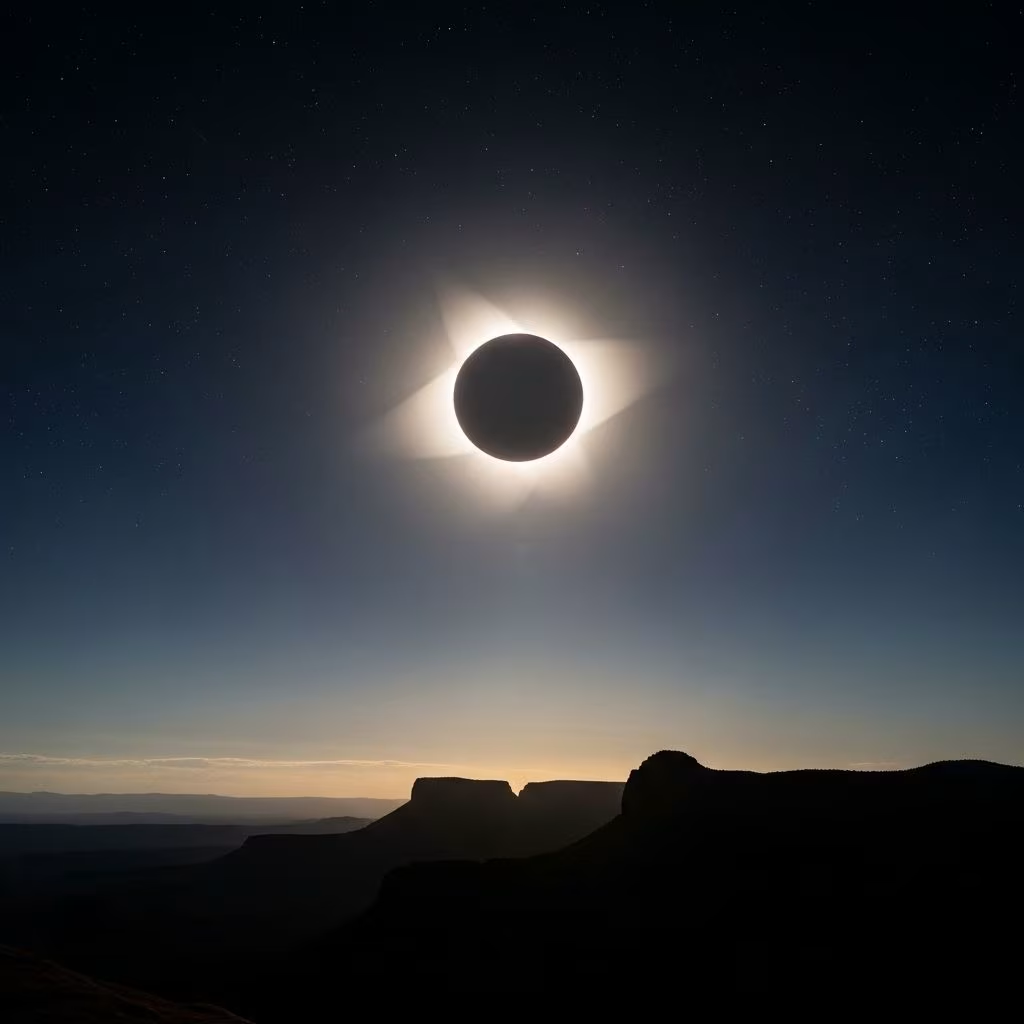
The Most Breathtaking Photos of the 2024 Total Solar Eclipse
The April 8, 2024 total solar eclipse captivated millions as it carved a rare path of darkness across North America. From the beaches of Mazatlán, Mexico to the forests of Canada, photographers and skywatchers documented this historic astronomical event with a wealth of stunning images. Join us as we relive those unforgettable moments through some of the most extraordinary photographs, compelling stories, and fascinating facts about the phenomena that unfolded on this remarkable day.
Introduction: A North American Spectacle
On April 8, 2024, a total solar eclipse traced its dark path across North America, plunging cities and countryside alike into a fleeting twilight. This rare event marked the first total solar eclipse to grace this region since 2017, drawing crowds from around the world and uniting seasoned astronomers, curious kids, and intrepid photographers under the same surreal shadow. For many, it was a once-in-a-lifetime experience—an astronomical show that won’t return to the contiguous United States for another two decades.
Where Darkness Fell: The 2024 Eclipse Path
The path of totality—the narrow band where the sun is completely covered by the moon—began over the Pacific Ocean before making landfall in Mazatlán, Mexico. It swept northeastward, crossing through Texas, Oklahoma, Arkansas, Missouri, Illinois, Indiana, Ohio, Pennsylvania, New York, Vermont, New Hampshire, Maine, and southern Canada. The spectacle concluded as the moon’s shadow exited the North American continent over Newfoundland.
This convergence of geography and celestial mechanics produced strikingly unique scenes across:
- Mazatlán, Mexico
- Texas (notably cities like Austin and Dallas)
- Indianapolis, Indiana
- Southern Illinois’ small towns
- The lakeshores of Ohio and New York
- Montreal and other parts of southern Canada
Signature Moments Captured
Several distinct moments define total solar eclipse photography:
- First Contact: The initial bite of the moon on the sun’s disc.
- Crescent Sun Phases: As the sun narrows to a sliver.
- Bailey’s Beads: Glimmering light flowing through mountains and valleys on the lunar edge just before totality.
- Diamond Ring Effect: A single brilliant flash as totality begins and ends, creating a visual ‘diamond ring.’
- Corona Reveal: At the peak of totality, the moon completely covers the sun, and the ethereal solar corona—our star’s ghostly outer atmosphere—unfurls in all directions.
Among the thousands of submitted and published photos, these moments offered both scientific value and artistic beauty. Clarity, ingenuity, and even a dash of serendipity played starring roles in capturing them.
Highlights from Space.com Reader Photos
Space.com received a remarkable collection of images from amateur and professional photographers. Here are a few standout highlights, each contributing a unique perspective to the visual story of the 2024 eclipse:
- Corona Details in Mazatlán: Early in the path, photographers in Mazatlán caught a vividly structured corona shimmering in the afternoon sky, with subtle streamers and hints of solar prominences visible along the limb.
- Perfect Diamond Ring in Austin: From atop Texas bridges and remote fields, eclipse chasers documented textbook examples of the diamond ring, flares tinged pink and gold, and the surreal darkness of totality amid city skylines and tranquil countryside.
- Midwest Wonders in Illinois: Tiny farm towns in Illinois buzzed with excitement as both school groups and scientists enjoyed wide-open skies, leading to photos that juxtaposed rural silos and barns with the grandeur of cosmic alignment.
- Urban Contrast in Washington, D.C.: Even outside the path of totality, photographers captured striking images—like the partial solar eclipse framed delicately above the Washington Monument, the sun’s crescent mirrored and refracted through camera lenses for artistic effect.
- Lake Erie Reflections: Along the shores of Lake Erie, photographers used the water’s surface to reflect the dimming daylight and ethereal glow of the eclipse, creating compositions that balanced celestial spectacle with serene landscapes.
Noteworthy Locations and Views
Enthusiasts traveled far and wide to witness the eclipse, and certain locales became focal points for particularly memorable sights. Here are a few locations whose images stood out for their beauty and uniqueness:
- Mazatlán, Mexico: As the very first major city in the path of totality, Mazatlán’s beaches became iconic viewing grounds, with thousands crowding the sands and photographers capturing the moon’s shadow racing over the Pacific and inland.
- Austin, Texas: Cityscapes and open countryside alike made Texas a prime spot, offering images of crowds gathered at state parks, children watching through eclipse glasses, and the stunning ‘diamond ring’ as totality descended upon urban skylines.
- Indianapolis Motor Speedway: This famous racing venue hosted tens of thousands who marveled at the event from the grandstands, resulting in vibrant images of collective awe under darkened midday skies.
- Cleveland and the Lake Erie Shore: Reflections off water and the framing of eclipse phases against city landmarks created a unique fresh-water twist to traditional eclipse photography.
- Montreal, Canada: At the northern tail of totality, city dwellers celebrated with public gatherings and successful last-minute dashes for clear skies, resulting in dramatic group images and skyline backdrops.
Each of these diverse settings yielded not only scientific data, but also a sense of community and shared wonder captured in every photograph.
The Science Behind the Spectacle
A total solar eclipse occurs when the moon passes directly between Earth and the sun, completely blocking the sun’s disk. Only the sun’s corona—the wispy outer atmosphere—remains visible, transforming daylight into twilight and dropping local temperatures by several degrees. The 2024 total solar eclipse offered unique opportunities for scientific observation, including:
- Measurements of the solar corona’s structure and behavior in real time.
- Tracking the rapid changes in local fauna and flora responding to sudden darkness.
- Coordinated campaigns by NASA and other institutions to study atmospheric changes and solar activity.
Some noteworthy science facts about solar eclipses:
| Feature | Detail |
|---|---|
| Eclipse Duration | Up to 4 minutes, 28 seconds at maximum for 2024 |
| Path Width | Up to 115 miles (185 km) wide |
| Coronal Studies | Corona visible only during totality |
| Next US Total Eclipse | August 23, 2044 |
Personal Experiences: Witnessing Totality
Across the path of totality, crowds erupted in spontaneous applause, tears, or stunned silence as daylight faded and the sun’s shimmering corona appeared. Schoolchildren cheered while scientists captured precious data. Families gathered for picnics, photographers readied telescopes and long lenses, while others simply soaked in the surreal hush that briefly blanketed their world. Personal accounts often spoke of:
- The eerie, sudden twilight sinking over familiar landscapes.
- Visible planet and star sightings, as Venus and Jupiter became prominent alongside the darkened sun.
- Chilled air and excited wildlife, with birds and insects momentarily fooled into thinking night had fallen.
- A profound sense of connection to cosmic rhythms and history—knowing that millions were simultaneously experiencing the same moment of awe.
The 2024 eclipse inspired everything from impromptu roadside gatherings to large celebrations, weddings, and coordinated scientific experiments, all beneath the fleeting umbra of the moon.
Tips for Photographing Eclipses
Photographing a solar eclipse requires preparation, patience, and care. Here’s what expert eclipse chasers and photographers recommend for would-be eclipse documentarians:
- Always use a solar filter for cameras, telescopes, and binoculars during partial phases—only remove during totality.
- Use a tripod and remote shutter to stabilize shots and reduce blur.
- Shoot a variety of exposures (bracketing) to capture both the corona’s faint tendrils and the bright diamond ring effects.
- Include foreground elements—people, landmarks, or landscapes—for context and drama.
- Don’t forget to look up and enjoy the experience firsthand—sometimes, the best moment is the one you don’t photograph.
Frequently Asked Questions
Q: When is the next total solar eclipse in North America?
A: The next total solar eclipse visible in the contiguous United States will occur on August 23, 2044. Totality will be visible only in parts of the northern U.S. and Canada.
Q: How does a total solar eclipse differ from a partial eclipse?
A: During a total eclipse, the moon completely covers the sun, revealing the corona and causing complete darkness in the path of totality. In a partial eclipse, only part of the sun is covered, producing a ‘bite’ out of the sun or a crescent shape but no dazzling corona or true darkness.
Q: Why are total solar eclipses so rare in any given location?
A: Eclipses require perfect alignment of the sun, moon, and Earth. The path of totality is a narrow band—typically less than 120 miles wide—so any particular spot on Earth experiences totality only every few hundred years on average.
Q: What safety precautions should be followed when viewing a solar eclipse?
A: Always use ISO 12312-2 certified solar viewing glasses or appropriate solar filters to view partial phases. Only during the brief minutes of totality is it safe to look at the sun with the naked eye.
Q: What is the ‘diamond ring’ effect?
A: The diamond ring effect occurs in the moments before and after totality, when a single bright spot of the sun remains visible beside the moon’s dark disc, resembling a sparkling diamond set on a ring.
Conclusion: A Lasting Legacy
The collective efforts of amateur and professional photographers, scientists, and everyday witnesses combined to create an enduring visual legacy of the April 8, 2024, total solar eclipse. These images allow us to relive those magical moments—each one a testament to the wonder of celestial events and our human drive to document and share the extraordinary. As millions await the next such event, the photos of 2024 will inspire and unite skywatchers and dreamers for decades to come.
References
- https://www.space.com/best-total-solar-eclipse-2024-photos
- https://www.cnet.com/pictures/total-solar-eclipse-2024-the-best-photos-weve-seen/
- https://www.youtube.com/watch?v=2MJY_ptQW1o
- https://www.usatoday.com/story/news/nation/2025/04/08/april-8-2024-total-solar-eclipse-photos/82975915007/
- https://science.nasa.gov/eclipses/
- https://science.nasa.gov/solar-system/skywatching/april-8-total-solar-eclipse-through-the-eyes-of-nasa/
- https://www.istockphoto.com/photos/total-eclipse
- https://www.youtube.com/watch?v=TUWQPIzzmJc
- https://www.space.com/total-solar-eclipse-2024-photos-from-the-web
- https://www.cloudynights.com/topic/918318-best-realistic-totality-imagevideo/
- https://www.popsci.com/science/2024-eclipse-photos/
- https://www.cloudynights.com/topic/917829-total-solar-eclipse-2024-images/
- https://www.sciencefocus.com/news/solar-eclipse-the-20-best-photos-from-2024s-celestial-spectacle
- https://www.smithsonianmag.com/smart-news/these-15-photos-show-how-the-2024-total-solar-eclipse-captivated-nation-180984115/
- https://www.cbsnews.com/news/2024-total-solar-eclipse-photos-videos/
- https://www.shutterstock.com/search/eclipse-solar-lunar


