Jupiter’s Atmosphere: A Colossal System
\n
\nJupiter, the largest planet in our solar system, boasts an atmosphere unlike any other—so vast that it dwarfs all other planetary atmospheres. Composed primarily of hydrogen and helium, Jupiter’s atmospheric system is a physicist’s laboratory and an astronomer’s enigma. Its clouds, storms, bands, and composition have challenged and captivated scientists for centuries. This article systematically explores the structure, chemistry, features, and mysteries of Jupiter’s atmosphere, drawing on decades of observational research and key mission findings.\n
\n
Table of Contents
\n
- \n
- Overview and Scale
- Atmospheric Composition
- Atmospheric Layers
- Cloud Structure and Bands
- Winds and Weather Patterns
- The Great Red Spot
- Chemical Mysteries
- Key Missions and Discoveries
- Frequently Asked Questions
\n
\n
\n
\n
\n
\n
\n
\n
\n
\n\n
Overview and Scale
\n
\nJupiter is a gas giant with a diameter eleven times that of Earth and a mass 2.5 times greater than all other planets in the solar system combined. Its atmosphere is the largest of any planet, extending thousands of kilometers above a vague boundary where gases become supercritical fluid, merging seamlessly with the planet’s deep interior. There’s no solid surface—only ever-thickening gases below the cloud layers.\n
\n
- \n
- Diameter: Over 142,000 km (88,846 miles)
- Atmospheric Depth: No clear lower boundary; merges gradually into the planet’s interior
- Relative Scale: Largest atmosphere in the solar system
\n
\n
\n
\n
\nJupiter’s unique structure makes it more similar to a small star than to terrestrial planets like Earth.\n
\n\n
Atmospheric Composition
\n
\nThe atmosphere consists primarily of molecular hydrogen (H2) and helium, reflecting their cosmic abundance. These elements account for almost all of the atmospheric mass:\n
\n
| Gas | Approximate Percentage (by volume) |
|---|---|
| Hydrogen (H2) | ~75% |
| Helium (He) | ~24% |
| Methane (CH4) | 0.3% |
| Ammonia (NH3) | 0.026% |
| Water vapor (H2O) | Trace, but variable |
| Hydrogen sulfide (H2S) | Trace |
\n
\nOther molecules—methane, ammonia, hydrogen sulfide, and significant quantities of water—are present in much smaller amounts but play crucial roles in cloud formation and chemical reactions. Studies suggest Jupiter contains a higher abundance of nitrogen, sulfur, and noble gases compared to solar values, hinting at mysterious formation processes.\n
\n
- \n
- Gases except hydrogen, helium, and argon are 2–4 times more abundant than the Sun
- Jupiter’s heavy elements may have originated from icy planetesimals or dust during its formation
\n
\n
\n\n
Atmospheric Layers
\n
\nJupiter’s atmosphere consists of several distinct layers, each defined by temperature gradients, chemical makeup, and physical phenomena. The main layers are:\n
\n
- \n
- Troposphere: The lowest layer, hosting intricate cloud decks and most weather activity
- Stratosphere: Above the troposphere, hosts hazes and is chemically active
- Thermosphere: Extreme upper layer, thin and hot, auroras form here
- Exosphere: Outermost tenuous region, merging into space
\n
\n
\n
\n
\n
\nThe troposphere is the most visually dynamic, with multiple cloud banks composed of ammonia, ammonium hydrosulfide, and water. Pressure ranges from 0.6 to 7 bars depending on depth.\n
\n
\nHaze layers exist both in the troposphere (200–500 mbar) and stratosphere (10–100 mbar), composed of condensed organic compounds or hydrazine produced by sunlight acting on methane.\n
\n\n
Cloud Structure and Bands
\n
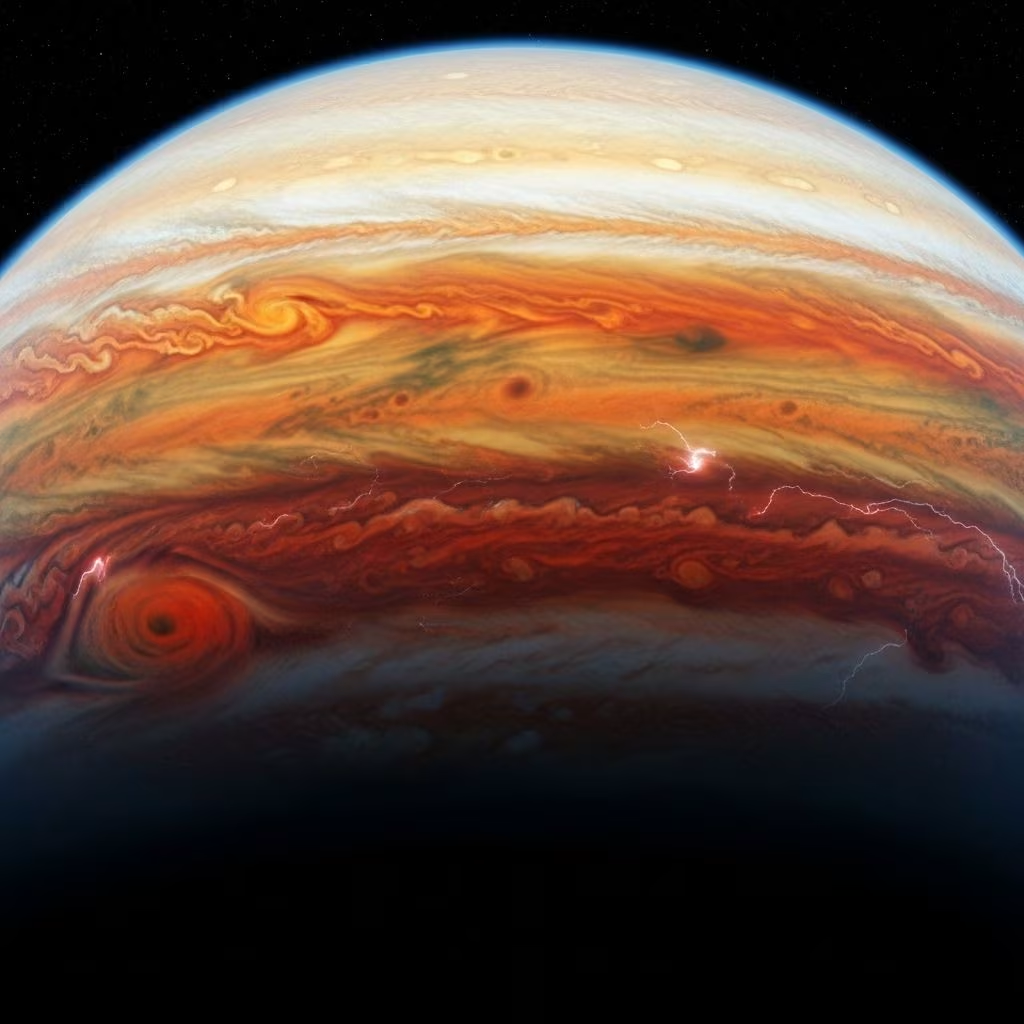
\nJupiter’s upper atmosphere dazzles with its distinctive bands: alternating light zones and dark belts that run parallel to the equator. These bands mark organized, powerful winds and dynamic weather patterns.\n
\n
- \n
- Zones (light bands): Colder, rising gas, thought to be ammonia ice
- Belts (dark bands): Warmer, sinking gas, composition for color uncertain
\n
\n
\n
\nThe cloud decks are stacked as follows:\n
\n
- \n
- Ammonia ice clouds (0.6–0.9 bar): Upper layer forming the prominent white clouds
- Ammonium hydrosulfide clouds (1–2 bar): Darker, lower layer
- Water clouds (3–7 bar): Densest and deepest cloud deck, impactful on atmospheric dynamics
\n
\n
\n
\n
\nJupiter lacks methane clouds—the temperature is simply too high for methane to condense in its atmosphere. The variation and turbulence between bands — combined with clouds and invisible hazes — create Jupiter’s stunning tapestry.\n
\n\n
Winds and Weather Patterns
\n
\nJupiter’s weather is driven by internal heat and complex chemistry, not primarily by sunlight. Remarkably, its winds achieve speeds up to 575 kilometers (360 miles) per hour, far outpacing any weather phenomena on Earth. The planet’s faint sunlight is only about 1/25th the strength of our sun, yet Jupiter’s weather is far more intense.\n
\n
- \n
- Wind jets organize atmospheric bands and drive super-rotation — powerful, planet-encircling flows
- Lightning and thunderstorms occur, especially in turbulent cloud regions
- Turbulence and storms can persist for centuries
\n
\n
\n
\n
\nThese phenomena suggest that Jupiter’s interior heat and physical dynamics dominate its atmospheric activity. Some missions aim to determine whether bands and storms are superficial, or penetrate deep into the planet’s gas layers.\n
\n\n
The Great Red Spot
\n
\nAmong Jupiter’s features, the Great Red Spot is the most iconic: a raging, elliptical storm larger than two Earths and at least 300 years old. This swirling region of red, orange, and pink hues is a turbulent high-pressure anticyclone, where chemicals are stirred and lightning may be common.\n
\n
- \n
- Diameter: ~16,500 km by 12,400 km at its largest
- Lifespan: At least 300 years; possibly much older
- Colors: Produced by complex chemical reactions, probably linked to lightning and sunlight
- Dynamics: Persistent anticyclonic circulation, supersonic winds
\n
\n
\n
\n
\n
\nScientists are still untangling the origins and chemistry behind the Spot. Its size and persistence testify to Jupiter’s chaotic and energetic atmosphere.\n
\n\n
Chemical Mysteries and Oxygen
\n
\nDespite intensive study, Jupiter’s makeup presents many puzzles:\n
\n
- \n
- Jupiter was formed from the same solar nebula as the Sun, yet contains elevated amounts of certain heavy elements
- The origins of the bands’ colors and jet structures remain unclear
- Water content: Measuring this is crucial. Since water forms from hydrogen and oxygen, determining Jupiter’s water allows astronomers to estimate its oxygen content
\n
\n
\n
\n
\nThe Galileo probe fell into a “hotspot”—a region with little water vapor—so its measurement of Jupiter’s water composition was incomplete. The Juno mission is designed to address this, with advanced instruments probing how deeply water and ammonia are distributed within the atmosphere.\n
\n\n
Key Missions and Discoveries
\n
\nOver the past decades, spacecraft have revolutionized our understanding of Jupiter:\n
\n
- \n
- Pioneer 10 & 11: First flybys, revealed band structure and powerful radiation belts
- Voyager 1 & 2: Delivered high-resolution images, mapped winds and storms
- Galileo orbiter and probe: Direct atmospheric measurements, revealed chemical composition and wind speeds
- Juno: Orbits since 2016, mapping water and ammonia, measuring temperature, investigating internal structure and storm depth
\n
\n
\n
\n
\n
\nJuno’s findings are helping researchers test competing theories about Jupiter’s formation and the origins of its atmospheric enrichment. The mission uses microwave radiometry and infrared imaging to measure heat, chemical content, and layering far beneath the cloud tops.\n
\n\n
Frequently Asked Questions (FAQs)
\n
Q: What causes Jupiter’s bands and colors?
\n
A: The bands—zones and belts—result from powerful jet streams/gas flows parallel to the equator. Their colors are produced mostly by ammonia ice in the bright zones, while the chemistry behind the darker belts remains uncertain.
\n
Q: Is there a solid surface on Jupiter?
\n
A: No. Jupiter’s atmosphere transitions into a supercritical liquid layer deeper inside. There’s no defined solid surface—just thickening gases and fluid dynamics.
\n
Q: How deep does the atmosphere go?
\n
A: There is no precise boundary. The atmosphere becomes gradually denser, eventually merging with Jupiter’s interior. Most phenomena occur within the top few hundred kilometers, but gases extend thousands of kilometers downward.
\n
Q: How strong are Jupiter’s winds?
\n
A: Some reach 575 km/h (360 mph), far faster than Earth’s most powerful hurricanes. These winds drive the bands and persistent features like the Great Red Spot.
\n
Q: How do scientists measure Jupiter’s atmosphere?
\n
A: Through spacecraft probes (like Galileo), remote sensing (Juno’s microwave and infrared devices), and telescopic observation. Probes sample molecules directly, while orbiters map heat, color, and chemistry to estimate composition.
\n\n
Additional Fascinating Facts about Jupiter’s Atmosphere
\n
- \n
- The thin haze in the upper layers is made from complex organic molecules, created when solar UV light acts on methane.
- Lightning storms on Jupiter can be dozens of kilometers across, dwarfing those on Earth.
- Some experts speculate Jupiter’s intense storms may help mix its chemical layers and redistribute heat.
- The iconic bands have persisted for centuries, yet can shift, merge, or fade over decadal timescales.
\n
\n
\n
\n
\n\n
Conclusion: Jupiter as a Model for Planetary Science
\n
\nJupiter’s atmospheric system reveals the grandeur and complexity of gas giants. Its chemistry, winds, cloud bands, and storms are driven by internal heat and complex processes that scientists are still working to decode. Understanding Jupiter not only illuminates the evolution of our solar system, but also sets the stage for interpreting atmospheres on newly discovered giant exoplanets.\n
\n
References
- https://en.wikipedia.org/wiki/Atmosphere_of_Jupiter
- https://www.missionjuno.swri.edu/jupiter/atmosphere?show=hs_jupiter_atmosphere_story_what-is-jupiters-atmosphere-made-of
- https://en.wikipedia.org/wiki/Jupiter
- https://lasp.colorado.edu/mop/files/2015/08/jupiter_ch4-1.pdf
- https://phys.libretexts.org/Courses/HACC_Central_Pennsylvania’s_Community_College/Astronomy_103:_Introduction_to_Planetary_Astronomy/11:_The_Jovian_Planets/11.01:_Jupiter’s_Atmosphere
- https://science.nasa.gov/jupiter/jupiter-facts/
- https://www.lpi.usra.edu/education/IYPT/Jupiter.pdf
- https://study.com/academy/lesson/facts-about-jupiter-atmosphere-temperature-mass.html
- https://www.britannica.com/place/Jupiter-planet/Cloud-composition
- https://www.missionjuno.swri.edu/jupiter/atmosphere
- https://www.space.com/jupiter-atmosphere-composition-formation-mystery
- https://www.science.org/doi/10.1126/science.156.3781.1489
- https://www.britannica.com/place/Jupiter-planet/The-interior
- https://www.liquisearch.com/atmosphere_of_jupiter/chemical_composition
- https://www.universityofcalifornia.edu/news/jupiter-its-mushballs-all-way-down
- https://public.websites.umich.edu/~atreya/Chapters/2005_JupiterAtmos.pdf
- https://pubmed.ncbi.nlm.nih.gov/17741073/