


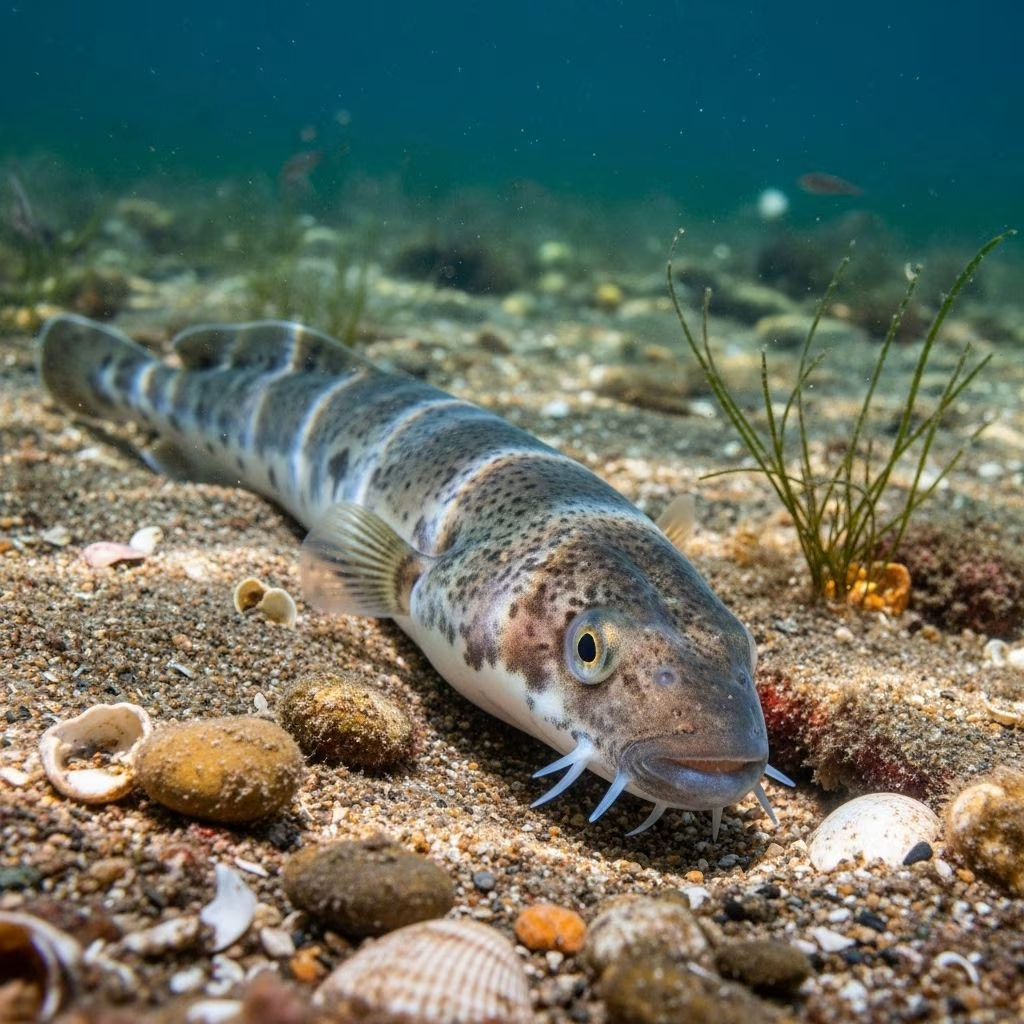
Hagfish are among the ocean’s most unusual and fascinating creatures. Often called ‘slime eels’ despite not being true eels, their combination of primitive anatomy, biological adaptations, environmental importance, and emerging commercial uses make them a topic of intrigue in the scientific and culinary worlds alike. This article examines the core question: What is hagfish? We’ll explore its biology, ecological value, utility in various industries, and distinct culinary profile.
Hagfish Overview: Taxonomy and Physical Description
Hagfish are marine jawless fish, comprising the class Myxini. They have existed for over 300 million years, making them some of the most ancient living vertebrates. Hagfish are the only known animals that possess a skull but lack a vertebral column, although they may have rudimentary vertebrae in certain species. Their unique evolutionary position provides insights into vertebrate ancestry.
Physical Features
- Body Shape: Hagfish have elongated, eel-like bodies typically ranging from 4 cm to 127 cm in length, but most species average around 50 cm (19.7 in).
- Skin: Their skin is smooth and naked, loosely attached except along the backbone and slime glands. Color varies by species, including pink, blue-grey, brown, and even hues of purple or black with occasional spots.
- Sensory Organs: Eyes are simple photosensitive spots covered by skin, and their mouth is surrounded by six to eight tentacle-like barbels.
- Teeth and Mouth: Instead of jaws, hagfish use a protrusible dental plate with tooth-like keratin structures to rasp flesh from prey.
- Internal Anatomy: Their digestive system lacks a stomach, and they are noted for possessing multiple accessory hearts (typically four hearts in total).
Biology and Unique Characteristics
Hagfish possess several characteristics that set them apart from other marine vertebrates and invertebrates.
Slime Production
- Slime Glands: Hagfish can excrete large volumes of a fibrous, mucilaginous slime from up to 100 glands along their flanks.
- Function: This slime acts as a potent defense mechanism against predators—when it contacts seawater, it expands greatly, becoming a gelatinous barrier that can clog the gills of would-be attackers or trap them in goo.
- Self-cleaning: To avoid suffocating in their own slime, hagfish can tie their bodies into a knot and scrape off excess slime by passing the knot down their length.
Feeding Habits
- Scavenging: Hagfish are nature’s deep-sea janitors, primarily feeding on dead and dying fish and marine animals. They burrow into carcasses and consume the softer tissues, leaving only the skin and bones.
- Active Predation: While they mainly scavenge, some hagfish species also prey on small invertebrates and polychaete worms.
- Adaptive Eating: Their ability to survive months without food, due to a slow metabolism, points to significant adaptations at low-energy ocean depths.
Reproductive Biology
- Separate sexes with external fertilization; females lay between 20–30 eggs per cycle.
- No true larval stage—young are miniature versions of adults and self-sufficient from hatching.
Ecological Benefits and Environmental Significance
The hagfish plays a critical role in maintaining the health of deep-sea environments.
- Scavenging and Nutrient Cycling: By consuming dead and decaying matter, hagfish accelerate decomposition and help recycle nutrients back into the food web.
- Habitat Engineering: Their feeding behavior creates microhabitats for microorganisms and smaller marine animals, thus supporting biodiversity.
- Predator-Prey Relationships: While relatively few animals prey on hagfish due to their slime defense, they form part of the complex deep-sea ecological web.
Commercial and Industrial Uses of Hagfish
Beyond their ecological role, hagfish have multiple uses in modern industry and traditional practices.
Biomedical and Material Science
- Slime Applications: The remarkable properties of hagfish slime—being lightweight, strong, and biodegradable—make it a focus for research into new biomaterials. Potential uses include tough, flexible fibers (sometimes compared to spider silk) for textiles, medical sutures, and even protective clothing.
Leather Industry
- Eel Skin Products: Hagfish are a major source of “eel skin” for wallets, belts, gloves, boots, and handbags, especially in Korea and some parts of Japan. Despite the name, these leather goods often come from hagfish, not true eels.
- Durability: Hagfish skin is strong, supple, and takes dyes well, making it appealing for high-end accessories.
Fisheries
- Bait: In some regions, hagfish are harvested and used as bait for lobster, crab, and other commercial fish species.
- Direct Consumption: There is a growing market for hagfish as food, largely centered in East Asian countries.
Hagfish as Food: Preparation, Taste, and Nutritional Value
Though little known as food in the West, hagfish are considered a delicacy in parts of Asia—particularly South Korea and Japan.
Preparation Methods
- Grilling: Typically, hagfish are grilled over open flame or on a barbecue (often after being skinned and cleaned). Their tough, elastic skin crisps up during cooking.
- Stir-Fried or Braised: Popular Korean dishes include spicy stir-fried hagfish, using strong seasonings like gochujang (chili paste), garlic, and scallions.
- Sashimi: Rarely, in Japan, fresh hagfish may be sliced thinly and served raw, but this is far less common than cooked preparations.
Taste and Texture
- Flavor: The taste is often described as mild, slightly fishy, and somewhat sweet, with none of the strong “muddy” flavors some other bottom-dwelling fish possess.
- Texture: When cooked, hagfish meat is chewy and dense, similar to eel or squid, but with a distinct, pleasantly gelatinous, and elastic mouthfeel.
- Skin: When well-prepared, the skin crisps and adds a contrasting texture to the tender meat beneath.
Nutritional Value
- Protein: Hagfish are a source of lean protein, comparable to other marine fish.
- Micronutrients: As with many oceanic fish, hagfish may contain beneficial omega-3 fatty acids, trace minerals, and vitamins, although comprehensive nutritional studies are limited.
Potential Health Benefits of Hagfish
In addition to their role as lean protein sources, some studies and traditional practices suggest other benefits:
- Collagen Content: The skin and connective tissues of hagfish are rich in collagen, which is highly sought after in both food and cosmetic industries for skin and joint health.
- Antimicrobial Properties: Components of hagfish slime have been investigated for their potential as natural antimicrobials, though applications are still experimental.
- Low-Calorie Content: Hagfish, like most marine fish, provide a filling meal with fewer calories and fats compared to red meats.
Conservation, Fishing Practices, and Sustainability
Hagfish populations are currently under increasing economic pressure due to demand for their skin and as a food source, particularly in East Asian markets. The conservation status of most hagfish species is still unclear because of limited studies and the difficulty of monitoring deep-sea species.
- Sustainable Fishing: Some regions have enacted quotas and seasonal restrictions to limit overharvesting, but illegal and unregulated fishing persists.
- Population Assessment: The International Union for Conservation of Nature (IUCN) lists many species, such as the Pacific hagfish, as “Data Deficient” due to the lack of population data.
- Bycatch Issues: Hagfish are sometimes unintentionally caught in trawls and longline fisheries targeting other deep-sea species.
Despite their slimy reputation, hagfish represent a promising source of sustainable protein and industrial material if managed responsibly.
Frequently Asked Questions (FAQs)
Q: Are hagfish dangerous to humans?
A: No, hagfish are not dangerous. They have no venom, and their defense mechanism is purely slimy and intended for aquatic predators. Handling a live hagfish can be messy due to their copious slime production, but it is not harmful.
Q: What does hagfish taste like?
A: Most people describe the taste of cooked hagfish as mild and slightly sweet, with a chewy, dense, and slightly gelatinous texture reminiscent of eel or squid. Its flavor is not overpowering or muddy.
Q: How is hagfish used commercially?
A: Hagfish are harvested for food (especially in Korea and Japan), bait, and for their skin, which is used in leather products marketed as “eel skin” wallets, belts, and bags.
Q: Why do hagfish produce so much slime?
A: Slime is their primary defense against predators; when threatened, the slime can quickly clog the gills of attacking fish or entangle would-be predators, allowing the hagfish to escape.
Q: Are hagfish an endangered species?
A: Many hagfish species are listed as “Data Deficient” by the IUCN, meaning there is not yet enough information to determine their conservation status. Overfishing in some areas could pose a risk if proper regulations are not in place.
References
- Hagfish – Wikipedia
- Hagfish Fish Facts – A-Z Animals
- Pacific Hagfish | Aquarium of the Pacific
References
- https://en.wikipedia.org/wiki/Hagfish
- https://a-z-animals.com/animals/hagfish/
- https://www.aquariumofpacific.org/onlinelearningcenter/species/pacific_hagfish
- https://www.adfg.alaska.gov/index.cfm?adfg=hagfish.main
- https://www.montereybayaquarium.org/animals/animals-a-to-z/pacific-hagfish
- https://www.britannica.com/animal/hagfish
- https://oceanconservancy.org/blog/2021/05/21/hagfish/
- https://www.nps.gov/subjects/fishing/jawless-fish.htm


