


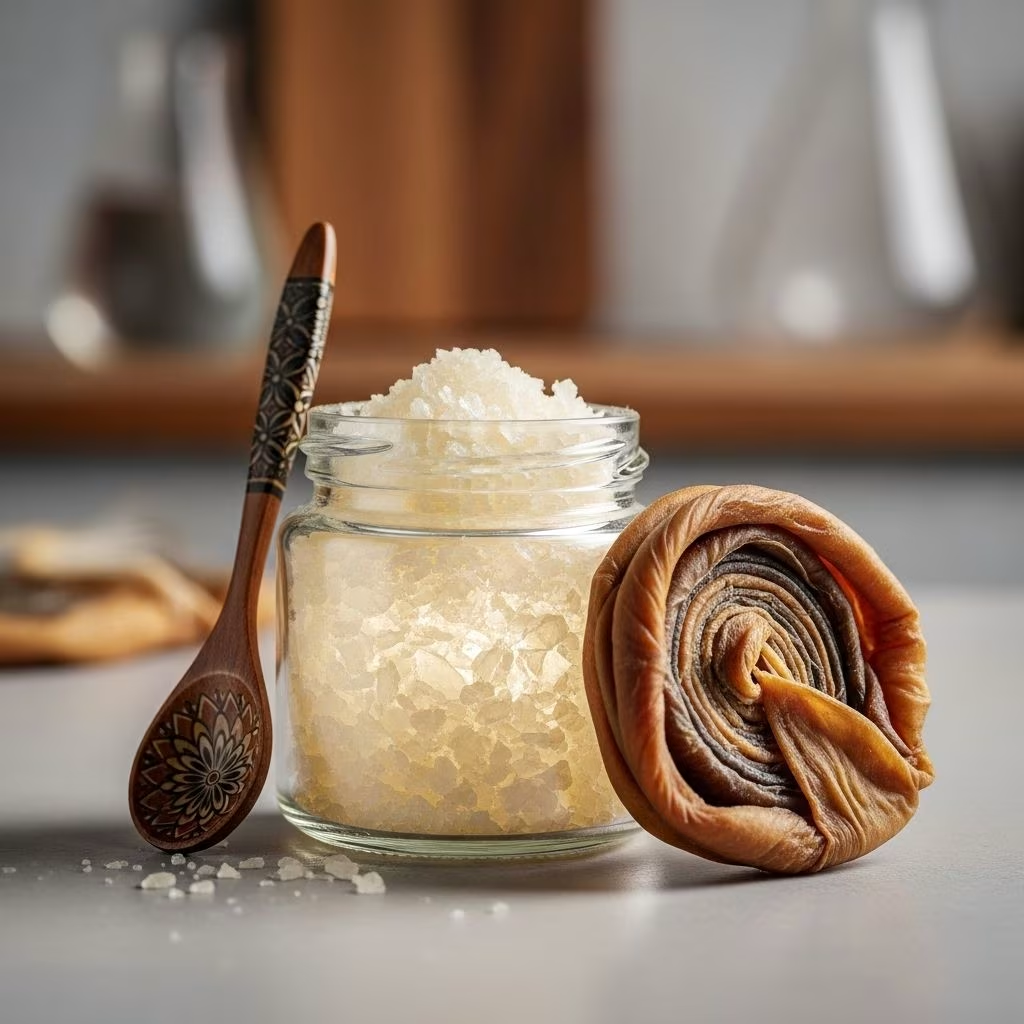
Isinglass is a fascinating material with a unique history and a diverse range of applications, especially for those interested in brewing, food technology, and traditional ingredients. While often referenced in relation to beer and wine, isinglass is much more than a simple clarifying agent. This article explores isinglass’s origins, processing, historical relevance, health considerations, culinary and industrial uses, and even its sensory and taste properties.
Definition and Origins of Isinglass
Isinglass is a pure, semitransparent form of gelatin and collagen obtained by processing and drying the swim bladders (air bladders) of certain fish species, most historically sturgeon, but now tropical fish such as Nile perch and cod are commonly used. The name comes from the obsolete Dutch term huizenblaas (sturgeon bladder) and German Hausenblase, reflecting its European trade origins.
- Physical appearance: Usually found as thin, whitish, flexible sheets or strips, or in shredded/powdered form.
- Key component: Collagen, a structural protein associated with connective tissues in animals and fish.
Etymology and Synonyms
Isinglass is sometimes misspelled as “eisenglass.” It is not related to the mineral mica called “isinglass” in some industrial contexts.
Fish Sources of Isinglass
- Sturgeon (traditional and original European source)
- Cod and hake (Britain & USA substitute since the 18th century)
- Tropical and subtropical fish (Nile Perch, various threadfin fish nowadays)
Production and Processing of Isinglass
Manufacturing isinglass is a careful process that preserves the delicate structure of the collagen to ensure its effectiveness as a clarifying agent.
- The swim bladders are removed from freshly caught fish.
- They are washed, trimmed, and sun-dried at the catch site.
- Dried bladders are macerated (soaked) and dissolved in food-grade dilute acids, resulting in a viscous, colorless solution high in collagen.
- The substance may be further processed into sheets, strips, flakes, or fine powders for various uses.
The highest quality isinglass traditionally came from the South China Sea and Russia, especially for brewing applications (e.g., “Round Saigon” and “Long Saigon” finings).
Historical and Traditional Uses
Isinglass dates back centuries and played an important role in:
- Europe (17th–19th centuries): As an adhesive and high-quality glue for artistic, decorative, and technical purposes.
- The Ojibway and other indigenous groups: As a binding agent for paints.
- Window material: Confusion occurs due to isinglass being mistakenly synonymous with early clear window mica, used in carriages and marine craft (unrelated to fish isinglass).
Its main historical value, however, was as a fining (clarifying) agent for beer, wine, and jellies.
Key Benefits of Isinglass
- Highly effective clarifier: Binds to yeast and particles, rapidly settling them to the bottom for clear, bright liquids.
- Does not impact flavor or alcohol content: Used in very small quantities; well-clarified products are regarded as higher in quality.
- Natural and minimally processed: Sourced from fish with relatively little chemical alteration.
- Alternative to filtration: Particularly important for traditional ales and wines where mechanical filtration is impractical or changes flavor/texture.
Modern Uses and Applications
Today, isinglass is still used in specialized areas and products. Its principal applications include:
- Brewing (beer and cask ales): Used as a fining agent to clarify beer, especially cask-conditioned ales.
- Winemaking: Employed to clarify wines and sometimes ciders.
- Culinary uses (historical): For setting jellies, aspics, and desserts before the rise of bovine and porcine gelatin products.
- Adhesives and glues: High-grade glue for restoring art, papers, and specialized materials.
- Other specialized uses: Occasionally in scientific research, art conservation, and rare crafts.
Isinglass in Brewing and Winemaking
Brewmasters and wine producers have relied on isinglass for centuries. Its mechanism of action lies in the protein (collagen):
- The isinglass solution is stirred into beer or wine, usually after fermentation.
- Positively charged collagen molecules bind to the negatively charged yeast cells and other particles suspended in the liquid.
- The particles aggregate and rapidly settle to the bottom, leaving a brilliantly clear beverage.
This process preserves the drink’s intended flavor while significantly improving visual appeal and shelf stability.
Typical Beverages Using Isinglass
- Cask-conditioned ales (“real ale”)
- Some British, European, and American craft beers
- White and sparkling wines
- Occasionally, cider and other fermented drinks
Declining Use in Modern Brewing
With advances in centrifugation and membrane filtering, many large-scale breweries have moved away from animal finings. Isinglass is now mainly reserved for traditional or craft techniques that value historical methods and flavor preservation.
Other Industrial and Cultural Applications
- Glue and adhesives: Historically prized for bookbinding, paper restoration, and art conservation due to its clarity and strength.
- Paint binding: Used by indigenous peoples as a binder in pigments and paints.
- Window materials (misnomer): The term “isinglass” is incorrectly applied to mica sheets used for flexible, clear window panels in historical carriages and boats, with no fish product involvement.
Isinglass and Dietary Considerations
- Not vegetarian or vegan: As a product derived from fish, isinglass is unsuitable for vegetarians or those practicing certain religious dietary laws.
- Allergy considerations: Rarely, trace amounts might remain in drinks and could theoretically trigger reactions in those with severe fish allergies.
- Labeling: Some regions (such as the EU) require labeling when animal-derived finings are used in food or beverages.
Nutritional and Health Aspects
- Isinglass is largely collagen protein (similar to gelatin), and its nutritional value in finished products is negligible due to low use quantities.
- It does not contain significant vitamins, minerals, or fats.
What Does Isinglass Taste Like?
Pure isinglass on its own has a very mild, slightly fishy taste and odor. However, in its main applications—beverage and food clarification—it is used in very small quantities, and almost all of it settles out or is removed before consumption.
- After processing: Properly clarified beer, wine, or juice should not retain any detectable flavor, aroma, or textural differences attributable to isinglass.
- Raw/sheet isinglass: If tasted directly (uncommon in modern cooking), flavor is bland, with only a hint of natural marine character due to its fish origin.
- In jellies or aspics (historical use): When used as a setting agent, its taste was likewise extremely neutral, acting only as a texture enhancer.
Vegan and Alternative Clarifying Agents
Due to ethical, dietary, and allergy considerations, the beverage and food industry often substitutes isinglass with plant-based or mineral finings.
| Substitute | Source | Main Applications | Suitability |
|---|---|---|---|
| Bentonite Clay | Mineral | Wine, juices, some beer | Vegan, vegetarian |
| Pectinase/Enzyme complex | Microbial/biotech | Juices, wine | Vegan, vegetarian |
| Irish Moss (carrageenan) | Seaweed | Beer | Vegan, vegetarian |
| Gelatin | Animal (pork, beef) | Jellies, candy | Not vegan/vegetarian |
| Egg whites (albumin) | Egg | Wine | Not vegan, typically not vegetarian |
Growing consumer demand has pressed many brewers and vintners to clearly label their use of animal or plant finings and to offer alternatives.
Frequently Asked Questions (FAQs)
Q: Is isinglass still commonly used in today’s beer and wine?
A: It is still used, especially in traditional, cask-conditioned ales and some wine fining, although modern technology and the rise of veganism have reduced its prevalence.
Q: Will beer or wine that was fined with isinglass taste like fish?
A: No. When properly used, isinglass does not impart any noticeable flavor or odor to clarified drinks.
Q: Is isinglass gelatin?
A: Isinglass is a form of collagenous gelatin, but uniquely derived from fish swim bladders, not from land animals.
Q: Are beers or wines fined with isinglass suitable for vegetarians or vegans?
A: No, isinglass is an animal product and thus unsuitable. Check for vegan labeling or ask the producer for confirmation.
Q: Are there health benefits from isinglass due to collagen?
A: The quantities used for clarification are too small to offer significant nutritional impact. While collagen is healthful when consumed directly, clarified drinks contain negligible amounts.
Q: Is there a difference between isinglass and the window material called isinglass?
A: Yes. The window “isinglass” refers to thin mica sheets used in carriages and boats. It is not related to fish-derived isinglass; the confusion is solely due to similarity in name.
Quick Reference Table: Isinglass at a Glance
| Aspect | Key Details |
|---|---|
| Source Material | Swim bladders (air bladders) of fish (sturgeon, perch, cod, etc.) |
| Main Component | Collagen (protein) |
| Primary Uses | Clarifying (fining) agent in beer and wine, glue/adhesive, historically for food setting (jellies) |
| Sensory Profile | Virtually no taste or smell in finished products |
| Vegan/Vegetarian? | No (fish-based) |
| Main Alternatives | Bentonite, Irish Moss, pectinase, gelatin (animal), egg whites |
| Cultural Interest | Historic brewing, artisanal food, indigenous crafts, art conservation |
Understanding isinglass and its context enriches your appreciation of the traditions and innovations in the brewing, winemaking, and food sciences spheres.
References
- https://beerandbrewing.com/dictionary/szToZUocgW/
- https://en.wikipedia.org/wiki/Isinglass
- https://www.merriam-webster.com/dictionary/isinglass
- https://www.sailrite.com/What-Is-Isinglass-Clear-Window-Material
- https://en.wiktionary.org/wiki/isinglass
- https://www.dictionary.com/browse/isinglass
- https://caviarstar.com/blogs/news/what-is-isinglass
- https://www.vocabulary.com/dictionary/isinglass


