


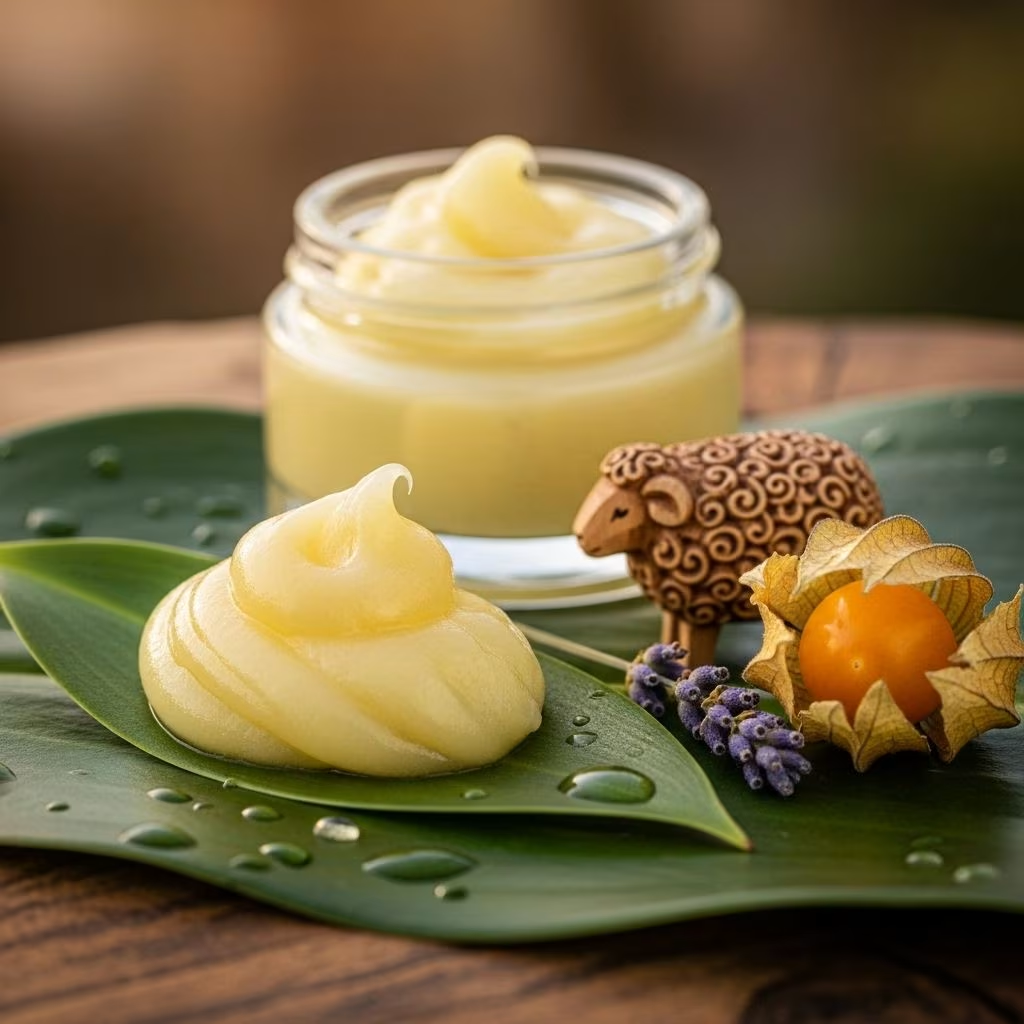
Lanolin is a natural, waxy substance harvested from sheep’s wool. Widely prized in skincare, cosmetics, and various industries, it is often misunderstood or little known beyond its association with healing ointments. This comprehensive guide details lanolin’s origins, composition, extensive applications, skin and health benefits, and even explores the oft-overlooked subject of its taste.
What Is Lanolin?
Lanolin—also called wool wax, wool fat, or sheep grease—is a wax secreted by the sebaceous glands of wool-bearing animals, primarily sheep. Despite often being called wool fat, lanolin is technically not a true fat because it contains little to no triglycerides. Its main biological role is to protect and waterproof the sheep’s fleece, keeping their wool and skin healthy even in wet environments.
This substance has been used for millennia. The ancients valued lanolin-like extracts for their ability to soothe and heal the skin, a tradition that continues in modern cosmetic and dermatological science.
The Complex Structure of Lanolin
High-purity lanolin is primarily made up of long-chain waxy esters—representing about 97% of its mass—with the remainder being a diverse mixture of lanolin alcohols, acids, and hydrocarbons. The complexity is remarkable: lanolin is thought to contain between 8,000 and 20,000 different kinds of esters, derived from combinations of its roughly 200 known lanolin acids and 100 alcohols.
| Component | % of Weight | Function |
|---|---|---|
| Waxy Esters | ~97% | Main compositional backbone |
| Lanolin Alcohols | Varied | Source of cholesterol, emulsifiers |
| Lanolin Acids | Varied | Alpha-hydroxy acids, beneficial for skin |
| Hydrocarbons | Minor | Structural and protective properties |
This molecular diversity makes lanolin and its derivatives uniquely suited for a wide range of cosmetic, medical, and industrial purposes.
- Emollient Qualities: Lanolin mimics the function of human skin lipids, providing a potent moisturizing and protective layer.
- Source of Cholesterol: Lanolin alcohols, after hydrolysis, are a rich source of cholesterol—a critical component in skin barrier repair.
- Natural Alpha-Hydroxy Acids (AHAs): About 40% of the acids derived from lanolin are AHAs, which are widely renowned in skincare for their exfoliating and moisturizing actions.
How Lanolin Is Obtained: Processing and Purity
Lanolin is harvested as a byproduct of wool production; it is extracted after sheep are sheared, ensuring the process does not harm the animal. The extraction follows several refined steps:
- Scouring: Sheep wool is washed in hot water and detergents to remove impurities and isolate crude lanolin.
- Centrifugation: The wool is spun at high speed to separate lanolin from other debris and chemicals.
- Purification: Crude lanolin undergoes further refining, including saponification and dehydration, and can eventually be filtered and solvent-extracted for high purity.
This process results in anhydrous lanolin (containing very little water), which is the form most widely used in medical and cosmetic formulations.
The Benefits of Lanolin
- Intense Moisturization: Lanolin is an outstanding emollient; it softens skin by both adding moisture and creating a protective, semi-occlusive barrier against water loss.
- Soothes Rough or Cracked Skin: It’s especially effective for relieving chapped lips, split heels, dry hands, and nipples during breastfeeding.
- Barrier Repair: Lanolin helps facilitate skin healing by restoring and supporting the natural skin lipid barrier, especially for conditions like eczema, dermatitis, and scaling.
- Safe for Sensitive Skin: Pure or medical-grade lanolin (after appropriate allergy testing) is generally safe for sensitive skin and infants.
- Blending and Stabilizing: Lanolin’s ability to mix with both water and oils makes it a powerful emulsifier in creams and ointments.
- Absorbs Water Efficiently: It can absorb twice its weight in water, helping creams and ointments maintain hydrated consistency.
Key Benefits Table
| Benefit | Description |
|---|---|
| Emollient/Moisturizer | Prevents water loss, hydrates, softens skin |
| Skin Barrier Repair | Restores and supports natural skin lipid layers |
| Anti-Scaling | Fights dryness and skin scale buildup |
| Mild Natural Polish | Used on leather for shine and water resistance |
| Safe for Infants | High-purity forms used for nipple creams, diaper rash ointments |
How Lanolin Is Used
Lanolin and its derivatives are incredibly versatile. Here are some of the most important uses:
- Skincare & Cosmetics: Found in creams, lotions, ointments, lip balms, and makeup products as a moisturizing and smoothing agent.
- Haircare: Present in shampoos, conditioners, and styling waxes to add shine, softness, and manageability.
- Baby Care: Included in baby oils, diaper rash ointments, and creams for its gentleness and protective properties.
- Medical Salves & Ointments: A common base for medicinal creams, especially for conditions requiring skin barrier repair.
- Industrial Applications: Used in lubricants, protective coating, anti-corrosion preparations, and even as a water-repellent treatment for leather and textiles.
Lanolin oil (more fluid, less tacky than whole lanolin) is favored in hair and skincare products for its excellent spreadability and high efficacy as an emollient.
Lanolin in Healthcare and Pharmaceutical Applications
Lanolin is widely respected for its use in pharmaceutical formulations due to its ability to:
- Act as a hydrophobic base for topical ointments, slowing water loss and providing a long-lasting effect.
- Facilitate the absorption of active drugs in ointments and creams.
- Be non-reactive and stable; it does not become rancid easily, providing a long shelf life.
It is used in wound healing, burns, eczema management, and nipple creams for breastfeeding mothers. Its similarity to human sebum makes it especially effective for skin restoration.
Lanolin Taste and Edibility
The taste of lanolin is rarely discussed, but is significant in specific contexts, such as when used in food-grade coatings, lip products, or breastfeeding ointments. Lanolin in its pure form is not considered edible and is not used as a direct food ingredient. However, trace ingestion via medicinal or lip care products can occur.
- Peculiar, Mildly Waxy Taste: Users describe the taste as waxy, mildly earthy, and slightly oily. The taste is usually faint due to small application amounts.
- Neutral and Bland: Some refined lanolin products are virtually tasteless and odorless.
- Odor: Lanolin naturally has a faint, characteristic odor, which is largely removed during purification but can linger in less-refined batches.
High-purity medical lanolin (such as used for nipple ointments) is formulated to be tasteless and odorless so as not to deter breastfeeding infants. It is considered safe for accidental ingestion in these forms at the minute amounts encountered through use.
Safety Considerations and Allergy Info
- Allergy Potential: While rare, some individuals may be allergic to certain lanolin components—primarily in less-refined forms.
- Comedogenicity: For sensitive or acne-prone skin, lanolin may on occasion cause breakouts due to its heavy, occlusive nature.
- Vegan Considerations: Lanolin is animal-derived and thus not considered vegan-friendly.
- Purity Is Key: Medical and cosmetic products typically use highly purified lanolin, lowering allergy risk and making them safe even for infants.
Tip: If you have a history of skin allergies or sensitivities, do a patch test before using lanolin-containing products, especially if your skin is broken or compromised.
Frequently Asked Questions (FAQs)
Q: Is lanolin safe for all skin types?
A: Highly purified lanolin is generally safe for most skin types, including babies, but may not be suitable for those with known wool or lanolin allergies.
Q: Is lanolin vegan?
A: No, it is derived from the wool of sheep so is not appropriate for vegan product formulations.
Q: Can lanolin be ingested?
A: Lanolin is not intended for food use, but tiny, incidental amounts (such as from lip balms or nipple creams) are considered safe if properly purified and used as directed.
Q: Why is lanolin used so widely in skin care?
A: It has the unique ability to deeply moisturize, protect, and repair skin, as well as blend well with other common skincare ingredients.
Q: What does lanolin taste like?
A: Lanolin has a mild, waxy taste with faint earthy notes in unrefined or less-purified forms, but purified medical lanolin is essentially tasteless and odorless for safe use on lips or nipples.
Q: Can lanolin clog pores?
A: It is moderately comedogenic, so those with oily or acne-prone skin should use it sparingly or choose non-lanolin alternatives.
Conclusion
Lanolin is a unique, naturally derived wax from sheep’s wool with an intricate molecular structure that bestows numerous health and cosmetic benefits. Its intense moisturizing properties, versatility in personal care formulations, and mild, neutral taste in purified forms underpin its wide-ranging use. While suitable for most, those with allergies or specific skin types should exercise caution. As both a venerable remedy and a modern skincare staple, lanolin continues to offer reliable, nature-inspired care for skin, hair, and more.
References
- https://en.wikipedia.org/wiki/Lanolin
- https://www.chemicalbook.com/ChemicalProductProperty_EN_CB3463970.htm
- https://www.cosmeticsinfo.org/ingredient/lanolin/
- https://www.cir-safety.org/sites/default/files/FAR_Lanolin_092024.pdf
- https://lanolin.com/personal-care/lanolin-oil/
- https://curology.com/blog/what-is-lanolin-the-natural-skincare-marvel-sourced-from-sheeps-wool/
- https://go.drugbank.com/drugs/DB11112
- https://www.ajer.org/papers/v3(7)/F0373343.pdf


