


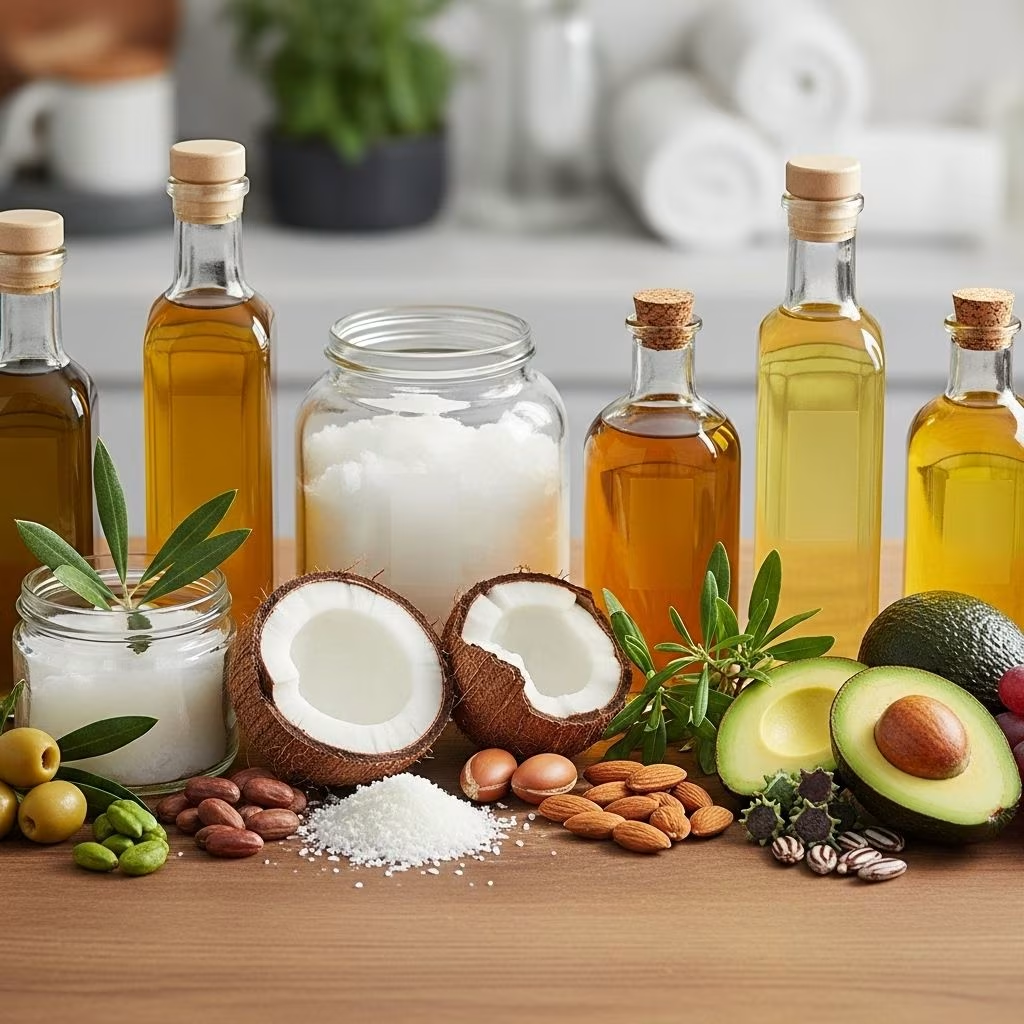
Vegetable Oil for Hair: Complete Benefits, Usage & Expert Tips
Vegetable oils have become staples in natural hair care routines worldwide, valued for their ability to nourish, protect, and encourage healthy growth. This guide offers a comprehensive exploration of vegetable oils for hair—revealing specific benefits, science-backed insights, top oils to consider, usage methods, and expert tips for best results.
Introduction
Vegetable oils, extracted from seeds and fruits such as soybeans, avocados, coconuts, and sunflowers, are prized for their high content of essential fatty acids, vitamins, and antioxidants. They have been widely incorporated into hair care regimens, either as standalone treatments or as ingredients in formulations intended to soothe the scalp, promote growth, and impart shine. Their popularity arises not only from their natural origins but also growing scientific support for their beneficial effects on hair health.
Vegetable Oil Hair Benefits
- Moisturization: Vegetable oils penetrate the hair shaft and help retain moisture, combating dryness and frizz.
- Nourishment: Rich in fatty acids and vitamins (like vitamin E), they supply vital nutrients to hair and scalp.
- Strengthening: Regular application can improve hair strength and tensile resilience, lowering breakage risk.
- Growth Promotion: Certain oils stimulate blood flow in the scalp, activating hair follicles and promoting growth.
- Protection: Oils create a protective barrier against environmental stressors like pollution, heat styling, and chemical treatments.
- Shine and Manageability: They smooth the hair cuticle, reducing frizz, and increasing shine for easier detangling and styling.
Breakdown of Specific Benefits
| Benefit | Vegetable Oils Involved |
|---|---|
| Moisturizes hair and scalp | Avocado, coconut, olive, sunflower |
| Improves hair strength | Soybean, castor, rapeseed |
| Promotes hair growth | Castor, mustard, fenugreek, argan |
| Prevents breakage & reduces hair loss | Borage, avocado, grape seed |
| Adds natural shine & reduces frizz | Coconut, olive, sesame |
Scientific Insights: How Vegetable Oil Works on Hair
Studies demonstrate that vegetable oils significantly alter the physical properties of hair fibers through the following mechanisms:
- Penetration of Oil Into Hair Shaft: The degree to which an oil penetrates the hair shaft correlates with improvements in hair thickness and tensile strength. Oils such as coconut and blends (Type 3 hair oil) show capacity to swell hair fibers and enhance resistance to breakage.
- Improved Cohesion and Fiber Integrity: Oils reduce inter-fiber friction, making hair smoother, less prone to tangling, and easier to style.
- Tensile Strength: Experiments measuring tensile strength (ability to stretch without snapping) confirm that hair treated with vegetable oils is less likely to break under tension than untreated hair.
- Protection Against Hygral Fatigue: Oils inside the shaft minimize excessive swelling and contraction that occurs when wetting and drying, lowering cumulative damage over time.
For optimal nourishment and protection, penetration and thickness increase—measured by laboratory methods—are key positive indicators for vegetable oil efficacy.
Best Vegetable Oils for Hair
Top Oils, Their Unique Properties, and Suitability
| Oil | Main Benefits | Best For |
|---|---|---|
| Soybean Oil | Moisturizing, strengthening, adds shine, reduces breakage | Damaged, dull hair |
| Coconut Oil | Deep penetration, strengthens, reduces protein loss | All hair types, especially dry |
| Castor Oil | Stimulates growth, thickens hair, strengthens | Thin, sparse hair |
| Mustard Oil | Stimulates scalp, enhances growth | Slow-growing, shedding hair |
| Olive Oil | Shine, manageability, scalp care | Frizzy, curly hair |
| Avocado Oil | Reduces hair loss, boosts growth, protects fiber | Fragile, thinning hair |
| Sesame Oil | Activates growth, adds gloss | Lifeless hair |
| Fenugreek Oil | Fortifying, encourages growth, scalp soothing | Sensitive scalp, weak hair |
- Cold-Pressed Oils: Whenever possible, select cold-pressed (unheated) and organic oils. These retain the highest level of nutrients and active compounds for hair health.
- Blended Oils: Combining heavier oils (like castor) with lighter ones (such as rapeseed, grape seed, or coconut) allows for easier application and customized effects.
How to Use Vegetable Oils on Hair
Step-by-Step Application Methods
- Choose Your Oil(s): Refer to the above tables for selection based on your hair goals (growth, moisture, shine, etc.).
- Pre-Oil Prep: Lightly dampen hair to assist absorption, or apply to dry hair for scalp massage.
- Application Technique:
- Dispense 1–2 tablespoons of oil into your palms.
- Gently massage the oil into the scalp using circular motions to stimulate blood circulation.
- Work oil through the lengths and ends, focusing on areas prone to dryness or split ends.
- Oil Bath for Deep Treatment: Warm (not hot) oil for better spreadability. Coat hair thoroughly and cover with a shower cap. Leave for 30 minutes to 2 hours or overnight for intense conditioning.
- Wash Out Thoroughly: Use a gentle shampoo to remove excess oil, followed by a conditioner if desired.
- Frequency: 1–2 times weekly suits most hair types. Adjust as needed based on hair response.
Blending and Enhancing Oils
- Mixing heavier oils (like castor) with lighter options (grape seed, coconut) enhances spreadability and usability.
- Add a few drops of essential oils (e.g., rosemary, peppermint) for added scalp stimulation if desired—but patch test for sensitivity beforehand.
Expert Tips for Effective Oil Application
- Consistency is Key: Regular application yields best results. Incorporate into a weekly hair care regimen rather than sporadic use.
- Use Warm Oil: Gently warming oil before application improves absorption and relaxation during scalp massage.
- Scalp Massage: Focus on scalp massage to stimulate circulation and maximize the benefits for hair growth and follicle health.
- Tailor to Hair Type: Fine hair may require lighter oils (or smaller amounts); thicker or curly hair can handle heavier oils.
- Protect During Oil Baths: Use an old t-shirt, shower cap, or towel to prevent oil stains and heat loss.
- Patch Test: Always conduct a patch test before first use, especially for sensitive scalps or first-time oils.
- Combine With Diet and Lifestyle: Remember hair health is integrative—supplement oils with good nutrition, sufficient hydration, and stress reduction for best results.
Precautions and Things to Consider
- Allergies and Sensitivities: Some individuals may be allergic to specific oils. Patch test on skin before full application.
- Amount Matters: Excessive oiling can lead to scalp buildup and weighed-down hair. Use sparingly and adjust with experimentation.
- Avoid Mineral Oils: While mineral oils may penetrate the shaft, vegetable oils offer more nourishment and are generally safer for long-term scalp health.
- Buy Quality: Opt for oils which are cold-pressed, organic, and free from additives or synthetic fragrance whenever possible.
- Rinse Well: Removing oil completely prevents scalp irritation or blocked follicles leading to hair loss.
Frequently Asked Questions (FAQs)
Q: Which vegetable oil is best for boosting hair growth?
A: Castor oil, mustard oil, and coconut oil are most frequently recommended for hair growth stimulation. Castor oil is especially noted for thickening and accelerating hair development.
Q: How often should vegetable oils be used for hair?
A: 1–2 times per week is sufficient for most hair types, but adjust based on your hair’s needs and how it responds to treatments.
Q: Can vegetable oil cause buildup or greasiness?
A: Yes, excessive application or incomplete rinsing can leave hair greasy. Use small amounts and wash thoroughly.
Q: Are vegetable oils suitable for all hair types?
A: Most hair types benefit from vegetable oils, but the best oil and application frequency can vary (e.g., lighter oils for fine hair, heavier oils for thick/curly hair).
Q: Is it safe to leave oil on hair overnight?
A: Yes, overnight oil baths provide deep conditioning. Cover hair to prevent staining and wash thoroughly the next morning.
Q: Do vegetable oils help with dandruff?
A: Oils such as coconut and neem may soothe the scalp, reducing flakiness and irritation. However, always address underlying causes and consult with a dermatologist for persistent issues.
Conclusion
Vegetable oils represent some of the most versatile, effective, and scientifically supported ingredients in natural hair care. Their ability to moisturize, strengthen, encourage growth, and enhance shine makes them invaluable for anyone seeking to protect and improve their hair health naturally. By choosing the right oils, applying them correctly, and observing key precautions, both immediate and long-term benefits can be attained—regardless of hair type or goal.
References
- https://www.mdhair.co/article/soybean-oil-for-hair-the-surprising-benefits
- https://pmc.ncbi.nlm.nih.gov/articles/PMC9447460/
- https://www.madamelapresidente.fr/en/blogs/news/vegetable-oils-to-stimulate-hair-growth
- https://pmc.ncbi.nlm.nih.gov/articles/PMC9231528/
- https://www.cosmeticsdesign.com/Article/2025/01/08/study-reveals-differences-in-vegetable-oil-penetration-between-textured-and-straight-hair-types/
- https://pubs.acs.org/doi/10.1021/acsomega.4c04277
- https://www.centre-clauderer.com/en/hair-loss/vegetable-oil-vs-essential-oil-effectiveness/
- https://us.typology.com/library/safflower-oil-and-hair-what-are-the-benefits


