


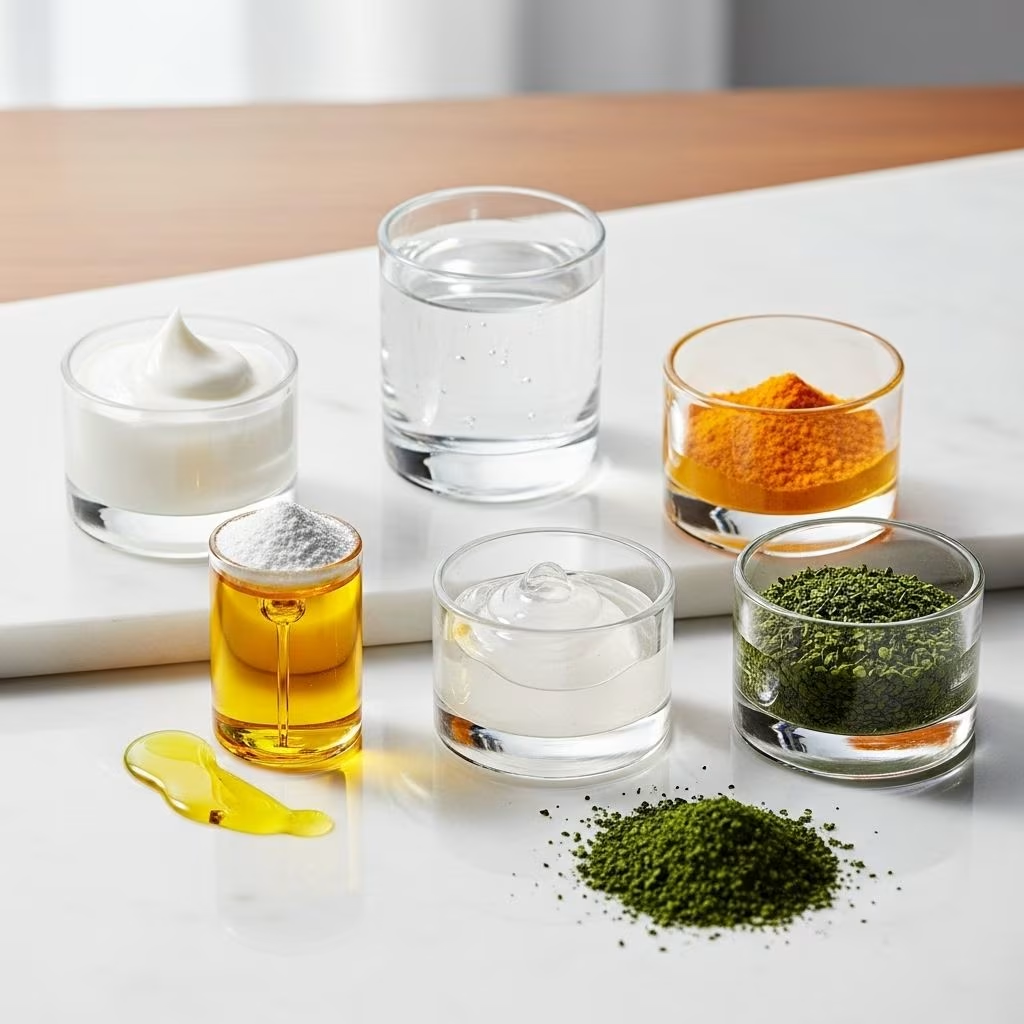
Skincare Actives: How They Work to Transform Your Skin
In the ever-evolving world of skincare, actives have emerged as the true power players. Potent, scientifically validated, and essential to targeted treatments, skincare actives promise transformational results—think smoother texture, clearer complexion, and visibly rejuvenated skin. This comprehensive guide dives deep into what actives are, how they work, which ones to choose for specific skin concerns, and how to use them confidently—backed by the latest research and expert insight.
What Are Skincare Actives?
Active skincare ingredients are scientifically proven compounds added to products for their targeted, beneficial effects on the skin. Unlike ingredients used solely to stabilize formulas or add texture, actives deliver on the product’s claims, addressing issues such as acne, aging, hyperpigmentation, irritation, and dehydration.
Actives often feature in serums due to their smaller molecule sizes, which allow deeper skin penetration—a critical factor for treating concerns beneath the surface. Their effectiveness depends on potency, stability, concentration, and delivery method.
- Targeted action—each active addresses a specific concern (e.g., niacinamide for redness, retinol for wrinkles).
- Backed by science—actives are researched, tested, and proven to influence biological processes within the skin.
- Powerful results—visible transformation in tone, texture, clarity, and resilience.
Mechanism of Action: How Actives Work at the Cellular Level
Unlike traditional cosmetics, actives interact directly with specific skin cells and molecular pathways, acting as sophisticated regulators of cellular processes. They can fine-tune enzymes, moderate inflammation, stimulate collagen, or influence pigment production—tackling concerns at their root rather than merely masking them.
- Enzyme modulation—actives like BHAs reduce inflammation via enzyme pathways.
- Cellular renewal—AHAs and retinoids accelerate the shedding and formation of new skin cells.
- Collagen production—vitamin C and retinoids stimulate collagen synthesis for firmer skin.
- Antioxidant activity—vitamin C, E, and polyphenols neutralize free radicals to reduce oxidative damage.
- Regulation of pigmentation—actives like niacinamide and specific acids inhibit excess melanin production.
This targeted interaction leads to demonstrable, long-lasting improvements in skin health and appearance that typical, non-active cosmetics simply cannot match.
The Six Core Types of Skincare Actives
Most high-performance skincare formulas contain one or more of the following actives—a selection formulated to address the widest range of skin concerns:
1. Antioxidants
Defend against free radical damage caused by UV, pollution, and stress. Key players include:
- Vitamin C—boosts radiance, fades hyperpigmentation, stimulates collagen.
- Vitamin E—heals and soothes, enhances moisture retention.
- Ferulic acid—stabilizes and enhances other antioxidants for maximum effect.
- Polyphenols (e.g., green tea, resveratrol)
2. Exfoliants: AHAs/BHAs/LHA
- Alpha hydroxy acids (AHAs; e.g., glycolic, lactic acid)—dissolve surface dead skin cells, promote cellular turnover, refine texture.
- Beta hydroxy acids (BHAs; e.g., salicylic acid)—oil-soluble, penetrate pores, reduce breakouts and blackheads.
- LHA (lipohydroxy acid)—gentle exfoliation, suitable for sensitive skin.
3. Retinoids (Vitamin A and Derivatives)
Retinoids (retinol, tretinoin, retinaldehyde, adapalene) are cornerstone actives for anti-aging and acne prevention:
- Accelerate cellular renewal
- Stimulate collagen
- Fade hyperpigmentation
Retinoids can be challenging for sensitive skin; gradual introduction and nighttime use are often recommended.
4. Peptides and Growth Factors
Short chains of amino acids that act as signaling molecules:
- Stimulate collagen and elastin for firmer, youthful skin
- Support wound healing
- Reduce inflammation
5. Humectants and Hydrators
- Hyaluronic acid—holds up to 1000x its weight in water.
- Glycerin, panthenol—maintain skin’s moisture barrier.
6. Skin Brighteners and Depigmenting Agents
- Niacinamide—reduces redness, regulates sebum, diminishes pigment lesions.
- Tranexamic acid—targets melasma and stubborn hyperpigmentation.
- Alpha-arbutin, azelaic acid
How Actives Penetrate The Skin: Delivery Systems
The skin’s outermost layer, the stratum corneum, is highly protective—designed to keep pathogens out and moisture in. For actives to work, they must penetrate this barrier. Three principal routes exist:
- Intercellular route—actives move between skin cells through the lipid matrix. Ideal for lipid-soluble molecules like many antioxidants.
- Transcellular route—actives travel through skin cells. Best for small, hydrophilic and lipophilic molecules, often enhanced by encapsulation (liposomes, nanotech).
- Transfollicular route—through hair follicles; suitable for larger, polar molecules.
Modern skincare leverages these pathways with advanced delivery systems:
- Microneedling—creates tiny channels, improving penetration.
- Electrical devices (galvanic current, ultrasound)—facilitate deeper delivery.
- Encapsulation—protects actives until they reach optimal skin depth.
Choosing the Right Actives for Your Skin Concern
Not all actives work for every skin type or concern. Select actives based on clinical evidence, your specific needs, and product compatibility. Here’s a simplified reference:
| Concern | Recommended Actives |
|---|---|
| Acne & Oiliness | BHAs (Salicylic acid), AHAs (Glycolic acid), Retinoids |
| Dryness & Dehydration | Hyaluronic acid, Glycerin, Ceramides |
| Hyperpigmentation | Vitamin C, Niacinamide, Tranexamic acid, Alpha-arbutin |
| Aging (Wrinkles, Loss of Elasticity) | Retinoids, Peptides, Vitamin C, Growth Factors |
| Sensitivity & Redness | Niacinamide, LHA, Panthenol |
| Sun Damage | Vitamin C, Ferulic acid, Retinoids |
Always patch test new actives and introduce them gradually to monitor for irritation. Seek dermatologist guidance for prescription-strength actives or complex combinations.
Combining and Layering Actives: Best Practices
Combining actives effectively can boost results but requires care:
- Low-and-slow introduction—always start with lower strength/frequency.
- Check compatibility—retinol and AHAs/BHAs may increase irritation when layered; consider alternating use.
- Hydrate and protect—support actives with humectants and always follow with broad-spectrum sunscreen.
- Mind the pH—certain actives work best at specific pH levels; check product instructions.
- Follow correct order—apply thinnest, water-based actives first, then creams, oils, sunscreens.
Sample Routine for Combination Skin
- AM: Cleanser → Vitamin C serum → Niacinamide serum → Moisturizer → Sunscreen
- PM: Double cleanse → AHA/BHA or Retinol (alternate nights) → Hyaluronic acid → Moisturizer
Common Mistakes and How to Avoid Them
- Overusing actives—more is rarely better; excessive use can damage skin barrier.
- Skipping SPF—most actives increase photosensitivity; skipping sunscreen accelerates aging and pigmentation.
- Mixing incompatible actives—read product labels for warnings about combining acids and retinoids or vitamin C with niacinamide.
- Ignoring inactive ingredients—these components support stability, delivery, and minimize irritation.
Frequently Asked Questions
Q: What is the difference between active and inactive ingredients?
A: Active ingredients target specific skin concerns and produce visible results, while inactive ingredients (preservatives, stabilizers, bases) help preserve formula, enhance texture, and aid delivery but are not the main performance drivers.
Q: Can actives cause irritation?
A: Yes; actives are potent and may lead to redness, peeling, or sensitivity, especially when overused or improperly combined. Always patch test and introduce new actives gradually.
Q: How long before I see results?
A: Results vary. Some actives (like exfoliating acids) show immediate effects (brighter skin), while anti-aging and pigment-correcting actives may take weeks to months for visible improvement. Consistent use and patience are key.
Q: Should I consult a dermatologist?
A: If you have sensitive, reactive, or medically concerning skin issues, or want to use prescription-strength actives, professional guidance is strongly recommended.
Q: Do all actives need to be applied at night?
A: Not all, but many (retinoids, some acids) are best used at night due to increased sun sensitivity. Hydrating actives and antioxidants can safely be used in the morning.
Empowering Your Skincare Journey
Understanding skincare actives equips you to make informed choices, optimize your routine, and achieve your healthiest, most radiant skin. Start slowly, observe your skin’s response, and embrace the science-backed power of the right actives—your path to true transformation.
References
- https://bespokeskintechnology.com/2024/01/24/6-different-types-of-active-ingredients/
- https://nexus-pharma.com/blog/mechanism-of-action-and-expected-outcomes-in-skincare/
- https://www.laroche-posay.com.au/blog/what-is-an-active-ingredient-in-skincare.html
- https://www.skininc.com/science/ingredients/article/21880551/active-ingredients-in-action
- https://pmc.ncbi.nlm.nih.gov/articles/PMC6791161/
- https://pmc.ncbi.nlm.nih.gov/articles/PMC10385838/
- https://charlestondermatology.com/understanding-the-power-of-actives/


