


Table of Content
- Laser Hair Removal Technology
- Effectiveness of Laser Hair Removal
- Safety and Complications
- Frequently Asked Questions
Laser Hair Removal Technology
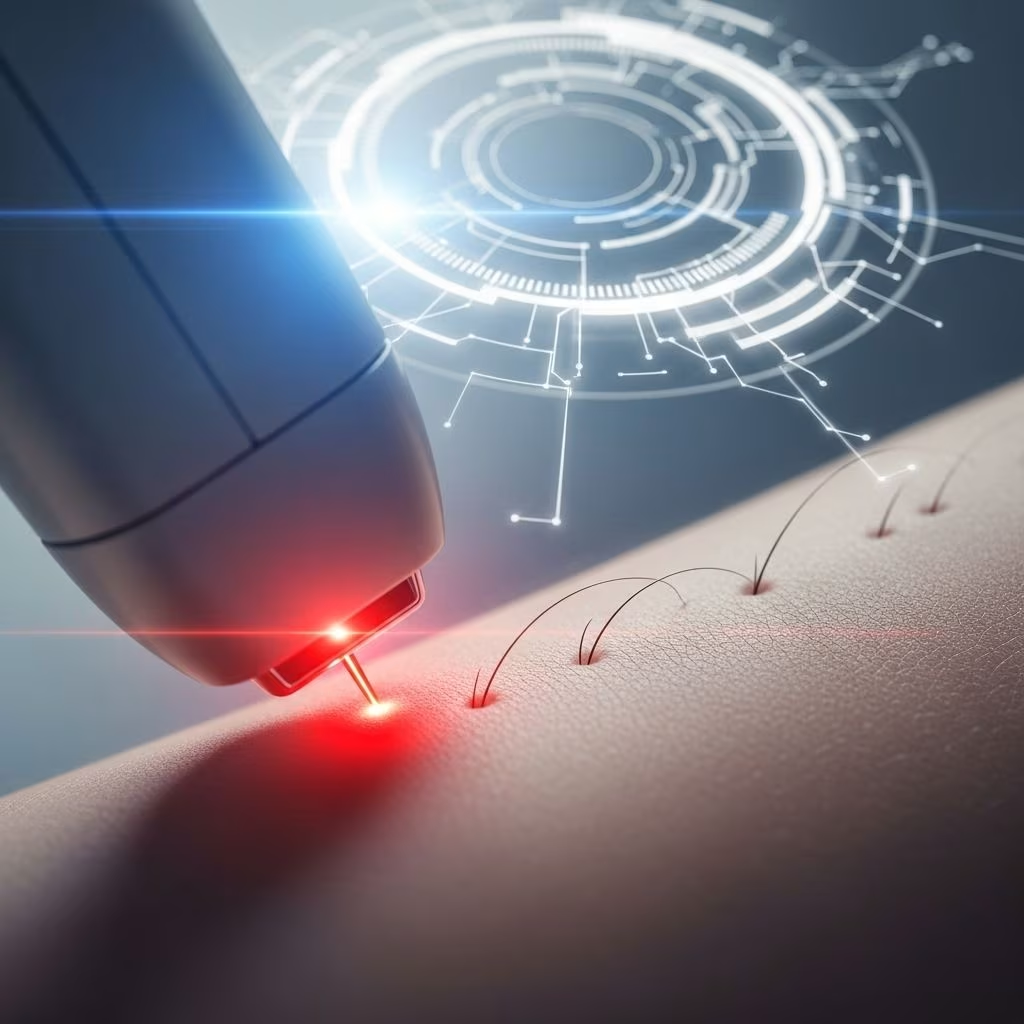
Laser hair removal is a cosmetic procedure that uses laser technology to remove unwanted hair by targeting the melanin pigment in hair follicles. The principle behind this process is called selective photothermolysis, where a specific wavelength of light is used to cause thermal damage to the hair follicle without harming the surrounding skin.
Lasers emit a concentrated beam of light that is absorbed by melanin in the hair, generating heat that damages the follicle and inhibits future hair growth. Different types of lasers are used for different skin and hair types. For example, the alexandrite laser is effective for lighter skin, while the neodymium-doped yttrium aluminum garnet (Nd:YAG) laser is used for darker skin types.
Effectiveness of Laser Hair Removal
Laser hair removal is effective for long-term hair reduction, particularly for dark coarse hair. It works best on individuals with light skin and dark hair, but advancements in laser technology have made it possible to treat a wider range of skin and hair types.
While laser hair removal can significantly reduce hair growth, it does not guarantee permanent removal for everyone. Many patients need touch-up treatments to maintain the results over time. The effectiveness of the treatment also depends on the skill of the laser operator and the technology used.
Safety and Complications
Laser hair removal is generally considered safe when performed by a trained professional. However, potential complications include skin burns, redness, and irritation. It is crucial to choose a skilled practitioner and follow pre- and post-treatment instructions to minimize risks.
One of the challenges with laser hair removal is that it works best on hair with color, which means white, light blonde, and strawberry blonde hair does not respond well to the treatment. Additionally, the effectiveness can vary depending on the individual’s skin tone and hair type.
Precautions and Considerations
Before undergoing laser hair removal, it is essential to avoid sun exposure, waxing, and other hair removal methods to prevent complications. It’s also important to inform the practitioner about any medical conditions or medications that may affect the treatment.
Comparison of Laser Types
| Laser Type | Wavelength | Skin/Hair Type | Effectiveness |
|---|---|---|---|
| Alexandrite Laser | 775 nm | Light Skin | Effective for lighter skin types, risky for darker skin |
| Nd:YAG Laser | 1064 nm | Darker Skin | Best for darker skin types, less effective on fine hair |
| Diode Laser | 800-980 nm | Most Skin Types | Versatile, suitable for a wide range of skin tones |
Frequently Asked Questions
Q: Is laser hair removal permanent?
A: Laser hair removal is approved for “permanent hair reduction” by the FDA, meaning it significantly reduces hair growth but may not completely eliminate it. Some regrowth can occur, especially over time.
Q: What is the ideal skin and hair combination for laser hair removal?
A: The ideal combination is light skin and dark hair, as this allows for better absorption of the laser light by the hair follicles without affecting the skin.
Q: What are the common side effects of laser hair removal?
A: Common side effects include temporary redness, minor burns, and skin irritation. These effects are usually mild and temporary.
Q: How many sessions are typically needed for laser hair removal?
A: Typically, 3 to 8 sessions are required, spaced several weeks apart. The exact number depends on the area being treated and individual hair growth patterns.
Q: What should I avoid before laser hair removal sessions?
A: You should avoid sun exposure, waxing, and other hair removal methods for several weeks before treatment to ensure effective and safe results.
Q: What are the different types of lasers used for hair removal?
A: The main types include alexandrite, Nd:YAG, and diode lasers. Each is suitable for different skin and hair types due to their varying wavelengths.
References
- https://illumin.usc.edu/beauty-and-the-geek-the-engineering-behind-laser-hair-removal/
- https://en.wikipedia.org/wiki/Laser_hair_removal
- https://www.ncbi.nlm.nih.gov/books/NBK507861/
- https://americanlasermedspa.com/the-science-behind-laser-hair-removal/
- https://sevlaser.com/blog/how-laser-hair-removal-works-demystifying-laser-technology/
- https://www.openaccessjournals.com/articles/laser-hair-removalmechanisms-and-complications.pdf
- https://almalasers.com/knowledge-booster/advanced-techniques-in-laser-hair-removal-a-comprehensive-guide/


