


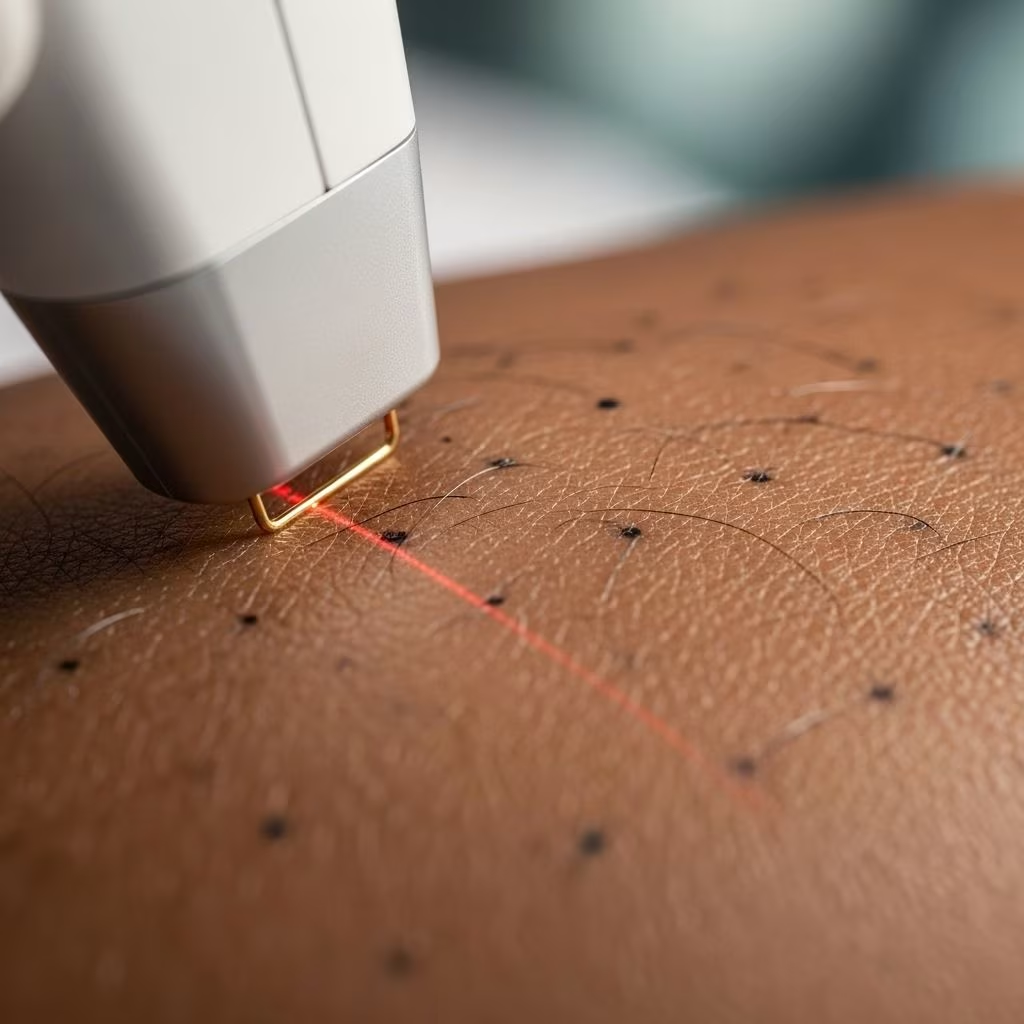
Laser treatments have evolved dramatically, and individuals with darker skin types—classified as Fitzpatrick IV, V, and VI—can now safely benefit from procedures like hair reduction, skin rejuvenation, and pigmentation correction. This comprehensive guide covers the science, device selection, treatment parameters, safety measures, and frequently asked questions regarding laser settings for darker skin.
Understanding Fitzpatrick Skin Types IV–VI
The Fitzpatrick scale is a widely used system to classify skin based on its response to ultraviolet exposure and inherent melanin content. Fitzpatrick IV–VI represent medium to deeply pigmented skin:
| Type | Skin Tone | Sun Response | Examples |
|---|---|---|---|
| IV | Medium to tan | Rarely burns, tans easily | Mediterranean, Hispanic, some Asian |
| V | Brown | Very rarely burns, tans well | Middle Eastern, South Asian, Afro-Caribbean |
| VI | Deep brown to black | Never burns, always tans | African, Afro-Caribbean descent |
These skin types have higher concentrations of melanin in the epidermis, which confer advantages (like protection against photoaging) but also pose unique considerations for laser procedures.
Unique Challenges for Laser in Darker Skin
Melanin acts as a chromophore that absorbs laser energy. In darker skin, excess melanin puts the upper epidermis at risk during laser treatments, potentially resulting in:
- Hyperpigmentation (dark spots)
- Hypopigmentation (light spots)
- Thermal burns
- Scarring
- Blistering or crusting
Therefore, the approach for Fitzpatrick IV–VI must consider:
- Selective target chromophores (minimizing melanin absorption in the epidermis)
- Customizing settings to achieve efficacy without adverse effects
- Using technologies specifically designed or adjusted for pigmented skin
Safe and Effective Laser Technologies
Selecting the right laser is critical for safety and results. Modern dermatology offers several technologies suitable for darker skin:
Nd:YAG Laser (1064 nm): Gold Standard
- 1064 nm wavelength bypasses melanin-rich epidermal layers and reaches deep structures.
- Indications: Hair removal, vascular lesions, skin tightening, pigmentation.
- Lower risk of post-inflammatory pigmentation changes.
- Can be used for patients with all degrees of skin pigmentation, especially IV–VI.
Diode Lasers (810 nm; select models)
- Some new-generation diode lasers can treat darker skin if pulse duration is increased and fluence is reduced.
- Less commonly used than Nd:YAG for the darkest phototypes, but suitable with strict protocols.
Q-Switched and Picosecond Nd:YAG Lasers
- Used for melasma, lentigines, and difficult pigmentation issues.
- Short pulse duration minimizes thermal diffusion to surrounding melanin.
Fractional Non-Ablative Lasers (e.g., 1550 nm Er:Glass)
- Fractional delivery means less total epidermal injury; often chosen for texture and laxity improvements.
- Still carries pigment alteration risk, so requires expert settings and patient selection.
Pulsed Dye Lasers (PDL)
- Useful for certain vascular/scar concerns, sometimes as adjunct for keloids or erythema.
Technologies to Avoid or Use With Extreme Caution:
- IPL (Intense Pulsed Light) – Many devices are not safe for IV–VI unless specifically designed for melanin-rich skin.
- Alexandrite (755 nm) – Typically reserved for lighter skin, high risk of complications in IV–VI types unless under expert guidance.
Critical Laser Settings and Parameters
Adjusting settings is key to balancing efficacy and safety. Major adjustable parameters include:
| Parameter | Recommended Approach for Fitzpatrick IV–VI |
|---|---|
| Wavelength | Longer wavelengths (1064 nm Nd:YAG, select 810 nm diode) |
| Fluence (Energy) | Lower starting fluences; titrate up based on test reaction and hair/lesion response |
| Pulse Duration | Longer pulse durations; minimize rapid energy delivery to reduce epidermal heat load |
| Spot Size | Larger spot sizes allow deeper penetration but require careful balancing with lower fluence |
| Cooling | Mandatory: integrated contact cooling, cryogen spray, or chilled air before/after pulse to protect epidermis |
| Number of Passes | Fewer passes, with adequate interval between treatments to allow healing |
- Always begin with test spots in an inconspicuous area before full treatment.
- Customize settings for indication (hair removal, pigment, vascular, etc.) and machine type[10].
Protocols and Pre/Post-Treatment Care
Pre-Treatment
- Avoid tanning and sun exposure for at least 2–4 weeks before sessions.
- Discontinue photosensitizing drugs and topical retinoids as directed by provider.
- Consider topical hydroquinone for 2–4 weeks pre-treatment in pigment-prone patients to reduce PIH risk.
- Do not wax, tweeze, or use depilatory creams prior to hair reduction lasers; shaving is permitted.
- Perform a test spot for settings calibration and pigment response.
Intra-Treatment
- Implement rigorous epidermal cooling methods before, during, and after each laser pulse.
- Monitor tissue response closely, pausing if whitening, excessive erythema, or blistering occurs.
- Limit passes and overlap to prevent heat accumulation.
Post-Treatment
- Apply cooling gels, ice packs, or anti-inflammatory creams as instructed.
- Use strict sun protection (broad-spectrum SPF 50+, wide-brim hats).
- Avoid picking, rubbing, or exfoliating the treated area for at least 1 week.
- Resume hydroquinone if prescribed for 2–4 weeks post-procedure to suppress PIH.
- Watch for delayed complications and attend follow-up appointments as scheduled.
Key Safety and Efficacy Precautions
- Choose only experienced providers with specialized training in pigmented skin and access to suitable laser platforms.
- Do not use “universal” or generic settings; always demand customization for your skin type.
- Ensure the facility follows evidence-based protocols for Fitzpatrick IV–VI clients.
- Ask about device wavelength, pulse parameters, safety track record, and recent clinical results in people with similar skin.
- Report any unwanted symptoms (pain, blisters, pigment changes) immediately to your provider.
Clinical Considerations and Common Indications
Most frequently, lasers are used in skin of color for:
- Hair removal (face, body, bikini, etc.)
- Treatment of hyperpigmentation (melasma, PIH, lentigines)
- Acne scars and texture improvements (using fractional non-ablative lasers)
- Vascular lesions and keloid scars (using PDL or Nd:YAG)
- Skin tightening and rejuvenation
Outcomes in experienced hands are good, with minimal risk when appropriate technology and techniques are used.
Risks and Potential Complications
- Post-inflammatory hyperpigmentation (PIH): Most common, especially when settings are aggressive.
- Anetoderma/hypopigmentation: Loss of pigment, often due to epidermal damage from over-treatment.
- Blisters, burns, crusting: Immediate signs of excessive energy or lack of epidermal protection.
- Scarring: Rare but possible in severe cases or repeated injury.
- All adverse events are mitigated by correct protocol and expert practitioners[10].
Frequently Asked Questions (FAQs)
Q: Why are certain lasers unsafe for darker skin?
A: Lasers that deliver shorter wavelengths or excessive energy are strongly absorbed by superficial melanin, leading to higher risks of burns and pigmentation changes in Fitzpatrick IV–VI skin.
Q: Can people with Fitzpatrick VI (deepest) skin undergo laser hair removal?
A: Yes. Nd:YAG lasers and certain diode lasers are safe for all dark skin types, including VI, when treatment is individualized and precautions are followed.
Q: Is hyperpigmentation a permanent side effect?
A: Most cases resolve gradually with time and proper care (e.g., topical hydroquinone, sun protection), but prevention through appropriate settings is best[10].
Q: How many sessions are required for hair removal in darker skin?
A: Typically, 6–8 spaced sessions are required; darker and thicker hair often responds best, while finer hairs may need further sessions. Maintenance sessions may be required annually.
Q: Can lasers treat acne scarring or pigmentation on darker skin?
A: Yes, with careful selection of fractional non-ablative or Q-switched/picosecond Nd:YAG lasers and conservative protocols, significant improvements are possible.
Summary and Key Takeaways
- Safe, effective laser treatments for Fitzpatrick IV–VI are now achievable with the right technology, settings, and expertise.
- Nd:YAG (1064 nm) remains the safest, most versatile option; other lasers can be used with specific modifications.
- Risks, mainly pigment alterations and burns, are preventable with protocol adherence and experienced providers.
- Always request a specialized consultation and customized test spot to ensure optimal safety and results.
- Post-treatment care is as crucial as laser selection to minimize complications and enhance results.
References
- https://theperfectedproof.com/best-lasers-for-dark-skin-fitzpatrick-iv-vi-safe-effective-and-pigment-safe-treatments/
- https://www.ncbi.nlm.nih.gov/books/NBK557626/
- https://www.peachfuzzlaser.com/blog/fitzpatrick-skin-types-explained-laser-safety-for-all-shades
- https://pubmed.ncbi.nlm.nih.gov/28791605/
- https://myskintastic.com/fitzpatrick-skin-types-for-laser-treatments/
- https://nuveau.co/how-does-nuveau-customize-laser-settings-for-fitzpatrick-iv-vi/
- https://aestheticsbiomedical.com/blog/provider-protocols-treating-darker-fitzpatrick-skin-types/
- https://naderm.com/blog/laser-hair-removal-and-different-skin-types-the-fitzpatrick-scale/
- https://kaizenmedspa.ca/fitzpatrick-scale-and-laser-treatments/
- https://skin.substack.com/p/laser-parameter-selection-in-darker


