


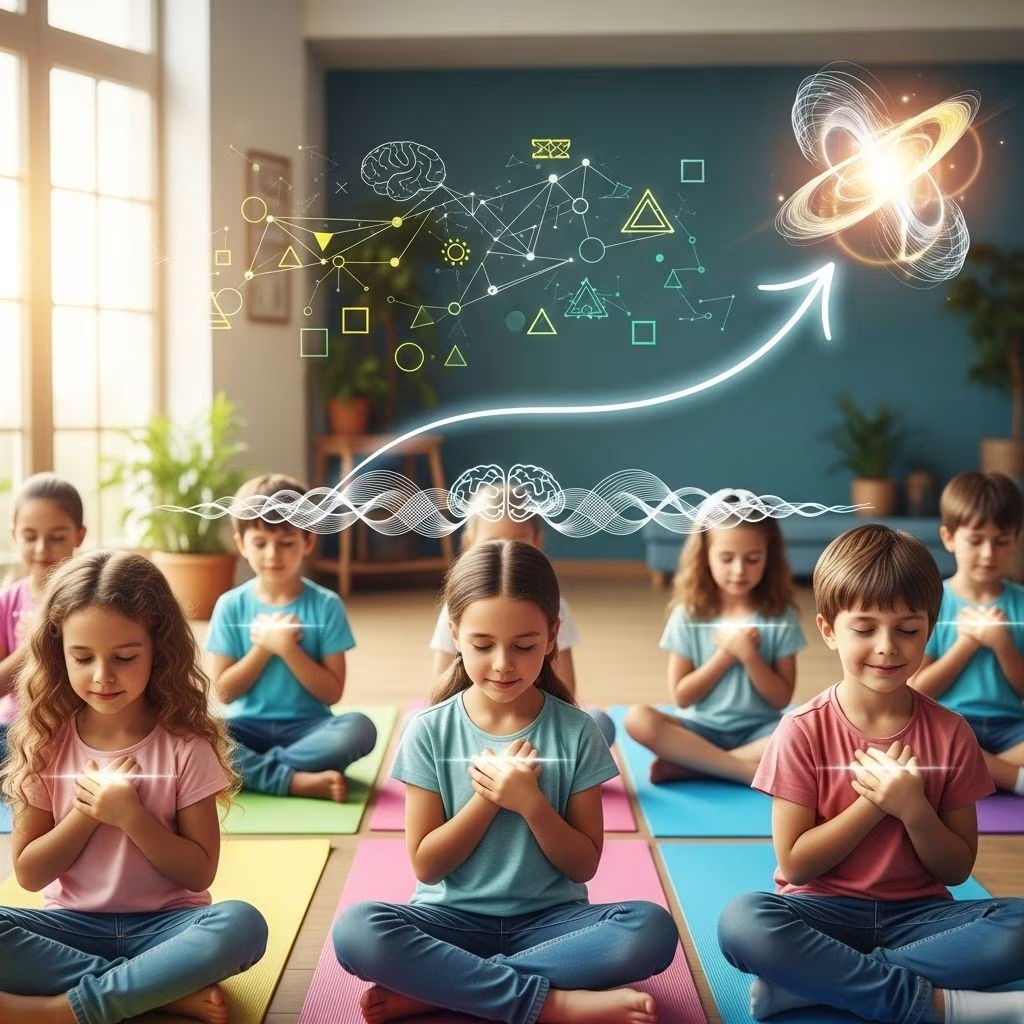
Mindfulness is rapidly gaining recognition as a foundational tool in supporting healthy cognitive, emotional, and behavioral development in children. As rates of anxiety, attention issues, and emotional challenges have increased in young people, evidence-based mindful practices offer a powerful, practical solution for nurturing self-regulation, empathy, and overall well-being. This article explores the science behind mindfulness for kids’ behavior, revealing how mindful interventions support young minds in classrooms, at home, and into the future.
Introduction to Mindfulness for Children
Mindfulness is the practice of bringing focused, non-judgmental awareness to the present moment. For children, this means learning to pay attention to their thoughts, emotions, bodily sensations, and surroundings with curiosity and kindness. Rooted in ancient contemplative traditions but validated by decades of modern science, mindfulness for young people is cultivated through simple exercises like mindful breathing, sensory exploration, guided imagery, or movement practices such as yoga.
The goal is not to force stillness or suppress emotions, but to help children understand and regulate their inner world, improving how they respond rather than react to life events. Early introduction enables kids to develop essential self-regulation skills and emotional awareness at critical stages of brain development.
What Happens in the Brain? Neuroscience of Mindfulness
Mindfulness physically changes the brain, especially in structures critical for behavior and emotional regulation. Research focusing on children’s brain development has revealed remarkable benefits:
- Amygdala: The brain’s emotional alarm system. Regular mindfulness practice shrinks the amygdala’s gray matter, associated with lower levels of fear and stress reactions.
- Prefrontal Cortex: Responsible for decision-making, planning, and controlling impulses. Mindfulness boosts activity and connectivity in this region, supporting better executive functions—like focus, problem-solving, and emotional control.
- Hippocampus: Central to memory and learning. Mindful exercises stimulate growth and activity here, aiding improved learning and retention.
Not only does mindfulness strengthen these areas, but it also results in a more efficient communication network between them, allowing children to pause before acting impulsively and access calm, measured responses to challenges.
Core Behavioral and Emotional Benefits of Mindfulness in Kids
Extensive research points to a broad spectrum of behavioral and psychological improvements when children engage in mindfulness-based interventions:
- Reduces Aggression and Behavioral Issues: Mindfulness programs in schools have been linked to 24% fewer aggressive behaviors, and significant decreases in disruptive or oppositional behavior.
- Enhances Positive Emotions and Empathy: Kids practicing mindfulness display higher levels of compassion, prosocial behaviors, and emotional resilience, fostering empathy and social connectedness.
- Decreases Stress and Anxiety: Mindful breathing and body awareness techniques calm the nervous system, and children report reduced symptoms of stress, anxiety, and even depression.
- Improves Focus and Attention: Regular mindfulness training sharpens attention spans, allowing better classroom engagement and academic performance—sometimes resulting in 15% better math scores.
- Boosts Self-Esteem and Well-Being: Mindfulness supports healthy sleep, self-esteem, and relaxation while lowering emotional reactivity.
These effects are cumulative: the more consistently mindfulness is embedded in children’s daily routines, the greater its positive impact across multiple domains of life.
Mindfulness and Self-Regulation: Developing Strong Foundations
Self-regulation is a cornerstone of healthy childhood development, involving the ability to manage thoughts, emotions, and impulses even in challenging situations. Mindfulness specifically enhances:
- Cognitive self-regulation—increases in attention, working memory, inhibitory control, and cognitive flexibility. Children become better equipped to stay on task, resist distractions, and shift strategies flexibly.
- Emotional regulation—teaching kids to observe feelings, label them, and ride “emotional waves” without being overwhelmed. This dramatically reduces emotional outbursts and improves resilience.
- Prosocial behaviors—such as sharing, kindness, and cooperation, all of which set the tone for a positive social environment.
A range of interventions, from Mindfulness-Based Stress Reduction (MBSR) to programs like CARE (Cultivating Awareness and Resilience in Education), have demonstrated positive outcomes in cognitive and behavioral self-regulation—even for those with additional challenges such as economic hardship, neurodivergence, or trauma.
Mindfulness in the Classroom and Academic Outcomes
Mindfulness is increasingly integrated into curricula worldwide as a tool for supporting not only students’ well-being but also their academic success. Its implementation delivers:
- Improved attention and working memory, reducing executive function deficits that hinder learning.
- Greater classroom harmony, with more kindness, empathetic interactions, and fewer disruptions.
- Moderate reductions in academic problems, and better performance in core subjects, particularly mathematics and reading.
- Benefit for teachers as well: Mindfulness helps educators cope with stress, maintain emotional calm, and foster a nurturing learning environment, which in turn amplifies gains for students.
Teachers report that mindful routines—whether brief “brain breaks,” guided visualizations, or mindful listening—are feasible, easily adopted, and widely accepted by both staff and students. This shifts classroom culture toward one of calm focus and mutual respect.
Special Populations: ADHD, Anxiety, and Emotional Challenges
Studies indicate that mindfulness practices deliver unique and amplified advantages for children experiencing behavioral or attentional difficulties:
- Children with ADHD: Mindfulness techniques substantially reduce impulsivity, anxiety, and emotional reactivity, leading to fewer behavior incidents at school and home. Research also demonstrates improved self-regulation, attention, and decision-making in these children.
- Emotional and Learning Challenges: Mindfulness equips children with tools to observe their thoughts without reacting, facilitating better emotion management in high-stress situations.
- Resilience in the Face of Adversity: Mindfulness is linked to increased emotional resilience during collective crises, such as the Covid-19 pandemic.
| Population | Mindfulness Benefit |
|---|---|
| ADHD | Reduced impulsivity, improved attention & emotional self-regulation |
| Anxiety/Stress | Decreased physical and psychological symptoms, better emotional coping |
| Trauma/Adversity | Greater resilience, more positive coping responses in challenging environments |
These findings highlight the inclusivity and versatility of mindfulness: it benefits all children, but can be especially transformative for those who need extra support.
Family Dynamics and Parenting through Mindfulness
Mindfulness is most effective and sustainable when practiced as a family value, not just an individual skill. Research shows:
- Parents who embrace mindfulness report less stress, higher self-compassion, and improved mental health.
- Mindful families foster greater patience, acceptance, and positive coping when facing behavioral challenges.
- When practiced collectively, mindfulness enhances family relationships, modeling emotional regulation and healthy communication for children.
Incorporating age-appropriate mindful practices at home—from shared breathing exercises to bedtime gratitude reflections—builds a nurturing, predictable family environment that supports child well-being.
Implementing Mindfulness: Programs and Everyday Strategies
How can families and schools get started with mindfulness? Research and real-world experience point to several effective approaches:
- Mindfulness-Based Interventions (MBIs): These structured programs (like MBSR, MindUP, and CARE) are integrated into classroom routines or therapy settings, with lesson plans tailored for different ages.
- Mindfulness Apps and Digital Tools: Especially valuable for reaching children at home or in remote contexts, apps offer guided breathing, body scans, and mindful listening exercises proven to improve mental health outcomes.
- Daily Practices: Families and teachers can embed mindfulness into the day through:
- Mindful breathing breaks before homework or stressful activities
- Body scans to notice sensations from head to toe
- Sensory walks, where children pay close attention to sights, sounds, and smells
- Mindful eating—savoring each bite without distractions
- Professional Development: Training teachers and parents in mindfulness techniques ensures consistent, skillful delivery and increases sustainability.
For maximum impact, it is recommended that mindfulness is introduced gradually, practiced consistently, and adapted for the child’s developmental stage and needs.
Frequently Asked Questions (FAQs)
Q: At what age can children start practicing mindfulness?
A: Mindfulness can be introduced as early as preschool (ages 3–5) through simple breathing and sensory games. Techniques are adapted for developmental level as children grow.
Q: Does mindfulness replace therapy or behavioral interventions?
A: No. Mindfulness is an effective complement to other supports, especially for anxiety, ADHD, and trauma, but not a replacement for evidence-based therapy or specialized interventions where indicated.
Q: How much time each day is needed to see benefits?
A: Studies show that even 5–10 minutes a day of mindful practice can yield observable benefits in mood, behavior, and attention over time.
Q: Is mindfulness evidence-based for diverse cultural and family contexts?
A: Yes. Mindfulness frameworks are effective across a wide range of cultural backgrounds and family structures. Programs should be adapted, when possible, to respect and include cultural values and traditions.
Q: Are there risks or downsides to introducing mindfulness?
A: Mindfulness is generally very safe. Occasionally, children with unresolved trauma may need modifications or should practice under the guidance of a trained professional to ensure safety and comfort.
Conclusion: Building Resilient, Mindful Futures
The science is clear: embedding mindfulness in early childhood yields broad, lasting improvements in behavior, emotional health, attention, and social connection. Mindfulness practices offer children, families, and educators a practical toolkit for thriving in a world filled with distractions and uncertainties. By fostering present-moment awareness, kindness, and self-regulation, we lay the foundation for resilient, compassionate, and well-adjusted future generations.
References
- https://pmc.ncbi.nlm.nih.gov/articles/PMC8936381/
- https://empoweringeducation.org/blog/benefits-of-mindfulness-for-children/
- https://news.mit.edu/2023/practicing-mindfulness-may-improve-childrens-mental-health-1011
- https://www.kutestkids.com/blog/the-benefits-of-using-mindfulness-techniques-for-children-with-adhd
- https://mindfulnessinschools.org/wp-content/uploads/2013/02/MiSP-Research-Summary-2012.pdf
- https://www.washington.edu/news/2018/09/25/practicing-mindfulness-benefits-parents-and-children-uw-study-says/
- https://childmind.org/article/the-art-and-science-of-mindfulness/
- https://pmc.ncbi.nlm.nih.gov/articles/PMC3267931/


