Cain and Abel: The Origins of Sibling Rivalry in Human History
The story of Cain and Abel remains one of the most enduring and debated narratives in the Judeo-Christian tradition. Found in Genesis 4, this tale establishes the first act of violence and jealousy between brothers, echoing through religious, literary, and cultural interpretations for millennia.
Setting the Stage: Adam, Eve, and Their Sons
- Adam and Eve, the first humans, were cast out of Eden and began the lineage of humankind.
- Cain was their firstborn, his name suggested “acquisition” or “creation.” He became a farmer.
- Abel, their second son, was a shepherd, tending flocks and animals.
This division—one tending land, the other animals—sets up the symbolic contrast that fuels their rivalry, reflecting historic tensions between agricultural and pastoral cultures.
The Offering: Divine Favor and Human Disappointment
Both brothers sought to please God with offerings:
- Cain brought the fruits of the soil.
- Abel offered the best portions of his firstborn lamb from his flock.
Scripture reveals that God favored Abel’s sacrifice but rejected Cain’s. The reasons have been debated by theologians and scholars:
- Quality and intention: Some suggest Abel’s offering was superior in quality and presented with sincere devotion, whereas Cain’s was lesser and half-hearted.
- Symbolism of blood: Abel’s animal sacrifice involved blood, which in ancient tradition was central to atonement, while Cain’s plant offering lacked this quality.
Emotional Fallout: Anger, Jealousy, and Warning
The divine preference for Abel distressed Cain, whose anger and resentment grew. God warned him about sin lurking at his door, urging self-restraint:
“If you had done the right thing I would have accepted your offering. But you did the wrong thing, and now sin is waiting to attack you like a lion. Sin wants to destroy you, but don’t let it.”
The First Murder: Motives and Methods
The tension between the brothers culminated in a tragic act:
- Cain invited Abel to the field.
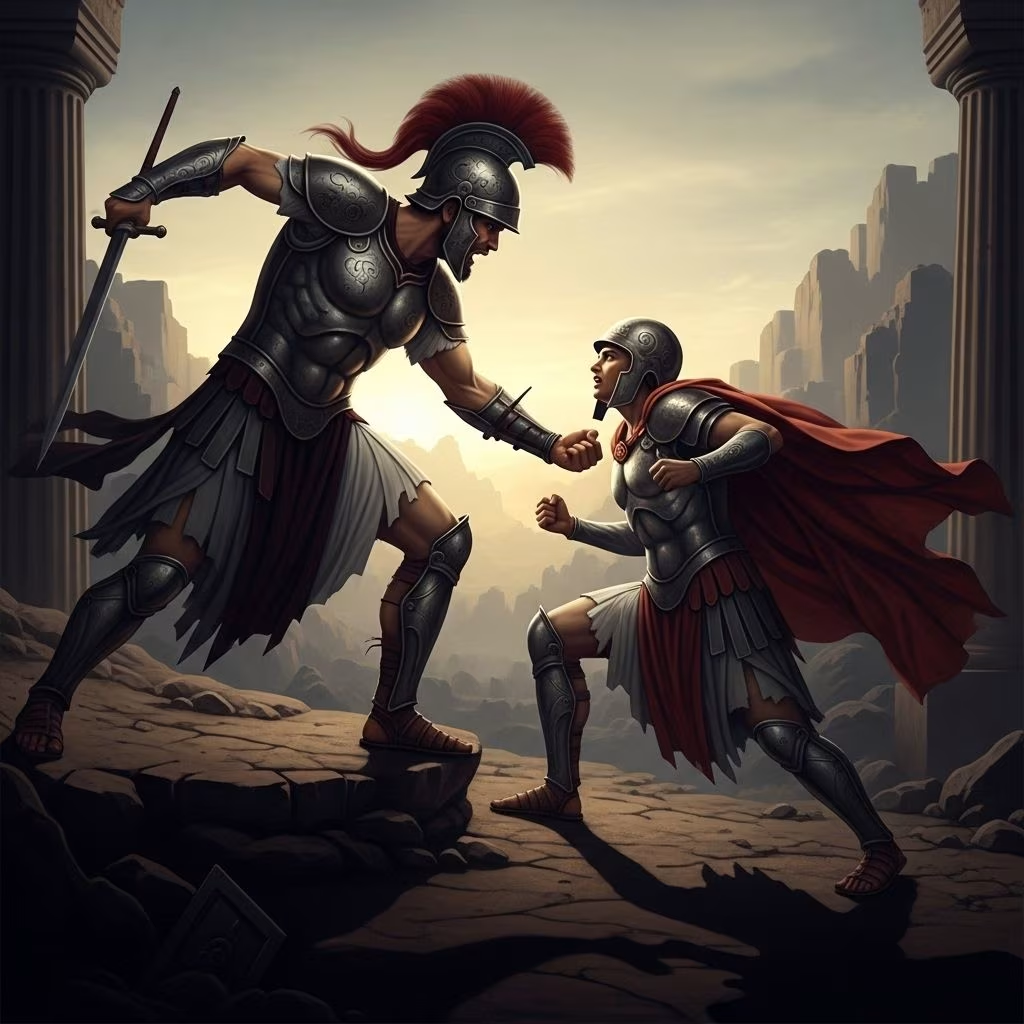
- He attacked and killed his brother—the first murder recorded in human history.
How Did Cain Kill Abel?
An enduring mystery is the method of Abel’s death. The biblical account is sparse, simply stating that Cain “rose up against his brother Abel and killed him.” Over centuries, interpretations proliferated:
- Stone or blunt object: Rabbinic sources variously suggest a stone, an agricultural tool, or even a bite as the murder weapon.
- Physical struggle: Some midrashic accounts describe Abel pinning Cain down, then showing mercy—only for Cain to retaliate.
- Supernatural or mystical interpretations: Gnostic texts suggest Abel died from Cain’s anger itself, a metaphysical rupture rather than physical violence.
| Theory | Details | Source/Tradition |
|---|---|---|
| Stone/Weapon | Cain used a rock or tool (hoe, plough) | Jewish Midrash, Rabbinic sources |
| Bite | Cain bit Abel’s neck | Some Jewish mystical traditions |
| Physical Struggle | Abel initially proved stronger, showing mercy before being killed | Chabad, Midrash |
| Anger/Divine Consequence | Abel died as a result of Cain’s anger, allowed by the divine | Gnostic/Christian mystical texts |
Divine Confrontation: The Questions from God
After the deed, God confronts Cain:
- “Where is your brother Abel?”
- Cain infamously replies, “I do not know. Am I my brother’s keeper?”
God declares that Abel’s blood cries out from the ground for justice. This rebuke conveys both the gravity of fratricide and the lasting consequences of violence.
The Punishment: Restless Wandering and The Mark of Cain
The aftermath of Cain’s crime is profound and multilayered:
- God curses Cain, dooming him to be “a restless wanderer on the earth.”
- The soil will no longer yield crops for Cain, intensifying his hardship.
- Cain pleads that the punishment is too great to bear, fearing reprisal from others.
- God places a protective “mark” on Cain to prevent others from killing him, warning that any aggressor will suffer sevenfold vengeance.
Theories About the Mark of Cain
- Physical sign: Possibilities include a scar, a horn, letter, or changed appearance.
- Symbolic protection: Scholars emphasize the mark is less curse than safeguard—an emblem of divine mercy despite great wrongdoing.
- Later misinterpretation: Theories connecting the mark to racial or social stigma are rejected by modern biblical historians as distortions.
Further Interpretations and Cultural Impacts
The story doesn’t end with Cain’s exile. Later traditions further interpret both the punishment and Cain’s legacy:
- Cain becomes a wandering nomad, struggling to farm the land.
- Some legends say God assigned him a dog as a merciful companion for protection.
- Alternatively, God restored the divine image to Cain, causing animals to fear and not harm him.
- The mark also served as a warning to others, signaling divine justice and mercy intertwined.
Justice and Retribution Across Generations
- The vengeance for Abel’s death was enacted “seven generations later” when Cain’s descendant Lemech inadvertently killed Cain, bringing the cycle of violence full circle.
- This motif of generational justice—punishment delayed but inevitable—echoes through biblical narratives.
Psychological and Ethical Dimensions
The Cain and Abel narrative is not just an origin story for violence—it offers deep ethical lessons. Themes include:
- Envy and uncontrolled anger: The dangers lurking in unchecked emotions.
- Responsibility for others: The rhetorical “Am I my brother’s keeper?” shapes debates on moral duty and social care.
- Divine justice and mercy: Despite Cain’s guilt, God’s mark is not merely a curse—it’s a form of protection.
This ambiguity has fueled philosophical, religious, and artistic interpretations. Is Cain irredeemable, or is he a template for repentance and divine mercy?
Legacy Through Cultures and Ages
The story of Cain and Abel is foundational to Western literature, art, and religious thought. Its themes resonate through multiple disciplines:
- Literature: Countless works—from John Milton’s “Paradise Lost” to modern novels and poems—reinterpret the fraternal conflict and its consequences.
- Art: Artists from the Middle Ages to now have depicted the archetypal scene, often emphasizing anguish, alienation, and the divine mark.
- Ethics: Debates on violence, justice, and responsibility trace their roots to the questions posed in Genesis 4.
Controversial Theories and Alternative Readings
- Some scholars propose that the narrative is an allegory for historic conflicts between agriculturalists (Cain) and pastoralists (Abel).
- Gnostic and mystical traditions suggest divine agency or metaphysical forces played a role in Abel’s death.
- Later traditions, such as in the apocryphal literature, add details about the role of Satan as an instigator, suggesting evil entered Cain’s heart.
While many accept the basic Genesis narrative, these theories highlight both the timeless mystery and the elasticity of the Cain and Abel story in human imagination.
Table: Key Lessons from the Cain and Abel Narrative
| Theme | Description | Relevance |
|---|---|---|
| Envy | Cain’s jealousy toward Abel’s favored position | Teaching against covetousness and resentment |
| Accountability | “Am I my brother’s keeper?”—questioning moral obligation | Central to debates on social and ethical responsibility |
| Justice and Mercy | God’s punishment balanced with protective mark | Symbols of divine judgment and potential for forgiveness |
| Restlessness | Cain cursed to wander, unable to settle or prosper from the land | Signifies consequences of violent actions |
| Legacy | Echoes in art, literature, and religious ethics | Shaping culture and morality for generations |
Frequently Asked Questions (FAQs)
Q: Why did God favor Abel’s offering over Cain’s?
A: The Bible doesn’t specify exactly, but most interpret that Abel’s offering was given from the best of his flock with sincere intent, while Cain’s was less heartfelt. The symbolism of blood in Abel’s sacrifice may also reflect deeper spiritual meaning.
Q: What was the mark that God placed on Cain?
A: The precise mark remains mysterious. Traditions vary from a visible scar or horn to a symbolic sign meant primarily for protection rather than punishment. Most modern scholars view it as a symbol of divine mercy and warning.
Q: Did Cain ever repent for killing Abel?
A: Cain expressed remorse, telling God his punishment was unbearable. Interpretations differ on whether this regret was for his guilt, for the consequences, or genuine repentance. Story traditions suggest Cain received protection despite his crime.
Q: Who killed Cain eventually?
A: According to Jewish tradition, Cain died generations later at the hands of his descendant Lemech in a hunting accident, thereby fulfilling God’s promise of retribution through the family line.
Q: Is the story of Cain and Abel literal or allegorical?
A: The story is treated as literal history in religious tradition but is also understood allegorically in philosophical and literary contexts. It speaks to recurring themes of violence, responsibility, and reconciliation.
Conclusion: The Enduring Mystery
The story of Cain and Abel remains a cornerstone of Western thought: a tale of jealousy, violence, divine justice, and mysterious mercy. Whether read historically, symbolically, or spiritually, it continues to invite questions about the nature of human wrongdoing—and the possibility of redemption.
References
- https://www.chabad.org/parshah/article_cdo/aid/3749639/jewish/Cain-and-Abel-The-Story-of-the-First-Sibling-Rivalry.htm
- https://www.youtube.com/watch?v=5A8pGOaymh8
- https://www.thenotsoinnocentsabroad.com/blog/controversial-theories-of-cain-and-abel
- https://www.youtube.com/watch?v=c1oq4Cbzyzk
- https://uniwork.buxdu.uz/resurs/13127_2_DA77C00A7679EF2BFDC7684DC011DD3F4334C6A1.pdf
- https://www.youtube.com/watch?v=D64AbypIs_Y