


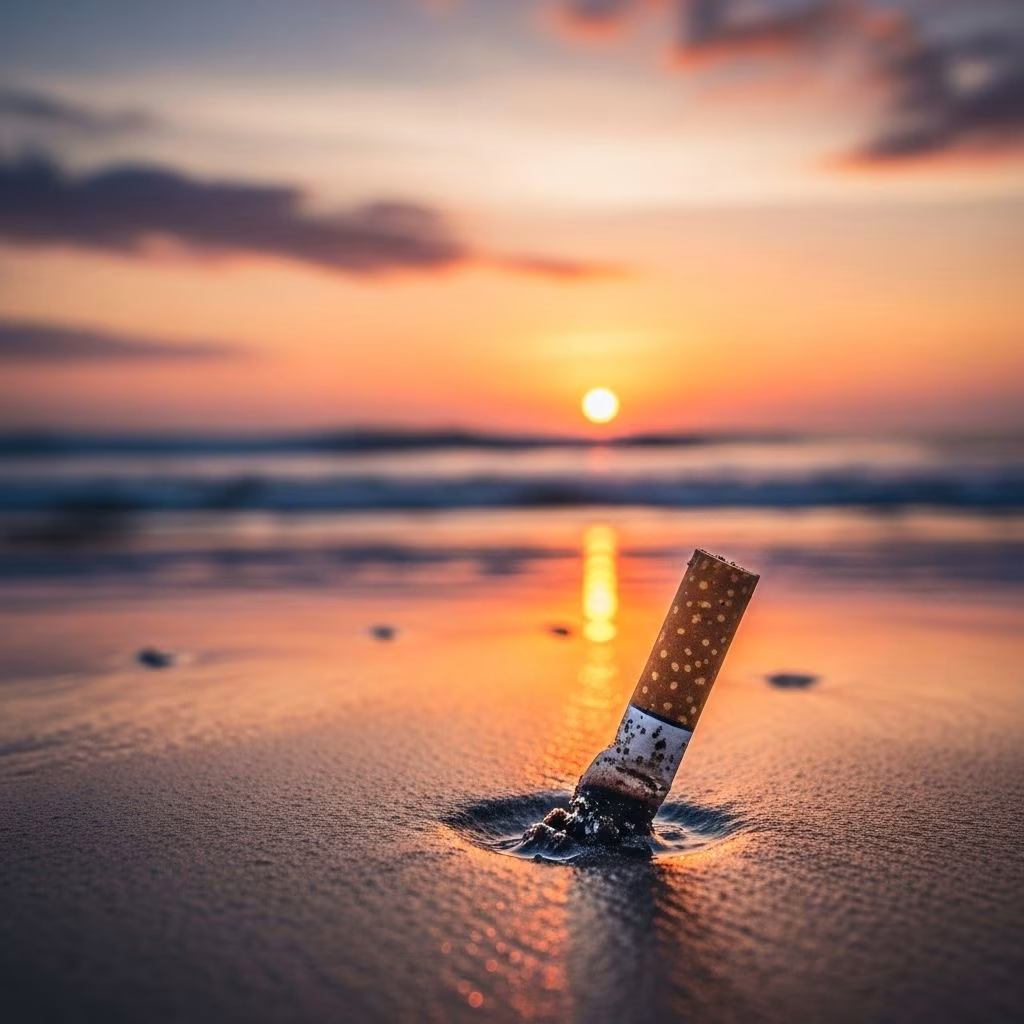
Are Cigarette Butts Biodegradable?
Cigarette butts are a ubiquitous sight on sidewalks, beaches, and waterways around the world. Every year, billions of these stubs are discarded, raising crucial questions about how they impact the environment. Despite popular belief—and misleading claims—cigarette butts are not biodegradable in any practical sense. Instead, they present persistent plastic pollution and toxic hazards wherever they are tossed.
What Are Cigarette Butts Made Of?
Although it might seem that the soft, fluffy appearance of a cigarette filter suggests cotton or paper, almost all modern filters are constructed from cellulose acetate, a type of plastic. In fact, 98 percent of cigarette filters are made of this tough synthetic fiber, which is wound and packed tightly to mimic organic material but is far less environmentally benign. Each filter is designed to catch certain particles as cigarette smoke is drawn through, but their primary claim to environmental harm comes after smoking has finished.
- Cellulose acetate is derived from wood pulp but processed to form strong plastic fibers.
- These fibers do not break down easily; sunlight, moisture, and physical abrasion only break them into smaller pieces, not into harmless substances.
The Scope of the Problem: Global Cigarette Butt Litter
Cigarette butts hold the unenviable distinction of being the most littered item on Earth. It is estimated that a staggering 4.5 trillion cigarette butts are discarded each year globally. These butts constitute about 38 percent of all collected litter during organized cleanups, making up nearly a fifth of all litter found.
- Over 1.8 million cigarette butts were collected worldwide during the 2022 International Coastal Cleanup alone.
- City governments spend between $3 million and $16 million annually cleaning up cigarette butts.
Are Cigarette Butts Biodegradable?
Simply put, cigarette butts are not biodegradable. This misconception is widespread: many smokers believe that the filter will safely break down in nature. In truth, these filters are made from a plastic that, under real-world conditions, does not decompose through natural biological processes. Instead, they persist for years—or even decades—depending on where they are discarded.
Understanding Biodegradability
- Biodegradable: Capable of being decomposed by living organisms such as bacteria and fungi.
- Photodegradable: Broken down by the action of sunlight, primarily UV rays.
- Degradable: Susceptible to chemical breakdown overall (including by non-living mechanisms).
While cigarette butts may degrade—through sunlight or weather, causing them to fragment—they do not biodegrade in the sense required for environmental safety. Rather, cellulose acetate persists much like other plastics, breaking down slowly into smaller microplastics.
How Long Do Cigarette Butts Last?
The longevity of cigarette butts in the environment depends on exposure to sun, moisture, and other environmental variabilities. Estimates for how long it takes a discarded cigarette filter to decompose or disappear range from 18 months up to 10 years, with significant variability.
- After 2 years, a cigarette butt may be only about 38 percent decomposed.
- Degradation can be slower in dry, dark, or cold environments.
- Even as the physical form is lost, persistent microplastics and toxic chemicals remain.
Crucially, as butts weather and fragment, everything toxic that the filter trapped—along with additional chemicals leaching from the burnt tobacco remains—are released into the surrounding soil and water.
Toxic Chemicals: More Than Just Litter
While their persistence is a problem, cigarette butts are also hazardous due to the complex cocktail of chemicals they contain and leach. Used filters are laced with residues from both the cigarette paper and the filter, including nicotine, tar, heavy metals, and many other dangerous substances.
- Arsenic, lead, and mercury: All three accumulate in cigarette butts and are leached into the environment.
- Pesticides used in tobacco cultivation may linger in the filters after smoking.
- Butts also contain polonium-210 (a radioactive element), and aromatic hydrocarbons that pose cancer risks.
Rain can carry these chemicals into storm drains, rivers, and ultimately into the ocean. Studies have shown that water allowed to leach through cigarette butts can be lethal to aquatic organisms, especially small species like water fleas and other base-of-the-food-chain fauna.
Environmental Impact of Cigarette Butt Pollution
The damage from discarded cigarette butts manifests in multiple ways across diverse ecosystems:
- Water contamination: Toxic leachate from butts can enter waterways, harming fish and aquatic invertebrates.
- Wildlife ingestion: Birds, fish, and other animals mistake filters for food, leading to gut blockages, reduced feeding, and poisoning.
- Microplastic pollution: As cigarette filters fragment but don’t fully disappear, they become another source of persistent microplastics in the environment.
- Soil pollution: Toxins accumulated in filters can inhibit plant growth and alter soil microbiota.
- Fire hazard: Still-burning cigarette butts are a notorious cause of fires in forests and grasslands, as well as urban areas.
Persistent Misconceptions About Filter Biodegradability
Tobacco companies often tout so-called “biodegradable” filters made from alternative fibers such as abaca, cotton, or hemp. However, scientific reviews and environmental organizations remain deeply skeptical:
- Regardless of filter material, used cigarette butts continue to harbor toxic chemicals—from tobacco and the smoking process—that leach into the environment when discarded.
- There is no effective method for safely recycling or disposing of these toxic butts at scale.
- Such “eco-friendly” alternatives may actually worsen the problem if smokers falsely believe littering is harmless.
Thus, even “biodegradable” filters do not offer an environmental solution. True progress lies in reducing smoking and changing behavior, not in filter redesign.
The Challenge of Decomposition: Environmental Factors
So, why do cigarette butts last so long? The environment where a butt is discarded can influence its breakdown, but the process is always exceedingly slow:
| Environment | Estimated Decomposition Time |
|---|---|
| Sunny & humid (e.g., tropical beach) | 18 months to 3 years |
| Dry & arid (e.g., roadside or desert) | Years to decades |
| Aquatic (e.g., river or ocean) | Several years (with possible microplastic formation) |
But in each case, the result is plastic pollution and lingering chemicals, not harmless decomposition.
Economic Costs of Cigarette Litter
The need for cleanup diverts public resources. Municipalities, beach cleanups, and environmental organizations all expend immense effort to control this persistent pollution:
- Cities spend millions of dollars annually to clean up and properly dispose of cigarette butts.
- Public health expenses are compounded by negative impacts on ecosystems and infrastructure maintenance.
- Tourism-dependent communities incur additional losses when cigarette litter makes beaches and recreational areas unattractive.
Attempts at Solutions: Why Innovations Often Fall Short
Given the scale and persistence of cigarette butt pollution, different strategies have been tried or proposed:
- Biodegradable or alternative filters. As already discussed, these do not genuinely solve the pollution or toxicity issue.
- Recycling programs. Small-scale pilot programs have tested recycling butts into products, but toxic contamination and low yield make these efforts impractical for mass adoption.
- Education campaigns. Experts agree the most effective approach is to change public perceptions and behaviors, emphasizing:
- The persistent, toxic nature of cigarette butts.
- The environmental and societal responsibilities surrounding smoking waste.
- Legislation and enforcement. Some regions have imposed fines for littering butts, mandated public awareness campaigns, or required disposal bins in high-traffic areas, with varying levels of success.
Reducing Cigarette Butt Litter: What Can Be Done?
Solving cigarette butt pollution requires coordinated actions across policy, personal habit, and public education:
- Increase awareness about the non-biodegradable, toxic nature of cigarette filters.
- Install dedicated collection bins in public spaces, particularly in hotspots for littering.
- Enforce littering laws with appropriate fines or environmental penalties.
- Encourage responsible disposal through clear labeling and education targeted at smokers.
- Advocate for product stewardship—making tobacco companies financially and logistically responsible for the full lifecycle of their product waste.
- Promote cessation: Ultimately, quitting smoking is the most environmentally friendly and healthy option.
Frequently Asked Questions (FAQs)
Q: Are cigarette butts made from cotton or plastic?
A: Nearly all cigarette filters are made from cellulose acetate, a form of plastic, not cotton. This plastic is engineered to look like cotton but is highly resistant to biodegradation.
Q: How long does it really take for a cigarette butt to disappear in the environment?
A: Depending on the environment, it can take from 18 months to over 10 years for a butt to degrade, but it never truly biodegrades. Instead, it breaks into microplastics, persisting in soil and waterways.
Q: Do so-called “biodegradable” cigarette filters solve the pollution problem?
A: No. Even alternative filters release toxic chemicals and are not truly biodegradable in open environments. They can add to the misunderstanding that cigarette waste is harmless.
Q: Why are cigarette butts bad for wildlife?
A: Birds, fish, and other animals can ingest cigarette butts, mistaking them for food. This can cause physical harm, poisoning, and even death.
Q: What can individuals do to help reduce cigarette butt pollution?
A: Smokers should properly dispose of cigarette butts in designated bins. Non-smokers and concerned citizens can participate in cleanup efforts, support anti-littering laws, and spread awareness about the environmental impact of cigarette butt waste.
Further Resources and References
- Clean Virginia Waterways: Degradation and leaching studies
- Truth Initiative: Environmental impacts of tobacco waste
- Earth Day Network: Plastic pollution campaign
- Ocean Conservancy International Coastal Cleanup Reports
- Environmental Protection Agency reports on toxic waste from cigarette litter
Addressing cigarette butt pollution requires a shift in both societal norms and manufacturer responsibility. Only through widespread behavioral change, robust environmental policy, and clear awareness of the true nature of this ‘invisible’ plastic can we hope to see cleaner streets, waterways, and ecosystems in the decades to come.
References
- https://www.generationsanstabac.org/en/actualites/les-filtres-biodegradables-la-fausse-bonne-solution-de-lindustrie-du-tabac-2/
- https://blogs.ifas.ufl.edu/ncbs/2024/06/04/cigarette-butts-biodegradable-or-not/
- https://sarasota.wateratlas.usf.edu/upload/documents/Are%20cigarette%20butts%20biodegradable.pdf
- https://truthinitiative.org/research-resources/harmful-effects-tobacco/5-ways-cigarette-litter-impacts-environment
- https://www.earthday.org/tiny-but-deadly-cigarette-butts-are-the-most-commonly-polluted-plastic/
- https://pmc.ncbi.nlm.nih.gov/articles/PMC3088475/


