


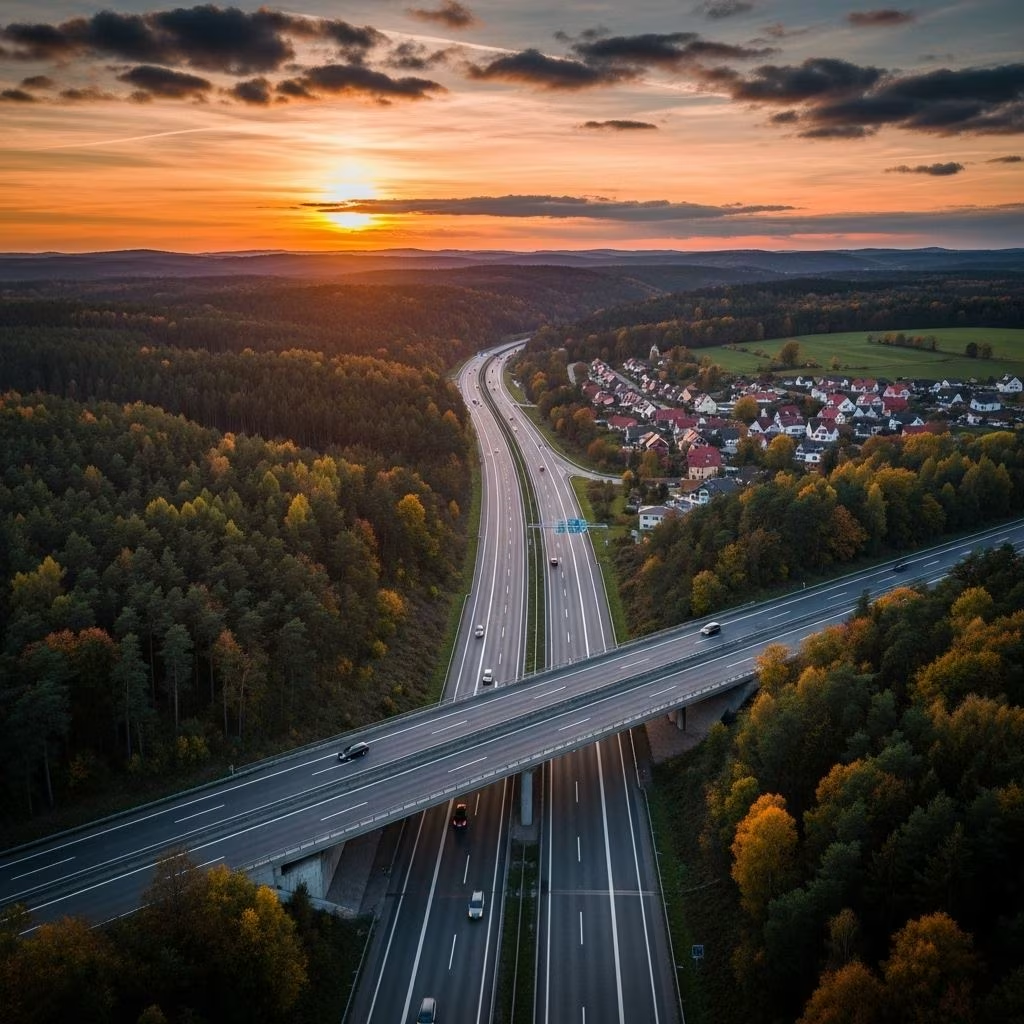
The German autobahn is more than a highway system—it’s a blend of engineering, culture, and myth. Best known for the absence of federally mandated speed limits on many stretches, the autobahn draws enthusiasts, tourists, and everyday commuters alike, inviting curiosity (and legends). This article explores key facts about the autobahn, breaking down misconceptions, history, rules, culture, and environmental impacts in an easily digestible format.
What is the Autobahn?
The term autobahn refers to Germany’s national network of high-speed motorways, known officially as the “Bundesautobahn.” This extensive network was conceived in the early 20th century and continues to function as a central artery in the nation’s transport system.
- Over 13,000 kilometers (about 8,000 miles) of roadway span the country, connecting major cities and regions.
- It serves passenger vehicles, freight transport, and tourists seeking the thrill of speed.
- Sections of the autobahn are famous for having no federally mandated speed limit.
The No-Speed-Limit Legend
One of the most persistent perceptions about the autobahn is that drivers can travel at any speed they wish, anywhere, anytime. The reality is more nuanced:
- Roughly 70% of the network has no permanent speed limit.
- However, about a quarter of the autobahn enforces permanent speed limits, due to safety, congestion, or environmental concerns.
- Temporary speed limits are imposed frequently, especially near construction zones or in response to weather and traffic conditions.
The Richtgeschwindigkeit—an advisory speed limit of 130 km/h (about 81 mph)—applies to all autobahn segments. Legally, you’re not required to observe this speed, but in the event of an accident above this speed, you could be held partially liable, even if another driver shares the blame.
The Autobahn’s Surprising History
Mythbusting: Who Built the Autobahn?
The autobahn is sometimes mistakenly credited as the brainchild of the Nazi regime. While the network’s rapid expansion occurred under Adolf Hitler in the 1930s, the first dedicated autobahn segment—the “AVUS” in Berlin—opened in 1921, well before the Nazis came to power. Post-WWI development gave way to construction booms as the government sought infrastructural prestige and jobs creation.
- By the end of WWII, approximately 3,000 km of autobahn had been built.
- The majority of the present network was constructed after the war, during the Wirtschaftswunder (economic miracle) of the 1950s and 60s.
Not Just for Speed Demons
Autobahns were conceived not only for speed but also for scenic enjoyment and efficient transport. Early planners included environmentalists, landscape architects, and proponents of integrating the roads with nature and local geography. Curved routes offered better views and less monotony, prioritizing both aesthetics and safety, even if it sometimes meant steeper gradients or winding stretches.
Design and Construction Features
The autobahn’s design is guided by a strict set of engineering standards, making it one of the world’s safest networks for high-speed travel.
- Multiple Lanes: Autobahns are typically at least two lanes per direction, with increasing frequency of three or four lanes around major cities.
- Emergency Shoulders: Wide emergency lanes provide spaces for breakdowns and emergency services.
- No Intersections: Autobahns never intersect at grade; access and exit is via controlled ramps, minimizing collision risks.
- High-Quality Surfaces: Pavement engineering ensures smoothness even at high speeds, with frequent maintenance and upgrades.
Attention to Nature and Scenery
German planners historically integrated the autobahn with the landscape. Notable stretches wind through forests or offer panoramic mountain views. Some routes are deliberately curved to reveal scenic sights, a legacy from the commissioning of landscape architects during the interwar period. These features persist—offering drivers a connection to the country’s varied geography.
Autobahn Safety and Driving Rules
- Speed: Though speed limits are absent on many sections, drivers must always maintain control and “adapt speed to traffic, weather, visibility, and vehicle condition.” Excessive speed, even within legal limits, can lead to fines or increased liability if an accident occurs.
- Passing: The left lane is for passing only. German drivers rigorously observe this etiquette, and “lane discipline” is strictly enforced. Passing on the right is illegal and can result in heavy fines.
- Minimum Speed: Vehicles must be capable of sustaining at least 60 km/h (37 mph)—bicycles, mopeds, and very slow vehicles are banned.
- Emergency Corridor (“Rettungsgasse”): During traffic jams, drivers must form a corridor in the middle of the road for emergency vehicles.
- Lighting: Headlights must be used during poor visibility. Reflective vests and warning triangles are mandatory in every car.
- Alcohol & Distractions: The legal blood alcohol limit is stricter than in many other countries, and distracted driving (especially phone use) is heavily penalized.
The Truth About High-Speed Driving
Despite the legend, average speeds on the autobahn are often lower than many expect. Factors include:
- Congestion: Many autobahns regularly experience traffic jams, especially near major urban centers.
- Construction Zones: Ongoing maintenance means frequent stretches with reduced speed limits and narrower lanes.
- Weather: Rain, ice, and fog can prompt temporary restrictions.
- Fuel Costs: High fuel prices deter continuous high-speed driving. At extreme speeds, fuel consumption can become prohibitively expensive, making speed exciting but costly.
Driving at 150 mph (241 km/h) can rapidly drain a fuel tank—or the battery in an electric vehicle—while exposing the driver to significant stress and risk. Even experienced drivers reinforce the importance of vigilance, good mirror habits, and giving wide berth to vehicles with foreign license plates, who may be unfamiliar with local speed differentials.
Environmental Considerations and Current Debates
Increasing awareness of climate change and environmental preservation has brought the autobahn’s limitless speeds under scrutiny:
- The German Green Party and environmental agencies advocate for a universal speed limit to curb CO2 emissions. A 120 km/h cap could save as much as 6.7 million tons of CO2 annually.
- Public opinion is mixed but trending toward support for speed caps, particularly as electrification of vehicles poses range and efficiency challenges at high speeds.
- The network is already adapting, with more speed-limited sections introduced, particularly in ecologically sensitive or urban areas.
Misconceptions About the Autobahn
- Myth: “There are never any speed limits.”
Fact: About a quarter of the autobahn is permanently restricted, and most stretches have speed advisories or temporary limits. - Myth: “Only high-performance cars use the autobahn.”
Fact: All legal vehicles use the autobahn, from family sedans to trucks, provided they meet minimum speed requirements. - Myth: “It’s extremely dangerous.”
Fact: While high-speed accidents can be severe, the autobahn’s construction and strict rules make it statistically safer per mile than many other highways.
Interesting and Fun Autobahn Facts
- Longest Uninterrupted Section: The longest stretch without a speed limit is over 150 km (about 93 miles).
- Tolls: Private cars travel for free. Only trucks over 7.5 tons pay tolls.
- First Segment: The original stretch, the AVUS in Berlin, started as a race track and is still used for testing today.
- Kraftwerk’s Musical Tribute: The iconic band Kraftwerk released an entire album dedicated to the autobahn, adding to its international mystique.
Comparing Autobahn With Other Highways
| Feature | German Autobahn | U.S. Interstate | UK Motorway |
|---|---|---|---|
| General Speed Limit | No federal limit (many unrestricted); 130 km/h advisory | Generally 65–75 mph (105-120 km/h) | 70 mph (113 km/h) |
| Number of Lanes | 2–4 per direction, variable | Typically 2–4 | Typically 3 |
| Access | Controlled entry/exit only | Controlled entry/exit only | Controlled entry/exit only |
| Scenery | High, with scenic routes and panoramic views | Variable | Variable |
Preparation Tips for Autobahn Travelers
- Ensure your car is in top condition with good tires, brakes, and oil levels.
- Keep reflective vests and a warning triangle in your vehicle, as required by law.
- Stay to the right except when passing—strict lane discipline is non-negotiable.
- Watch for sudden changes in speed limits and be vigilant in construction zones.
- Don’t underestimate driving at speed: Eye fatigue, tunnel vision, and reaction times all matter more above 100 mph (160 km/h).
Frequently Asked Questions (FAQs)
Q: Is it legal to drive as fast as you want everywhere on the autobahn?
A: Not everywhere. Around 70% of the network remains unrestricted, but permanent and temporary speed limits exist for the rest, especially near cities, dangerous curves, or construction areas.
Q: What vehicles are allowed on the autobahn?
A: Only motor vehicles capable of at least 60 km/h (37 mph) are permitted. Very slow vehicles, mopeds, and bicycles are not allowed.
Q: Are autobahns really safer than highways elsewhere?
A: The autobahn’s fatality rate per vehicle mile is lower than many other highway systems, largely due to high standards of construction and enforcement of driving rules.
Q: Do you have to pay to use the autobahn?
A: No tolls are charged to passenger cars. Heavy trucks are subject to tolls based on their weight and emission class.
Q: How does the “emergency corridor” rule work?
A: During traffic jams, all vehicles must move to the sides of their lane to form a clear corridor in the middle, enabling emergency vehicles to pass quickly and safely.
Final Thoughts
The German autobahn is more than a road—it’s a national icon with a unique place in engineering, culture, and environmental debates. Whether you dream of unrestricted speed or admire its design and scenery, the autobahn invites exploration as one of the world’s true transportation marvels.


