


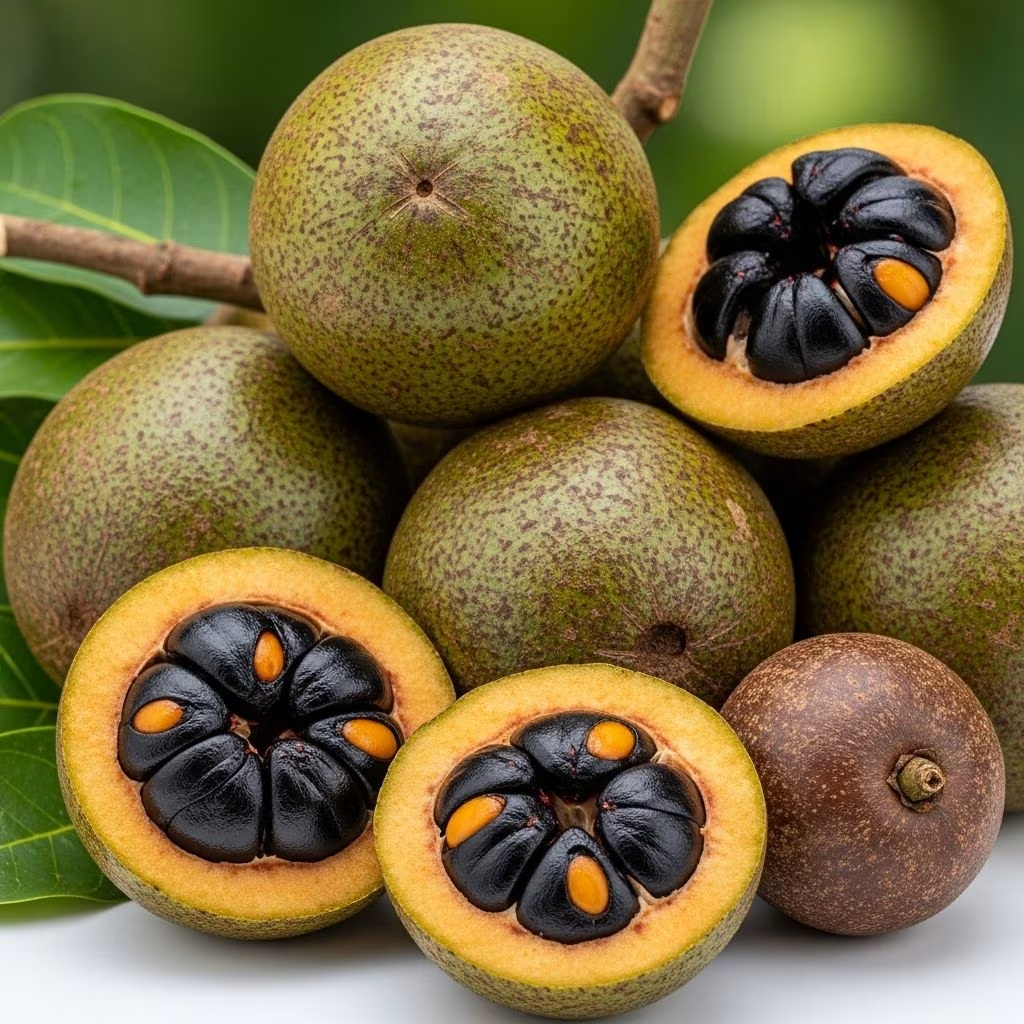
Genipa, also known as jenipapo in Brazil and by many other names across Latin America and the Caribbean, is a remarkable tropical fruit with a history stretching back to indigenous cultures of the Amazon basin. Highly valued for its nutritional content, medicinal properties, cultural roles, and unique sensory profile, genipa continues to play a significant role in local economies, gastronomy, and traditional medicine.
Introduction to Genipa
Genipa americana, belonging to the coffee family Rubiaceae, is a tropical tree native to the forests of Central and South America and the Caribbean . Its common names include genipap, jenipapo, and huito. In indigenous Tupi-Guarani language, jenipapo means “fruit that stains”—an allusion to its ability to yield a blue-black dye used for body art .
The fruit of the genipa tree is often regarded as a hidden gem. While less popular outside its native regions, it holds longstanding importance among local peoples for its flavor, medicinal value, and as a cultural symbol.
Botanical Profile and Distribution
Genipa americana is a notable species, exhibiting several botanical characteristics:
- Tree size: Small to large deciduous tree, reaching heights of 8–30 meters with dense, rounded crowns .
- Leaves: Simple, thick, dark green leaves, oblong or lanceolate, 10–35 cm long, clustered towards branch ends .
- Flowers: Bisexual, tubular, white to pale yellow, fragrant, about 4 cm wide, arranged in terminal inflorescences .
- Fruit: An oval to elliptical berry, typically 9–15 cm long and 7–9 cm wide, with a thin leathery skin and soft yellowish pulp. Each fruit weighs 200–400 grams and contains up to 300 flattened seeds .
- Native range: Widespread from Mexico and the Caribbean southward through Brazil, the Amazon basin, Argentina, and parts of northern South America. Thrives from sea level up to 1,200 meters .
The tree’s adaptability allows it to grow in diverse habitats, including floodplains, tropical forests, savannas, and along rivers. It is sometimes cultivated for shade or as an ornamental plant in agroforestry systems .
Common Names in Different Cultures
| Language/Region | Name |
|---|---|
| English | Genipap, Marmalade box |
| Portuguese (Brazil) | Jenipapo |
| Spanish (Latin America) | Genipa, Juitó, Jagua |
| French | Confiture de singe |
| Tupi-Guarani (Indigenous) | Jenipapo (“fruit that stains”) |
| Guyana | Genip, Marmalade box |
Traditional and Cultural Significance
The genipa tree and its fruit have deep roots in the history, traditions, and daily life of several indigenous and rural populations:
- Body painting and rituals: The compound genipin in the fruit’s pulp and bark oxidizes to create a blue-black dye. Indigenous peoples have historically used this dye for ceremonial body and face painting, body art, and temporary tattoos .
- Textile and craft dye: The same staining property extends to textile coloring and craftwork, used in baskets and tools .
- Folk medicine: The fruit, seeds, leaves, and bark are all utilized in traditional remedies, as a general tonic, treatment for fevers, and various ailments (see Health Benefits) .
- Local economies: Fruit sales and wood are integral to commerce in certain rural regions. Wood from genipa is valued for its durability and flexibility, finding use in tool handles, carpentry, furniture, and even clock cases .
The longevity of these practices underpins the tree’s continued ecological and economic relevance, even as commercial agriculture and urbanization encroach upon natural habitats.
Nutritional Composition and Health Benefits
The genipa fruit is not just important culturally; it is also a powerhouse of nutrients and bioactive compounds:
Nutritional Profile
- Vitamins: High in B-complex vitamins (B1, B2, B5) and vitamin C .
- Minerals: Rich in iron and calcium, both critical for anemia prevention and bone health .
- Phytonutrients: Contains antioxidant flavonoids and iridoids, most notably genipin and genipic/genipinic acids .
- Calories and sugars: The pulp has relatively low sugar content, which influences its subtle flavor profile .
Medicinal and Therapeutic Uses
- Liver and respiratory health: Traditional medicine employs genipa for the treatment of liver issues and respiratory infections .
- Anemia remedy: Due to its iron content, the fruit is used to help combat anemia .
- Antimicrobial and anti-inflammatory: The genipin compound has shown antibiotic and anti-inflammatory properties in some studies. Extracts are used on wounds, fevers, and even as an eyewash for corneal opacities .
- Digestive tonic: Fruit decoction and juice are described as general tonics and as febrifuges—substances that reduce fever .
- Antioxidant effects: The fruit’s natural antioxidants may play a role in protecting cells from oxidative stress, though more research is needed for conclusive claims.
While modern research is expanding on these traditional claims, genipa’s established role in folk medicine highlights its potential as a natural therapeutic.
Culinary and Practical Uses
The genipa fruit is not commonly eaten fresh due to its mild, not-very-sweet flavor and somewhat pungent aroma . However, it remains a staple ingredient in many traditional recipes and uses:
Gastronomy and Food Preparations
- Fruit preserves: Used in the production of jams, marmalade (“marmelada de jenipapo”), and jellies. The fruit’s pectin content allows it to gel well .
- Beverages: Alcoholic infusions (jenipapo liqueur), juices, and syrups are popular in Brazilian and Caribbean cuisine. Its mild flavor blends harmoniously with sugar and spices .
- Desserts: Occasionally used in cakes, sweets, or mixed with honey or molasses .
- Fermented products: Indigenous groups traditionally ferment genipa for wines or other drinks.
- Fish bait: In Guyana and other regions, ripe fruit is utilized as a bait in artisanal fishing .
Non-Food Applications
- Dye and ink: Genipin’s blue-black pigment is prized for body art, craft dying, and even historic tattooing .
- Cosmetics: Experimental use of genipin as a natural colorant in cosmetics and body paints.
- Soil improvement: Heavy leaf fall contributes organic material, enriching local soils where the tree is cultivated .
Taste and Sensory Profile
The taste of genipa fruit is often described as mildly acidic, slightly astringent, earthy, and somewhat bitter-sweet . Its unique flavor is characterized by a subtle aromatic profile, more aromatic than sweet—a feature which makes it more suitable for processing than raw consumption.
- Texture: Soft, pulpy, and moist; the edible mesocarp is easily scooped out when ripe.
- Aroma: Distinctive, somewhat pungent or musky when fresh, which mellows upon cooking or fermenting.
- Sweetness: Relatively low, with sugars present in smaller concentrations compared to tropical fruits like mango or pineapple .
- Best enjoyed as: Marmalades, liqueurs, syrups or added to desserts after sweetening and flavor enhancement.
Because of its understated flavor, genipa shines when paired with sugar, honey, or as a flavoring base in mixed drinks and preserves.
Growing, Harvesting, and Environmental Impact
Genipa trees exhibit the following agricultural features:
- Growth rate: Moderate, bearing fruit within 6–8 years of planting .
- Harvest period: Fruit ripens primarily from November through April, but can be harvested almost year-round in tropical climate zones .
- Pollination & dispersal: Pollinated primarily by bees. Fruits are dispersed by water and by wild animals who feed on the pulp .
- Ecological role: Provides food and habitat for wildlife and improves soil quality via leaf litter .
Threats: Rapid deforestation and land conversion in the Amazon and Atlantic Forest regions threaten wild genipa populations, alongside the erosion of traditional knowledge about its uses .
Modern Research and Innovations
- Genipin as a natural dye: Increasingly researched for its application in food coloring, cosmetics, and even medical imaging due to its nontoxic profile .
- Potential pharmacological uses: Studies continue to investigate genipin’s antimicrobial, antioxidant, liver-protective, and anti-inflammatory effects .
- Agroforestry and conservation: Genipa’s value in traditional and mixed-crop agroforestry contributes to soil health and biodiversity preservation, while providing shade and additional income streams for farmers .
Frequently Asked Questions (FAQs)
Q: Is genipa fruit safe to eat fresh?
A: Yes. Ripe genipa is safe to eat, though it is generally not consumed raw in large quantities due to its subtle flavor. It’s more often processed into preserves, juices, or liqueurs .
Q: What does genipa taste like?
A: Genipa’s flavor is mildly acidic, earthy, and somewhat astringent, with a subtle sweetness. Its scent is unique and can be musky or pungent when fresh, mellowing after cooking .
Q: How is genipin used in traditional and modern applications?
A: Traditionally, genipin is used as a body and textile dye. Modern research explores its use as a natural food colorant and potential medical imaging agent .
Q: What are the health benefits of consuming genipa?
A: Genipa is a source of iron, calcium, B vitamins, and vitamin C. It’s traditionally used for anemia, liver and respiratory support, and contains antioxidants and antimicrobial compounds .
Q: Is genipa endangered or at risk?
A: In some regions, genipa trees are threatened by deforestation and habitat loss. Conservation initiatives in Brazil and the Caribbean aim to protect local strains and promote sustainable cultivation .
Genipa’s distinct aroma, deep historical roots, health benefits, and versatility make it a symbol of Amazonian biodiversity—a fruit worth celebrating and conserving for future generations.
References
- https://apps.worldagroforestry.org/treedb/AFTPDFS/Genipa_americana.PDF
- https://www.fondazioneslowfood.com/en/ark-of-taste-slow-food/jenipapo/
- https://en.wikipedia.org/wiki/Genipa_americana
- http://www.bananasraras.org/frutasrarasingles/genipa.htm
- https://tropical.theferns.info/viewtropical.php?id=Genipa+americana
- https://data.fs.usda.gov/research/pubs/iitf/sm_iitf058%20%20(5).pdf
- https://onlinelibrary.wiley.com/doi/10.1002/cbdv.202400748


