


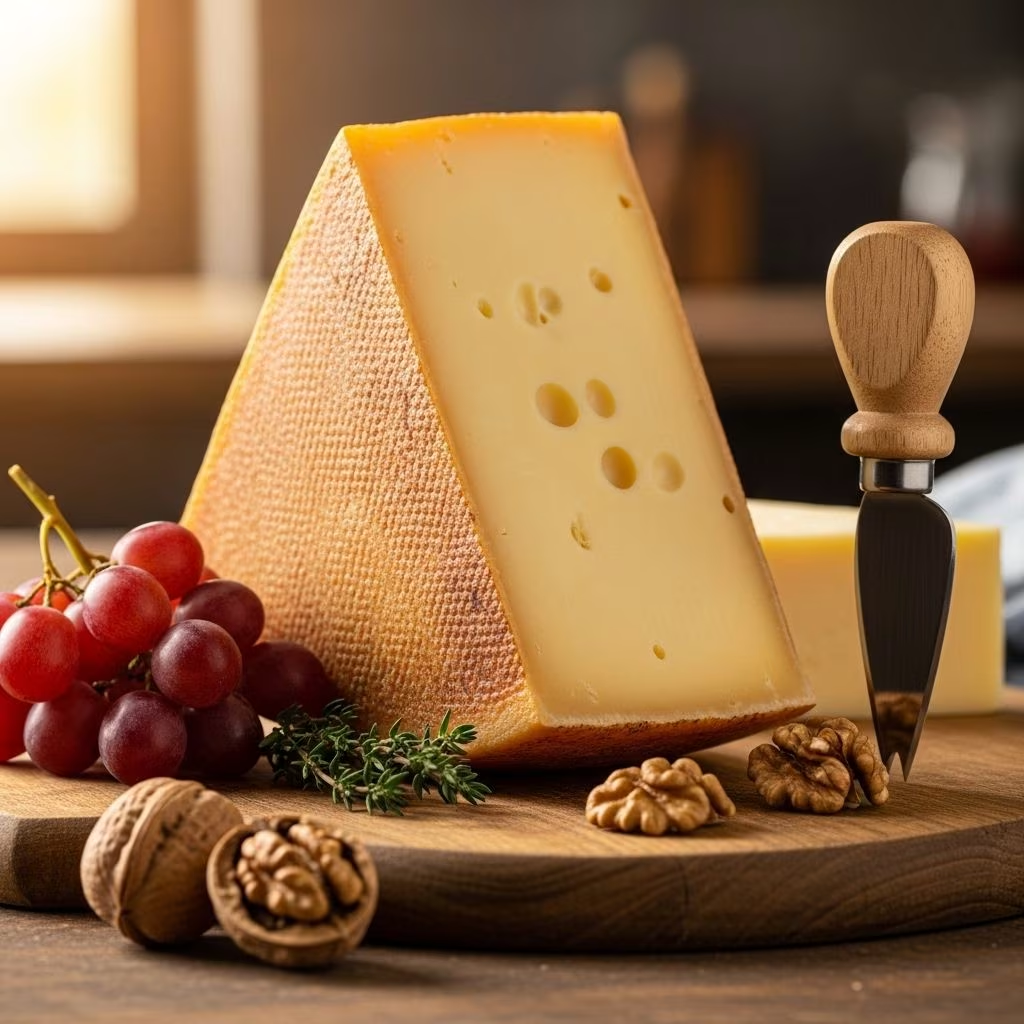
Introduction
Gruyère cheese is renowned for its distinct flavor, versatility, and rich cultural heritage. Originating from Switzerland, Gruyère has cemented its place among the world’s finest cheeses, celebrated in both home kitchens and by culinary professionals. This article delves into Gruyère’s historical significance, nutritional benefits, wide-ranging uses, and its nuanced taste profile that sets it apart from other cheeses.
History and Origins
Gruyère cheese boasts a heritage dating back to the 12th century, tracing its roots to the Gruyères region in Switzerland. Its name derives directly from the picturesque town of Gruyères, located in the Canton of Fribourg. Local dairy farmers began crafting Gruyère as a way to preserve excess cow’s milk, developing traditional methods suited to the alpine climate and lush pastures of the region.
| Century | Event | Significance |
|---|---|---|
| 12th | First production of Gruyère in Switzerland | Origin of Gruyère as a regional specialty |
| 16th | Expansion across Europe | Adopted in Swiss and French cuisine |
| 17th | Official recognition of regional name | Protected origin begins to take root |
| 20th | AOP status granted (Protected Designation of Origin) | Guarantees authenticity and quality |
Gruyère’s position near the Franco-Swiss border led to the development of similar styles in France (such as Comté and Beaufort) and a comparable Austrian variety, though Swiss Gruyère remains distinct in method and terroir.
The cheese became a staple in European cuisine, featured in dishes from Swiss fondue to French quiches, enhancing its reputation and demand throughout the continent.
Traditional Production and Varieties
Gruyère is classified as a Swiss-type or Alpine cheese, typically made from unpasteurized cow’s milk. The production follows time-honored methods that have changed little over centuries:
- Milk Collection: High-quality alpine cow’s milk is gathered, ensuring rich flavor and texture.
- Curdling & Cooking: The milk is gently warmed in copper vats and curdled using the traditional rennet process.
- Pressing & Molding: The curds are pressed into large wheels, ensuring solidity and an even texture.
- Aging (Affinage): The wheels are aged in cellars or caves, typically from 5 months to over a year. Aging develops Gruyère’s flavor and texture. Younger cheeses are creamy and mild, while longer aging produces more complex, earthy, and assertive notes.
- Certification: Le Gruyère AOP (Appellation d’Origine Protégée) status guarantees Gruyère is produced according to strict geographical and quality standards.
The cheese is generally formed into wheels of 25–40 kg. The careful monitoring of humidity, temperature, and microbial environment during maturation imparts Gruyère’s signature character, often resulting in tiny cracks and a slightly grainy texture in fully matured versions.
Varieties of Gruyère
- Swiss Gruyère: The classic, produced under strict AOP guidelines in designated regions in Switzerland.
- French Gruyère: Similar method, produced in France (notably Comté, Beaufort), yet distinct in taste and regulation.
- Austrian Gruyère: Less common, made in certain Alpine regions of Austria, similar in texture and taste.
Nutritional Benefits
Gruyère cheese is celebrated for more than flavor—it is a nutritious addition to the diet, providing essential nutrients and contributing to overall health:
- Rich Protein Source: Contains about 8–9 grams per ounce, supporting muscle repair and growth.
- High in Calcium: A single ounce typically provides 20–25% of the daily recommended intake, essential for bone health.
- Vitamin A: Supports eye health and immune function.
- Phosphorus and Zinc: Important for metabolic processes and cellular health.
- Probiotics: Naturally aged cheeses like Gruyère may offer beneficial bacteria that promote gut health.
- Low Lactose: Gruyère’s aging process significantly reduces lactose content, making it suitable for most lactose-intolerant individuals.
Note: Gruyère is also caloric and high in saturated fat, which should be considered as part of a balanced diet.
| Nutrient (per 1 oz/28g) | Amount |
|---|---|
| Calories | ~120 |
| Protein | 8–9 g |
| Calcium | 250–300 mg |
| Fat | ~9 g |
| Saturated Fat | ~5–6 g |
| Lactose | <0.1 g |
Culinary Uses
Gruyère’s melting quality, robust flavor, and texture make it a star ingredient in numerous dishes. Chefs and home cooks alike value this cheese for its versatility:
- Fondue: The signature cheese in traditional Swiss fondue blends, prized for its smooth melting and rich flavor.
- Quiche & Savory Tarts: Central to Quiche Lorraine and other savory pastries.
- Croque Monsieur & Gourmet Sandwiches: Gruyère adds depth and creaminess to French-inspired sandwiches.
- Soups: Classic topping for French onion soup—melted and broiled until golden.
- Egg Dishes: Enhances omelets, frittatas, and scrambled eggs.
- Pasta & Risotto: Used as a gratin cheese for pasta bakes and risotto.
- Salads: Shaved or cubed Gruyère complements fruit and nut salads.
- Table Cheese & Cheese Boards: Served sliced or cubed, paired with cured meats, fruits, and nuts.
Gruyère’s flavor balances sweetness and saltiness, making it a premium choice in culinary applications where meltability and boldness are desired.
Cooking Tips for Gruyère
- Grate or slice thinly for easier melting in cooked dishes.
- Pair with wines such as Pinot Noir, Chardonnay, or dry Rieslings for optimal flavor synergy.
- Store wrapped in wax paper or cheese paper to maintain moisture and prevent drying.
Taste Profile: What Does Gruyère Taste Like?
Gruyère’s taste evolves according to age and terroir. It is broadly described as creamy and nutty when young, developing into earthy, assertive, and even slightly salty as it matures. The cheese is notably free of the large holes (“eyes”) found in Emmental, though small cracks and tiny “eyes” may form in aged wheels.
| Age | Flavor Characteristics | Texture |
|---|---|---|
| Young (5–8 months) | Creamy, slightly sweet, nutty | Supple, smooth |
| Fully Aged (>12 months) | Earthy, robust, slightly salty, complex | Firm, granular, sometimes tiny cracks |
Aroma: Gruyère’s aroma is subtle yet inviting, hinting at roasted nuts and fresh cream. Mouthfeel: Smooth, slightly grainy in aged cheeses.
Pairings
- Wine: Pairs well with Pinot Noir, Sauvignon Blanc, and Chardonnay.
- Fruits: Apples, pears, grapes complement Gruyère’s nutty notes.
- Nuts: Walnuts and hazelnuts serve as an excellent counterpart to its flavor.
Gruyère vs. Other Cheeses
| Cheese | Origin | Main Characteristics | Flavor Profile |
|---|---|---|---|
| Gruyère | Switzerland | Firm, few eyes, copper-vat made, AOP | Creamy, nutty, earthy, evolves with age |
| Emmental | Switzerland | Large holes (‘eyes’), milder, softer | Buttery, slightly fruity, sweet |
| Comté | France | Similar texture, aged longer, raw milk | Nutty, fruity, more herbal |
| Beaufort | France | Larger wheels, Alpine milk, sweet-milky | Sweet, floral, grassy |
While Gruyère is sometimes confused with other Alpine cheeses, its protected status and unique production set it apart.
Frequently Asked Questions (FAQs)
Q: Is Gruyère a Swiss or French cheese?
A: Gruyère originated in Switzerland but similar varieties are made in France and Austria. Swiss Gruyère is the best-known and protected version.
Q: Is Gruyère suitable for vegetarians?
A: Traditional Gruyère uses animal rennet, but some producers may offer vegetarian-friendly options—check labeling for confirmation.
Q: How should Gruyère be stored?
A: Store in the refrigerator wrapped in cheese or wax paper, inside a loose plastic bag or container to maintain humidity and prevent excess drying.
Q: What dishes best showcase Gruyère?
A: Fondue, croque monsieur, quiche Lorraine, and French onion soup are classic dishes that highlight Gruyère’s melting quality and taste.
Q: How does Gruyère differ from Emmental?
A: While Emmental is milder and characterized by large holes, Gruyère is firmer, more robust, and usually features fewer and smaller ‘eyes’.
Q: Is Gruyère suitable for lactose-intolerant individuals?
A: Aged Gruyère contains very low (<0.1g per ounce) lactose and is generally well tolerated by those with lactose intolerance.
Final Thoughts
Gruyère’s status as a world-class cheese is closely tied to its long-standing heritage, careful production, outstanding health benefits, and its role as a versatile culinary staple. Whether enjoyed on its own or incorporated in gourmet recipes, Gruyère continues to be cherished by cheese aficionados and cooks, maintaining a legacy that spans centuries and culinary cultures.
References
- https://agristuff.com/dairy-industry/gruyere-cheese-history-types-processing-steps-equipment-and-uses/
- https://oldwayspt.org/traditional-cheeses/examples-of-traditional-cheeses/all-about-le-gruyere-aop/
- https://www.cheesehouse.com/cheese/gruyere-cheese-a-history-as-rich-and-fascinating-as-its-flavor/
- https://en.wikipedia.org/wiki/Gruy%C3%A8re_cheese
- https://www.gruyere.com/en/le-gruyere-aop/the-history
- https://www.masterclass.com/articles/gruyere-cheese
- https://www.gruyere.com/en/le-gruyere-aop/characteristics
- https://anycheese.com/types/gruyere-vs-le-gruyere/


