


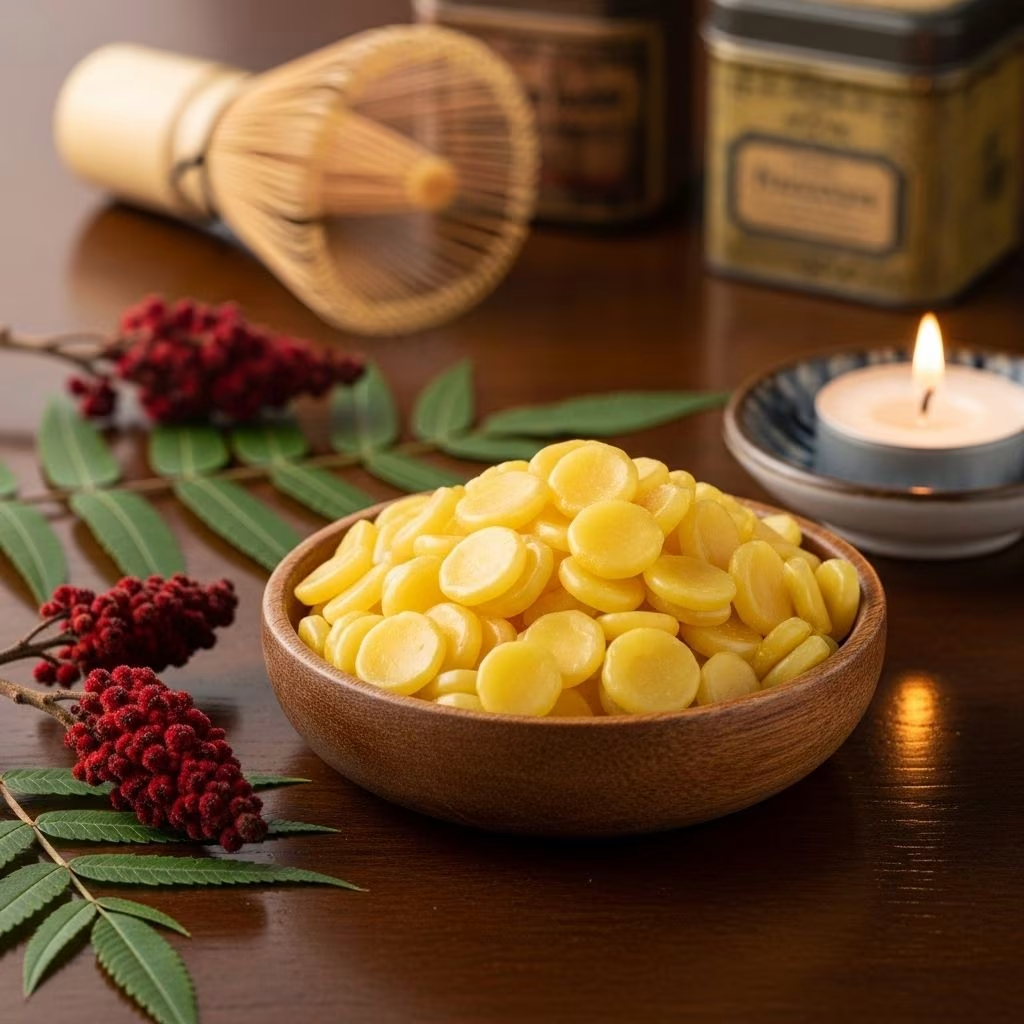
Japan Wax: Origins, Benefits, Uses, and Taste
Japan Wax is a unique, plant-based wax celebrated for its soft texture, gentle skin feel, and versatile applications in cosmetics, personal care, food, and industry. Extracted primarily from the fruit of Rhus verniciflua, the Japanese sumac tree, Japan wax is valued for its creamy consistency and natural emollient properties. This extensive guide explores the history, production, benefits, industrial and culinary uses, physical attributes, and sensory profile of Japan wax.
Introduction: What Is Japan Wax?
Japan Wax is a pale yellow, soft wax derived from the berries and nuts of the Japanese sumac tree (Rhus verniciflua) and related species such as the Japanese wax tree (Rhus succedanea). While commonly referred to as a “wax,” chemically it is closer to a fat, primarily composed of glyceryl esters of palmitic, stearic, and oleic acids, with approximately 1% unique japanic acid. It offers a gentle alternative to animal-derived waxes and is renowned for its emollient, vegan, and biodegradable properties.
Japan Wax in Brief
- Plant-based wax from Rhus verniciflua berries
- Creamy texture, pale yellow color
- Widely used in cosmetics, candles, polishes, food, and more
- Natural, vegan, and biodegradable
Origins and Production
Japan Wax has been harvested and used in East Asia for centuries. Historically, it evolved as a byproduct of lacquer manufacture since the lacquer trees producing Japan wax also yield prized varnish and lacquers.
Geographical Origin
- Mainly produced in Japan, especially in Kyushu, Shikoku, Chugoku, and Wakayama regions
- The wax is obtained from naturally growing and cultivated trees
Harvesting Process
- Berries are collected from the sumac tree in late summer to early autumn
- Berries are boiled in water; wax floats and is skimmed off
- Raw wax undergoes purification to remove natural odors and peroxides, preserving texture and touch
Specialized purification techniques, including patented procedures, ensure odorless, high-purity Japan wax suitable for luxury cosmetic and food applications.
Physical and Chemical Properties
| Attribute | Japan Wax |
|---|---|
| Melting Point | 48–56°C |
| Density | 0.97–0.99 g/ml |
| Main Ingredients | Glyceryl esters of palmitic, stearic, oleic acids |
| Solubility | Soluble in benzene, ether, naphtha; insoluble in water/alcohol |
| Appearance | Pale yellow, creamy, soft |
Japan Wax’s low melting point and creamy consistency make it excellent for products requiring softness and spreadability.
Benefits of Japan Wax
Japan Wax is prized for both functional and sensory benefits, especially as an ingredient in modern formulations.
1. Moisturizing and Emollient Properties
- Prevents moisture loss: Forms a protective barrier on skin and surfaces
- Enhances skin feel: Imparts softness, silkiness, and a powdery touch in cosmetics and creams
- Improves product texture: Stabilizes emulsions, delivers a whipped cream feel
2. Vegan and Biodegradable Alternative
- 100% plant origin: Suitable for vegan and cruelty-free formulations
- Biodegradable: Breaks down naturally, ideal for sustainable brands and eco-aware consumers
3. Physical Stability and Sensory Performance
- Low chemical reactivity: Very stable, odor-retentive for scented products
- Gloss and transparency: Adds shine and clarity to cosmetic, hair products, and polishes
- Improved hardness: Maintains appropriate hardness and stickiness in pencils and sticks
4. Gentle and Non-Hazardous
- Considered non-hazardous in food-grade processes (EU §1272/2008)
- Low irritancy and mildness for sensitive skin and delicate surfaces
Uses of Japan Wax
Japan Wax’s unique combination of plant-based composition, texture, and safety give it wide-ranging utility across multiple industries.
Industrial Uses
- Candles: Produces soft, glossy, and slow-burning candles with subtle natural fragrance
- Furniture polishes & floor waxes: Delivers shine, barrier protection, and easy application
- Pastels, crayons & art supplies: Ensures smooth texture and reliable coloring
- Buffing compounds & lubricants: Used for metallic and surface treatments
- Adhesives: Contributes to smoothness and spreadability
Cosmetic and Personal Care
- Creams, lotions, balms: Enhances moisture retention and delivers velvety feel
- Lipsticks, glosses, pencil products: Boosts break resistance, shine, and smoothness
- Hair styling products: Solidifies gels, adds gloss, and maintains transparency
- Makeup and skin care: Functions as emulsifier, barrier, and stabilizer
Food Industry Applications
- Edible coatings: Used for shiny fruit and confectionery coatings in traditional Japanese food processing
- Mild flavor profile: Japan wax has a subtle, neutral taste and does not affect the taste of coated products
Specialty and Emerging Uses
- Artisan crafts and restoration: Applied in antique restoration for preserving lacquers and woods
- Sustainable packaging: Investigated as a biodegradable layer in food packaging
Taste and Sensory Profile
Japan Wax is not only valued for its texture and stability, but also its impact (or lack thereof) on sensory properties in food and cosmetic applications.
Flavor and Odor
- Unrefined Japan wax: Initially has a rancid, grassy odor
- Refined Japan wax: Odorless after specialized purification
- Taste: Extremely mild, almost neutral; does not impart flavor when used as a coating
Sensory Qualities in Products
- Adds creamy and velvety feel to creams, lotions, and decorative cosmetics
- Increases gloss, transparency, and shine in hair and lip products
- Does not mask or alter underlying scents/flavors, suitable for perfume and fine fragrance carriers
Sustainability and Environmental Impact
Japan Wax is increasingly valued for its environmental profile, supporting sustainable harvesting, biodiversity, and eco-friendly formulations.
Key Points
- Biodegradable: Breaks down naturally, reducing long-term pollution risk
- Plant-based: Derived from renewable sources, supports reduction of animal-derived waxes
- Sustainable harvesting: Local programs educate and train new harvesters for long-term supply
- Community impact: Planting and harvesting haze trees supports regional economies and local SDG initiatives
Risks, Safety, and Regulatory Status
Japan Wax is generally considered safe, with mildness and low toxicity being notable attributes, but it does have certain handling and industrial risks.
Risks and Hazards
- Combustible: Flammable and should be stored away from excessive heat and ignition sources
- Non-irritant: Low risk of skin irritation or allergic reaction
- Non-hazardous in approved uses: Qualifies as non-hazardous per European food-grade regulations
Storage and Handling
- Store in cool, dry locations
- Keep away from open flames
- Maintain proper ventilation when melting
Japan Wax vs. Other Waxes
| Feature | Japan Wax | Beeswax | Candelilla Wax |
|---|---|---|---|
| Source | Sumac Tree Berry | Honeybee | Candelilla Shrub |
| Melting Point | 48–56°C | 62–64°C | 68–73°C |
| Consistency | Soft, Creamy | Medium, Firm | Hard, Brittle |
| Vegan | Yes | No | Yes |
| Uses | Cosmetics, Food, Candles | Cosmetics, Food, Candles | Cosmetics, Pharmaceuticals |
Japan Wax’s distinct softness, low melting point, and vegan origin make it especially versatile for formulating gentle and eco-friendly products.
Frequently Asked Questions (FAQ)
Q: Is Japan Wax edible?
A: Yes, Japan Wax is non-toxic and approved for food applications under European regulations. It is mostly used as an edible coating or for textural purposes, with a neutral taste and no significant effect on flavor.
Q: Is Japan Wax vegan?
A: Yes, Japan Wax is 100% plant-derived from sumac tree berries, making it completely vegan and suitable for cruelty-free brands.
Q: How does Japan Wax differ from beeswax in cosmetics?
A: Japan Wax is softer, imparts a silkier feel, and is fully vegan, whereas beeswax is firmer and of animal origin. Japan Wax is also more temperature-stable, with a lower melting point, and enhances product gloss and texture in unique ways.
Q: Does Japan Wax have any scent or taste?
A: Unrefined Japan Wax may have a grassy or rancid odor, but refined, cosmetic-grade wax is odorless and tasteless, preserving the underlying fragrance or flavor profile of a product.
Q: Is Japan Wax safe for sensitive skin?
A: Yes, Japan Wax is especially suitable for sensitive skin due to its mildness, barrier-formation, and extremely low incidence of allergic reaction.
Conclusion
Japan Wax stands out as a rare, natural wax combining centuries-old tradition with contemporary performance and sustainability. Its ultra-soft texture, gentle emollient properties, vegan status, and reliable stability make it a prized ingredient in cosmetics, industry, food coatings, and artisan crafts. As the demand for plant-derived, biodegradable, and eco-friendly formulations grows, Japan Wax’s unique physical, chemical, and sensory properties position it at the forefront of natural wax solutions—providing soft, silky textures and lasting benefits wherever it is applied.
References
- https://cameo.mfa.org/wiki/Japan_wax
- https://www.atamanchemicals.com/japan-wax_u34661/
- https://ceraricanoda.com/en/product-info/cerarica-royal-wax/japanese-wax/
- https://www.dictionary.com/browse/japan-wax
- https://www.merriam-webster.com/dictionary/Japan%20wax
- https://onlinelibrary.wiley.com/doi/10.1002/9783527807758.ch12
- https://www.artiencegroup.com/en/products/wax/about.html
- https://www.yourdictionary.com/japan-wax


