


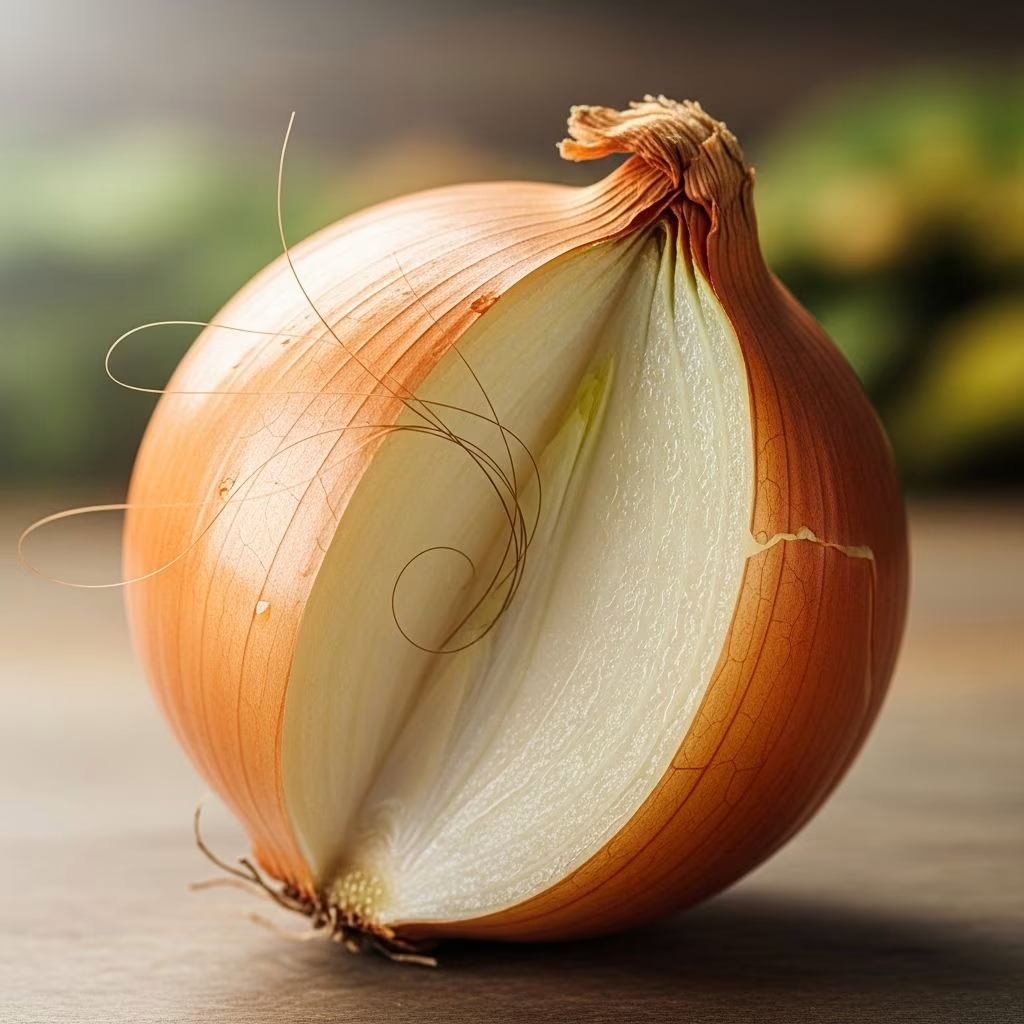
Vidalia onions, prized for their mild flavor, have recently attracted attention beyond the culinary world. Research and anecdotal evidence suggest that onion juice—including juice from Vidalia onions—can benefit hair health in various ways, from supporting growth to soothing scalp irritations.
This article explores the science behind onion’s impact on hair, clearly explains how to use Vidalia onion for hair treatments, includes expert-backed safety and usage tips, and answers common questions.
Overview: Vidalia Onion and Hair Health
Vidalia onions (Allium cepa) are celebrated for their low pungency and high levels of certain nutrients. While most studies focus on onion juice generally—not specifically Vidalia onions—the nutrient profile is similar across varieties. Vidalia onions offer:
- Rich dietary sulfur
- Essential vitamins (e.g., vitamin C, folate, biotin)
- Powerful antioxidants
- Anti-inflammatory compounds
These components form the foundation of onion’s potential hair health benefits.
Scientific Evidence: Onion Juice for Hair Growth
While Vidalia onions are not specifically studied in hair research, the effect of onion juice on hair health is well documented. Multiple clinical studies and reviews support onion juice as a topical remedy for certain types of hair loss and scalp conditions.
Key Clinical Studies
- 2002 Randomized Trial (Alopecia Areata): Crude onion juice applied twice daily led to significant hair regrowth in 86.9% of participants compared to only 13% in the control group (tap water). Visible results started after just two weeks. This effect was more pronounced in males than females.
- 2018 Study (Onion Shampoo): Shampoo enriched with onion extract provided more nutrients, better nourishment to follicles, and increased moisture in scalp and hair. No significant skin irritation was observed with proper application times.
Mechanisms of Action
- Dietary sulfur supports keratin synthesis (hair’s structural protein), potentially promoting stronger and thicker growth.
- Collagen production is increased, supporting healthy skin cells at the hair root.
- Anti-microbial activity combats scalp infections that can inhibit normal growth.
- May improve circulation, increasing blood flow to follicles and enhancing growth potential.
Despite encouraging findings, onion juice is not a cure for genetic or severe hair loss disorders, but it can support existing hair health and growth.
Key Hair Benefits of Vidalia Onion
1. Promotes Hair Growth
The dietary sulfur in Vidalia onion juice helps build strong hair proteins (keratin), which are essential for thick, resilient strands. Clinical data shows that topical use supports regrowth, especially for patchy hair loss like alopecia areata.
2. Reduces Scalp Inflammation and Itching
Anti-inflammatory compounds calm irritated, dry, or itchy scalps, improving overall scalp comfort and supporting a healthy environment for follicles.
3. Treats Dandruff and Fights Scalp Infections
Onion juice’s natural anti-microbial properties help to fight bacteria and fungi that cause dandruff or infections. Maintaining scalp health is key to consistent hair growth.
4. May Reverse Graying
Traditional remedies suggest that onion’s antioxidant and enzyme content may slow or reverse premature graying, though this benefit lacks rigorous scientific confirmation.
5. Adds Shine and Softness
Onion juice’s nourishing effect can restore shine and luster—especially to dry or brittle hair.
6. Moisturizes Hair and Scalp
Properly prepared onion treatments help retain moisture in both hair shafts and scalp, reducing breakage and dryness.
How to Use Vidalia Onion for Hair
Vidalia onions can be used in several forms—most commonly as fresh juice, extracts added to shampoo, or homemade hair masks. Below is a step-by-step guide to making and applying onion juice for optimal hair benefits:
Step-by-Step: Onion Juice Preparation
- Peel and chop 1-2 fresh Vidalia onions.
- Using a blender or food processor, puree the onions until smooth.
- Strain the juice through a muslin cloth or fine sieve to remove solids.
- Optional: Add a few drops of lemon juice or essential oil (such as lavender or rosemary) to help mask odor.
Application Methods
- Direct Scalp Massage: Using clean hands or a cotton ball, massage the onion juice directly onto the scalp, focusing on areas of thinning or hair loss.
- Onion Juice Hair Mask: Combine onion juice with equal parts coconut or castor oil for added moisture. Leave on for 30–60 minutes before washing out.
- Add to Shampoo: Mix 1–3 tablespoons of onion juice into your regular shampoo. Leave in for 3–5 minutes before rinsing, as studies support longer contact times for best results.
- Onion Extract Conditioner: Add onion juice to a deep conditioner for occasionally intensive treatments.
Frequency of Use
- For regrowth: Apply onion juice to the scalp twice daily for 2–3 months as supported by studies.
- For maintenance: Use 1–2 times weekly as part of routine hair care.
Expert Tips for Safe and Effective Use
- Patch Test: Always test onion juice on a small skin area before full scalp application, as rare allergic reactions or dermatitis can occur.
- Odor Control: Mix with lemon juice, essential oils, or follow with a fragrant conditioner to neutralize pungent aroma.
- Protect Eyes: Avoid contact with eyes, as onion juice can cause irritation and watering.
- Use Fresh Juice: Use freshly made onion juice each time for maximum potency; do not store juice beyond 24 hours due to oxidation and bacterial growth risks.
- Gentle Massage: Massage gently—harsh rubbing can aggravate scalp sensitivity.
- Balanced Routine: Combine onion-based treatments with gentle, sulfate-free shampoos and regular scalp care for best long-term results.
Potential Side Effects and Precautions
While onion juice is generally safe for topical use, certain precautions are advised—especially for those with sensitive skin or open scalp wounds.
- Scalp Irritation: Mild stinging, redness, or itching is possible; discontinue use if severe or persistent reactions occur.
- Allergic Reactions: Rare but possible. Conduct a patch test and monitor for rashes or swelling.
- Strong Odor: The characteristic smell can linger despite washing; use odorous masking techniques as described in expert tips.
- No Effect on Pattern Baldness: Onion treatments may not work for all types of hair loss—especially hereditary baldness. Consult a dermatologist for persistent or unexplained hair loss.
- Not for Open Wounds: Avoid using onion juice on broken or inflamed skin.
Onion Juice vs. Other Natural Hair Treatments
| Remedy | Primary Benefit | Key Downside | Ideal Use |
|---|---|---|---|
| Vidalia Onion Juice | Supports growth, reduces inflammation, fights dandruff | Strong odor, possible scalp irritation | Patchy hair loss, dry/itchy scalp |
| Coconut Oil | Deep moisturization | Greasy feel, not for oily scalps | Dry, brittle hair; split ends |
| Castor Oil | Promotes thickness | Sticky texture | Thin hair, edge growth |
| Lemon Juice | Balances pH, clarifies scalp | Can be drying | Oily scalp, mild dandruff |
Frequently Asked Questions (FAQs)
Q: Can Vidalia onion juice really regrow hair?
A: Studies demonstrate that onion juice, including from Vidalia onions, can support regrowth in certain cases of patchy hair loss like alopecia areata. Its sulfur content nourishes follicles and may accelerate growth phases, but results can vary by individual and hair loss cause.
Q: Will my hair smell like onions after treatment?
A: Temporary odor can occur, but mixing onion juice with lemon, fragrant oils, and thorough rinsing typically neutralizes lingering smells.
Q: How long should I apply onion juice to the scalp?
A: Clinical studies suggest 5–60 minutes per application, up to twice daily for 2–3 months for visible improvement. Longer durations may increase nourishment but check for irritation.
Q: Are there any risks using onion juice on colored or chemically treated hair?
A: Onion juice is generally safe but may interact with sensitive scalps post-chemical processing. Proceed slowly and patch test beforehand.
Q: What if onion juice causes irritation?
A: Remove immediately with cool water and stop use. If redness or swelling persists, consult a dermatologist.
Q: Can I use store-bought onion extract instead of fresh juice?
A: Fresh juice is preferred for potency, but high-quality store-bought extracts used in small doses (as per product instructions) can work.
Summary
Vidalia onion offers a novel, science-backed approach to natural hair care. Its sulfur, antioxidants, and anti-inflammatory properties can support growth, manage scalp health, and restore hair luster. Safe, effective use requires proper preparation, application, and attention to individual skin sensitivity. Always patch test, and pair onion treatments with overall healthy hair routines for best results.
References
- https://www.healthline.com/health/onion-juice-on-hair
- https://www.healthline.com/health/onion-juice-for-hair
- https://pubmed.ncbi.nlm.nih.gov/12126069/
- https://www.medicalnewstoday.com/articles/319515
- https://ijprajournal.com/issue_dcp/A%20Review:%20onion%20Allium%20cepa.pdf
- https://www.webmd.com/diet/health-benefits-onions
- https://pmc.ncbi.nlm.nih.gov/articles/PMC8789449/


