


Best Binoculars & Magnifying Glasses for Kids: A Definitive Buyer’s Guide
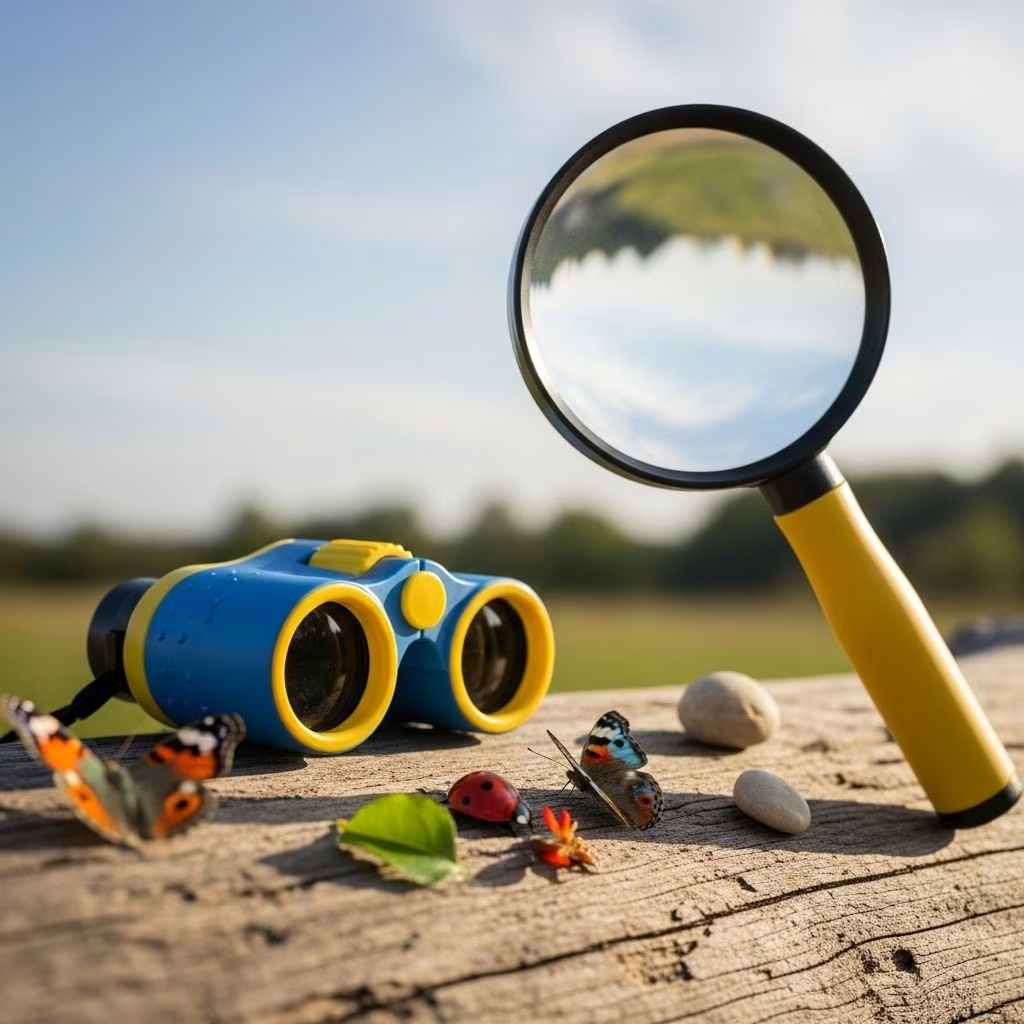
Introducing children to the wonders of nature, science, and the outdoors starts with the right tools. For many curious young minds, binoculars and magnifying glasses are not only engaging toys but gateways to hands-on learning and lifelong hobbies such as birdwatching, stargazing, and nature exploration. This comprehensive guide covers everything you need to know to choose the best binoculars and magnifying glasses for kids, ensuring safety, durability, and suitable features for all ages.
Why Binoculars & Magnifying Glasses Matter for Kids
Binoculars and magnifying glasses are more than mere toys for children—they foster an early love of discovery, nature, and science. These tools:
- Develop observation skills and attention to detail
- Encourage outdoor play and curiosity about the environment
- Support learning in STEM subjects by giving hands-on experiences
- Promote focus and patience through activities like birdwatching
- Help children appreciate the small wonders—bugs, leaves, stones, and stars
As children grow, their ability to handle and benefit from these instruments increases. Choosing the right equipment can make the difference between frustration and fascination.
How to Choose the Best Binoculars for Kids
Key Features to Consider
- Magnification Power: For younger kids (under 8), 4x–6x is best; for older kids (8+), 7x–8x offers increased clarity and excitement.
- Diameter of Objective Lens: Larger lenses (21mm–30mm) let in more light but can be heavier.
- Prism Type: BAK-4 prisms offer better image quality than BK-7 and are more desirable as kids become more discerning.
- Field of View: A wider field (above 300ft/1000yds) is easier for kids to locate subjects.
- Weight and Size: Lightweight, small designs fit smaller hands and faces and reduce fatigue.
- Durability: Rubber armored bodies, shock-proof designs, and waterproofing are must-haves for children.
- Ease of Use: Focus-free models are ideal for preschoolers; older kids benefit from central focus wheels and diopter adjustment.
- Safety: Soft eyecups, non-toxic materials, and well-protected optics matter for little explorers.
Recommended Magnification by Age
| Age Group | Recommended Magnification | Features |
|---|---|---|
| 3–6 Years | 2x–4x | Focus-free, lightweight, toy-like design |
| 6–8 Years | 4x–6x | Easy central focus, wide field, soft armor |
| 8–12 Years | 6x–8x | Higher quality optics, adjustable diopter, waterproof |
| 12+ Years | 7x–8x | Compact, serious entry-level binoculars |
Top Binoculars for Kids: Reviews & Comparisons
Best Binoculars for Junior Explorers and Beginners
- Educational Insights GeoSafari Kids Binoculars
- Magnification: 2x
- Focus-free
- Lightweight, durable plastic
- Designed for ages 3–6
- Price: Affordable entry-level
- Pros: Award winner, very safe, toy-like
- Cons: More of a toy than an optical instrument
- Scotamalone Kid Binoculars 4×30
- Magnification: 4x
- Focus-free, BAK-4 prism
- Natural rubber material, soft folding eyecups
- Weight: Only 150g
- Pros: Simple to use, safe materials, very lightweight
- Best for sporting events and young kids starting out
- Bresser ExploreOne 6×21 Binoculars
- Magnification: 6x
- BK-7 prism, rubber armor
- Fully coated optics
- Weight: Very light (181g)
- Pros: Compact for small hands, durable, bright images
- Cons: BK-7 prism, not waterproof
- National Geographic 6×21 Child Binocular
- Magnification: 6x
- BAK-4 prism, soft flexible eyecups
- Rubber armor, lightweight
- Customer satisfaction: 72%
- Recommended for ages 6–11
- Pros: Comfortable for glasses-wearers, durable
- Cons: Not fully waterproof
Best Binoculars for Older Kids and Young Teens
- Kidwinz Shock-Proof High Resolution 8×21 Binoculars
- Magnification: 8x
- BAK-4 prism, fully coated
- Shock-proof rubber armor, foldable eyecups
- Weight: 294g
- Pros: Premium optics, robust protection, fits kids’ hands
- Cons: Not waterproof
- Great for serious beginners and ages 8–13
- Bresser C-Series 8×25
- Magnification: 8x
- BAK-4 prism, waterproof
- Compact, high-quality build
- Pros: Waterproof, bright image quality, durable
- Cons: Slightly pricier
- Bresser Montana 8×25
- Magnification: 8x
- Wide field of view, waterproof & fog proof
- Fully multi-coated optics, high-end construction
- Pros: Bright, premium, durable with best-in-class protection
- Cons: Expensive
- Bresser Pirsch 8×26
- Magnification: 8x
- Wide field of view, waterproof
- Fully multi-coated optics, BAK-4 prism
- Pros: Excellent optics for young birders and nature lovers
- Cons: Price may be high for a first purchase
Best for Stargazing & Night Sky
- Opticron Adventurer T WP 8×42 Binoculars
- Magnification: 8x
- Objective lens: 42mm
- Recommended for night sky viewing, lightweight design
- Pros: Large aperture for low-light, wide field
- Cons: Slightly larger, may require supervision for small children
Choosing Magnifying Glasses for Kids
Magnifying glasses introduce children to microscopic wonders—bugs, leaves, stones, and more—fueling interest in biology and nature walks. Choosing the right magnifier requires balancing safety, ease of use, and optical power.
Key Features to Consider
- Magnification Strength: For children, 3x–5x is usually sufficient for exploring details without image distortion.
- Lens Material: Acrylic lenses are safer than glass and resist breakage.
- Frame & Handle: Sturdy, easy-to-grip handles made from non-toxic, lightweight materials.
- Safety: Rounded, smooth edges to prevent accidents; shatterproof construction preferred.
- Size: Medium-sized magnifiers (diameter of 2–3 inches) are best for small hands.
Best Magnifying Glasses for Kids
- Lakeshore Super Safe Magnifying Glass
- Magnification: 3x
- Acrylic lens, shatterproof body
- Lightweight and plain design
- Pros: Cheap, very safe, especially for toddlers and preschoolers
- Cons: No advanced features
- Adventure Kidz Outdoor Exploration Magnifying Glass
- Magnification: 4x
- Lightweight, ergonomic
- Compatible with exploration kits
- Pros: Fun colors, sturdy design, clear optics
- Cons: Only suitable for casual use
- Educational Insights Jumbo Magnifier
- Magnification: 4.5x
- Large viewing area, easy-grip
- Pros: Big enough for group viewing, ultra-safe plastic
- Cons: Bulky for small backpacks
Combination Kits & Exploration Sets
For parents who want a comprehensive starter set, outdoor exploration kits combine binoculars, magnifying glasses, and other scientific accessories such as compasses and whistles. These are ideal for birthdays or for inspiring new hobbies, and often come in themed backpacks for easy portability.
- Adventure Kidz Exploration Kit
- Includes: 4x binoculars, magnifying glass, flashlight, compass, whistle, backpack
- Target age: 4–10 years
- Pros: Everything needed for nature walks and camping
- Cons: Toy-grade optics not suitable for high-quality image demands
Parent Tips: Safety and Usage Advice
- Choose non-toxic materials and sturdy construction to ensure safety in case of drops or rough play.
- Encourage supervised outdoor activities, especially for younger children exploring near water or in wild areas.
- Teach children how to store and clean optics: keep lenses scratch-free by using provided cleaning cloths, and always store in a case.
- If your child wears glasses, ensure the binoculars have soft, folding eyecups and at least 12mm eye relief for a comfortable viewing experience.
- Remind children not to look directly at the sun with any instrument.
- For stargazing, choose larger aperture binoculars and always supervise lens usage after dusk.
Frequently Asked Questions
Q: What magnification is best for young kids?
A: 4x–6x magnification is recommended for children under 8, as higher magnification can cause image shake and frustration.
Q: Are waterproof binoculars necessary?
A: Waterproofing is ideal for children frequently outdoors, especially in wet environments or around water—but it’s not always essential for beginners using binoculars primarily indoors or under supervision.
Q: What’s the difference between BAK-4 and BK-7 prisms?
A: BAK-4 prisms offer brighter, clearer images and are preferred for higher-quality children’s binoculars. BK-7 is adequate for young kids and beginners.
Q: Are toy binoculars or magnifying glasses valuable?
A: While toy instruments may lack optical quality, they can be valuable for igniting a child’s initial interest and training them to use real tools safely.
Q: What precautions should parents take?
A: Always supervise young children, choose shatterproof models, and teach proper use and storage. Avoid letting children use equipment unsupervised near water, roads, or other hazards.
Q: How can I maximize learning and fun?
A: Combine binocular and magnifier usage with nature walks, birdwatching, bug hunting, or simple science experiments. Encourage kids to keep observation journals to deepen their connection with nature and science.
Encouragement for Young Explorers
With the right set of binoculars and magnifying glasses, every child can unlock the wonders of the world—from distant birds in the treetops to tiny insects beneath their feet. By choosing age-appropriate, safe, and durable optics, parents and educators can provide healthy, engaging, and educational experiences that foster a lifelong love for discovery.
References
- https://binocularsguides.com/best-binoculars-for-kids/
- https://www.bestbinocularsreviews.com/childrens-kids-binoculars.php
- https://www.livescience.com/best-binoculars-for-kids.html
- https://www.space.com/best-binoculars-for-kids
- https://forums.welltrainedmind.com/topic/739100-suggestions-for-a-magnifying-tool-for-small-children-for-nature-walks-personal-experience-please/
- https://www.birds.cornell.edu/k12/binoculars-for-kids/
- https://www.walmart.com/c/kp/children’s-magnifying-glass-and-binoculars
- https://www.rickandanns.com/reviews/product/387205


