


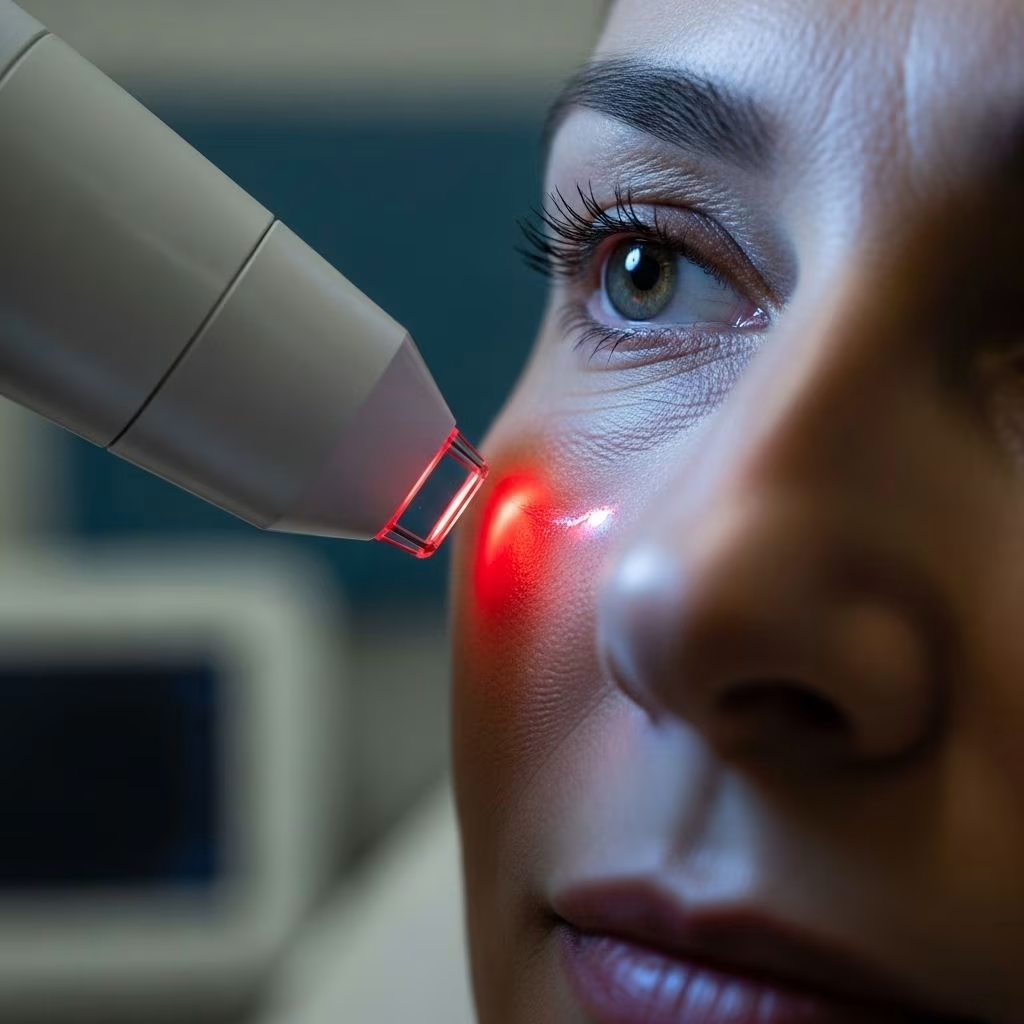
Laser resurfacing is a popular cosmetic procedure used to improve the appearance of the skin by reducing fine lines, wrinkles, and scars. It involves using high-energy light to remove damaged skin layers, promoting smoother, more youthful-looking skin. However, while it can be highly effective for many, there are instances when laser resurfacing might not be the right choice.
Complications of Laser Resurfacing
Laser resurfacing can lead to several complications, some of which are serious enough to warrant caution. These include:
- Postinflammatory Hyperpigmentation (PIH): This is a common complication, especially in darker skin types, where the skin becomes darker due to inflammation. It can take several months to resolve.
- True Hypopigmentation: Although less common, true hypopigmentation involves a permanent lightening of the skin due to damage to melanin-producing cells.
- Reactivation of Herpes Simplex Virus (HSV): There is a risk of reactivating cold sores, particularly if the treatment area includes the face.
- Viral, Bacterial, and Fungal Infections: These are rare but can occur, especially during the first week post-treatment.
- Hypertrophic Scarring and Ectropion: In severe cases, hypertrophic scarring or ectropion (eyelid eversion) can occur, especially with aggressive treatments like fully ablative CO2 laser resurfacing.
- contact Dermatitis: Some patients may experience contact dermatitis due to increased sensitivity post-treatment.
When Laser Resurfacing Is Not Suitable
Laser resurfacing is not universally appropriate for all skin types or conditions. It is crucial to consider the following scenarios:
Skin Type and Tone
Darker skin types are more prone to complications like PIH and true hypopigmentation. Therefore, laser resurfacing may not be the best choice for individuals with darker complexions unless they are willing to take the necessary precautions and follow strict post-treatment protocols.
Previous Skin Conditions
Individuals with a history of rosacea or those who regularly use tretinoin or glycolic acid compounds may experience prolonged erythema (redness) after laser resurfacing. Similarly, patients with active acne or other skin infections should avoid laser treatments until their condition is under control.
Sensitivity and Allergies
Those with heightened sensitivity or allergies might react more severely to the treatment, leading to complications like contact dermatitis.
Budget and Recovery Time
Laser resurfacing can be expensive and requires a significant recovery period, especially for more aggressive treatments like fully ablative CO2 lasers. Patients on a tight budget or with limited time for recovery might find alternative treatments more suitable.
Alternative Treatments
For those who are not ideal candidates for laser resurfacing, several alternative treatments can achieve similar results with fewer risks:
- Chemical Peels: These involve applying a solution to the skin to remove the top layers, revealing smoother skin.
- Microdermabrasion: A non-invasive exfoliating treatment that removes dead skin cells.
- Microneedling: A minimally invasive treatment that uses tiny needles to stimulate collagen production.
- Facial Fillers: Injectables used to fill wrinkles and fine lines.
Frequently Asked Questions
Q: What are the most common complications of laser resurfacing?
Common complications include prolonged erythema, postinflammatory hyperpigmentation, and infections. More severe complications, though rare, can include hypertrophic scarring and ectropion.
Q: Is laser resurfacing suitable for all skin types?
No, laser resurfacing can be risky for darker skin types due to the higher risk of hyperpigmentation and hypopigmentation.
Q: How long does it take to recover from laser resurfacing?
Recovery time varies depending on the type of laser used. For ablative lasers like CO2, recovery can take several months, while non-ablative lasers may have a shorter recovery period of a few days to a week.
Table of Content
- Introduction to Laser Resurfacing
- Complications of Laser Resurfacing
- When Laser Resurfacing Is Not Suitable
- Alternative Treatments
- Frequently Asked Questions
References
- https://marmurmedical.com/wp-content/uploads/2021/02/Complications-in-Lasers-Lights-and-Radiofrequency-Devices.pdf
- https://www.drhconsult.co.uk/treatments/laser-resurfacing/ablative-co2/
- https://www.liebertpub.com/doi/10.1001/archfaci.2.4.279
- https://pmc.ncbi.nlm.nih.gov/articles/PMC3580977/
- https://www.ncbi.nlm.nih.gov/books/NBK532248/
- https://my.clevelandclinic.org/health/treatments/11015-laser-skin-resurfacing
- https://drtorgerson.com/non-surgical-procedures/laser-treatments-toronto/complications-of-laser-skin-therapy/
- https://www.webmd.com/beauty/laser-skin-resurfacing
- https://www.medicalnewstoday.com/articles/laser-skin-resurfacing


