A Quiet Place: The Complete Guide to the Franchise’s Alien Monsters
\n
A Quiet Place: Day One has reignited fascination with the terrifying extraterrestrials that hunt sound in John Krasinski’s acclaimed film universe. As the franchise expands, mysteries about the origins, abilities, and motives of the aliens persist, leaving fans eager for clear answers. Here, we unravel every detail currently known about these gruesome invaders: their homeworld, biology, the rules they live by, and the logic (if any) behind their relentless slaughter.
\n\n
Table of Contents
\n
- \n
- The Origins of the Aliens
- Alien Biology and Physiology
- Behavior and Ecosystem
- Do Aliens Eat Humans?
- Strengths, Weaknesses, and Survival Strategies
- The Creation and Design of A Quiet Place Monsters
- Frequently Asked Questions (FAQs)
\n
\n
\n
\n
\n
\n
\n
\n\n
The Origins of the Aliens
\n
The alien monsters in A Quiet Place are among science fiction’s most enigmatic invaders. According to John Krasinski, the creatures originate from a planet drastically different from Earth—a world devoid of light and familiar lifeforms. Their home was likely dominated by darkness, extreme gravity, and harsh environmental conditions, necessitating the evolution of beings fine-tuned for survival under those extremes.[10][11]
\n
Key facts about their origin:
\n
- \n
- Exoplanetary Habitat: The aliens evolved on a desolate, unlit planet—adapting to hunt entirely by sound.
- Parasites and Apex Predators: They acted as both predators and parasites, perfectly equipped for their world’s threats.
- Journey Through Space: When their homeworld was destroyed (possibly by a cataclysmic event), the creatures survived by clinging to rocky debris. These fragments drifted through the void, eventually crashing onto planets—Earth included.[10]
\n
\n
\n
\n
This cosmic origin explains both their resilience and the absence of eyes or light-dependent senses. The species’ arrival is depicted memorably in A Quiet Place: Day One, as meteoric impacts deliver the lethal newcomers.
\n\n
Alien Biology and Physiology
\n
The monsters’ alien biology is a marvel of evolutionary adaptation. Unlike Earthly predators, these creatures possess a unique combination of defenses and hunting mechanisms—making them especially lethal within Earth’s environment.
\n
- \n
- Echolocation: Evolved in total darkness, their ability to navigate and hunt by sound is highly advanced. They can pinpoint even the most minute noises over vast distances.
- Armor-like Skin: Their bodies are covered in a near-impenetrable hide, evolved in response to their homeworld’s harsh climate and gravity. Conventional weapons are largely ineffective.
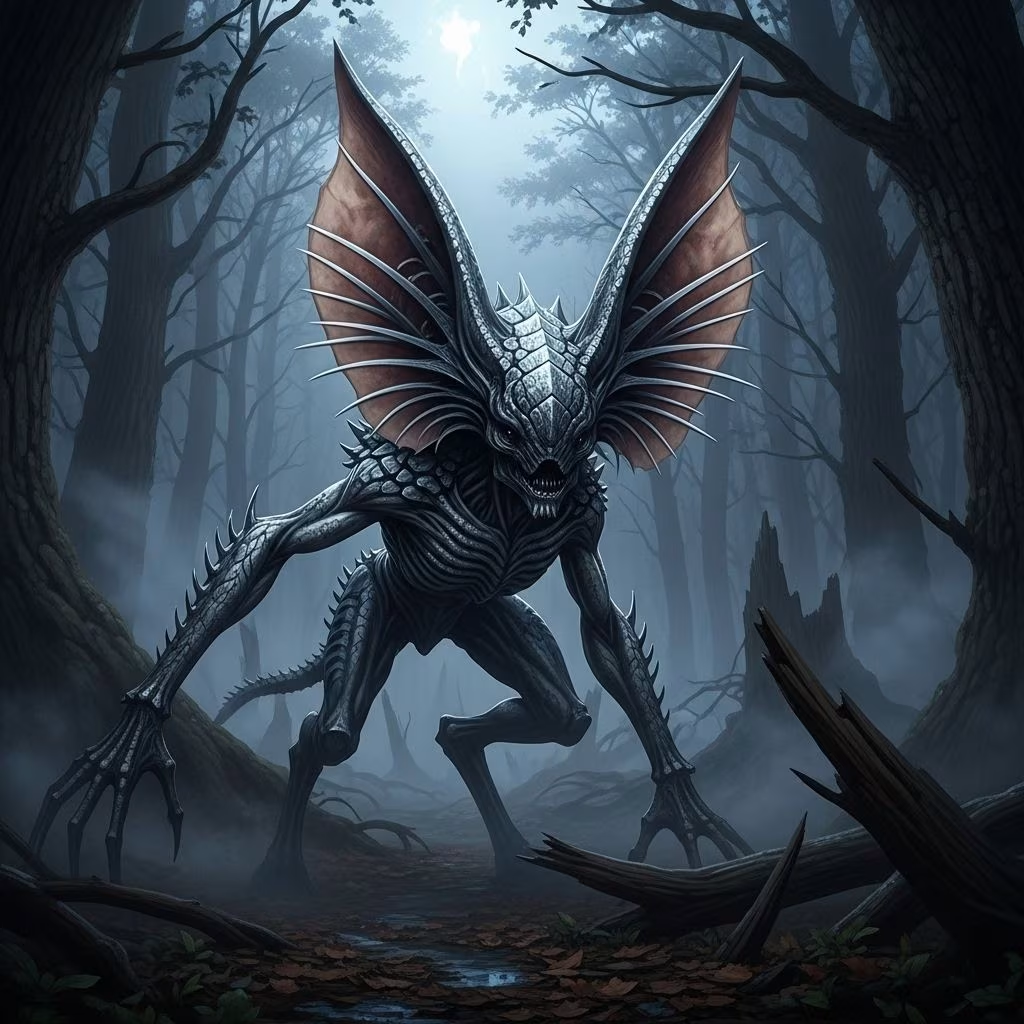
- Physical Structure: The aliens are taller than average humans, with a hunched posture reminiscent of gorillas and bats. Their long arms, ending in sharp three-fingered claws, assist both in high-speed locomotion and climbing.
- Speed and Agility: Capable of running at speeds as high as 300 mph and climbing with agility, they remain a constant—and overwhelming—threat.
- Swimming Ability: Notably, the aliens are poor swimmers and are vulnerable to drowning, a rare weakness exploited by human survivors.
\n
\n
\n
\n
\n
\n\n
Alien Biology Table
\n
| Trait | Description |
|---|---|
| Echolocation | Ultra-sensitive; allows tracking sounds imperceptible to humans |
| Armor | Highly resistant to bullets, blades, most earthly weapons |
| Limbs & Posture | Knuckle-walking, long arms, three claws |
| Speed | Up to ~300 mph sprint; agile in trees, buildings |
| Weakness | Incapable in water, disoriented by high-frequency sound |
\n\n
Behavior and Ecosystem
\n
The aliens’ method of survival is both simple and chilling: they hunt anything that makes a sound. Yet, contrary to what their indiscriminate killing suggests, these monsters are more than mindless killers. A Quiet Place: Day One introduces subtle clues about their place in a broader ecosystem.[12]
\n
- \n
- Not for Food: Corpses left by the aliens are often untouched, indicating the creatures do not eat terrestrial animals.
- Silencing Instinct: Their behavior appears driven not by hunger, but by an automatic urge to eliminate noise—possibly an instinct reinforced by their evolutionary environment.
\n
\n
\n
Director Michael Sarnoski and creator John Krasinski have clarified: the aliens are not recreational killers. There are hints that they once functioned as apex predators (or ecological regulators) designed to control their native ecosystem.
\n
In Day One, a pivotal scene reveals aliens consuming alien plants that arrived with the asteroids. This suggests their dietary needs are highly specialized—Earth’s biology is incompatible with their own, forcing a focus on “silencing” threats rather than feeding.
\n\n
Do the Aliens Eat Humans?
\n
This question has perplexed audiences since the franchise began. The short answer: No, the monsters do not eat humans or Earth animals. Instead:
\n
- \n
- Corpses remain largely intact: Suggests they are not consumed for food.
- Ecological Control: The creatures might use their kills to prevent disruption, maintaining quiet as a survival tactic.
- Unique Diet: Evidence from A Quiet Place: Day One shows the creatures eating alien flora, which likely formed part of their diet on their homeworld.
- Possible Usage of Corpses: Director Sarnoski posited that the creatures might use Earth organisms in creating conditions favorable to their own plant life—though this was not fully detailed in the films.[12]
\n
\n
\n
\n
\n
This unique set of habits—and their selective use of planetary resources—sets these creatures apart from typical horror movie monsters.
\n\n
Strengths, Weaknesses, and Survival Strategies
\n
Surviving in a world overrun by sound-hunting aliens is a near-impossible ordeal. The movies, however, deliver critical clues about the strengths to fear and weaknesses to exploit:
\n
- \n
- Strength: Acute Hearing – The monsters’ greatest asset is their extraordinarily sensitive hearing. They target any noise above a certain threshold, which is why absolute silence is key to human survival.
- Strength: Physical Power – These aliens are not only fast and agile but have immense strength, easily breaking through doors, vehicles, and barricades.
- Weakness: High-Frequency Sound – The creatures’ hearing can be overloaded or incapacitated by specific high-pitched frequencies. In the films, this vulnerability allows the protagonists to fight back, albeit only for brief windows.[11]
- Weakness: Water – Poor swimming skills mean that deep water or large bodies of water serve as natural barriers. Several human communities have survived by retreating to islands.
\n
\n
\n
\n
\n
Humans employ a range of survival strategies, including sign language communication, noise-minimizing innovations, and purposely creating noisy distractions to draw monsters away from settlements.
\n\n
The Creation and Design of A Quiet Place Monsters
\n
The aliens’ instantly iconic look is the product of collaborative worldbuilding between writers, designers, and visual effects experts:
\n
- \n
- Initial Vision: John Krasinski wanted creatures that were not just frightening, but biologically plausible. The aliens’ “muscular armor”, unique posture, and noise-hunting adaptations reflect their bitter interstellar origin.[10]
- Visual Inspiration: Elements of bats, gorillas, crustaceans, and nightmare fuel from H.R. Giger’s “Alien” and other science fiction classics informed the creatures’ sinewy, animalistic forms.
- Evolution for Cinematic Drama: To highlight their hearing prowess, the monsters feature flared head openings, membranous skin, and expressive, pulsating ear structures that ‘open’ when they track prey.
- Behind the Scenes: The design team iterated through dozens of concepts, always returning to the core mandate: natural selection pushed to its absolute limit. Every detail—from skin texture to limb structure to jaw mechanics—serves their evolutionary purpose.
\n
\n
\n
\n
\n
This careful attention to evolutionary and dramatic logic is part of what makes the aliens memorable, elevating them far above generic movie monsters.
\n\n
Frequently Asked Questions (FAQs)
\n
Q: How do the aliens find their prey?
\n
A: The aliens rely entirely on sound to detect movement and identify targets. Their hearing is so fine-tuned that even the faintest creak or whisper can reveal a human’s location.
\n\n
Q: Why don’t the aliens eat humans?
\n
A: The movies and creators clarify that the creatures’ biology is incompatible with terrestrial food. Instead, their rampage is tied to silencing disturbances, and they feed only on alien plants that arrived with them.[12]
\n\n
Q: Are the monsters invulnerable?
\n
A: Not entirely—their skin is tough but not indestructible. High-frequency soundwaves and water environments create exploitable weaknesses.
\n\n
Q: Could the monsters be defeated?
\n
A: Survival and resistance are possible when humans exploit the aliens’ weaknesses, use sound traps, and inhabit inaccessible locations (like islands). However, their physical superiority and numbers make them a formidable threat worldwide.
\n\n
Q: Is there more to come in the A Quiet Place franchise?
\n
A: Yes—the expanding universe, including the hit Day One prequel, hints at future films and even a video game adaptation, promising further revelations about the aliens and their impact on humanity’s struggle for survival.
\n\n
Final Thoughts
\n
The aliens in A Quiet Place represent a unique blend of plausible science fiction and primal horror, forcing audiences to consider how they themselves would respond to a world where survival means utter silence. As new installments and adaptations expand the lore, expect more secrets—about both the monsters and those who endure them—to emerge.
References
- https://www.space.com/a-quiet-place-aliens-explained
- https://www.space.com/a-quiet-place-day-one-alien-invasion-trailer-paramount
- https://en.wikipedia.org/wiki/Death_Angels_(A_Quiet_Place)
- https://screenrant.com/a-quiet-place-alien-monster-look-design/
- https://www.fiz-x.com/a-quiet-places-alien-monsters-explained/
- https://www.livescience.com/space/extraterrestrial-life/strange-places-scientists-are-looking-for-aliens
- https://screenrant.com/quiet-place-2-alien-monster-origins/
- https://en.wikipedia.org/wiki/A_Quiet_Place
- https://www.watchmojo.com/articles/everything-we-know-about-the-creatures-from-a-quiet-place
- https://www.syfy.com/syfy-wire/john-krasinski-breaks-silence-reveals-the-origin-of-the-monsters-in-a-quiet-place
- https://collider.com/a-quiet-place-monsters-explained/
- https://www.cbr.com/a-quiet-place-day-one-aliens-kill-explanation/
- https://www.youtube.com/watch?v=FAAhWMaZoYE
- https://comicbook.com/horror/news/a-quiet-place-monsters-origins-explained/
- https://listverse.com/2023/06/23/10-weird-places-aliens-might-be-lurking/
- https://www.youtube.com/watch?v=kV78G3LYHkQ