


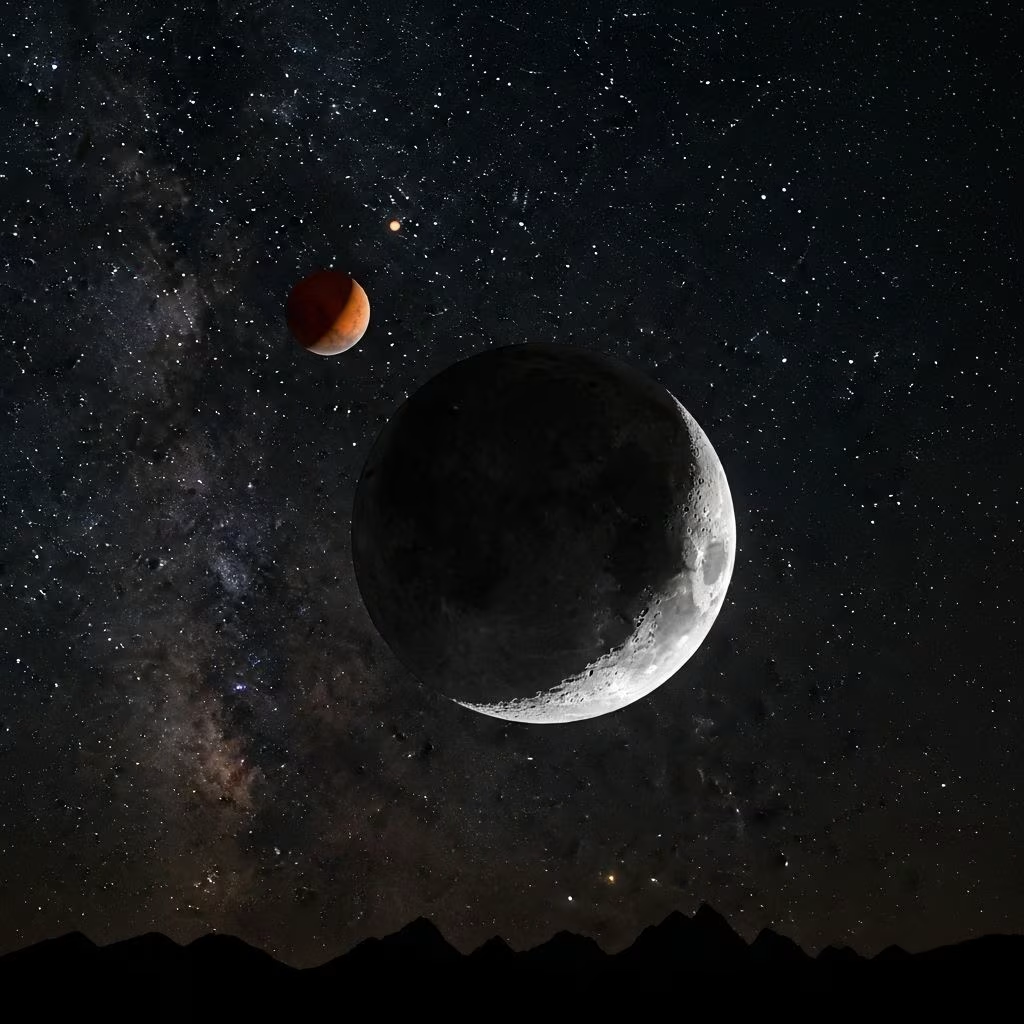
Mars Meets the Crescent Moon: A Celestial Spectacle on July 28, 2025
As twilight falls on July 28, 2025, skywatchers across the globe will be treated to a breathtaking scene: the waxing crescent moon shining in close proximity to Mars, the Red Planet. This rare conjunction, occurring just after sunset, promises a dazzling skyscape. Coupled with the peak of summer meteor showers, the night will offer one of the most memorable skywatching experiences of the year.
Celestial Alignments: What Makes July 28, 2025 Special?
On this evening, the waxing crescent moon—illuminated at just 19%—will pair closely with Mars in the night sky. The conjunction places the two cosmic bodies within about one degree of each other, roughly the width of a pinky finger held at arm’s length. Mars will stand out as a reddish dot, while the moon casts a soft, silvery glow. This pairing is accentuated by Earthshine, the ghostly illumination on the moon’s night side caused by sunlight reflecting off Earth.
- Date: July 28, 2025
- Time: About 45 minutes after local sunset; best viewing around 8:15 p.m. in many locations.
- Location in Sky: Low in the western horizon, in the constellation Taurus for North American observers.
- Moon Illuminated: ~19%, forming a delicate crescent
- Mars: Reddish, visible just beneath or beside the moon depending on your vantage point.
- Special Feature: Meteor showers peaking on the same night add extra excitement.
The Science Behind the Moon-Mars Conjunction
A conjunction occurs when two astronomical bodies share the same right ascension in the sky, appearing very close together from Earth. While conjunctions between planets and the moon are relatively common, some are rarer and more visually striking—such as this pairing of the crescent moon and Mars during the early evening hours. Mars, having moved past its brightest phase for the year, remains prominent, especially in the dark, clear skies of midsummer.
“The moon will be only 19 percent illuminated, offering a delicate, glowing crescent, while Mars, the Red Planet, will be visible as a distinct reddish dot in the twilight sky.”
Understanding the Key Terms
- Waxing Crescent: The lunar phase when the moon is partly lit between the new moon and first quarter, growing more illuminated each night.
- Earthshine: Soft glow visible on the dark portion of the moon, caused by sunlight bouncing off Earth and onto the moon.
- Conjunction: Apparent meeting or close approach of two celestial bodies in Earth’s sky.
Where and How to See the Mars-Moon Conjunction
Visibility of the Mars-moon conjunction will be best for those with an unobstructed view of the western horizon. Due to the event’s low position in the sky, city dwellers may face challenges from buildings, trees, and particularly, urban light pollution. Coastal regions and elevated areas such as hills or sightseeing overlooks offer ideal vantage points. Southern California, including Los Angeles, Santa Barbara, and San Diego, is poised for excellent visibility if clear skies prevail.
- Start watching: Approximately 45 minutes after sunset.
- Best viewing tools: Naked eye for moon; Mars may require binoculars or a small telescope, especially in cities.
- Look west: Low on the western horizon in the constellation Taurus.
- Weather matters: Clear skies are vital; haze, clouds, or fog will reduce visibility.
Table: Ideal Viewing Locations and Tips
| Location Type | Visibility | Viewing Advice |
|---|---|---|
| Urban Centers | Moderate to Poor | Find parks, rooftops, or open spaces free from tall buildings and excessive light. |
| Coastal Areas | Excellent | Head to beaches or elevated coastal trails for clear western horizons. |
| Hills and Mountains | Excellent | Seek out high ground for unobstructed views and darker skies. |
Binoculars, Telescopes, and Technological Aids
While the moon will be bright enough to spot with the unaided eye, Mars can be fainter, especially in urban environments. Binoculars significantly enhance the experience, revealing the reddish hue of Mars next to the lunar crescent. A small telescope can provide additional detail, including surface features or the glow of earthshine. Technological aids, such as stargazing smartphone apps, can help locate the conjunction’s exact position in the sky.
- Binoculars: Recommended for Mars, especially in areas with light pollution.
- Telescopes: Optional for detailed lunar viewing, but not necessary for the conjunction itself.
- Stargazing Apps: Apps like Star Walk or SkySafari help locate celestial events in real time.
Adding to the Magic: Meteor Showers Peak
The conjunction of Mars and the moon on July 28 coincides with multiple meteor showers peaking that night. According to reports, the Southern Delta Aquariids and Alpha Capricornids are particularly active, sending slow, bright meteors across the sky. These showers enhance the spectacle, with the best meteor activity typically observed between midnight and dawn.
- Southern Delta Aquariids: Known for steady meteor rates and moderate activity.
- Alpha Capricornids: Noted for occasional bright fireballs, visible even from light-polluted areas.
Why Are Such Conjunctions Significant?
Conjunctions like the Mars-moon pairing provide both aesthetic beauty and scientific value. They help astronomers precisely chart planetary movements, study lunar illumination, and engage the public with accessible skygazing experiences. For casual observers, these events spark curiosity and wonder about the dynamics of our solar system.
Historical and Cultural Context
Throughout history, close approaches of Mars and the moon have fascinated astronomers and inspired cultural myths. Ancient civilizations often saw such conjunctions as omens or celestial messages, while modern observers celebrate them as opportunities to deepen our understanding of the cosmos.
Astrological and Spiritual Perspectives
Some astrology enthusiasts and spiritual thinkers interpret the moon-Mars conjunction as a moment of heightened energy, clarity, and personal transformation. While not grounded in physical science, these perspectives offer additional layers of meaning for those who seek them.
Tips for Photographing the Mars-Moon Conjunction
Capturing the conjunction requires a steady camera and a clear view of the western horizon. Use a tripod for long exposures, and experiment with different settings to highlight the contrast between the moon’s glow and Mars’s subtle red.
- Turn off flash and use manual focus if possible.
- Set ISO between 400 and 1600 for best night sky results.
- Frame the shot with silhouettes of trees or buildings for dramatic effect.
Skywatching Etiquette and Safety
- Respect dark-sky sites by minimizing artificial light.
- Carry flashlights with red filters to preserve night vision.
- Dress warmly; summer nights can be cool, especially in coastal or mountainous regions.
- Stay aware of your surroundings to ensure safe viewing from parks, trails, or roadside locations.
Frequently Asked Questions (FAQs)
Q: Can I see the Mars-moon conjunction with the naked eye?
A: Yes, both the crescent moon and Mars should be visible without special equipment in clear, dark skies. Mars may appear as a faint reddish dot next to the moon.
Q: Why is Mars red?
A: Mars appears red due to iron oxide (rust) on its surface, which reflects sunlight and creates the planet’s distinct color.
Q: What time should I go outside to view the conjunction?
A: The best time is about 45 minutes after local sunset, generally around 8:15 p.m. in North America.
Q: What if it’s cloudy or hazy on July 28?
A: Cloud cover or haze can obstruct the view. If possible, travel to a location with clearer skies or check local weather forecasts for the best opportunities.
Q: Will there be other planets visible that night?
A: Yes. July 2025 offers several planetary groupings, and depending on your sky conditions, you may also glimpse Venus or Jupiter in other parts of the sky.
Stargazing Resources and Events
- Local astronomy clubs often organize viewing parties for major conjunctions and meteor showers.
- Online sky calendars (such as NASA’s and major astronomy websites) track dates and times for upcoming events.
- Stargazing guides can help plan your night for maximum enjoyment.
Additional Celestial Events in July 2025
- Meteor showers: Southern Delta Aquariids, Alpha Capricornids.
- Planetary groupings: Venus and Jupiter present later in July.
- Lunar phases: Waxing crescent, followed by first quarter in early August.
Summary Table: July 28, 2025 Celestial Highlights
| Event | Description | Best Viewing Time |
|---|---|---|
| Moon-Mars Conjunction | Crescent moon and Mars appear less than one degree apart | About 45 minutes after sunset |
| Meteor Showers | Southern Delta Aquariids, Alpha Capricornids peak | Midnight to dawn |
| Earthshine | Soft glow visible on the moon’s night side | Early evening twilight |
Final Skywatching Checklist for July 28
- Check weather forecasts for clear conditions.
- Locate an open, western-facing spot with minimal light pollution.
- Bring binoculars and camera gear if desired.
- Consult stargazing apps to pinpoint the moon and Mars.
- Dress appropriately for outdoor conditions.
The close approach of Mars and the waxing crescent moon, set against the backdrop of meteor showers, makes July 28, 2025, a highlight for astronomy enthusiasts and casual skywatchers alike. Wherever you are, even a brief glimpse can inspire curiosity and wonder about our place in a dynamic, ever-changing universe.
References
- https://www.astronomy.com/observing/the-sky-today-monday-july-28-2025/
- https://in-the-sky.org/news.php?id=20250728_20_100
- https://www.livescience.com/space/planets/moon-mars-and-meteors-why-july-28-is-the-best-night-for-skywatching-all-summer
- https://www.space.com/stargazing/see-mars-shine-close-to-the-waxing-crescent-moon-after-sunset-on-july-28
- https://www.edhat.com/news/moon-mars-conjunction-july-28-2025/
- https://dailygalaxy.com/2025/07/moon-mars-meteor-showers-july-28/
- https://science.nasa.gov/solar-system/skywatching/whats-up-july-2025-skywatching-tips-from-nasa/
- https://www.youtube.com/watch?v=tVK3GLUFPg4
- https://nasaspacenews.com/2025/07/dont-miss-the-july-28-2025-moon-mars-conjunction-a-stunning-twilight-show/
- https://in-the-sky.org/news.php?id=20250728_15_100
- https://www.youtube.com/watch?v=Y3ZhMJYKTEk
- https://dailygalaxy.com/2025/07/the-moon-and-mars-are-meeting-in-the-sky/
- https://news.ssbcrack.com/crescent-moon-and-mars-to-converge-in-southern-california-skies-this-july/
- https://whenthecurveslineup.com/2024/07/17/2024-july-28-morning-bright-outer-planets-moon-stars/
- https://om-journal.com/aspect/1753700400
- https://whenthecurveslineup.com/2025/07/12/2025-july-27-31-evening-moon-mars-virgo/
- http://astropical.space/index.php/moon/moon/marsastro.php
- https://lunaf.com/lunar-calendar/2025/07/28/


