Best Star Projectors 2025: Bring the Cosmos Indoors
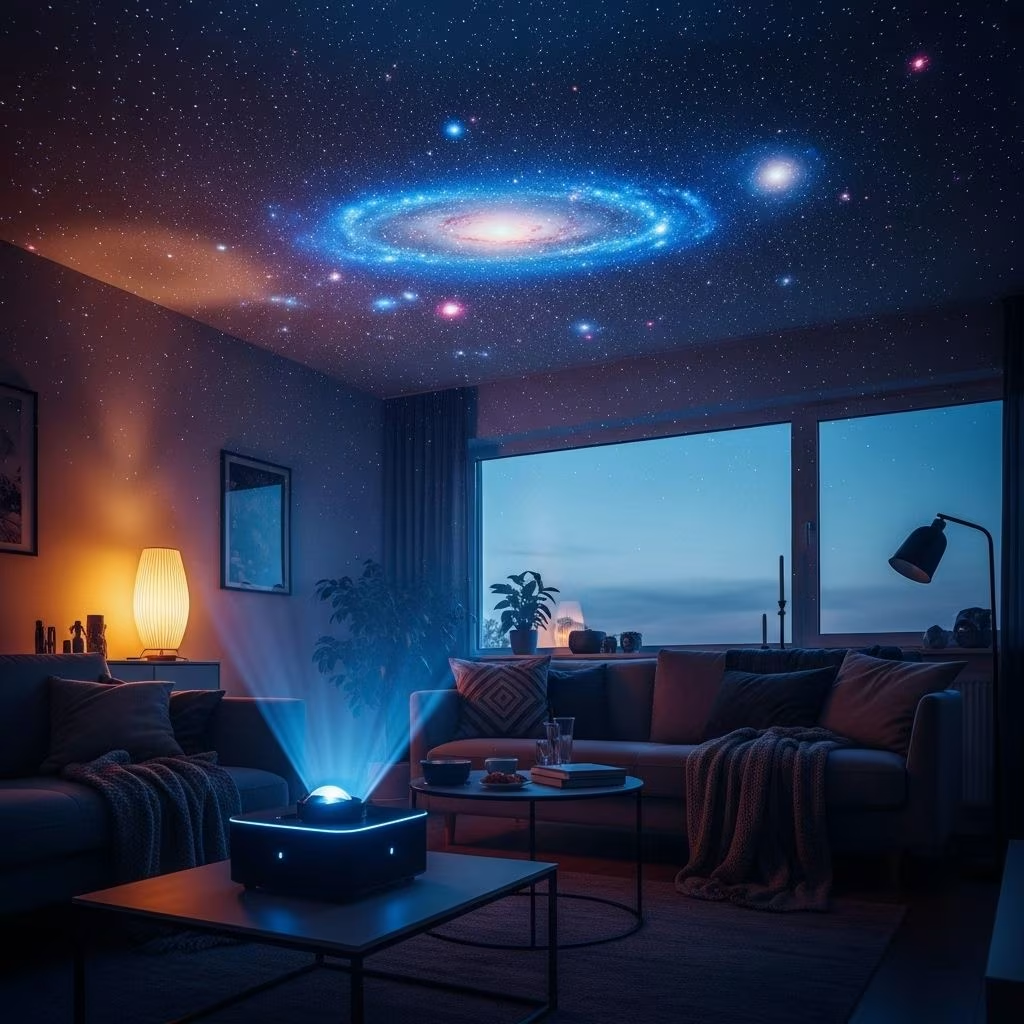
Imagine gazing up at a shimmering sky filled with stars and nebulae—right from your bedroom or living space. The best star projectors of 2025 are more advanced than ever, offering vivid displays, realistic constellations, and educational features that captivate astronomy enthusiasts, kids, and families alike. This comprehensive guide explores the top models available, their key features, who they’re best for, and how to select the right home planetarium solution for your needs.
Why Choose a Star Projector?
- Recreates a realistic night sky: Enjoy breathtaking clusters, constellations, and galaxy displays regardless of weather or light pollution.
- Educational and entertaining: Many models include astronomy content, helping users learn as they gaze.
- Relaxation and ambiance: Star projectors create serene environments that are perfect for sleep, meditation, or creative inspiration.
How We Selected the Best Star Projectors
Our recommendations are based on extensive research, expert reviews, user feedback, and hands-on tests. We referenced trusted sources in the astronomy and tech space, including Space.com, Popular Mechanics, and ThePlanets.org, combined with verified consumer insights to ensure every pick stands out for quality, realism, and value.
Evaluation Criteria
- Projection quality (brightness, resolution, coverage)
- Number of stars and celestial bodies visible
- Build quality and durability
- Ease of use and adjustability
- Educational features (disc content, sky maps, app connectivity)
Top Star Projectors for 2025
Below are the leading star projectors for 2025, with their standout features, pros, cons, and technical specs.
1. Dark Skys DS-1 Star Projector
- Best for: Enthusiasts seeking the ultimate home stargazing experience
| Projection | Over 4 million stars (Northern Hemisphere) |
|---|---|
| Lighting | Ultra-bright 10-watt LED |
| Material | Premium aluminum and glass |
| Modes | Adjustable projection (horizontal/vertical), rotation speeds, and timer |
| Weight | 4 lbs |
| Price | ~$600 |
Pros:
- Projects more stars than any other home model
- Extremely bright and detailed
- Durable, premium build
- Multiple timer and rotation settings
Cons:
- Heavy and less portable
- High-end price point
2. SEGA Homestar Projector
- Best Value: For families and casual astronomers
| Projection | 60,000 stars |
|---|---|
| Lighting | 3-watt LED |
| Included | Two star discs (with/without constellations), double-sided sky map poster |
| Features | Timer, clockwise/counterclockwise rotation |
| Price | $150–$169 |
Pros:
- Highly detailed sky projections
- Easy to operate and adjust
- Additional discs available for expanded content
- Immersive alternative to a traditional projector
Cons:
- Extra star discs are expensive
- Some users find the brightness lacking
3. Star Projector Pro 2025 HD Galaxy Planetarium Light
- Best for: Education, large rooms, immersive galaxy displays
| Coverage | 135–754 square feet |
|---|---|
| Rotation | 360° whisper-quiet |
| Projection | 13 unique galaxy and nebula scenarios |
| Features | Built-in timer (1, 2, or 4 hours), USB-powered |
| Size | 1.39 lbs, compact ABS design |
Pros:
- Extensive coverage great for larger spaces
- Includes educational material on projection discs
- Timer and silent operation ideal for sleep routines
- Vivid, crystal-clear projections across 13 cosmic scenarios
Cons:
- Changing discs can be fiddly
- Limited adjustment for projection angle
- Initial setup may take time
4. Orzorz Galaxy Lite Star Projector
- Best for: Stylish home decor, relaxing environments
The Orzorz Galaxy Lite is praised for elegant design and versatile projection modes. While not as educational as some competitors, it offers impressive atmosphere enhancement and ease of use.
- Customizable colors and brightness
- Multiple nebula and star modes
- Silent operation ideal for bedrooms
5. Additional Recommended Models
- POCOCO, DS-FX, SEGA Flux: Best for small rooms and quick setup
- Blisslights, Smart Star, Rosetta, UFO: Popular choices for their app controls and ambiance features
Table: Star Projector Comparison Guide
| Model | Star Count | Projection Modes | Timer | Best For |
|---|---|---|---|---|
| Dark Skys DS-1 | 4M+ | Stars, constellations | Yes | Ultimate realism, home planetarium |
| SEGA Homestar | 60,000 | Stars, constellations | Yes | Great value, families |
| Star Projector Pro 2025 | Varied | Galaxy, nebula, planets | Yes | Large rooms, education |
| Orzorz Galaxy Lite | Varied | Galaxy, nebula | Yes | Home decor, relaxation |
Key Features to Consider Before Buying
- Resolution and Brightness: Seek projectors with at least 720p and 500–2000 lumens for sharp, vivid cosmic imagery.
- Room Coverage: Consider your room size; coverage ranges from 135–754 sq ft are optimal.
- Power Options: USB powering offers flexibility; AC models suit larger installations.
- Custom Modes: Preference for star only, nebula, solar system, or mixed modes—some models offer up to 13 scenarios.
- Ease of Operation: Remote controls, timer features, and silent operation add major convenience.
- Educational Content: Discs or app integrations enrich the experience for learners of all ages.
Use Cases for Star Projectors
- Stargazing from home: Experience the universe despite urban light pollution or cloudy skies.
- Educational tool: Engage children and students with interactive, immersive celestial lessons.
- Relaxation and wellness: Create calming spaces for meditation, yoga, or improved sleep.
- Decor and ambiance: Enhance rooms with captivating cosmic visuals for parties, reading nooks, or studios.
Expert Tips for Maximizing Your Star Projector
- Place the projector at the recommended distance (6–16 feet) for best focus and coverage.
- Use timer settings to conserve energy and prevent overexposure to LED light.
- Experiment with multiple discs or scenario modes to keep the experience fresh.
- Integrate with apps (where supported) for interactive star map learning.
- Check manufacturer websites for downloadable sky maps or educational resources.
Frequently Asked Questions (FAQs)
Q: What is the difference between a star projector and a planetarium?
A star projector creates an immersive display of stars, nebulae, and planets indoors, while a planetarium is usually a larger dome or facility offering professional-quality astronomical screenings and educational programs.
Q: How do I choose the right star projector for my room size?
Check the coverage area specifications; small bedrooms may need coverage of 135 sq ft, while larger spaces may benefit from projectors that reach up to 754 sq ft.
Q: Are star projectors suitable for children?
Yes, most models are kid-friendly. Many feature educational discs and calming rotations, making them ideal for bedtime routines.
Q: Can I use my star projector during the day?
While possible, projection is sharpest in complete darkness. Dimming room lights or using blackout curtains helps achieve best results.
Q: Do star projectors require assembly?
Most arrive ready-to-use, but some models require inserting discs or simple lens adjustments. Always follow the manufacturer’s setup guide for optimal performance.
Final Thoughts: Creating Your Stellar Sanctuary
The top star projectors of 2025 go far beyond simple night lights. They bring awe-inspiring cosmic landscapes to any room, offering stunning realism, versatile features, and powerful educational benefits. Whether you’re seeking immersive stargazing, soothing ambiance, or interactive learning, there’s a model perfectly suited for your needs. Use this guide, compare features, and get ready to explore the universe from the comfort of your home.
References
- https://www.space.com/technology/which-is-the-best-home-planetarium-we-pit-three-of-our-favorites-against-one-other
- https://www.space.com/orzorz-galaxy-lite-star-projector-review
- https://www.livescience.com/space/best-star-projectors
- https://www.popularmechanics.com/space/g42233164/the-best-star-projectors/
- https://www.youtube.com/watch?v=Wdp_av1fLGI
- https://optiviewlabs.com/best-space-projector/
- https://www.youtube.com/watch?v=yaM-0TOzxf4
- https://www.skyatnightmagazine.com/top-astronomy-kit/best-planetariums-home-projectors
- https://spacemazing.com/star-projector/
- https://www.livescience.com/space/astronaut-starry-sky-projector-review
- https://projectorpicker.com/best-star-projector/
- https://projectorpress.com/projectors-with-features/best-star-projector/
- https://lasersandlights.com/blogs/1/8-best-star-light-projectors
- https://projectorsguru.com/best-star-projector/
- https://hollybellbooks.com/discovery-planetarium-projector-extra-discs/
- https://theproductanalyst.com/best-star-projector/
- https://telescope-for-kids.com/space-toys/star-light-projector/