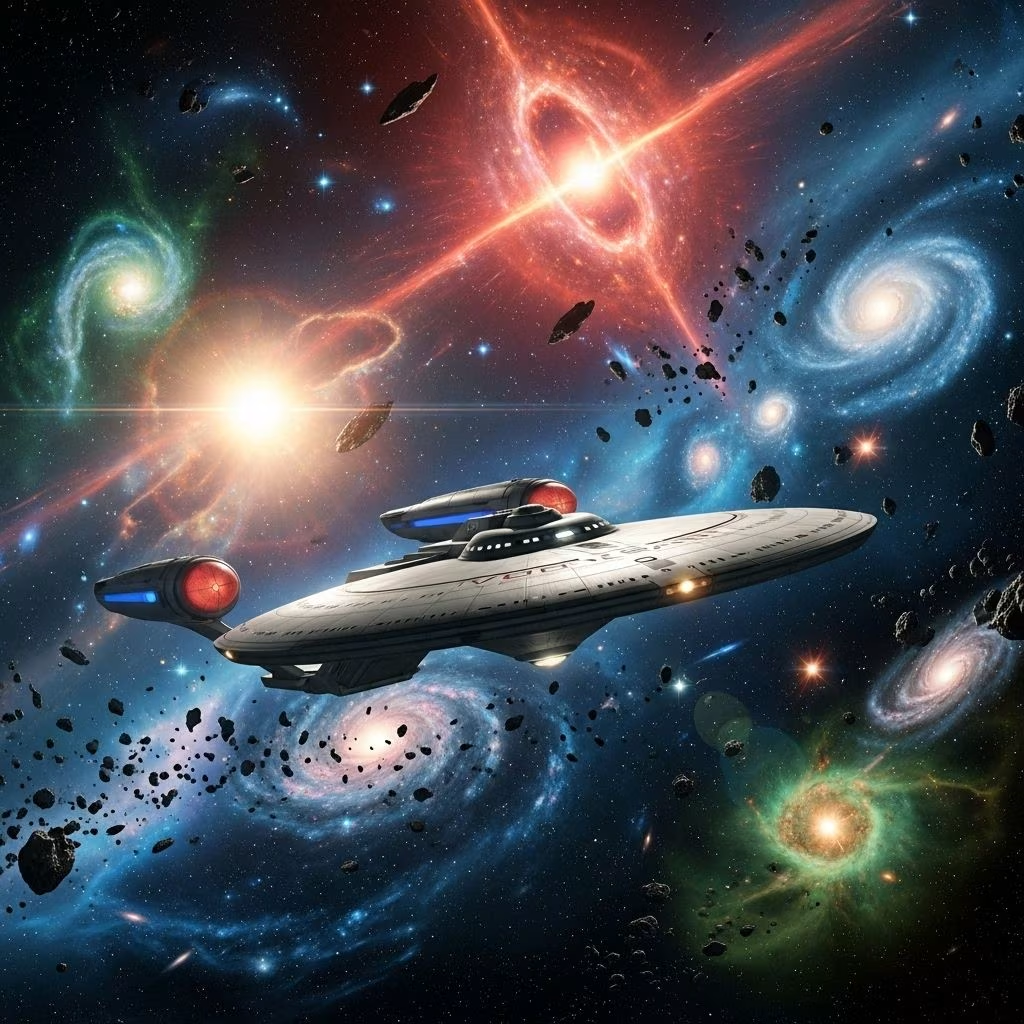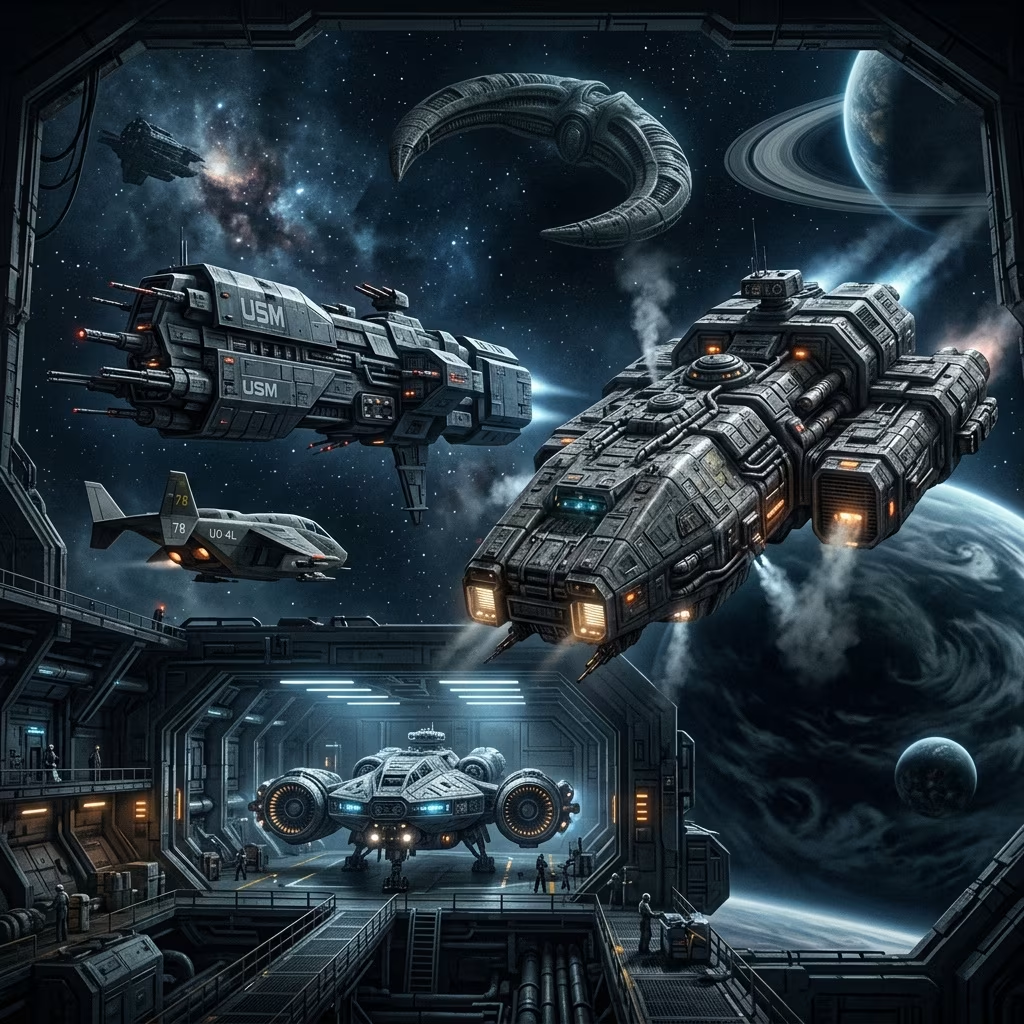
Spaceships of the Alien Movies: Iconic Vessels in Science Fiction
The Alien franchise stands as a giant in science fiction horror cinema, introducing audiences to both terrifying extraterrestrial creatures and unforgettable interstellar vessels. The spaceships of the Alien films not only serve as backdrops for suspense and action, but also as critical characters in their own right—shaping the fates of their crews and the atmosphere of each story. This comprehensive overview explores the design, history, significance, and memorable moments of the most influential spacecraft in the Alien movies, offering insight into their role within the franchise and their broader impact on sci-fi film craft.
The Alien Franchise Universe: Setting the Stage
The Alien franchise began in 1979 with Ridley Scott’s original film and has since expanded through sequels, prequels, and spin-offs. Spanning almost 300 years of fictional history, the series explores space colonization, corporate greed, human survival, and the unknown terrors lurking beyond the stars—all centralized around humanity’s deadly encounters with the Xenomorph.
Throughout these stories, spaceships serve as isolation chambers, battlegrounds, and sometimes, unwitting incubators for extraterrestrial threats. The following sections examine the legendary vessels that have defined the franchise.
USCSS Nostromo: The Space Freighter that Started It All
Key Facts
- First Appearance: Alien (1979)
- Role: Commercial towing spaceship
- Operator: Weyland-Yutani Corporation
- Crew Size: 7 (plus the cat, Jonesy)
- Purpose: Towing massive ore refinery
The Nostromo is arguably one of the most iconic vessels in sci-fi cinema. Described as a working-class, industrial star tug, the Nostromo is a far cry from the sleek ships of classic space opera. Its lived-in interiors, harsh lighting, and labyrinthine corridors established the aesthetic of “used future” realism that would influence countless future films. The ship’s claustrophobic design, with narrow passageways and dim lighting, amplifies the sense of dread as the Xenomorph stalks the crew.
Memorable Moment: The self-destruct sequence and Ripley’s desperate escape encapsulate the ship’s grim, pragmatic atmosphere and its unforgiving environment.
USS Sulaco: The Colonial Marines’ War Machine
Key Facts
- First Appearance: Aliens (1986)
- Role: Troop carrier/military ship
- Operator: United States Colonial Marines
- Crew & Passengers: Ripley, marines, ship’s AI
The Sulaco is a symbol of Cold War-era militarism—a massive, heavily armed, and angular craft designed to transport Colonial Marines to extraterrestrial threats. Its cold, mechanical interiors and immense storage bay were a deliberate contrast to the Nostromo’s industrial vibe, emphasizing the escalation from blue-collar survival to a militaristic rescue mission.
- The drop-ship bays and hangars evoke naval aircraft carriers, reinforcing themes of war and discipline.
- The automated, clinical bridges and corridors give the ship an impersonal feel, heightening the tension as things go wrong.
Memorable Moment: The deployment of drop-ships to the surface of LV-426, echoing real-world military operations, brings cinematic realism to futuristic warfare.
USM Auriga: Science Gone Awry
Key Facts
- First Appearance: Alien: Resurrection (1997)
- Role: Research vessel and military science lab
- Operator: United Systems Military
The USM Auriga is a vast research and military ship where science and corporate ambition lead to disaster. Here, scientists clone Ellen Ripley—and, inadvertently, the Alien Queen residing within her—hoping to weaponize the Xenomorph. The Auriga’s sterile yet menacing corridors and cold laboratories reflect the dehumanized pursuit of scientific advancement at all costs.
- Biotech labs and containment cells serve as incubators for horror sequences.
- The ship’s automated systems threaten further catastrophe as AI systems clash with human intentions.
Memorable Moment: The hybrid Newborn creature’s emergence and the ultimate self-destruction of the Auriga represent the culmination of unchecked experimentation.
The Engineer Juggernaut: Mysterious Alien Technology
Key Facts
- First Appearance: Alien (1979), main focus in Prometheus (2012)
- Role: Spacecraft of the Engineers, ancient alien race
- Features: Bio-mechanical interiors, mysterious navigation chamber, and deadly cargo
The Juggernaut, often referred to as the Derelict, is the alien ship first discovered by the Nostromo’s crew and then explored at length in Prometheus. Its bio-mechanical design is an enigmatic blend of organic curves, grotesque ornamentation, and advanced alien technology—drawing on visions from H.R. Giger, whose art defined the look of Alien’s universe.
- Contains the infamous cargo: canisters (or eggs) containing the Xenomorph pathogen or facehugger eggs.
- Pilot’s seat, with the fossilized ‘Space Jockey,’ became one of science fiction’s most haunting images.
Memorable Moment: The discovery of the eggs and the mysterious alien architecture marks a turning point in sci-fi set design.
USCSS Covenant: Colonization Meets Horror
Key Facts
- First Appearance: Alien: Covenant (2017)
- Role: Colony ship bound for planet Origae-6
- Operator: Weyland-Yutani
- Passengers: 2,000 colonists, crew, and advanced androids
The Covenant is a sleek, advanced ship designed to ferry humanity’s hopes for a new home world. With state-of-the-art technology, living quarters for thousands, and advanced navigation systems, it represents both hope and hubris. The tragic turning point comes when the crew answers a mysterious signal, exposing the colonists to unspeakable danger.
- The ship features modular life-support systems, a complex AI, and emergency evacuation shuttles.
- It echoes themes of colonization, anticipation, and human vulnerability in deep space.
Memorable Moment: The calm luxury of the Covenant is shattered when disaster strikes and the Xenomorph threat emerges anew.
Romulus Station: The Deadly Return of Xenomorphs
Key Facts
- First Appearance: Alien: Romulus (2024)
- Role: Secret Weyland-Yutani space station
- Purpose: Xenomorph experimentation and containment
- Significance: Links classic Alien narrative to new generational cast
Alien: Romulus introduces a new generation of characters and brings the Xenomorph threat to an isolated research space station. Weyland-Yutani’s clandestine retrieval of a cocooned Xenomorph from the Nostromo’s wreckage sets the stage for fresh horrors as a band of would-be thieves unwittingly become prey to the franchise’s signature monster.
- Concealed labs and containment fields reflect ongoing corporate obsessions with alien biology.
- The station is designed for secrecy, allowing for ethically dubious experiments far from prying eyes.
Memorable Moment: The discovery of the persistent Xenomorph cocoon, surviving since the original Alien’s events, weaves the new film tightly into franchise lore.
Other Notable Ships in the Alien Universe
- USCSS Prometheus: The titular vessel of Prometheus, sent on a scientific mission driven by ancient alien mysteries and corporate motives.
- USCSS Patna: Mentioned in Alien 3, the military vessel tasked with securing Xenomorph specimens.
- Kurtz: A private ship featured in Alien: Resurrection, providing vital plot pivots for the main characters.
Each vessel adds texture and continuity to the Alien universe, from hulking mining ships to agile shuttles and enigmatic alien craft. Together, they create a tapestry of deep-space isolation, relentless corporate agendas, and gruesome encounters with the unknown.
Spaceship Design and Atmosphere: The Franchise’s Sci-Fi Legacy
The design of Alien’s ships was revolutionary. Instead of pristine, utopian environments, the franchise introduced audiences to gritty, industrial spaces—where grime, creaking bulkheads, and malfunctioning tech are the norm. This approach grounded the terror and made the setting relatable, amplifying the claustrophobia crucial to the films’ horror.
- Set Design: H.R. Giger’s influence is especially prominent, blending technological and organic motifs.
- Lighting: Sharp, utilitarian lights create deep shadows, perfect for hiding lurking threats.
- Layouts: Tight corridors force characters (and audience) into intimate proximity with unknown dangers.
- Functionality: Each ship has a clear, realistic purpose—whether hauling ore, researching biology, or carrying marines. This creates a sense of authenticity in an otherwise fantastical universe.
These ships not only advanced the plot but also redefined how audiences imagined lived-in, dangerous space travel. Their impact continues to shape science fiction, gaming, and set design to this day.
| Ship Name | First Movie Appearance | Primary Operator | Main Function | Design Style |
|---|---|---|---|---|
| USCSS Nostromo | Alien (1979) | Weyland-Yutani | Commercial towing | Industrial, lived-in |
| USS Sulaco | Aliens (1986) | Colonial Marines | Military transport | Brutalist, angular |
| USM Auriga | Alien: Resurrection (1997) | United Systems Military | Research & military | Laboratory, sterile |
| Engineer Juggernaut | Prometheus (2012) | Engineers (alien race) | Unknown/carrying bio-weapons | Bio-mechanical, grotesque |
| USCSS Covenant | Alien: Covenant (2017) | Weyland-Yutani | Colony transport | Futuristic, modular |
| Romulus Station | Alien: Romulus (2024) | Weyland-Yutani | Experimental research | High-security, clandestine |
Frequently Asked Questions (FAQs)
Q: Which spaceship is the most iconic from the Alien movies?
A: The USCSS Nostromo is often considered the most iconic, establishing the franchise’s industrial-chic and claustrophobic aesthetic. Its design, atmosphere, and central role in the first film made it a pop-culture touchstone in science fiction.
Q: What is the purpose of the Weyland-Yutani Corporation’s ships?
A: Weyland-Yutani’s vessels serve a range of purposes, including resource extraction, exploration, colony transport, and, crucially, the secret retrieval and experimentation on Xenomorph organisms to further their corporate ambitions.
Q: How does spaceship design contribute to the horror in the Alien films?
A: The Alien ships’ confined passageways, failing machinery, and dark, labyrinthine layouts amplify feelings of isolation, vulnerability, and the unknown. This makes them ideal settings for suspenseful encounters and terrifying chases.
Q: Are the ships from the Alien franchise realistic?
A: While rooted in cinematic imagination, Alien’s ships are praised for their functional logic, industrial efficiency, and plausible technology—qualities that set them apart from purely fantasy space vessels.
Q: How are the Alien franchise’s starships different from those in other sci-fi franchises?
A: Unlike the utopian, gleaming ships often seen in Star Trek or Star Wars, the Alien franchise emphasizes rough, functional, and hazardous environments. These ships feel more like working vehicles than dream machines, underscoring the series’ gritty tone.
Conclusion: The Lasting Legacy of Alien’s Spaceships
The ships of the Alien franchise are more than just settings—they are active participants in the unfolding drama, shaping the moods, destinies, and even the nightmares of characters and audiences alike. From the industrial terror of the Nostromo to the enigmatic dread of the Juggernaut and the sinister science of the Auriga and Romulus, each vessel has indelibly shaped science fiction’s vision of humanity’s dark future in the stars.
References
- https://www.space.com/alien-movies-in-order
- https://www.space.com/33466-best-strange-space-movies.html
- https://en.wikipedia.org/wiki/Alien:_Romulus
- https://en.wikipedia.org/wiki/List_of_films_featuring_extraterrestrials
- https://spyscape.com/article/spies-and-space-aliens-must-see-movies-and-tv-series-to-stream-now
- https://www.youtube.com/watch?v=L007NADsqcQ
- https://www.imdb.com/list/ls084220304/
- https://editorial.rottentomatoes.com/article/stalked-on-a-spaceship-10-films-anticipating-pandorum/
- https://thespacereview.com/article/5020/1
- https://www.imdb.com/list/ls023125717/
- https://www.denofgeek.com/movies/15-of-sci-fi-cinemas-most-eccentric-spaceships/
- https://www.youtube.com/watch?v=ZtwlG9Qeyz4
- https://screenrant.com/alien-romulus-title-meaning-space-station-lab/
- https://robertforto.com/horror-lovers-challenge-favorite-alien-related-horror-movie/
- https://www.sciencefocus.com/space/it-came-from-beyond-the-silver-screen-aliens-in-the-movies
- https://movieweb.com/horror-movies-in-space-list/
- https://www.monstercomplex.com/blog/terror-in-space-15-horror-movies-set-in-outer-space