Best Stargazing Apps for Exploring the Night Sky in 2025
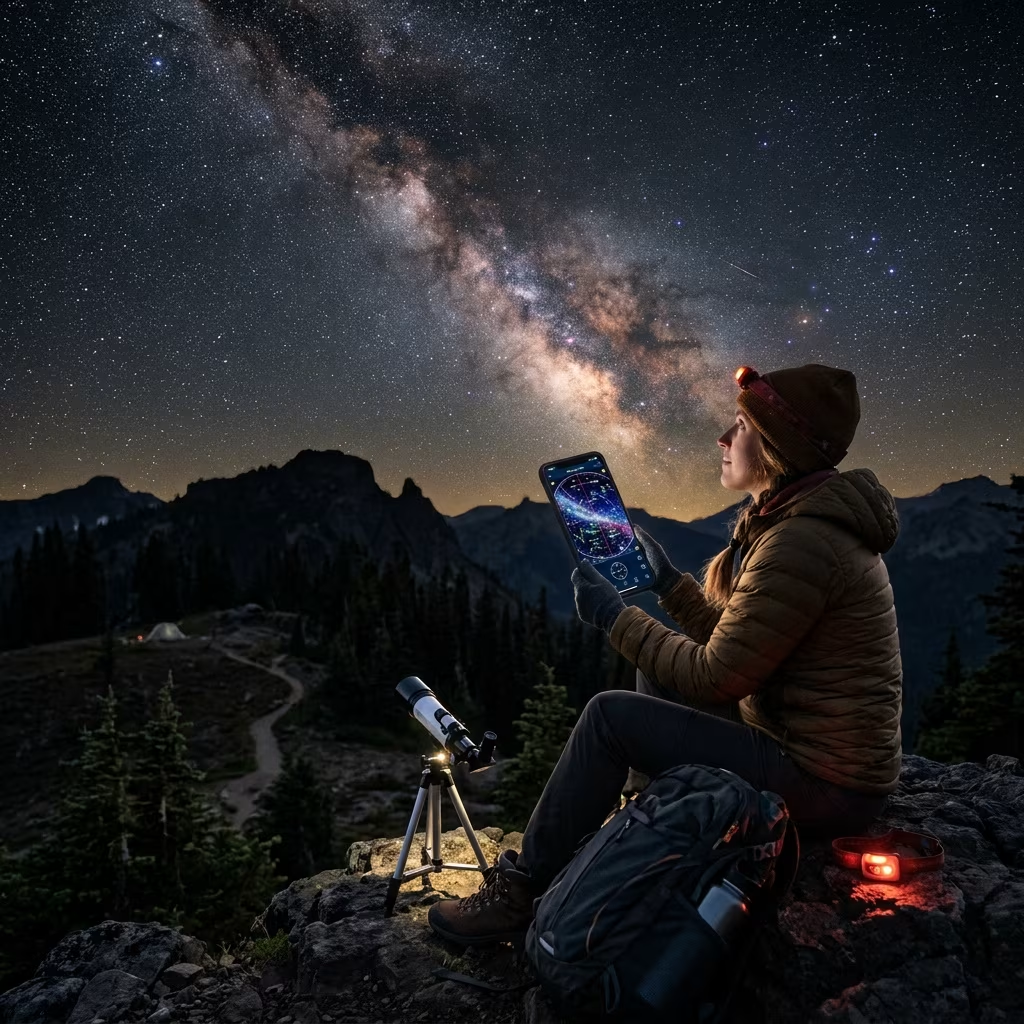
Stargazing has been transformed in recent years by mobile astronomy apps. Whether you’re a beginner eager to learn your first constellations or a seasoned observer tracking deep-sky objects, a stargazing app can help you unlock the wonders of the night sky. With real-time augmented reality (AR) displays, comprehensive celestial databases, and smart notification systems, these apps have made it possible for everyone to bring the universe closer than ever before.
Why Use a Stargazing App?
Before the rise of smartphones, amateur astronomers relied on printed star charts and planispheres for celestial navigation. While traditional tools remain valuable, astronomy apps now add a layer of interactivity and precision unattainable with paper:
- Instant identification of stars, planets, and constellations simply by pointing your device at the sky.
- Event alerts for meteor showers, ISS flyovers, or planetary conjunctions.
- Night mode settings to preserve night vision with red illumination.
- Location-based features that customize recommendations for your current sky.
- Some apps control telescopes or allow collaborative observing sessions.
With many apps offering both free and premium features, astronomy has never been more accessible—no matter your level of experience.
The Top Stargazing Apps of 2025
This section presents a detailed look at the finest stargazing apps available today, comparing their features, strengths, and any important considerations.
1. Sky Tonight
- Availability: App Store, Google Play, Huawei AppGallery
- Pricing: Free; Lifetime Premium ($12.99), Subscription ($0.99/month), Free Trial (1 week)
- Main Features: Massive free object database, event forecasts, built-in weather predictions, customizable notifications, astronomy articles
- User Experience: Highly rated for ease of use and design. All-space object access is free, though some content in each tab is blurred unless premium is activated.
- Noteworthy: Weather prediction and event alerts integrated, making stargazing planning seamless.
- Drawbacks: Settings are spread across multiple sections and may require acclimatization.
Why it’s best: Sky Tonight is celebrated as the most comprehensive free stargazing app for both newcomers and advanced observers, offering access to an unparalleled database and reliable features for planning observations.
2. SkySafari
- Platform: iOS, Android
- Pricing: Plus ($17.99), Pro ($21.99)
- Main Features: Real-time star maps, telescope control via Wi-Fi, detailed celestial databases, logbook, ‘Sky Tonight’ highlight, session planning, red-light night mode
- Database: Plus shows 2.5 million stars and 32,000 deep-sky objects; Pro expands to 100 million stars, 3 million galaxies, 750,000 Solar System objects
- Community Tools: Observation sharing via SkyCast; real-time viewing through ‘OneSky’
Who it’s for: Advanced astronomers who want professional-grade tools and telescope integration, as well as hobbyists seeking rich databases. The steep learning curve is off-set by its deep feature set.
3. Star Walk 2
- Platforms: iOS, Android
- Pricing: Free (with ads), Premium options available
- Main Features: Gorgeous AR sky overlays, nightly event calendar, educational content, and deep-sky objects visualization
- Special Touch: Time travel mode to view the sky in the past or future; 3D models of constellations
Best for: Beginners and casual users who want an intuitive, visually stunning, and educational app. The app’s clean interface makes it particularly popular with families and educators.
4. Stellarium Mobile
- Platforms: iOS, Android
- Pricing: Free with in-app purchases for advanced features
- Main Features: Realistic sky simulation; vast star, planet, and deep-sky object catalogs; AR overlay; Telescope control
- User Appeal: Popular for its near-photographic realism and scientific accuracy
Why choose it: Stellarium Mobile is highly respected for educational and hobbyist use, serving as a lightweight version of the acclaimed desktop software.
5. Star Chart
- Platforms: iOS, Android
- Pricing: Free basic app, paid add-ons for more objects/features
- Main Features: Point-and-identify AR interface, interactive sky navigation, object details and mythology, time-travel views
Who it’s for: Those seeking simple, user-friendly night sky exploration. Useful for guiding beginners and children on their first star-hopping adventures.
6. Night Sky
- Platforms: iOS only
- Pricing: Free with premium upgrade options
- Main Features: Responsive AR sky overlays, celestial event notifications, astronomy news, and Apple Watch support
Special features: Visualization of satellites and the ISS, as well as seasonal stargazing guides. Integration with Apple’s ecosystem makes it a good fit for iOS users seeking seamless experience.
7. SkyView
- Platforms: iOS, Android
- Pricing: Free and paid versions
- Main Features: Clean AR display, object tracking, location sharing, user-friendly object discovery
- Popular With: Beginners and casual users who value an intuitive experience over complex features
Comparative Overview: Essential Features
| App | Free Version | Augmented Reality | Telescope Control | Notifications & Events | Cross-Platform |
|---|---|---|---|---|---|
| Sky Tonight | Yes | Yes | No | Yes | Yes |
| SkySafari | No | Yes | Yes | Yes | Yes |
| Star Walk 2 | Yes | Yes | No | Yes | Yes |
| Stellarium Mobile | Yes | Yes | Yes (premium) | Limited | Yes |
| Star Chart | Yes | Yes | No | No | Yes |
| Night Sky | Yes | Yes | No | Yes | iOS only |
| SkyView | Yes | Yes | No | Limited | Yes |
How to Choose the Best Stargazing App for You
With so many options, the right app for your needs will depend on several factors:
- Experience level: Beginners may prefer apps like Star Walk 2 or Sky Tonight for visual simplicity. Advanced users may opt for SkySafari or Stellarium for technical depth.
- Platform: Ensure the app is available for your device (Android, iOS, tablet, smart watches).
- Key features: If you want telescope control, prioritize SkySafari or Stellarium. For AR overlays or educational content, Star Walk 2 and Sky Tonight excel.
- Price considerations: Many apps are free or have limited free versions; premium unlocks add new capabilities for regular observers.
- Event alerts and planning: Sky Tonight and Night Sky have strong notification systems and are great for event-focused observers.
Essential Tips for Stargazing With Mobile Apps
- Enable red-light/night modes to prevent your eyes from losing their dark adaptation.
- Turn on location services for the most accurate sky maps and event predictions.
- Download offline data if your stargazing area has poor cell coverage.
- Regularly check for app updates—astronomy apps frequently add new celestial events and features.
- Explore built-in guides and articles to expand your understanding of cosmic phenomena.
Frequently Asked Questions (FAQ)
Q: Are stargazing apps accurate enough for real observations?
A: Yes, most modern stargazing apps rely on high-quality astronomical data and use your precise GPS location, making them accurate guides under real skies. However, always check for app updates for the latest event information.
Q: Can I connect my telescope to a stargazing app?
A: Some apps like SkySafari and Stellarium Mobile offer telescope control via Wi-Fi or Bluetooth, provided your telescope is compatible. This allows you to command your telescope to point directly at selected objects from your app.
Q: Is there a completely free stargazing app?
A: Sky Tonight offers the largest selection of free celestial data and tools, while Star Chart and Stellarium also include robust free versions.
Q: Do stargazing apps work in light-polluted cities?
A: Absolutely! While urban light pollution may restrict what’s visible to the naked eye, apps can show you what’s above you, recommend objects that are possible to see, and simulate a dark sky. Many even factor in light pollution forecasts when suggesting objects or events.
Q: Can I use these apps for astrophotography?
A: Yes. While not all apps directly control cameras, many provide vital information on object positions, transit times, and best viewing opportunities—essential for planning astrophotography sessions.
Final Thoughts: Discover the Cosmos in Your Pocket
Modern stargazing apps place a universe of information at your fingertips. Whether you want to identify a mystery star, plan a family meteor shower watch, or control a computerized telescope, there’s an app perfectly suited for your needs. Feature-rich options like Sky Tonight and SkySafari empower both new and veteran astronomers, ensuring everyone can enjoy the beauty and wonder of our night sky—wherever and whenever inspiration strikes.
References
- https://www.space.com/32061-mobile-stargazing-astronomy-apps.html
- https://www.space.com/31921-mobile-stargazing-apps-smartphone-astronomy.html
- https://www.skyatnightmagazine.com/top-astronomy-kit/best-astronomy-stargazing-apps
- https://astrobackyard.com/astronomy-apps-for-stargazing/
- https://www.astronomy.com/observing/best-astronomy-apps-for-stargazing/
- https://www.tomsguide.com/round-up/best-stargazing-apps
- https://www.cnet.com/tech/services-and-software/best-stargazing-apps/
- https://vitotechnology.com/news/top-stargazing-apps
- https://www.astronomy.com/observing/best-astronomy-apps-for-stargazing
- https://spacegeek.co.uk/top-5-stargazing-apps-you-need-in-2024-for-every-space-enthusiast/
- https://www.howtogeek.com/the-best-stargazing-apps/
- https://observationhobbies.com/astronomy/best-apps-for-space-lovers/
- https://www.youtube.com/watch?v=WRnOKDBHfrQ
- https://www.wideopenspaces.com/best-stargazing-apps/
- https://starsbynight.es/blogs/2025/3/24/exploring-the-night-sky-a-guide-to-stargazing-apps-and-apple-watch-integrationnbsp
- https://vitotechnology.com/news/how-to-choose-a-stargazing-app