


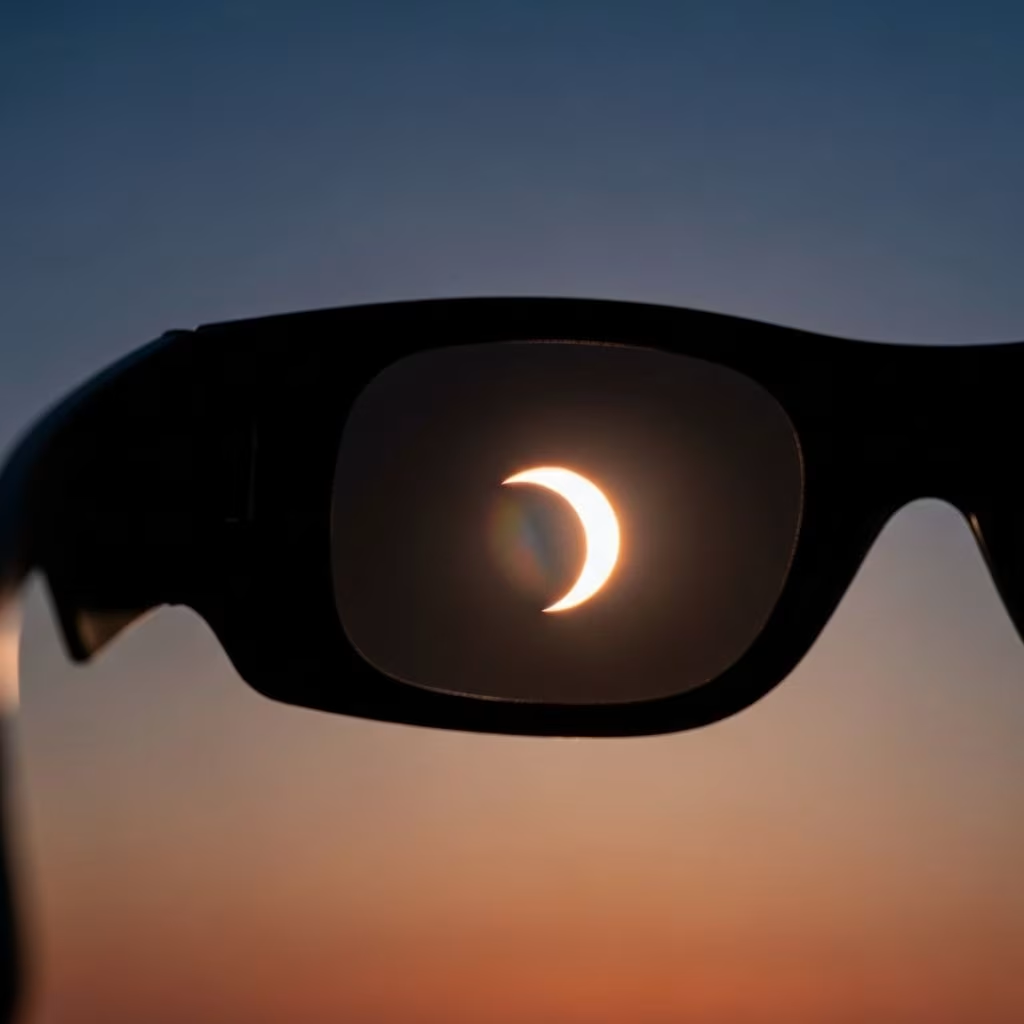
Solar Eclipse Eye Safety: A Comprehensive Guide for Safe Viewing
Solar eclipses inspire awe and curiosity, drawing millions to gaze skyward and witness these rare astronomical events. However, viewing the Sun, whether fully or partially obscured, poses significant risks to eyesight if done improperly. This guide provides the facts, strategies, and vital warnings necessary to enjoy solar eclipses safely—whether total, partial, or annular.
What is a Solar Eclipse?
A solar eclipse occurs when the Moon passes between the Earth and the Sun, temporarily blocking all or part of the Sun’s disk. There are several eclipse types:
- Total solar eclipse: The Moon covers the entire Sun, creating several minutes of darkness during the day.
- Partial solar eclipse: The Moon covers part of the Sun’s disk, which remains visible.
- Annular solar eclipse: The Moon appears smaller than the Sun, leaving a bright ring around the lunar silhouette.
While the spectacle is unforgettable, serious eye injury can occur without proper precautions.
Why Direct Solar Viewing Is Dangerous
Looking directly at the Sun, even for a few seconds, exposes your eyes to intense visible and ultraviolet radiation, which can:
- Burn the retinas—the sensitive tissue at the back of your eyes.
- Cause permanent vision loss (solar retinopathy).
- Lead to blindness with prolonged exposure, especially during eclipse events.
These risks apply throughout the partial phases of an eclipse, and during an annular eclipse, when the Sun is never fully blocked.
Safe Eye Protection: Solar Viewing Glasses and Filters
To directly and safely watch a solar eclipse, the only approved methods are:
- Eclipse glasses or solar viewing glasses: Made with special-purpose solar filters that are much darker than regular sunglasses and block harmful rays.
- Handheld solar viewers: Also fitted with certified solar filters.
These glasses must meet the ISO 12312-2 international safety standard for solar viewing.
| Type | Level of Protection | Use Case |
|---|---|---|
| Eclipse Glasses/Certified Solar Viewers | Filters over 99.999% of sunlight | Safe for direct viewing of the Sun during partial/annular eclipses |
| Regular Sunglasses | Block only a small fraction of sunlight | Not safe for any eclipse viewing |
| Welder’s Glass (Shade 14 or higher) | Blocks hazardous rays | Can provide adequate protection if quality is confirmed |
| Homemade Filters, Smoked Glass, Film | Ineffective or highly variable | Never safe for solar viewing |
What Not to Use
- Sunglasses (any type)
- Color film
- Medical X-ray film
- Smoked glass
- CDs, DVDs, floppy disks
According to NASA and the American Astronomical Society, none of these materials offer the required protection and may still expose eyes to dangerous solar intensity.
Viewing the Eclipse Safely: Direct and Indirect Methods
Direct Viewing with Eclipse Glasses or Filters
To ensure safe eclipse observation:
- Inspect your eclipse glasses or solar viewers before each use. Discard if scratched, torn, or damaged.
- Always supervise children to ensure correct and consistent use of protection.
- Never use eclipse glasses when looking through cameras, telescopes, or binoculars unless those devices themselves are fitted with certified solar filters. The concentration of sunlight through optical devices can destroy both your glasses and your vision instantly.
- Eclipse glasses should be worn whenever any bright portion of the Sun is visible—even the smallest sliver is unsafe for unprotected eyes.
Indirect Viewing: Projections and Pinhole Cameras
Indirect observation lets you enjoy eclipse events safely and is especially suited for group settings and children. This method uses a projection, rather than direct exposure:
- Pinhole projector: Simple DIY devices that project the Sun’s image onto a surface.
- Box projector: A cardboard box setup for projecting the eclipse.
- Telescope or binocular projection: Aim the instrument at the Sun and project its image (using only the projection, not looking through the device itself!).
Important tip: Never look through the viewfinder, eyepiece, or finder scope of optical devices aimed at the Sun, whether projecting or not.
Photo & Video Tips
Capturing images or footage of the solar eclipse is popular, but take these precautions:
- Attach a solar filter (meeting ISO 12312-2 standard) to the front of your camera lens, binoculars, or telescope.
- Never rely on camera viewfinders or screens alone to protect your eyes from solar rays.
- Do not attempt to photograph or observe the Sun through any device without certified solar filtering equipment—this can concentrate solar energy through optics and cause eye injury.
Understanding Eclipse Phases: When Protection Is Essential
| Eclipse Phase | Eye Protection Required? | Explanation |
|---|---|---|
| Partial Eclipse | Yes | The Sun is only partly covered—dangerous rays still reach your eyes. |
| Totality (Total Eclipse) | No (briefly) | When the Moon entirely blocks the Sun, darkness falls for minutes. Only during totality can you remove protection, but must put it back on as soon as any sunlight reappears. |
| Annular Eclipse | Yes | The Sun’s bright ring is always visible—never safe for unprotected viewing. |
Key Safety Timings
- Partial phases before totality: Eye protection mandatory.
- Totality: Remove protection only when sure the Sun is fully covered.
- Partial phases after totality: Eye protection mandatory again.
If you are uncertain about the timing of totality, keep your eclipse glasses on at all times for safety.
How to Choose and Use Eclipse Glasses
Selecting Safe Products
- Choose glasses/viewers certified to ISO 12312-2.
- Check reputable supplier lists from astronomical societies or NASA recommendations.
- Consider welder glass (shade 14+) if quality is verified, but grading can vary between countries.
Discard any solar viewer that is scratched, wrinkled, punctured, or older than three years. Do not attempt to repair damaged viewers—purchase replacements before eclipse day.
Proper Use of Eclipse Glasses
- Wear glasses for the entire duration of partial phases.
- Remove only during full totality, if applicable, and reapply immediately as sunlight returns.
- Do not use eclipse glasses in conjunction with camera optics, binoculars, or telescopes without additional solar filters.
Special Precautions for Children and Groups
Children’s eyes can be more vulnerable to damage, and excitement may lead to improper use of safety gear. Always:
- Supervise children closely throughout the eclipse event.
- Provide clear, simple instructions before the eclipse begins.
- Demonstrate safe viewing techniques with indirect methods (pinhole cameras, projections).
- Double-check each child’s eclipse glasses for fit and condition.
Frequently Asked Questions (FAQs)
Q: Why are regular sunglasses unsafe for viewing a solar eclipse?
A: Sunglasses do not block enough light or harmful spectrum (infrared and ultraviolet rays) to prevent eye damage from staring at the Sun, regardless of darkness or polarization. Only certified solar viewing filters provide adequate protection.
Q: Do eclipse glasses expire or degrade?
A: Yes. Eclipse glasses can degrade over time, especially if exposed to moisture, sun, or physical damage. Always inspect before use, discard if older than three years or if the manufacturer recommends replacement.
Q: Can I watch a solar eclipse through a window or windshield?
A: No. Glass filters sunlight unevenly and does not block harmful rays. Viewing through windows, windshields, or glass doors without certified solar filters is unsafe.
Q: Is it safe to use cameras, binoculars, or telescopes with eclipse glasses?
A: No. Eclipse glasses are not designed to withstand concentrated sunlight from additional optics. Use a dedicated solar filter attached to the front of any lens or telescope during observations or photography.
Q: How do I make a pinhole projector?
A: Punch a small hole in stiff paper or tin foil and let sunlight pass through onto a second sheet; the resulting spot is a safe projection of the eclipse. Detailed instructions can be found on NASA’s eclipse safety websites.
Q: What should I do if I experience eye discomfort during or after an eclipse?
A: If you experience blurred vision, sensitivity, or discomfort after viewing the eclipse, consult an eye care professional immediately.
Summary: The Essentials for Safe Solar Eclipse Viewing
- Never look directly at the Sun without proper eye protection, except during the brief totality of a total solar eclipse.
- Use ISO 12312-2 certified eclipse glasses or handheld solar viewers for all direct viewing.
- For indirect viewing, employ pinhole projectors or other projection techniques to observe safely.
- Supervise children and inspect all viewing devices prior to use.
- Never use cameras, telescopes, or binoculars without certified solar filters.
- Discard damaged or expired eclipse glasses.
By following these guidelines, you can experience the wonder of solar eclipses safely and leave with both memories and healthy vision. To find recommended suppliers and detailed instructions for safe viewing products, consult reputable astronomical societies and NASA resources.
References
- https://www.space.com/35555-total-solar-eclipse-safety-tips.html
- https://www.space.com/best-solar-viewing-kit
- https://science.nasa.gov/eclipses/safety/
- https://science.nasa.gov/eclipses/future-eclipses/eclipse-2024/safety/
- https://en.wikipedia.org/wiki/Solar_eclipse
- https://www.youtube.com/watch?v=1KWN35jRae4
- https://www.timeanddate.com/eclipse/eclipse-tips-safety.html
- https://www.youtube.com/watch?v=S3wKzsbCw8M
- https://eclipse2026.is/eye-safety
- https://eclipse23.com/blogs/eclipse-education/eye-safety-guide-for-safe-viewing-of-solar-eclipses
- https://www.livescience.com/space/best-solar-eclipse-glasses
- https://eclipsewise.com/solar/SEhelp/SEviewing.html
- https://eclipse.aas.org/eye-safety
- https://www.3dglassesonline.com/solar-eclipse-eye-safety-tips/
- https://assileye.com/blog/safely-look-at-a-solar-eclipse/


