The Solar System: Our Cosmic Neighborhood
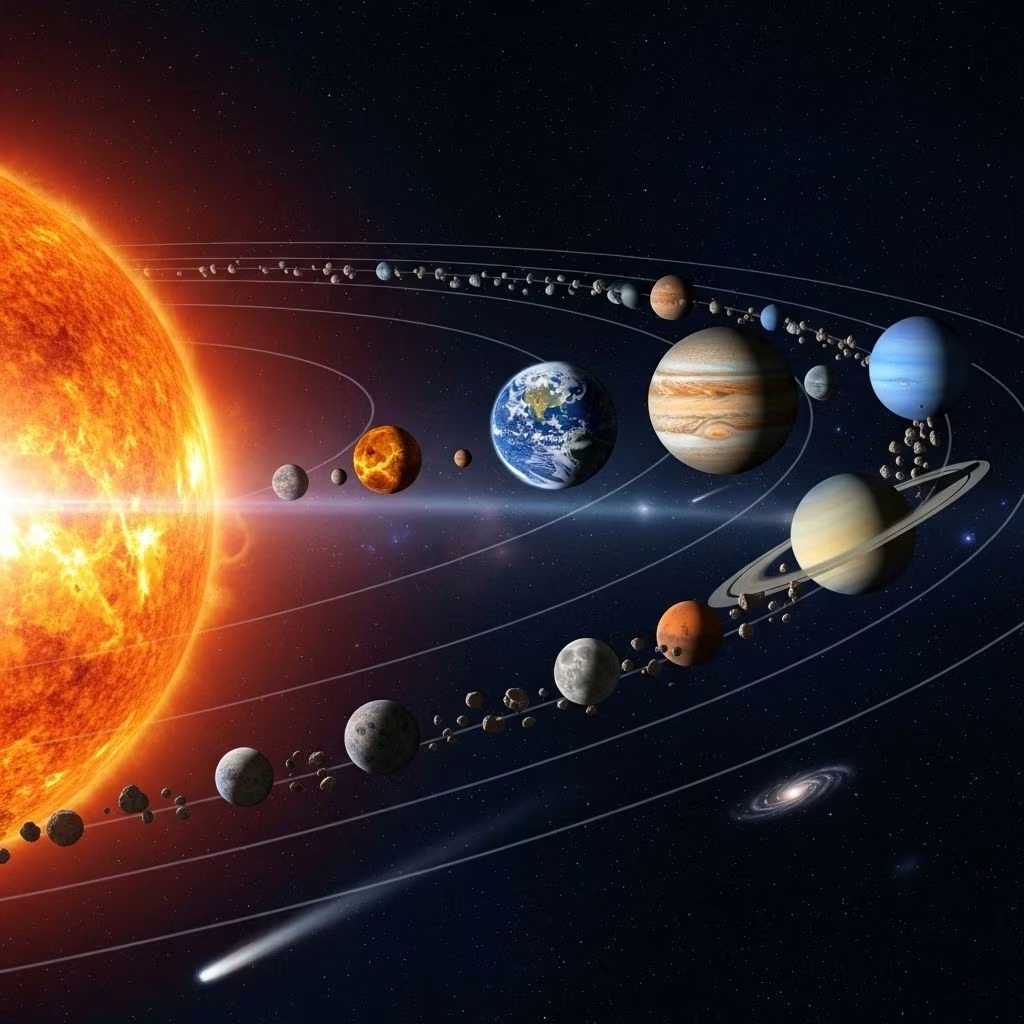
The solar system is a vast kingdom ruled by our star, the Sun. It is home to eight distinct planets and a multitude of smaller celestial bodies, all bound by the gravity and light of the Sun. Together, these worlds, their satellites, and a wide assortment of comets and asteroids form the planetary system that we call home.
Each planet offers a different perspective on planetary formation and evolution, and their moons provide intriguing clues about the origins and diversity of the solar system. Let us embark on a visual and scientific expedition, exploring the solar system from its fiery center outward to the cold reaches beyond Neptune.
The Sun: Heart of the Solar System
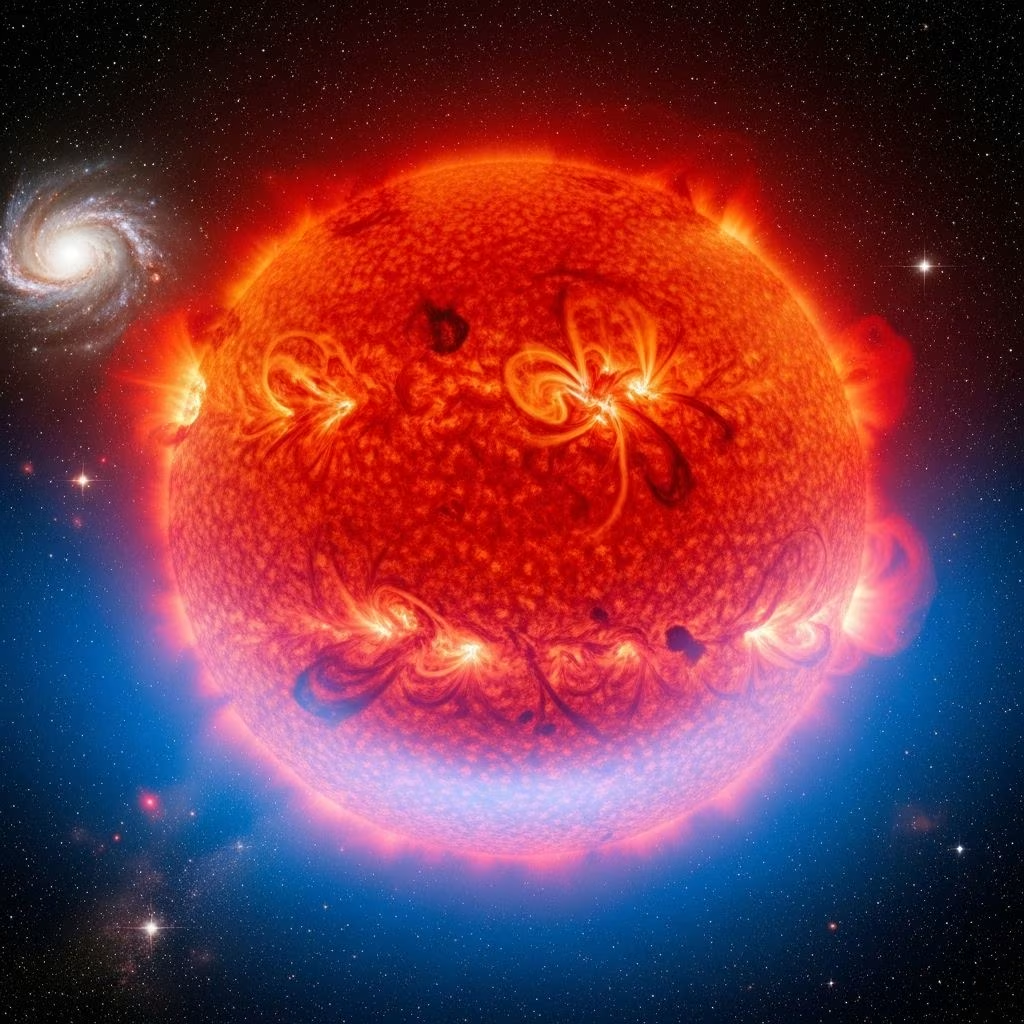
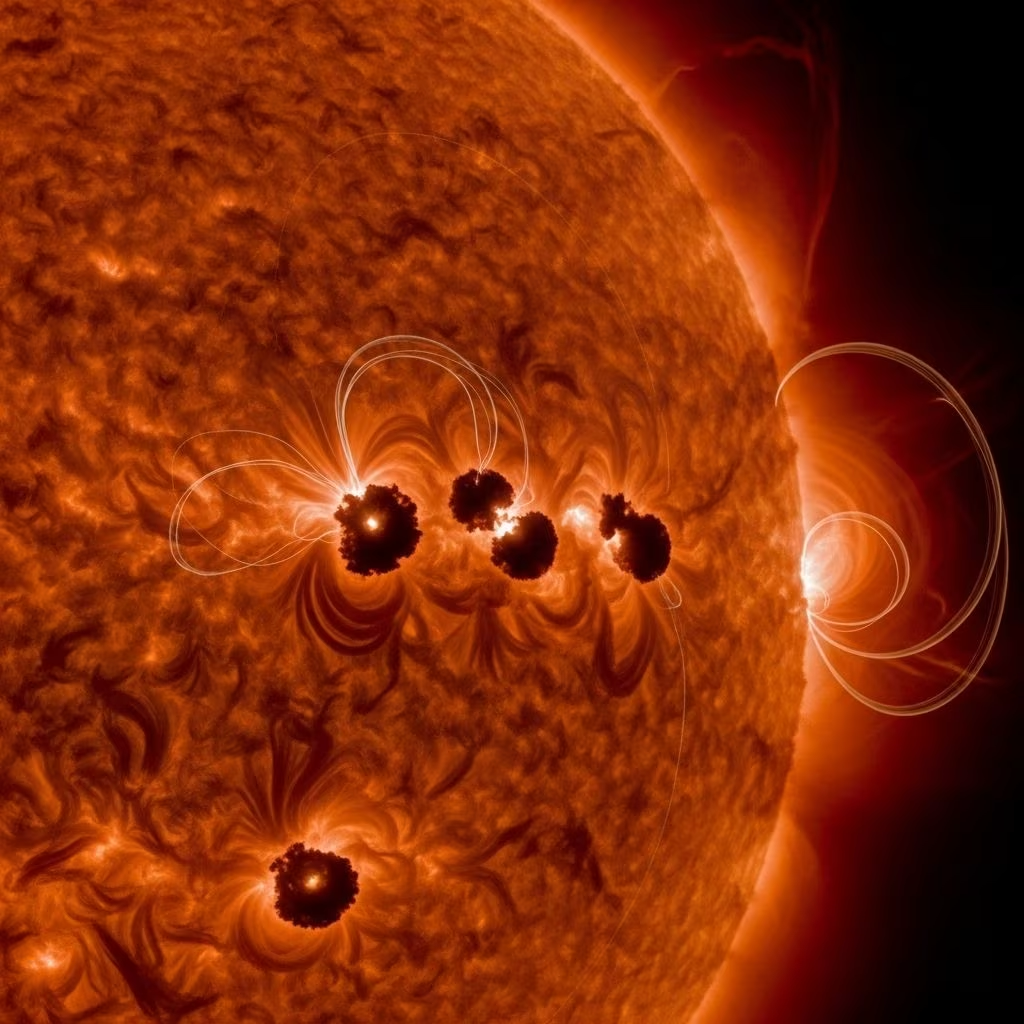
The Sun is the engine and anchor of our planetary system. This enormous sphere of hot plasma accounts for more than 99% of the solar system’s mass and powers life on Earth with its energy.
- Diameter: About 1.4 million kilometers
- Mass: 330,000 times Earth’s
- Composition: Mainly hydrogen and helium
- Energy output: Emits light and heat through nuclear fusion
Its immense gravity holds all planets, asteroids, comets, and other objects in orbit, shaping the architecture of our solar system.
Mercury: The Innermost Planet
Mercury is the closest planet to the Sun and is enveloped by extremes.
- Diameter: 4,880 kilometers
- Surface: Heavily cratered; resembles Earth’s Moon
- Atmosphere: Extremely thin; composed mostly of oxygen, sodium, and hydrogen
- Moons: None
Due to its proximity to the Sun, Mercury endures scorching days and frigid nights, with temperatures varying over 600°C. Its lack of moons and atmosphere highlights its simple, yet intriguing character.
Venus: The Shrouded World
Venus, Earth’s twin in size, is veiled in poisonous clouds and seismic activity.
- Diameter: 12,104 kilometers
- Surface: Covered by volcanoes and highland regions
- Atmosphere: Thick CO2; clouds of sulfuric acid
- Moons: None
The runaway greenhouse effect on Venus results in surface temperatures exceeding 460°C and pressures over 90 times Earth’s atmospheric pressure.
Earth: The Water Planet
Earth stands out as the only known planet to host life, with a balanced environment and abundant water.
- Diameter: 12,742 kilometers
- Surface: 71% water, continents, and atmosphere rich with nitrogen and oxygen
- Moons: 1 (the Moon)
Our planet’s atmosphere shields life while its magnetic field protects it from cosmic radiation. Earth’s singular moon plays a crucial role in stabilizing the planet’s axial tilt and enabling ocean tides.
The Moon
- Diameter: 3,474 kilometers
- Surface: Features vast plains, craters, and mountains
- Notable Features: Faces have been unchanged for billions of years due to lack of atmosphere
The Moon is Earth’s constant companion and has been extensively studied, serving as a stepping stone for space exploration.
Mars: The Red Planet
Mars is recognized for its rusty hue, polar ice caps, and seasonal dust storms. It is of profound interest for future human exploration.
- Diameter: 6,779 kilometers
- Surface: Barren deserts, gigantic volcanoes (Olympus Mons), and canyons (Valles Marineris)
- Atmosphere: Thin, mostly CO2
- Moons: 2 (Phobos and Deimos)
Mars’ two small, irregularly shaped moons, Phobos and Deimos, are likely captured asteroids.
- Phobos: 22.2 km diameter; orbits close to Mars
- Deimos: 12.6 km diameter; orbits farther out
Jupiter: Giant of the Planets
Jupiter is the largest planet, a gas giant swirling with stormy clouds and dominated by powerful gravity.
- Diameter: 139,820 kilometers
- Composition: Hydrogen, helium
- Key Feature: The Great Red Spot – a massive storm
- Moons: At least 97 confirmed moons
The Galilean Moons
- Io: Volcanically active, with hundreds of volcanoes
- Europa: Smooth icy surface; may harbor subsurface oceans
- Ganymede: Largest moon in the solar system
- Callisto: Heavily cratered and ancient terrain
Jupiter’s moons offered the first confirmation that other worlds could harbor satellites, revolutionizing astronomy.
Saturn: Lord of the Rings
Saturn is known for its spectacular ring system and extensive moon population.
- Diameter: 116,460 kilometers
- Composition: Hydrogen, helium
- Rings: Made of ice and rock particles; the most extensive in the solar system
- Moons: Over 274 confirmed moons
Major Moons
- Titan: Largest; features rivers, lakes, and seas of liquid methane and ethane
- Enceladus: Icy surface and subsurface ocean; cryovolcanism detected
- Other significant moons: Mimas, Tethys, Dione, Rhea, Iapetus
Saturn’s vast entourage of moons range from tiny moonlets buried in its rings to large, planet-like bodies.
Uranus: The Tilted Ice Giant
Uranus perplexes astronomers with its extreme axial tilt and faint ring system.
- Diameter: 50,724 kilometers
- Atmosphere: Hydrogen, helium, methane (gives bluish color)
- Axial tilt: 98 degrees; rotates almost on its side
- Moons: 29 confirmed
Uranus’s major moons, including Titania, Oberon, Umbriel, Ariel, and Miranda, are mostly composed of water ice and rock.
Neptune: The Distant Blue World
Neptune reigns at the solar system’s frontier with its deep blue color and active climate.
- Diameter: 49,244 kilometers
- Atmosphere: Hydrogen, helium, methane
- Weather: Features the fastest winds in the solar system
- Moons: 16 confirmed
Neptune’s largest moon, Triton, is geologically active and features nitrogen geysers. Triton may be a captured object from the Kuiper Belt.
Dwarf Planets and Minor Bodies
Dwarf planets are celestial bodies that orbit the Sun, are nearly round, but have not cleared their orbits of other debris. Notable dwarf planets include Pluto, Eris, Haumea, Makemake, and Ceres.
- Pluto: Once the ninth planet, now recognized as a dwarf planet with five known moons.
- Ceres: Largest object in the asteroid belt; may have water ice poles.
The solar system is also populated by innumerable asteroids, comets, and meteoroids scattered throughout its vast expanse.
Solar System Moons: Diversity and Discovery
Moons, or natural satellites, present remarkable diversity in the solar system. There are over 431 confirmed natural satellites orbiting the planets and many more around dwarf planets and asteroids.
Moons can be organized as:
- Regular moons: Orbit close to the planet’s equatorial plane and are likely formed from the same material as their planet.
- Irregular moons: Orbit at tilted angles or retrograde; likely captured asteroids.
Some moons are so large and geologically active they would qualify as planets if they orbited the Sun directly.
Summary Table: Planetary Moons
| Planet | Moons |
|---|---|
| Mercury | 0 |
| Venus | 0 |
| Earth | 1 |
| Mars | 2 |
| Jupiter | 97 |
| Saturn | 274 |
| Uranus | 29 |
| Neptune | 16 |
Asteroids, Comets, and Meteoroids
Apart from planets and moons, the solar system contains a wealth of smaller bodies.
- Asteroids: Rocky or metallic minor planets, mostly in the asteroid belt between Mars and Jupiter
- Comets: Icy objects that develop tails as they approach the Sun
- Meteoroids: Small rocky fragments; meteors if they enter Earth’s atmosphere, meteorites if they reach the surface
These objects are crucial to understanding planetary formation and the solar system’s evolution.
Frequently Asked Questions (FAQs)
Q: How many planets in our solar system have no moons?
A: Only Mercury and Venus have no moons.
Q: Which planet has the most moons?
A: Saturn has the most confirmed moons, with over 274 known satellites.
Q: What is the largest moon in the solar system?
A: Ganymede, orbiting Jupiter, is the largest moon in the solar system.
Q: What qualifies a celestial body as a moon?
A: A moon is a natural satellite that orbits a planet or a dwarf planet.
Q: What is the difference between an asteroid, comet, and meteoroid?
A: Asteroids are rocky objects, comets are icy bodies that develop gas tails near the Sun, and meteoroids are small rocky fragments that may enter Earth’s atmosphere.
Further Reading & Exploration
- Explore interactive solar system models with NASA’s Solar System Exploration portal.
- Study missions like Voyager and Cassini for in-depth planetary and moon discoveries.
- Track new findings of moons and minor planets through ongoing telescope surveys.
This guided tour delivers a foundational look at our solar system’s primary worlds and their satellites. Each planet and moon helps unravel the complex history and dynamic nature of our cosmic home.
References
- https://science.nasa.gov/solar-system/
- https://en.wikipedia.org/wiki/List_of_natural_satellites
- https://science.nasa.gov/solar-system/moons/
- https://en.wikipedia.org/wiki/Solar_System
- https://www.britannica.com/science/solar-system/Planets-and-their-moons
- https://courses.lumenlearning.com/suny-astronomy/chapter/overview-of-our-planetary-system/
- https://www.go-astronomy.com/planets/planet-moons.htm
- https://study.com/academy/lesson/solar-system-overview.html
- https://www.cs.utexas.edu/~mitra/csSummer2025/hsra/astro_notes/moons.html
- https://www.youtube.com/watch?v=22VTx1GE5uA
- https://www.youtube.com/watch?v=e8YzKyot4Pc
- https://www.britannica.com/topic/list-of-moons-2033266
- https://www.cs.utexas.edu/~mitra/csSummer2024/hsra/astro_notes/moons.html
- http://www.spacetoday.org/SolSys/Moons/MoonsSolSys.html
- https://www.slideshare.net/slideshow/moons-of-the-solar-system-an-outline-of-moons-in-the-solar-system-edd2/267434021
- https://study.com/academy/lesson/video/solar-system-overview.html
- https://www.vedantu.com/physics/planets-and-their-moons
- https://www.planetary.org/articles/our-favorite-moons-of-the-solar-system