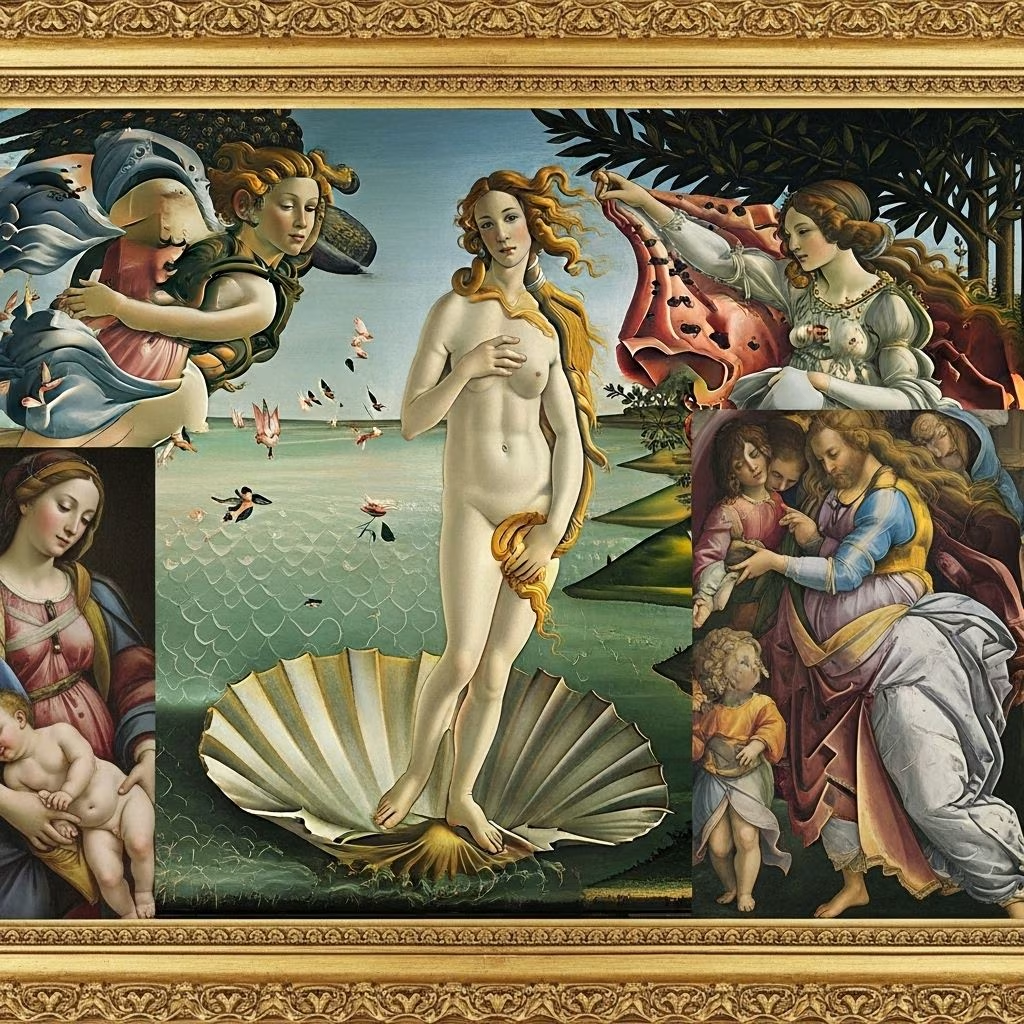
Masterpieces of the Uffizi Gallery: A Renaissance Journey
The Uffizi Gallery stands as Florence’s treasure house of art, drawing visitors from around the world for its unrivaled collection of Renaissance masterpieces. On a single elegant floor, you step through centuries of artistic revolution, discovering the stories, innovations, and genius that redefined Western culture. This guide explores the Uffizi’s evolution, the Medici family’s crucial role, and the legacy of artists like Giotto, Botticelli, Leonardo, Michelangelo, and Raphael.
Why Visit the Uffizi? A Gateway to the Renaissance
No trip to Florence is complete without touring the Uffizi Gallery. Housed in the former Medici offices (‘uffizi’ means offices in Italian), this museum lets you experience Italian art’s seismic leap from the medieval to the modern. Highlights include:
- A sweep through art history from the 12th to the 17th centuries
- Iconic works from the Florentine ‘Class of 1500’, including Botticelli, Leonardo da Vinci, Michelangelo, and Raphael
- Stunning Gothic altarpieces, Renaissance portraits, and Mannerist masterpieces
- An immersive encounter with the evolution of realism, perspective, symbolism, and emotion in art
The Medici Legacy: Power, Patronage, and Art
The Medici family shaped Florence’s destiny from their grand residence, the Palazzo Vecchio. As powerful bankers and patrons, they cultivated the city’s greatest minds in science and art. Next door to the palace stood their administrative offices—now the space housing the Uffizi Gallery.
Key aspects of the Medici legacy:
- Ruled Florence for generations, transforming it into a Renaissance hub
- Commissioned and supported artists including Leonardo, Botticelli, and Michelangelo
- Collected and preserved Italy’s finest paintings, now exhibited at the Uffizi
The Visitor Experience: Planning Your Uffizi Visit
The Uffizi’s popularity means lines can be daunting. To make the most of your visit:
- Book tickets in advance – Secure your entry by reserving online or purchasing a museum pass
- Travel tip: Arrive early, bring a guidebook, and wear comfortable shoes; the collection is vast, and the masterpieces beckon room after room
- Begin your tour with a sense of the journey: you will traverse centuries of art on a single floor, starting with medieval Gothic altarpieces and culminating in the heights of Renaissance innovation
A Journey Through Art History: Gothic to Renaissance
The heart of the Uffizi’s collection is its breathtaking walk through the evolution of Western art—from gilded, symbolic medieval paintings to the vibrant realism of the Renaissance.
Gothic Altarpieces: Faith and Symbolism
Before the Renaissance, Gothic art dazzled Florence’s citizens. High, golden altarpieces—like Simone Martini’s Annunciation—captured stories from the Bible with symbols rather than lifelike realism.
- Gold leaf backgrounds represent the holy and eternal
- Figures are stacked and two-dimensional, with little sense of depth
- Symbolism takes precedence over naturalism; angels may float in vertical rows, and narrative panels unfold like painted manuscripts
These dazzling pieces were designed to inspire awe and devotion in an era before naturalistic perspective.
The Dawn of the Renaissance: Discovering Realism
With the Renaissance, artists in Florence pioneered naturalism and perspective, breathing life and depth into their paintings:
- Giotto challenged old forms, leading the shift toward three-dimensional figures—a critical step from symbolic to realistic art
- Lorenzo Ghiberti’s Gates of Paradise doors (not inside the Uffizi, but nearby) exemplified the new depth and perspective, revolutionizing visual storytelling
- The city’s artists studied anatomy, observed light, and strove to make the divine human and familiar
Icons of the Uffizi: Renaissance Masters
| Artist | Signature Work(s) in the Uffizi | Significance |
|---|---|---|
| Botticelli | Birth of Venus, Primavera | Celebrates myth, beauty, and Renaissance ideals with flowing lines and radiant color |
| Leonardo da Vinci | Annunciation | Exemplifies precision and the scientist’s approach to art: anatomical accuracy, composition, and profound silence |
| Michelangelo | Holy Family (Tondo Doni) | Dynamic figures, strong color, and the artist’s sculptural imagination on canvas |
| Raphael | Madonna of the Goldfinch | Graceful, harmonious composition that blends the power of Michelangelo and the delicacy of Leonardo |
| Parmigianino | Lady with the Long Neck | Striking example of Mannerism: elongated figures and emotional intensity post-Renaissance |
Botticelli: Poetry in Paint
Sandro Botticelli’s Birth of Venus and Primavera are among the Uffizi’s most celebrated canvases. These works usher viewers from religious to mythological subjects, bathing the viewer in color, elegance, and humanist joy:
- Birth of Venus: The goddess arrives on a shell at the moment of her creation; Botticelli’s figures are ethereal, capturing the ideal of beauty
- Primavera: An allegory of spring, brimming with ancient mythic symbolism and the promise of renewal
Leonardo da Vinci: Science and Soul
Leonardo’s Annunciation illustrates early mastery of depth, anatomy, and emotion—hallmarks of his drive to unite art with scientific observation. The quiet exchange between Gabriel and Mary, set against a lush Tuscan landscape, marks Leonardo as a pioneer of expressive, naturalistic painting.
Michelangelo: The Sculptor Paints
Michelangelo’s Holy Family, also known as the Tondo Doni, proves his genius reached beyond marble. The swirling, sculpted forms recall Michelangelo’s statues, while his use of color and energy foreshadows the intense emotions to come in Mannerism.
Raphael: Harmony and Grace
Raphael’s Madonna of the Goldfinch perfectly balances tender feeling and symmetrical beauty. Raphael synthesized the muscular dynamism of Michelangelo and the serene wisdom of Leonardo, giving his Madonnas an enduring air of gentle humanity.
Beyond the Renaissance: Mannerism and New Directions
After the peak of the Renaissance, artists found inspiration in exaggeration, elegance, and complexity. Parmigianino’s Lady with the Long Neck stretches the boundaries of proportion and presents sensuality with a sense of mystery.
Architectural Marvel: The Uffizi Building
The structure itself is part of the experience: designed by Giorgio Vasari for Cosimo I de’ Medici in the 16th century, the Uffizi was one of Europe’s first purpose-built “galleries.” The building’s long, U-shaped corridors were the Medici’s administrative heart and a bold architectural statement on the riverfront.
- Elegant, classical arches frame statues of Renaissance greats in the courtyard
- Inside, high windows flood the galleries with light, enhancing the luminous colors of Renaissance canvases
The Art of Storytelling: From Symbol to Realism
Walking the Uffizi, you witness the gradual transformation of art’s purpose. Medieval pieces narrate biblical stories to a largely illiterate public using symbols—gold haloes, stylized angelic hosts, and schematic perspective. The Renaissance sought not just to tell stories, but to invite the viewer into the scene, using:
- Scientific perspective: Creating space and depth, leading the eye into the landscape
- Anatomical study: Depicting the human body with unprecedented realism
- Emotion and drama: Giving saints, angels, and mythic figures human feeling
The result: a thrilling visual sweep from the gold-encrusted spirituality of the Middle Ages to the living, dynamic world of Renaissance Florence.
Practical Tips: Navigating the Uffizi
- Time your entry: Book tickets well in advance or use the Firenze Card; morning slots tend to be less crowded
- Guide resources: Audio guides and downloadable tours enhance your appreciation of each gallery
- Allow time: The Uffizi can be overwhelming—plan to spend at least two hours, more if you love art history
- Focus on highlights: Prioritize works by Botticelli, Leonardo, Michelangelo, Raphael, and key Gothic masters if your time is short
Frequently Asked Questions (FAQs)
Q: What famous works should I not miss in the Uffizi Gallery?
A: Must-sees include Botticelli’s Birth of Venus and Primavera, Leonardo da Vinci’s Annunciation, Michelangelo’s Holy Family (Tondo Doni), and Raphael’s Madonna of the Goldfinch. Also notable are masterpieces by Giotto and Parmigianino.
Q: How do I avoid long lines at the Uffizi?
A: Book tickets online well in advance or obtain a Firenze Card, which covers multiple museums and offers fast-track entry.
Q: How long should I allow for a visit?
A: Most travelers should plan 2–3 hours to explore the collection. Art enthusiasts could spend longer tracing every era and masterpiece. Arriving early or late in the day can help avoid peak crowds.
Q: Where is the Uffizi Gallery located?
A: The museum is in central Florence, adjacent to the Palazzo Vecchio and alongside the Arno River. Its central location makes it easily walkable from other major sites.
Q: Is the Uffizi Gallery suitable for children?
A: While primarily focused on art, the Uffizi’s rich stories and dramatic paintings can captivate older children, especially with a guide. For younger visitors, the scale can be overwhelming, so plan breaks or shorter visits.
Florence and the Uffizi: Living Legacy of the Renaissance
Florence is rightly called the ‘Cradle of the Renaissance,’ and the Uffizi Gallery is its greatest showcase. By walking these corridors, you follow the same path as popes, princes, and artists centuries ago—an immersive journey that leaves you awed at the achievements of humanity’s creative spirit.
The Uffizi is more than a museum. It is a celebration of imagination, faith, and inquiry—an essential stop for anyone seeking to understand the evolution of western art and the enduring power of beauty.
References
- https://www.ricksteves.com/watch-read-listen/video/uffizi-gallery
- https://www.youtube.com/watch?v=61uXUxmpKWg
- https://classroom.ricksteves.com/videos/the-uffizi-gallery-best-paintings-of-florentine-renaissance
- https://www.ricksteves.com/watch-read-listen/video/tv-show/florence-heart-of-the-renaissance
- https://blog.ricksteves.com/blog/florence-art/
- https://www.ricksteves.com/watch-read-listen/read/articles/making-museum-reservations-in-florence
- https://community.ricksteves.com/travel-forum/italy/best-uffizi-florence-tour-guide