


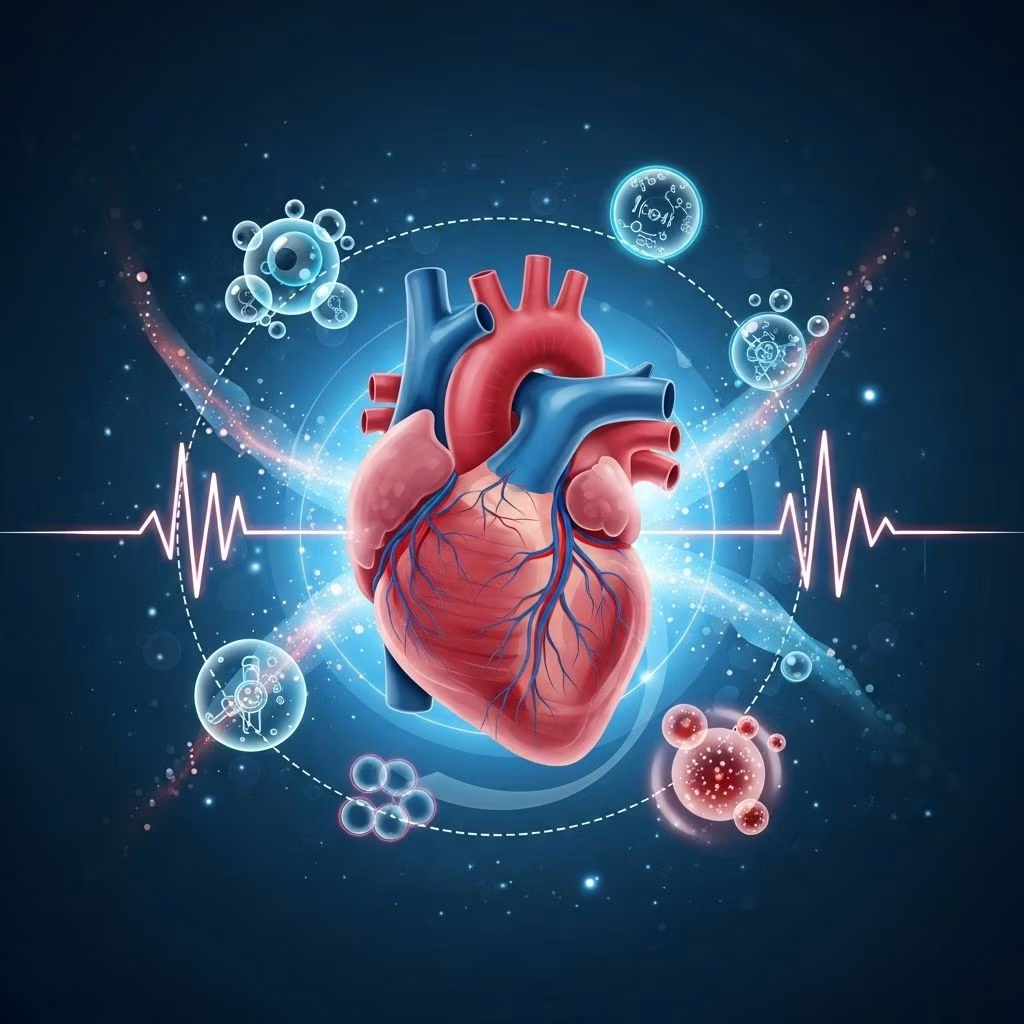
Exercise and Heart Disease: What Science Reveals
Heart disease remains a leading cause of illness and death worldwide. While medical treatments have advanced, regular exercise is one of the most powerful ways to both prevent and manage heart disease. This guide uncovers the science behind exercise and heart health, explains how movement repairs and protects your cardiovascular system, and offers actionable tips for all fitness levels.
Why Is Exercise So Important for Heart Health?
Exercise is often referred to as a “magic bullet” for heart health — and for good reason. The heart is a dynamic muscle, and like all muscles, it grows stronger and more resilient with regular use. Here’s a look at why experts consider physical activity essential for heart health.
- Lowers blood pressure by making the heart and arteries more efficient.
- Improves blood flow by encouraging development of new blood vessels and clearing blockages.
- Supports healthy cholesterol levels by increasing protective HDL and lowering harmful LDL.
- Reduces risk of heart disease, stroke, and type 2 diabetes by supporting overall metabolic health.
- Decreases inflammation, a key driver of vascular disease and heart attacks.
- Improves body weight, helping control obesity — a major heart risk factor.
- Enhances blood vessel function by supporting the cells that line your arteries.
How Exercise Repairs and Strengthens the Heart
Researchers once believed that exercise was only useful for preventing heart problems. In reality, evidence now shows exercise can also reverse certain kinds of heart damage and improve cardiac function, even in adults at risk for or diagnosed with heart disease.
- Reduces cardiac stiffness: Exercise helps the heart muscle remain flexible, so it pumps blood more efficiently.
- Promotes healing in the heart’s blood vessels by increasing angiogenesis — the formation of new vascular connections.
- Lowers levels of cardiac biomarkers (substances in the blood that signal heart stress or injury).
- Stabilizes plaque in arteries, reducing the chances of sudden events like heart attacks.
For example, a yearlong study found people with early signs of heart failure who exercised regularly had hearts that were less stiff and pumped blood more efficiently compared to those who remained inactive or did only light flexibility work.
The Cellular Science of Exercise and Heart Health
The benefits of exercise operate far below the surface:
- Boosts good cholesterol (HDL) and lowers bad (LDL).
- Improves insulin sensitivity, reducing risk for both diabetes and cardiovascular problems.
- Lowers systemic inflammation throughout the blood vessels and the body.
- Strengthens antioxidant defenses, protecting cells from oxidative stress.
- Promotes cellular repair, even in people with existing heart disease.
In short, exercise enhances nearly every molecular pathway related to cardiovascular health, helping your body avoid — and even recover from — the damage caused by modern sedentary habits.
Benefits of Exercise for Heart Health
- Lowering Blood Pressure: Each heartbeat becomes more efficient, leading to lower resting blood pressure.
- Increasing Blood Flow: The heart grows new capillaries, providing alternative routes for blood in case of blockages.
- Improving Cholesterol: Regular exercise boosts “good” HDL cholesterol levels and can decrease “bad” LDL cholesterol.
- Reducing the Risk of Heart Disease & Stroke: Active people have a significantly lower risk of heart events compared to those who are sedentary.
- Managing Arrhythmias: Exercise reduces the frequency and severity of rhythm problems like atrial fibrillation.
- Supporting Healthy Weight: Physical activity helps maintain or achieve a healthy weight, further reducing cardiovascular risk.
- Promoting Mental and Emotional Health: Exercise helps reduce stress, anxiety, and depression, which can impact heart health.
Common Types of Exercise for Cardiovascular Health
| Type of Exercise | Key Heart Benefits | How Often |
|---|---|---|
| Aerobic Exercise (walking, cycling, swimming, dancing) | Improves blood pressure, cholesterol, weight, and oxygen use | At least 150 minutes/week (moderate), or 75 minutes/week (vigorous) |
| Interval Training | Boosts cardiovascular fitness more efficiently; reduces stiffness | 1–3 sessions/week alongside regular aerobic exercise |
| Resistance/Strength Training (weights, resistance bands) | Builds muscle, lowers fat, improves insulin sensitivity | 2 or more days/week |
| Flexibility & Stretching (yoga, tai chi) | Improves overall mobility, may aid stress reduction | As often as desired |
Combining aerobic, strength, and flexibility training provides optimal heart benefits. For best results, consistency is key — even short daily sessions have a positive impact.
How Much Exercise Is Enough?
According to major heart health organizations:
- Aim for at least 150 minutes of moderate aerobic exercise each week, such as brisk walking or gentle cycling.
- Alternatively, 75 minutes of vigorous activity (running, swimming laps) also provides benefit.
- Add two strengthening sessions per week (using weights or bands) to further reduce risk.
Short on time? Even 10-minute sessions distributed throughout the day deliver significant cardiovascular protection.
What If I Have Heart Disease — Should I Exercise?
Yes, but with physician guidance. Studies show that people with heart disease, including a history of heart attack, bypass surgery, and arrhythmias, greatly benefit from supervised and moderate-intensity activity. Exercise-based cardiac rehabilitation programs improve outcomes, reduce hospitalizations and prolong life.
- Start slow and build up gradually.
- Warm up and cool down fully.
- Stop if you feel chest pain, severe shortness of breath, or dizziness.
- Consult your doctor before making significant changes to your activity level.
Warning Signs: When to Pause or Adjust Exercise
- Unexplained chest pain or pressure
- Severe shortness of breath or palpitations
- Dizziness or fainting
- Marked swelling in the legs
- Very rapid or irregular heartbeats
If you experience any of these symptoms, stop exercising and seek prompt medical evaluation. Safety always comes first, especially for those with known or suspected heart conditions.
Tips for Building a Heart-Healthy Exercise Habit
- Find activities you enjoy — this helps you stick with the routine.
- Schedule workouts like any vital appointment.
- Use a heart-rate monitor or step counter to track progress.
- Join a group or class for motivation.
- Mix up your routine to keep it fun and prevent plateaus.
- Listen to your body and adjust the intensity as needed.
FAQs: Exercise and Heart Health
What is the best exercise for my heart?
Aerobic activities like brisk walking, cycling, swimming, and dancing exercise your heart and lungs the most. Combining aerobic with strength training produces optimum results.
How soon will I see results?
You may notice better energy, mood, and sleep within 1–2 weeks. Measurable improvements in cholesterol, blood pressure, or weight often appear after 4–12 weeks of consistent activity.
Can exercise reverse heart disease?
Regular exercise reduces many risks and can reverse some muscle and vascular abnormalities. It can’t always “cure” established disease, but it prolongs life, decreases symptoms, and prevents progression in many cases.
Is it possible to exercise too much?
Extreme, intense exercise for hours daily can stress the heart, but this is rare. For most, the main problem is not moving enough!
Are there any exercises I should avoid?
People with advanced heart disease or recent cardiac events should avoid very high-intensity or sudden strenuous exercise unless cleared by their doctor. Always start gradually and follow medical recommendations.
Takeaway: Small Steps, Big Gains
Even if you are new to fitness or already manage heart disease, physical activity is one of the most effective tools for a longer, healthier life. Every step, pedal, or swim stroke strengthens your heart, whether you start with a few minutes or longer sessions. Consult your healthcare provider for an individualized plan, and remember — movement is medicine for your heart, at any age.
References
- https://www.endeavorhealth.org/articles/ways-your-heart-benefits-from-exercise
- https://www.health.harvard.edu/exercise-and-fitness/exercise-may-heal-the-heart-as-well-as-prevent-future-problems
- https://www.acc.org/Latest-in-Cardiology/ten-points-to-remember/2023/04/10/15/09/exercise-benefits-in-cvds
- https://www.heart.org/en/healthy-living/fitness/fitness-basics/aha-recs-for-physical-activity-in-adults
- https://pmc.ncbi.nlm.nih.gov/articles/PMC6481017/
- https://www.ahajournals.org/doi/10.1161/CIRCRESAHA.125.325526
- https://www.mayoclinic.org/healthy-lifestyle/fitness/in-depth/exercise/art-20048389
- https://www.goredforwomen.org/en/about-heart-disease-in-women/preventing-cardiovascular-disease/exercise-to-prevent-heart-disease


