What Happened to the American Flags on the Moon?
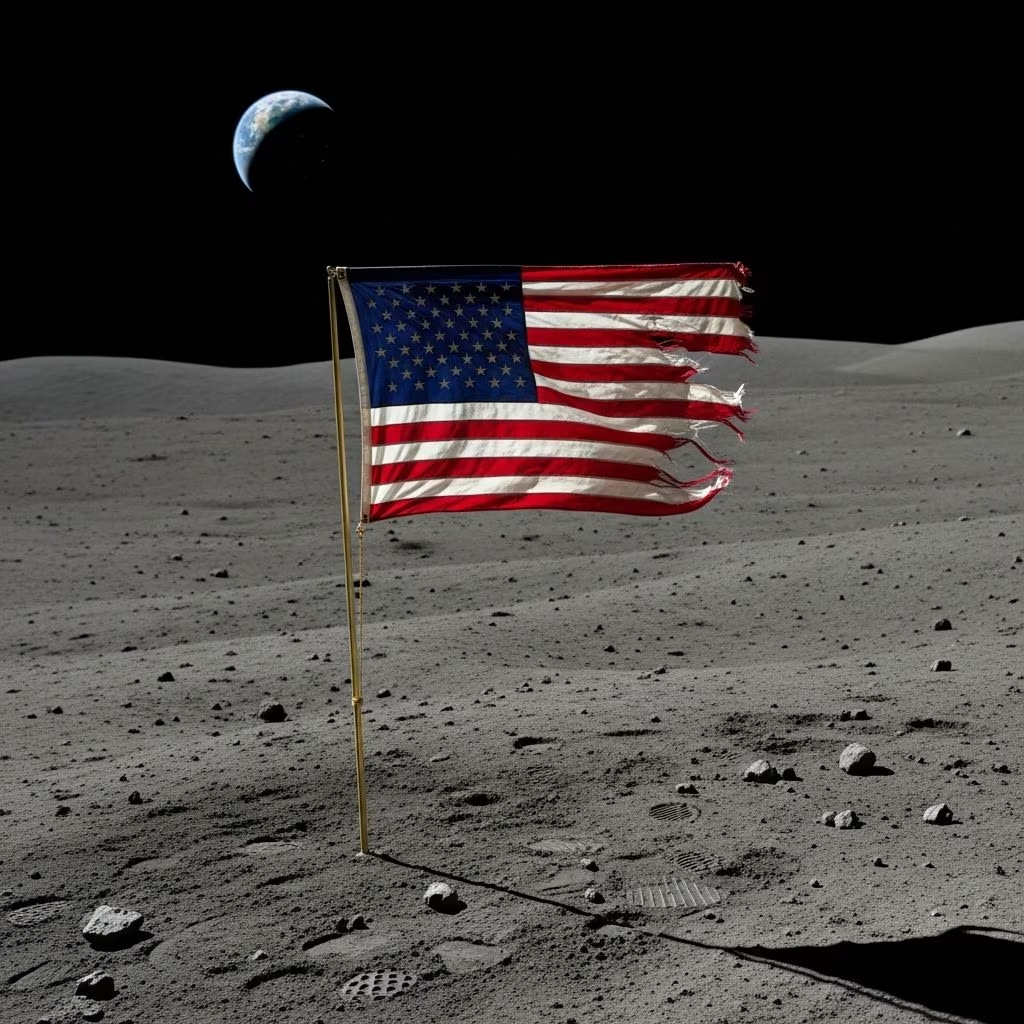
One of the most enduring images of the Apollo lunar missions is the sight of American astronauts planting the Stars and Stripes on the moon’s barren surface. These flags carried deep symbolic and historic meaning, representing not just the United States, but human achievement itself. But decades after they were planted, questions remain: What became of the lunar flags? Do they still stand? Could we see them with current technology? And will future missions repeat this iconic gesture?
The Origin and Symbolism of Planting Flags on the Moon
The idea of planting an American flag on the Moon became a pivotal aspect of Apollo 11, the first manned lunar landing. NASA Administrator Thomas O. Paine convened the Committee on Symbolic Activities for the First Lunar Landing only months before launch, with recommendations from historical and governmental bodies. The prevailing suggestion was to carry a flag and plant it—a decision fueled by both patriotic intent and a desire for symbolic international representation.
Jack A. Kinzler, NASA’s Technical Services Division Chief, engineered the Lunar Flag Assembly in a matter of days. The standard nylon flag was altered with a hem at its top, allowing a metal rod to create the illusion of ‘waving’ in the windless lunar environment. The robust assembly weighed over 9 pounds and featured gold-anodized aluminum poles to withstand the temperature extremes and lunar soil challenges.
How the Flags Were Planted: Technical Challenges
During the Apollo missions (11, 12, 14, 15, 16, 17), astronauts planted flags near their landing sites, each following a similar procedure:
- Design: Nylon flags with horizontal support rods to prevent drooping.
- Installation: Hammered into the hard lunar soil; often faced challenges due to unexpectedly dense regolith.
- Positioning: Flags were placed near the lunar module but, following Apollo 11, subsequent missions planted them farther away to avoid damage from takeoff.
Buzz Aldrin revealed that the Apollo 11 flag couldn’t be driven deep enough into the lunar surface. During their televised moonwalk, Aldrin worried the flag might topple. Ultimately, the flag withstood the moonwalk broadcast but was knocked over by the blast when the lunar module lifted off, as witnessed by Aldrin himself.
Fate of the Apollo Flags: Decades After the Landings
While the planting of flags was highly symbolic and memorable, their ultimate fate has been less glamorous.
- Apollo 11: The first flag fell over during liftoff from the lunar surface.
- Apollo 12, 14, 15, 16, 17: Flags are believed to have remained upright initially, though most experts suspect that the harsh environmental conditions have changed them dramatically.
According to lunar imaging and astronaut accounts, three flagpoles—Apollo 12, 16, and 17—were confirmed as still casting shadows on the surface as late as 2012, suggesting they remain upright. However, the flag material almost certainly has faded, with ultraviolet radiation, solar wind, and temperature extremes bleaching them white or causing significant deterioration.
Environmental Impact: The Moon’s Hostile Conditions
Unlike on Earth, there is no atmosphere to shield lunar surface objects. Conditions include:
- Extreme Temperature Swings: Surface temperatures range from about -180°C (-292°F) at night to over 100°C (212°F) in sunlight.
- Solar Radiation: The moon is unprotected from harsh ultraviolet light and solar wind, which rapidly degrade materials.
- Lunar Dust: Sharp, static-charged regolith can abrade any exposed object over time.
As a result of these factors, it is nearly certain that the flags are now mere shreds or colorless nylon with little resemblance to the vibrant emblems planted so proudly decades ago.
Can We See the Flags from Earth?
This question frequently surfaces among enthusiasts: Is it possible to see the flags from Earth-based telescopes? The answer is unequivocally no. Even the largest observatories lack the resolution to see the small flag assemblies on the lunar surface. The best lunar images come from orbiters such as NASA’s Lunar Reconnaissance Orbiter (LRO), which has imaged the Apollo landing sites and identified objects such as lunar module descent stages, astronaut tracks, and flag shadows.
| Imaging Method | Can See Flag Details? |
|---|---|
| Earth-based Telescope | No |
| Lunar Orbiter Imaging | Can see shadows, but not flag designs |
| Human Observation | Only possible during missions |
LRO images have shown shadows of flagpoles, giving indirect confirmation that some flags (their poles, at least) are still standing.
Why Plant Flags? Legal, Historic, and Symbolic Aspects
Planting the flags was less about claiming territory and more about marking achievement. The Outer Space Treaty (1967) expressly prohibits any national claims of sovereignty on celestial bodies. NASA made a public statement that placing the flag was a symbolic gesture, not an act of territorial conquest. That symbolism persists in global consciousness, representing scientific and technological accomplishment.
Apollo Flags and Lunar Artifacts: The Big Picture
The flags are just one part of a tapestry of Apollo-era artifacts left on the Moon:
- Descent stages of lunar modules
- Scientific instruments (e.g., seismometers, retroreflectors)
- Rovers and tools
- Personal items—and even astronaut waste, all left for posterity
Together, these artifacts tell the story of an era of exploration, experimentation, and achievement.
The Flags’ Legacy: Influence on Future Lunar Missions
The symbolism of flag-planting endures. As the United States and other nations prepare to return to the Moon through NASA’s Artemis missions, the fate and meaning of the Apollo flags inform future plans. Artemis II and Artemis III aim to place astronauts on the moon, this time targeting the lunar south pole, and discussions continue as to whether a new flag will be planted by future moonwalkers.
- Artemis missions intend long-term lunar exploration and possible base establishment.
- NASA has not confirmed whether Artemis III astronauts will plant a flag, though tradition and precedent suggest it is likely.
The flags are woven into the fabric of lunar exploration, symbolizing both the accomplishments and ambitions of humanity in space.
Frequently Asked Questions (FAQs)
Q: Are any Apollo flags still standing on the Moon?
A: As of the latest orbiter images, three flagpoles (Apollo 12, 16, and 17) are believed to still stand, though the flags themselves are almost certainly bleached and deteriorated.
Q: Why did the Apollo 11 flag fall over?
A: The Apollo 11 flag was planted too close to the lunar module. The blast from the ascent rocket knocked it over during liftoff.
Q: Can we see the American flags on the Moon from Earth?
A: No. The flags are far too small; only lunar orbiters can glimpse the sites and flagpole shadows with special imaging equipment.
Q: What happens to material left on the Moon over time?
A: Lunar artifacts—including flags—are subject to extreme radiation, temperature swings, and abrasive dust, which rapidly degrade synthetic materials.
Q: Will future astronauts plant new flags on the Moon?
A: NASA has not yet confirmed Artemis III mission details, but planting a flag remains a powerful tradition and is likely to recur in future human lunar landings.
Conclusion: Enduring Symbols and the Dawn of New Exploration
The fate of the American flags on the moon mirrors the challenges and marvels of human exploration. Once vivid emblems of achievement, they now endure as faded relics, visible only in shadow through the lens of lunar orbiters. Yet their story is more than about material longevity—they represent our drive to explore, push boundaries, and mark milestones on distant worlds. As humanity prepares to return to the moon, the legacy of these flags continues, bridging past triumphs and future ambitions.
References
- https://www.nasa.gov/history/flag-day-flying-high-the-stars-and-stripes-in-space/
- https://www.space.com/what-happened-to-the-american-flags-on-the-moon
- https://en.wikipedia.org/wiki/Lunar_Flag_Assembly
- https://www.celestron.com/blogs/news/can-we-see-the-american-flags-left-on-the-moon-by-the-apollo-astronauts
- https://historycollection.jsc.nasa.gov/JSCHistoryPortal/history/flag/flag.htm
- https://www.youtube.com/watch?v=PxpecER2hmU
- https://www.senate.gov/art-artifacts/historical-artifacts/other/87_00001.htm
- https://www.smithsonianmag.com/smithsonian-institution/apollo-astronauts-left-american-flags-boots-and-even-poop-on-the-moon-heres-why-these-artifacts-matter-180984736/
- https://www.axios.com/local/houston/2024/07/19/apollo-11-anniversary-moon-landing-flag
- https://airandspace.si.edu/collection-objects/flag-us-lunar/nasm_A19810865000
- https://www.youtube.com/watch?v=4lO6eOtwy-s
- https://www.space.com/16798-american-flags-moon-apollo-photos.html
- https://www.indiatoday.in/science/story/apollo-11-neil-armstrong-moon-landing-anniversary-airless-flag-flying-nasa-2569192-2024-07-20
- https://usflag.us/articles/lunar-legacy.html
- https://flagladyusa.com/blogs/blog/are-american-flags-still-on-the-moon
- https://apollo11space.com/apollo-11-the-american-flag-on-the-moon/
- https://www.nfop.org/american-flag-on-the-moon
- https://abcnews.go.com/Technology/story?id=97589&page=1