


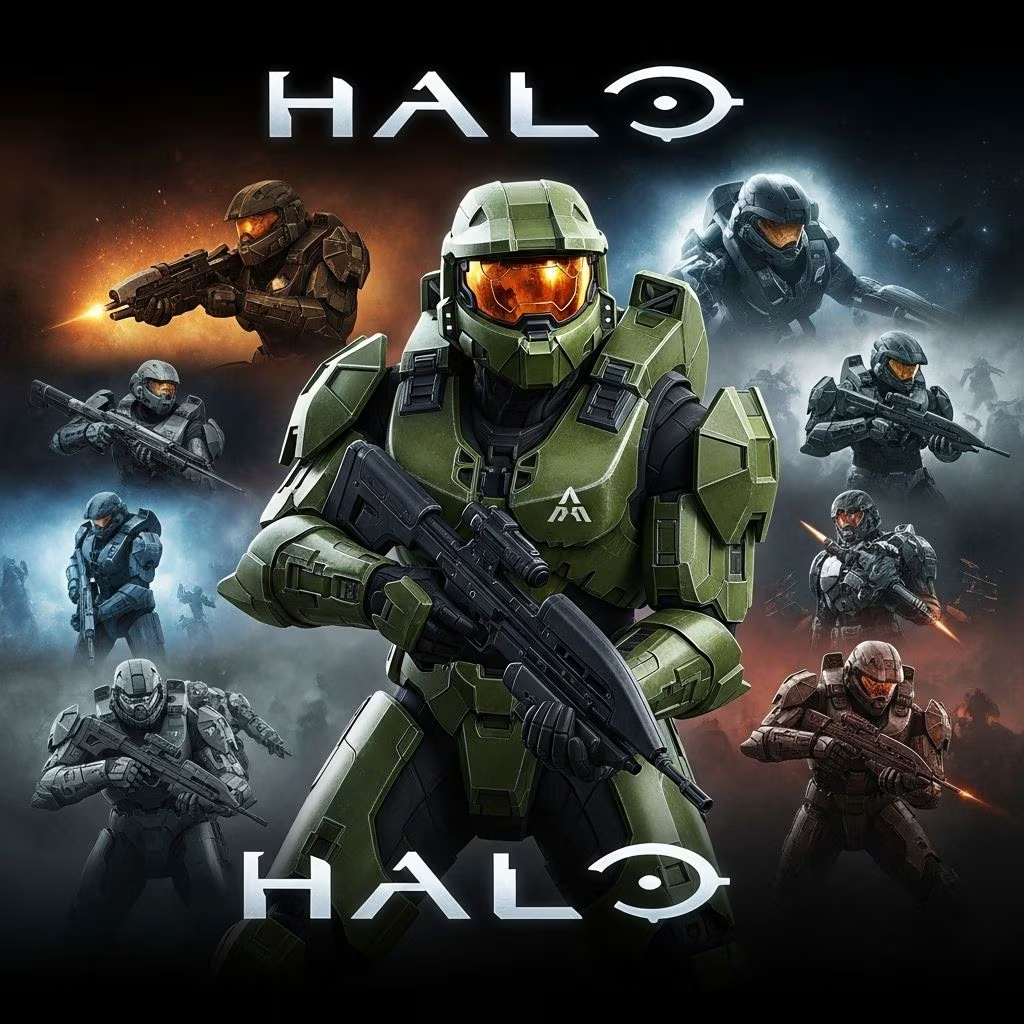
Halo Games In Order: Complete Chronological and Release Guide
The Halo franchise is one of the most beloved and best-known in gaming, spanning over two decades with numerous main entries, spin-offs, and expanded media. This guide will help you navigate the chronological story order of every major Halo game, as well as their release sequence, combining lore, gameplay innovations, and trivia for newcomers and veterans alike.
Why The Halo Series Is Important
Since Halo: Combat Evolved launched in 2001, Halo has been a defining force for console shooters, multiplayer innovation, and transmedia storytelling. Millions of players have battled the Covenant, Flood, and Banished while following the journey of Master Chief and other iconic characters. Halo’s universe now spans novels, films, comics, and spin-off games, making continuity and order valuable for fans diving into the saga.
Halo Games In Chronological Story Order
Here is the chronological order of the major Halo video games based on the series’ timeline, with core dates for each entry:
| Game Title | In-Game Date | Release Year | Key Protagonists | Notable Features |
|---|---|---|---|---|
| Halo Wars | 2531 | 2009 | Spirit of Fire Crew | RTS, prequel, first large-scale UNSC vs. Covenant conflict |
| Halo: Reach | 2552 | 2010 | Noble Team | Origins of Cortana, fall of Reach |
| Halo: Combat Evolved | 2552 | 2001 | Master Chief | Launch title, introduces Halo rings, Flood, Cortana |
| Halo: Fireteam Raven | 2552 | 2018 | Fireteam Raven | Arcade shooter, parallel story to Combat Evolved |
| Halo 2 | 2552 | 2004 | Master Chief, Arbiter | Dual protagonist, introduces the Arbiter, major lore expansion |
| Halo 3: ODST | 2552 | 2009 | ODST Squad | Spin-off, focuses on human troops during Halo 2 events |
| Halo 3 | 2552-2553 | 2007 | Master Chief | End of Covenant War, classic trilogy finale |
| Halo: Spartan Assault | 2552–2557 | 2013 | Spartan Palmer | Twin-stick shooter, short campaigns |
| Halo 4 | 2557 | 2012 | Master Chief | Forerunner threat, Reclaimer Saga begins |
| Halo: Spartan Strike | 2552–2558 | 2015 | Spartan (unnamed) | Sequel to Assault, split timeline (Halo 2 & after 4) |
| Halo 5: Guardians | 2558 | 2015 | Master Chief, Spartan Locke | Fireteam Osiris, Cortana’s transformation |
| Halo Wars 2 | 2559 | 2017 | Spirit of Fire Crew | Banished threat, RTS mechanics return |
| Halo Infinite | 2560 | 2021 | Master Chief | Open-world gameplay, new threats, continuation of Reclaimer Saga |
Chronological Halo Game List Summary
- Halo Wars (2531)
- Halo: Reach (2552)
- Halo: Combat Evolved (2552)
- Halo: Fireteam Raven (2552)
- Halo 2 (2552)
- Halo 3: ODST (2552)
- Halo 3 (2552–2553)
- Halo: Spartan Assault (2552–2557)
- Halo 4 (2557)
- Halo: Spartan Strike (2552 & 2557–2558)
- Halo 5: Guardians (2558)
- Halo Wars 2 (2559)
- Halo Infinite (2560)
Halo Games In Release Order
Alternatively, here is every main Halo title by release date, showing how the saga evolved for players worldwide:
- Halo: Combat Evolved (2001)
- Halo 2 (2004)
- Halo 3 (2007)
- Halo Wars (2009)
- Halo 3: ODST (2009)
- Halo: Reach (2010)
- Halo 4 (2012)
- Halo: Spartan Assault (2013)
- Halo: Spartan Strike (2015)
- Halo 5: Guardians (2015)
- Halo Wars 2 (2017)
- Halo: Fireteam Raven (2018)
- Halo Infinite (2021)
Major Halo Story Eras Explained
- Pre-Halo/Rise of the Covenant: Halo Wars sets the stage for humanity’s battle with the Covenant, years before the first ringworld is discovered.
- Fall of Reach & Arrival at Halo: Halo: Reach details the planet’s destruction and serves as a direct prequel to Combat Evolved.
- The Great War: The trilogy of Combat Evolved, Halo 2, 3, ODST, and Fireteam Raven chronicle the main battles against the Covenant and the Flood.
- Post-War & Spartan Operations: Spartan Assault and Spartan Strike represent the United Nations Space Command (UNSC) facing new threats after the main war ends.
- Reclaimer Saga: Halo 4, 5: Guardians, and Infinite follow the evolving Forerunner mystery, the rise of Cortana as a major galactic force, and new enemies like the Banished.
About The Main Halo Games
Halo Wars (2009)
An RTS prequel where players control the crew of Spirit of Fire, setting up the first major contact with the Covenant in 2531. Offers strategic gameplay distinct from the core FPS titles.
Halo: Reach (2010)
Tells the tragic story of Noble Team defending humanity’s military stronghold, Reach. Critical for understanding Cortana’s origins and the stakes leading into the original trilogy.
Halo: Combat Evolved (2001)
The launchpad of the franchise, with Master Chief uncovering the true power of the Halo ringworld and fighting the Flood for the first time. Iconic for campaign and multiplayer innovation.
Halo: Fireteam Raven (2018)
Arcade shooter set parallel to Combat Evolved, showing other UNSC perspectives during the events of Installation 04.
Halo 2 (2004)
Expands the universe with dual protagonist gameplay, introducing the Arbiter and chronicling the escalation of Covenant civil war and Earth’s defense.
Halo 3: ODST (2009)
Focuses on Orbital Drop Shock Troopers surviving a covert occupation. Offers a unique, atmospheric perspective during the events leading into Halo 3.
Halo 3 (2007)
Concludes the original trilogy in an epic battle against the Covenant and Flood, wrapping up the main galactic conflict and saving humanity.
Halo: Spartan Assault (2013)
A twin-stick shooter offering bite-sized campaigns starring Spartan Commander Sarah Palmer, filling in UNSC operations post-war.
Halo 4 (2012)
Opens the Reclaimer Saga with the mysterious Forerunner antagonist, the Didact, and charts Cortana’s struggle with Rampancy.
Halo: Spartan Strike (2015)
Split across two periods, covers both the events of Halo 2 and moments following Halo 4, continuing the fight against new Covenant and Promethean threats.
Halo 5: Guardians (2015)
Focuses on the conflict between Spartan teams and the transformation of Cortana into a galactic AI leader. Master Chief and Fireteam Osiris are major playable groups.
Halo Wars 2 (2017)
Returns to RTS roots, pitting the crew of Spirit of Fire against the Banished, a brutal new faction led by Atriox, advancing the timeline toward Infinite.
Halo Infinite (2021)
Latest mainline entry, featuring an open-world ring setting and redefining gameplay for modern audiences. Continues the Reclaimer Saga and explores the aftermath of Cortana’s uprising.
Spin-Offs, Novels, and Expanded Media
The Halo universe is supported by dozens of novels, comics, and short films, such as Halo: The Fall of Reach, Forward Unto Dawn, and Halo: Nightfall. These works fill gaps in lore, detail secondary characters, and add richness to the main timeline. The television adaptation uses an alternate canon, known as the ‘Silver Timeline’.
Frequently Asked Questions (FAQs)
Q: Should I play Halo in story order or release order?
A: Playing in chronological order gives a more coherent understanding of the saga’s narrative, but starting with release order can help you appreciate gameplay and innovation as the developers intended.
Q: Do I need to play all Halo games to follow the story?
A: No, the mainline FPS games (Combat Evolved, 2, 3, 4, 5, and Infinite) offer the central narrative. Spin-offs and RTS entries expand the universe, but aren’t required for core plot comprehension.
Q: What is the difference between Halo Wars and the main series?
A: Halo Wars and Wars 2 are real-time strategy games, focused on tactical troop management rather than first-person shooting. Their stories complement the FPS campaigns but provide a unique gameplay experience.
Q: Which Halo games feature Master Chief as the protagonist?
A: Master Chief is the lead character in Halo: Combat Evolved, Halo 2, Halo 3, Halo 4, Halo 5: Guardians (shared lead), and Halo Infinite.
Q: Are there any new Halo games planned?
A: As of late 2025, further expansion for Halo Infinite and potential new spin-offs are rumored, but no major new titles have been confirmed for release.
Best Practices For Newcomers
- Start with Halo: Combat Evolved for original gameplay and story introduction.
- If you prefer chronological narrative, begin with Halo Wars, then Reach, and continue forward.
- Try Halo: The Master Chief Collection on Xbox or PC for remastered campaigns in one package.
- Explore the novels and comics after playing core games to deepen lore knowledge.
Conclusion: The Halo Saga’s Enduring Legacy
With dozens of titles, a massive universe, and continuing development, Halo remains a pillar in the gaming world. Understanding the series’ order is key to grasping both gameplay evolution and the complex, interconnected story. Whether you’re aiming for lore mastery or just classic multiplayer thrills, Halo offers a journey that stands the test of time.
References
- https://www.trueachievements.com/news/halo-games-in-order
- https://www.fiercepc.co.uk/blog/games/halo-games-in-order
- https://www.radiotimes.com/technology/gaming/halo-games-in-story-order/
- https://www.fiercepc.co.uk/blog/games/halo-games-in-order?srsltid=AfmBOorThZbMxkJpxxax1a7Fsfk2JtHQyXIOtyKtEdXIhn7u9xtG8puM
- https://www.thegamer.com/halo-games-in-order/
- https://storytellingdb.com/halo-timeline-and-chronology/
- https://en.wikipedia.org/wiki/Halo_(franchise)
- https://halo.fandom.com/wiki/Timeline
- https://en.wikipedia.org/wiki/List_of_Halo_media
- https://howlongtobeat.com/forum/thread/1381/1
- https://www.youtube.com/watch?v=PyjISYGNKUM
- https://www.imdb.com/list/ls560916677/
- https://gamerant.com/halo-infinite-complete-chronological-order/
- https://www.chithot.com/20296/halo-games-timeline-release-date-chronological/
- https://www.beyondvideogaming.com/en/timelines/halo-timeline-everything-in-chronological-order/
- https://www.beyondvideogaming.com/en/article/all-halo-games-in-order/
- https://steamcommunity.com/app/976730/discussions/0/5264192561399455696/


